Facebook Instagram Youtube Twitter

What is Bohr Model of Atom – Definition

In atomic physics, the Bohr model if the atom (also known as the Rutherford-Bohr model) is modern model of the hydrogen atom introduced by Danish physicist Niels Bohr. All features of Bohr model of the atom can be summarized in Bohr’s Postulates. Material Properties

Bohr Model of the Atom

Failure of Classical Physics - Atomic NucleusIn atomic physics, the Bohr model if the atom (also known as the Rutherford-Bohr model) is modern model of the hydrogen atom introduced by Danish physicist Niels Bohr working with Ernest Rutherford at the University of Manchester in 1913.

This model provides especially the solution to the problem of the failure of classical physics in the field of atomic physics. Classical electromagnetic theory, makes three entirely wrong predictions about atoms:

  • atoms should emit light continuously,
  • atoms should be unstable,
  • the light they emit should have a continuous spectrum.

The Bohr model adopted Planck’s quantum hypothesis and he proposed a model in which the electrons of an atom were assumed to orbit the nucleus but could only do so in a finite set of orbits. Planck’s quantum hypothesis (Planck’s law) is named after a German theoretical physicist Max Planck, who proposed it in 1900. Planck’s law is a pioneering result of modern physics and quantum theory. Planck’s hypothesis that energy is radiated and absorbed in discrete “quanta” (or energy packets) precisely matched the observed patterns of blackbody radiation and resolved the ultraviolet catastrophe.

Bohr model - atomBased on this hypothesis, Bohr postulated that an atom emits or absorbs energy only in discrete quanta corresponding to absorption or radiation of a photon. During the emission of a photon, the internal energy of the atom changes by an amount equal to the energy of the photon. Therefore, each atom must be able to exist with only certain specific values of internal energy. Each of these stationary states is characterised by a specific amount of energy called its energy level. An atom can have an amount of internal energy equal to any one of these possible energy levels, but it cannot have an energy intermediate between two levels.

The success of Bohr model is in explaining the spectral lines of atomic hydrogen and the Rydberg formula for the spectral emission lines. Bohr’s theory was the first to successfully account for the discrete energy levels of this radiation as measured in the laboratory. The emission line spectrum of hydrogen tells us that atoms of that element emit photons with only certain specific frequencies ƒ and hence certain specific energies equal to E = hƒ, where h = Planck’s constant = 6.63 x 10⁻³⁴ J.s and f = frequency of the photon.

Although Bohr’s atomic model is designed specifically to explain the hydrogen atom, his theories apply generally to the structure of all atoms. Subsequently, Bohr extended the model of hydrogen to give an approximate model for heavier atoms. Heavier atoms, like carbon or oxygen, have more protons in the nucleus, and more electrons to cancel the charge. Bohr’s idea was that each discrete orbit could only hold a certain number of electrons. In 1922, Niels Bohr updated his model of the atom by assuming that certain numbers of electrons corresponded to stable “closed shells”. After that orbit is full, the next energy level would have to be used. This defines an electron shell, which is the set of allowed states and it gives the atom an electron shell structure.

Bohr’s Postulates

All these features of Bohr model of the atom can be summarized in Bohr’s Postulates:

  1. Electrons in atoms orbit the nucleus.
  2. An atom can exist only in certain specific energy states, in which an electron can reside without the emission of radiant energy.
  3. Transmission between stationary states can occur only by jumping from one allowed orbit to another. This process produces/absorbs only a discrete quanta of electromagnetic radiation.
  4. The angular momentum of a stationary electron is also quantised.
References:
Nuclear and Reactor Physics:
  1. J. R. Lamarsh, Introduction to Nuclear Reactor Theory, 2nd ed., Addison-Wesley, Reading, MA (1983).
  2. J. R. Lamarsh, A. J. Baratta, Introduction to Nuclear Engineering, 3d ed., Prentice-Hall, 2001, ISBN: 0-201-82498-1.
  3. W. M. Stacey, Nuclear Reactor Physics, John Wiley & Sons, 2001, ISBN: 0- 471-39127-1.
  4. Glasstone, Sesonske. Nuclear Reactor Engineering: Reactor Systems Engineering, Springer; 4th edition, 1994, ISBN: 978-0412985317
  5. W.S.C. Williams. Nuclear and Particle Physics. Clarendon Press; 1 edition, 1991, ISBN: 978-0198520467
  6. G.R.Keepin. Physics of Nuclear Kinetics. Addison-Wesley Pub. Co; 1st edition, 1965
  7. Robert Reed Burn, Introduction to Nuclear Reactor Operation, 1988.
  8. U.S. Department of Energy, Nuclear Physics and Reactor Theory. DOE Fundamentals Handbook, Volume 1 and 2. January 1993.
  9. Paul Reuss, Neutron Physics. EDP Sciences, 2008. ISBN: 978-2759800414.

Advanced Reactor Physics:

  1. K. O. Ott, W. A. Bezella, Introductory Nuclear Reactor Statics, American Nuclear Society, Revised edition (1989), 1989, ISBN: 0-894-48033-2.
  2. K. O. Ott, R. J. Neuhold, Introductory Nuclear Reactor Dynamics, American Nuclear Society, 1985, ISBN: 0-894-48029-4.
  3. D. L. Hetrick, Dynamics of Nuclear Reactors, American Nuclear Society, 1993, ISBN: 0-894-48453-2.
  4. E. E. Lewis, W. F. Miller, Computational Methods of Neutron Transport, American Nuclear Society, 1993, ISBN: 0-894-48452-4.

See also:

Atomic Theory

We hope, this article, Bohr Model of Atom, helps you. If so, give us a like in the sidebar. Main purpose of this website is to help the public to learn some interesting and important information about materials and their properties.
What is Discovery of Proton – Definition

Rutherford proved that the hydrogen nucleus is present in other nuclei, a result usually described as the discovery of protons. Discovery of protons is also associated with Eugen Goldstein. He discovered anode rays and showed that they were positively charged particles (ions) produced from gases. Material Properties

Discovery of Proton

Before the discovery of atomic nucleus, there was ideas that all atoms are composed of hydrogen atoms (called by William Prout “protyles“). This hypothesis is known as Prout’s hypothesis. In 1816, he hypothesized that the hydrogen atom was the only truly fundamental particles, and that the other atoms were actually groupings of various numbers of hydrogen atoms (protyles). Further important facts were discovered in 1886 by German physicist Eugen Goldstein. He discovered anode rays and showed that they were positively charged particles (ions) produced from gases. In 1907 a study of how these rays were deflected in a magnetic field, revealed that the particles making up the ray were not all the same mass. The lightest ones, formed when there was some hydrogen gas in the tube, were calculated to be about 1840 times as massive as an electron.

Following Geiger-Marsden experiments, which were a landmark series of experiments by which scientists discovered that every atom contains an atomic nucleus (whose diameter is of the order 10-14m) lead to the identification of the ‘primitive atom’ . The identification of the primitive atom of positive electricity was first made by the British physicist Ernest Rutherford. Rutherford proved that the hydrogen nucleus is present in other nuclei, a result usually described as the discovery of protons. No positively charged atom lighter than these had ever been detected. Furthermore, they never carry more than a single natural unit of positive charge, +e.

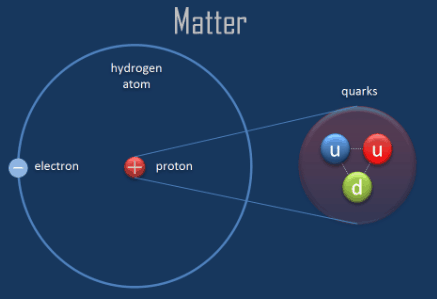
protonAccording to modern physics, a proton is one of the subatomic particles that make up matter. In the universe, protons are abundant, making up about half of all visible matter. It has a positive electric charge (+1e) and a rest mass equal to 1.67262 × 10⁻²⁷ kg (938.272 MeV/c2)— marginally lighter than that of the neutron but nearly 1836 times greater than that of the electron. The proton has a mean square radius of about 0.87 × 10⁻¹⁵ m, or 0.87 fm, and it is a spin – ½ fermion.

The protons exist in the nuclei of typical atoms, along with their neutral counterparts, the neutrons. Neutrons and protons, commonly called nucleons, are bound together in the atomic nucleus, where they account for 99.9 percent of the atom’s mass. Research in high-energy particle physics in the 20th century revealed that neither the neutron nor the proton is not the smallest building block of matter.

References:
Nuclear and Reactor Physics:
  1. J. R. Lamarsh, Introduction to Nuclear Reactor Theory, 2nd ed., Addison-Wesley, Reading, MA (1983).
  2. J. R. Lamarsh, A. J. Baratta, Introduction to Nuclear Engineering, 3d ed., Prentice-Hall, 2001, ISBN: 0-201-82498-1.
  3. W. M. Stacey, Nuclear Reactor Physics, John Wiley & Sons, 2001, ISBN: 0- 471-39127-1.
  4. Glasstone, Sesonske. Nuclear Reactor Engineering: Reactor Systems Engineering, Springer; 4th edition, 1994, ISBN: 978-0412985317
  5. W.S.C. Williams. Nuclear and Particle Physics. Clarendon Press; 1 edition, 1991, ISBN: 978-0198520467
  6. G.R.Keepin. Physics of Nuclear Kinetics. Addison-Wesley Pub. Co; 1st edition, 1965
  7. Robert Reed Burn, Introduction to Nuclear Reactor Operation, 1988.
  8. U.S. Department of Energy, Nuclear Physics and Reactor Theory. DOE Fundamentals Handbook, Volume 1 and 2. January 1993.
  9. Paul Reuss, Neutron Physics. EDP Sciences, 2008. ISBN: 978-2759800414.

Advanced Reactor Physics:

  1. K. O. Ott, W. A. Bezella, Introductory Nuclear Reactor Statics, American Nuclear Society, Revised edition (1989), 1989, ISBN: 0-894-48033-2.
  2. K. O. Ott, R. J. Neuhold, Introductory Nuclear Reactor Dynamics, American Nuclear Society, 1985, ISBN: 0-894-48029-4.
  3. D. L. Hetrick, Dynamics of Nuclear Reactors, American Nuclear Society, 1993, ISBN: 0-894-48453-2.
  4. E. E. Lewis, W. F. Miller, Computational Methods of Neutron Transport, American Nuclear Society, 1993, ISBN: 0-894-48452-4.

See also:

Atomic Theory

We hope, this article, Discovery of Proton, helps you. If so, give us a like in the sidebar. Main purpose of this website is to help the public to learn some interesting and important information about materials and their properties.
What is Saturnian Model of the Atom – Nagaoka’s Planetary Model – Definition

Saturnian model of the atom was proposed by a Japanese physicist Hantaro Nagaoka. His model was known as the Saturnian model of the atom and according to this model the atom consists of a massive positive centre surrounded by a number of orbiting electrons, in the manner of Saturn and its rings. Material Properties

Saturnian Model of the Atom – Nagaoka’s Planetary Model

It must be noted, the Rutherford model of the atom was not the first model, which proposed a nuclear structure. The idea of a nuclear structure was previously proposed in 1903 by a Japanese physicist Hantaro Nagaoka, who rejected Thomson’s model on the grounds that opposite charges are impenetrable.His model was known as the Saturnian model of the atom and according to this model the atom consists of a massive positive centre surrounded by a number of orbiting electrons, in the manner of Saturn and its rings.

Nagaoka’s planetary model had two predictions:

  • a very massive atomic center (in analogy to a very massive planet)
  • electrons revolving around the nucleus, bound by electrostatic forces

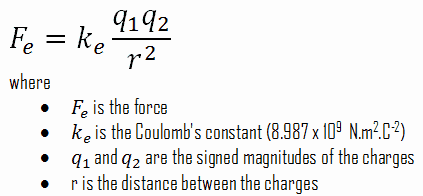
Both predictions were successfully confirmed by Ernest Rutherford in 1911, however, other details of the model was incorrect. Notwithstanding the Rutherford model of the atom was really very close to modern concept of the atom, it was based on classical physics. But neither classical physics nor the Rutherford model can explain the following problem. Why the negatively charged electrons are prevented from falling into the positively charged nucleus? Forces between static electrically charged particles are governed by the Coulomb’s law:

Rutherford suggested that perhaps the electrons revolve in orbits about the nucleus. In classical mechanics, a condition for the dynamic stability of such systems of rotating particles is that only forces of attraction act between its components.

Failure of Classical Physics - Atomic NucleusClassical physics also states that any accelerating electric charge (either oscillating or revolving) emits electromagnetic radiation. As a result, an electron orbiting inside an atom should be continually losing energy and it should spiral into the nucleus within a fraction of a second. In fact, physicists calculated that the electron should lose all of its energy and spiral down into the proton in only about 0.000000000001 second, which means that every atoms should not exist longer than a mere 10-12 seconds.

The solution to the problem of the stability of the electrons in an atom was provided by young Danish physicist Niels Bohr working with Ernest Rutherford at the University of Manchester in 1913. His model adopted Planck’s quantum hypothesis and he proposed a model in which the electrons of an atom were assumed to orbit the nucleus but could only do so in a finite set of orbits. He postulated that an atom emits or absorbs energy only in discrete quanta corresponding to absorption or radiation of a photon.

References:
Nuclear and Reactor Physics:
  1. J. R. Lamarsh, Introduction to Nuclear Reactor Theory, 2nd ed., Addison-Wesley, Reading, MA (1983).
  2. J. R. Lamarsh, A. J. Baratta, Introduction to Nuclear Engineering, 3d ed., Prentice-Hall, 2001, ISBN: 0-201-82498-1.
  3. W. M. Stacey, Nuclear Reactor Physics, John Wiley & Sons, 2001, ISBN: 0- 471-39127-1.
  4. Glasstone, Sesonske. Nuclear Reactor Engineering: Reactor Systems Engineering, Springer; 4th edition, 1994, ISBN: 978-0412985317
  5. W.S.C. Williams. Nuclear and Particle Physics. Clarendon Press; 1 edition, 1991, ISBN: 978-0198520467
  6. G.R.Keepin. Physics of Nuclear Kinetics. Addison-Wesley Pub. Co; 1st edition, 1965
  7. Robert Reed Burn, Introduction to Nuclear Reactor Operation, 1988.
  8. U.S. Department of Energy, Nuclear Physics and Reactor Theory. DOE Fundamentals Handbook, Volume 1 and 2. January 1993.
  9. Paul Reuss, Neutron Physics. EDP Sciences, 2008. ISBN: 978-2759800414.

Advanced Reactor Physics:

  1. K. O. Ott, W. A. Bezella, Introductory Nuclear Reactor Statics, American Nuclear Society, Revised edition (1989), 1989, ISBN: 0-894-48033-2.
  2. K. O. Ott, R. J. Neuhold, Introductory Nuclear Reactor Dynamics, American Nuclear Society, 1985, ISBN: 0-894-48029-4.
  3. D. L. Hetrick, Dynamics of Nuclear Reactors, American Nuclear Society, 1993, ISBN: 0-894-48453-2.
  4. E. E. Lewis, W. F. Miller, Computational Methods of Neutron Transport, American Nuclear Society, 1993, ISBN: 0-894-48452-4.

See also:

Atomic Theory

We hope, this article, Saturnian Model of the Atom – Nagaoka’s Planetary Model, helps you. If so, give us a like in the sidebar. Main purpose of this website is to help the public to learn some interesting and important information about materials and their properties.
What is Discovery of Atomic Nucleus – Definition

The atomic nucleus was discovered by Ernest Rutherford, who proposed a new model of the atom based on Geiger-Marsden experiments. The atomic nucleus occupies only about 10-12 of the total volume of the atom, but it contains all the positive charge and most of the total mass of the atom. Discovery of Atomic Nucleus

Discovery of Atomic Nucleus

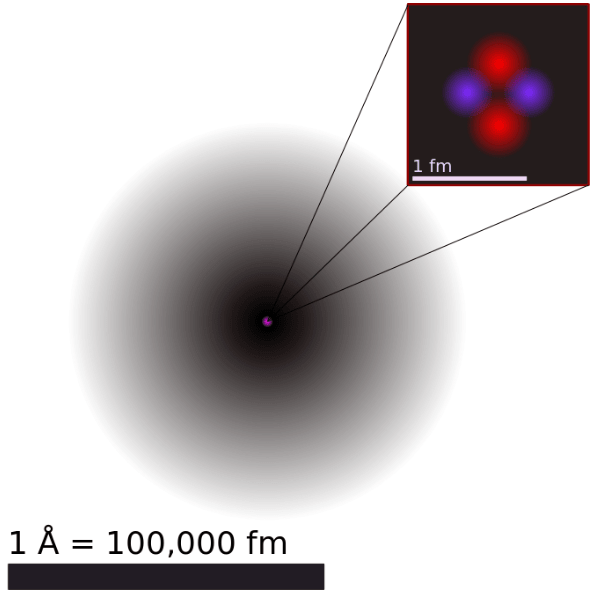
A figurative depiction of the helium-4 atom with the electron cloud in shades of gray. Protons and neutrons are most likely found in exactly the same space, at the central point. Source wikipedia.org License CC BY-SA 3.0

In physics, the atomic nucleus is the central part of an atom. In comparison to an atom, it is much more smaller and contains most of the mass of the atom. The atomic nucleus also contains all of its positive electric charge (in protons), while all of its negative charge is distributed in the electron cloud.

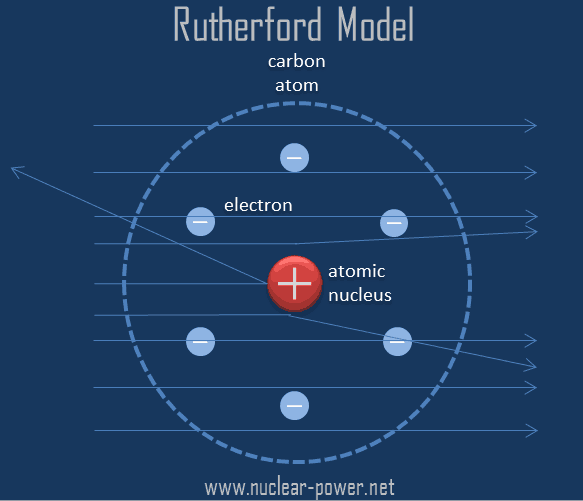
The atomic nucleus was discovered by Ernest Rutherford, who proposed a new model of the atom based on Geiger-Marsden experiments. These experiments were performed between 1908 and 1913 by Hans Geiger and Ernest Marsden under the direction of Ernest Rutherford. Rutherford’s idea was to direct energetic alpha particles at a thin metal foil and measure how an alpha particle beam is scattered when it strikes a thin metal foil. A narrow collimated beam of alpha particles was aimed at a gold foil of approximately 1 μm thickness (about 10,000 atoms thick).  Alpha particles are energetic nuclei of helium (usually about 6 MeV). Alpha particles, which are about 7300 times more massive than electrons, have a positive charge of +2e. Because of their relatively much greater mass, alpha particles are not significantly deflected from their paths by the electrons in the metal’s atoms.

According to Thomson’s model, if an alpha particle were to collide with an plum-pudding atom, it would just fly straight through, its path being deflected by at most a fraction of a degree. But in the experiment Geiger and Marsden saw that most of the particles are scattered through rather small angles, but, and this was the big surprise, a very small fraction of them are scattered through very large angles, approaching 180° (i.e., they were recoiled backwards).

In Rutherford’s words:

“It is almost as incredible as if you had fired a fifteen inch shell at a sheet of tissue paper and it came back and hit you.”

rutherford model - gold foil experimentsRutherford assumed that, to deflect the alpha particle backward, there must be a very large force. This force could be provided only result from a collision with a massive target or from an interaction with an electric or magnetic field of great strength. In previous experiments, it was shown the deflections had to be electrical or perhaps possibly magnetic in origin.

These experiments were a landmark series of experiments by which scientists discovered that every atom contains a nucleus (whose diameter is of the order 10-14m) where all of its positive charge and most of its mass are concentrated in a small region called an atomic nucleus. In Rutherford’s atom, the diameter of its sphere (about 10-10 m) of influence is determined by its electrons. In other words, the nucleus occupies only about 10-12 of the total volume of the atom or less (the nuclear atom is largely empty space), but it contains all the positive charge and at least 99.95% of the total mass of the atom.

Based on these results, Ernest Rutherford proposed a new model of the atom. He postulated that the positive charge in an atom is concentrated in a small region (in comparison to the rest of the atom) called a nucleus at the center of the atom with electrons existing in orbits around it. Furthermore, the nucleus is responsible for most of the mass of the atom.

References:
Nuclear and Reactor Physics:
  1. J. R. Lamarsh, Introduction to Nuclear Reactor Theory, 2nd ed., Addison-Wesley, Reading, MA (1983).
  2. J. R. Lamarsh, A. J. Baratta, Introduction to Nuclear Engineering, 3d ed., Prentice-Hall, 2001, ISBN: 0-201-82498-1.
  3. W. M. Stacey, Nuclear Reactor Physics, John Wiley & Sons, 2001, ISBN: 0- 471-39127-1.
  4. Glasstone, Sesonske. Nuclear Reactor Engineering: Reactor Systems Engineering, Springer; 4th edition, 1994, ISBN: 978-0412985317
  5. W.S.C. Williams. Nuclear and Particle Physics. Clarendon Press; 1 edition, 1991, ISBN: 978-0198520467
  6. G.R.Keepin. Physics of Nuclear Kinetics. Addison-Wesley Pub. Co; 1st edition, 1965
  7. Robert Reed Burn, Introduction to Nuclear Reactor Operation, 1988.
  8. U.S. Department of Energy, Nuclear Physics and Reactor Theory. DOE Fundamentals Handbook, Volume 1 and 2. January 1993.
  9. Paul Reuss, Neutron Physics. EDP Sciences, 2008. ISBN: 978-2759800414.

Advanced Reactor Physics:

  1. K. O. Ott, W. A. Bezella, Introductory Nuclear Reactor Statics, American Nuclear Society, Revised edition (1989), 1989, ISBN: 0-894-48033-2.
  2. K. O. Ott, R. J. Neuhold, Introductory Nuclear Reactor Dynamics, American Nuclear Society, 1985, ISBN: 0-894-48029-4.
  3. D. L. Hetrick, Dynamics of Nuclear Reactors, American Nuclear Society, 1993, ISBN: 0-894-48453-2.
  4. E. E. Lewis, W. F. Miller, Computational Methods of Neutron Transport, American Nuclear Society, 1993, ISBN: 0-894-48452-4.

See also:

Atomic Theory

We hope, this article, Discovery of Atomic Nucleus, helps you. If so, give us a like in the sidebar. Main purpose of this website is to help the public to learn some interesting and important information about materials and their properties.

What is Geiger-Marsden Experiment – Rutherford gold foil experiment – Definition

Geiger-Marsden experiments (also called the Rutherford gold foil experiment) were performed between 1908 and 1913 by Hans Geiger (of Geiger counter fame) and Ernest Marsden (a 20-year-old student who had not yet earned his bachelor’s degree) under the direction of Ernest Rutherford. Material Properties

Geiger-Marsden Experiments – Rutherford gold foil experiment

Thomson Model vs Rutherford ModelThe Rutherford model of the atom is a model of the atom devised by the British physicist Ernest Rutherford. Rutherford’s new model for the atom is based on the experimental results, which were obtained from Geiger-Marsden experiments (also called the Rutherford gold foil experiment). The Geiger–Marsden experiments were performed between 1908 and 1913 by Hans Geiger (of Geiger counter fame) and Ernest Marsden (a 20-year-old student who had not yet earned his bachelor’s degree) under the direction of Ernest Rutherford.

Rutherford’s idea was to direct energetic alpha particles at a thin metal foil and measure how an alpha particle beam is scattered when it strikes a thin metal foil. A narrow collimated beam of alpha particles was aimed at a gold foil of approximately 1 μm thickness (about 10,000 atoms thick).  Alpha particles are energetic nuclei of helium (usually about 6 MeV). Alpha particles, which are about 7300 times more massive than electrons, have a positive charge of +2e. Because of their relatively much greater mass, alpha particles are not significantly deflected from their paths by the electrons in the metal’s atoms.

According to Thomson’s model, if an alpha particle were to collide with an plum-pudding atom, it would just fly straight through, its path being deflected by at most a fraction of a degree. But in the experiment Geiger and Marsden saw that most of the particles are scattered through rather small angles, but, and this was the big surprise, a very small fraction of them are scattered through very large angles, approaching 180° (i.e., they were recoiled backwards).

In Rutherford’s words:

“It is almost as incredible as if you had fired a fifteen inch shell at a sheet of tissue paper and it came back and hit you.”

rutherford model - gold foil experimentsRutherford assumed that, to deflect the alpha particle backward, there must be a very large force. This force could be provided only result from a collision with a massive target or from an interaction with an electric or magnetic field of great strength. In previous experiments, it was shown the deflections had to be electrical or perhaps possibly magnetic in origin.

As a result, Rutherford abandoned the Thomson model. Geiger-Marsden experiments were therefore a landmark series of experiments by which scientists discovered that every atom contains a nucleus (whose diameter is of the order 10-14m.) where all of its positive charge and most of its mass are concentrated in a small region called an atomic nucleus. In Rutherford’s atom, the diameter of its sphere (about 10-10 m) of influence is determined by its electrons. In other words, the nucleus occupies only about 10-12 of the total volume of the atom or less (the nuclear atom is largely empty space), but it contains all the positive charge and at least 99.95% of the total mass of the atom.

Based on these results, Ernest Rutherford proposed a new model of the atom. He postulated that the positive charge in an atom is concentrated in a small region (in comparison to the rest of the atom) called a nucleus at the center of the atom with electrons existing in orbits around it. Furthermore, the nucleus is responsible for most of the mass of the atom.

References:
Nuclear and Reactor Physics:
  1. J. R. Lamarsh, Introduction to Nuclear Reactor Theory, 2nd ed., Addison-Wesley, Reading, MA (1983).
  2. J. R. Lamarsh, A. J. Baratta, Introduction to Nuclear Engineering, 3d ed., Prentice-Hall, 2001, ISBN: 0-201-82498-1.
  3. W. M. Stacey, Nuclear Reactor Physics, John Wiley & Sons, 2001, ISBN: 0- 471-39127-1.
  4. Glasstone, Sesonske. Nuclear Reactor Engineering: Reactor Systems Engineering, Springer; 4th edition, 1994, ISBN: 978-0412985317
  5. W.S.C. Williams. Nuclear and Particle Physics. Clarendon Press; 1 edition, 1991, ISBN: 978-0198520467
  6. G.R.Keepin. Physics of Nuclear Kinetics. Addison-Wesley Pub. Co; 1st edition, 1965
  7. Robert Reed Burn, Introduction to Nuclear Reactor Operation, 1988.
  8. U.S. Department of Energy, Nuclear Physics and Reactor Theory. DOE Fundamentals Handbook, Volume 1 and 2. January 1993.
  9. Paul Reuss, Neutron Physics. EDP Sciences, 2008. ISBN: 978-2759800414.

Advanced Reactor Physics:

  1. K. O. Ott, W. A. Bezella, Introductory Nuclear Reactor Statics, American Nuclear Society, Revised edition (1989), 1989, ISBN: 0-894-48033-2.
  2. K. O. Ott, R. J. Neuhold, Introductory Nuclear Reactor Dynamics, American Nuclear Society, 1985, ISBN: 0-894-48029-4.
  3. D. L. Hetrick, Dynamics of Nuclear Reactors, American Nuclear Society, 1993, ISBN: 0-894-48453-2.
  4. E. E. Lewis, W. F. Miller, Computational Methods of Neutron Transport, American Nuclear Society, 1993, ISBN: 0-894-48452-4.

See also:

Atomic Theory

We hope, this article, Geiger-Marsden Experiment – Rutherford gold foil experiment, helps you. If so, give us a like in the sidebar. Main purpose of this website is to help the public to learn some interesting and important information about materials and their properties.
What is Rutherford Model of the Atom – Definition

The Rutherford model of the atom is a model of the atom devised by the British physicist Ernest Rutherford. Ernest Rutherford postulated that the positive charge in an atom is concentrated in a small region called a nucleus at the center of the atom with electrons existing in orbits around it. Material Properties

Rutherford Model of the Atom

Thomson Model vs Rutherford ModelThe Rutherford model of the atom is a model of the atom devised by the British physicist Ernest Rutherford. Rutherford’s new model for the atom is based on the experimental results, which were obtained from Geiger-Marsden experiments (also called the Rutherford gold foil experiment). The Geiger–Marsden experiments were performed between 1908 and 1913 by Hans Geiger (of Geiger counter fame) and Ernest Marsden (a 20-year-old student who had not yet earned his bachelor’s degree) under the direction of Ernest Rutherford.

Rutherford’s idea was to direct energetic alpha particles at a thin metal foil and measure how an alpha particle beam is scattered when it strikes a thin metal foil. A narrow collimated beam of alpha particles was aimed at a gold foil of approximately 1 μm thickness (about 10,000 atoms thick).  Alpha particles are energetic nuclei of helium (usually about 6 MeV). Alpha particles, which are about 7300 times more massive than electrons, have a positive charge of +2e. Because of their relatively much greater mass, alpha particles are not significantly deflected from their paths by the electrons in the metal’s atoms.

According to Thomson’s model, if an alpha particle were to collide with an plum-pudding atom, it would just fly straight through, its path being deflected by at most a fraction of a degree. But in the experiment Geiger and Marsden saw that most of the particles are scattered through rather small angles, but, and this was the big surprise, a very small fraction of them are scattered through very large angles, approaching 180° (i.e., they were recoiled backwards).

In Rutherford’s words:

“It is almost as incredible as if you had fired a fifteen inch shell at a sheet of tissue paper and it came back and hit you.”

rutherford model - gold foil experimentsRutherford assumed that, to deflect the alpha particle backward, there must be a very large force. This force could be provided only result from a collision with a massive target or from an interaction with an electric or magnetic field of great strength. In previous experiments, it was shown the deflections had to be electrical or perhaps possibly magnetic in origin.

As a result, Rutherford abandoned the Thomson model. Geiger-Marsden experiments were a landmark series of experiments by which scientists discovered that every atom contains a nucleus (whose diameter is of the order 10-14m.) where all of its positive charge and most of its mass are concentrated in a small region called an atomic nucleus. In Rutherford’s atom, the diameter of its sphere (about 10-10 m) of influence is determined by its electrons. In other words, the nucleus occupies only about 10-12 of the total volume of the atom or less (the nuclear atom is largely empty space), but it contains all the positive charge and at least 99.95% of the total mass of the atom.

Based on these results, Ernest Rutherford proposed a new model of the atom. He postulated that the positive charge in an atom is concentrated in a small region (in comparison to the rest of the atom) called a nucleus at the center of the atom with electrons existing in orbits around it. Furthermore, the nucleus is responsible for most of the mass of the atom.


Is an atom an empty space?
A figurative depiction of the helium-4 atom with the electron cloud in shades of gray. Protons and neutrons are most likely found in exactly the same space, at the central point. Source wikipedia.org License CC BY-SA 3.0

The volume of an atom is about 15 orders of magnitude largerthan the volume of a nucleus. For uranium atom, the Van der Waals radius is about 186 pm = 1.86 ×10⁻¹⁰ m. The Van der Waals radius, rw, of an atom is the radius of an imaginary hard sphere representing the distance of closest approach for another atom.  Assuming spherical shape, the uranium atom have volume of about  26.9 ×10⁻³⁰ m3. But this “huge” space is occupied primarily by electrons, because the nucleus occupies only about 1721×10−45 m3 of space. These electrons together weigh only a fraction (let say 0.05%) of entire atom.

It may seem, that the space and in fact the matter is empty, but it is not. Due to the quantum nature of electrons, the electrons are not point particles, they are smeared out over the whole atom. The classical description cannot be used to describe things on the atomic scale. On the atomic scale, physicists have found that quantum mechanics describes things very well on that scale. Particle locations in quantum mechanics are not at an exact position, they are described by a probability density function. Therefore the space in an atom (between electrons and an atomic nucleus) is not empty, but it is filled by a probability density function of electrons (usually known as  “electron cloud“).

Failure of Rutherford Model

It must be noted, the Rutherford model of the atom was not the first model, which proposed a nuclear structure. The idea of a nuclear structure was previously proposed in 1903 by a Japanese physicist Hantaro Nagaoka, who rejected Thomson’s model on the grounds that opposite charges are impenetrable.His model was known as the Saturnian model of the atom and according to this model the atom consists of a massive positive centre surrounded by a number of orbiting electrons, in the manner of Saturn and its rings.

Nagaoka’s planetary model had two predictions:

  • a very massive atomic center (in analogy to a very massive planet)
  • electrons revolving around the nucleus, bound by electrostatic forces

Both predictions were successfully confirmed by Ernest Rutherford in 1911, however, other details of the model was incorrect. Notwithstanding the Rutherford model of the atom was really very close to modern concept of the atom, it was based on classical physics. But neither classical physics nor the Rutherford model can explain the following problem. Why the negatively charged electrons are prevented from falling into the positively charged nucleus? Forces between static electrically charged particles are governed by the Coulomb’s law:

Rutherford suggested that perhaps the electrons revolve in orbits about the nucleus. In classical mechanics, a condition for the dynamic stability of such systems of rotating particles is that only forces of attraction act between its components.

Failure of Classical Physics - Atomic NucleusClassical physics also states that any accelerating electric charge (either oscillating or revolving) emits electromagnetic radiation. As a result, an electron orbiting inside an atom should be continually losing energy and it should spiral into the nucleus within a fraction of a second. In fact, physicists calculated that the electron should lose all of its energy and spiral down into the proton in only about 0.000000000001 second, which means that every atoms should not exist longer than a mere 10-12 seconds.

The solution to the problem of the stability of the electrons in an atom was provided by young Danish physicist Niels Bohr working with Ernest Rutherford at the University of Manchester in 1913. His model adopted Planck’s quantum hypothesis and he proposed a model in which the electrons of an atom were assumed to orbit the nucleus but could only do so in a finite set of orbits. He postulated that an atom emits or absorbs energy only in discrete quanta corresponding to absorption or radiation of a photon.

References:
Nuclear and Reactor Physics:
  1. J. R. Lamarsh, Introduction to Nuclear Reactor Theory, 2nd ed., Addison-Wesley, Reading, MA (1983).
  2. J. R. Lamarsh, A. J. Baratta, Introduction to Nuclear Engineering, 3d ed., Prentice-Hall, 2001, ISBN: 0-201-82498-1.
  3. W. M. Stacey, Nuclear Reactor Physics, John Wiley & Sons, 2001, ISBN: 0- 471-39127-1.
  4. Glasstone, Sesonske. Nuclear Reactor Engineering: Reactor Systems Engineering, Springer; 4th edition, 1994, ISBN: 978-0412985317
  5. W.S.C. Williams. Nuclear and Particle Physics. Clarendon Press; 1 edition, 1991, ISBN: 978-0198520467
  6. G.R.Keepin. Physics of Nuclear Kinetics. Addison-Wesley Pub. Co; 1st edition, 1965
  7. Robert Reed Burn, Introduction to Nuclear Reactor Operation, 1988.
  8. U.S. Department of Energy, Nuclear Physics and Reactor Theory. DOE Fundamentals Handbook, Volume 1 and 2. January 1993.
  9. Paul Reuss, Neutron Physics. EDP Sciences, 2008. ISBN: 978-2759800414.

Advanced Reactor Physics:

  1. K. O. Ott, W. A. Bezella, Introductory Nuclear Reactor Statics, American Nuclear Society, Revised edition (1989), 1989, ISBN: 0-894-48033-2.
  2. K. O. Ott, R. J. Neuhold, Introductory Nuclear Reactor Dynamics, American Nuclear Society, 1985, ISBN: 0-894-48029-4.
  3. D. L. Hetrick, Dynamics of Nuclear Reactors, American Nuclear Society, 1993, ISBN: 0-894-48453-2.
  4. E. E. Lewis, W. F. Miller, Computational Methods of Neutron Transport, American Nuclear Society, 1993, ISBN: 0-894-48452-4.

See also:

Atomic Theory

We hope, this article, Rutherford Model of the Atom, helps you. If so, give us a like in the sidebar. Main purpose of this website is to help the public to learn some interesting and important information about materials and their properties.

What is Discovery of Electron – Definition

Discovery of Electron. In 1897, an English physicist J.J. Thomson showed that cathode rays were composed of previously unknown negatively charged particles. Thomson originally called these particles “corpuscles,” and the name electron was proposed for these particles by the Irish physicist George Johnstone Stoney.

Discovery of Electron

For almost 100 years (from Dalton’s A New System of Chemical Philosophy) atoms were thought to be the smallest possible division of matter. All of the results of chemical experiments during this time indicated that the atom was indivisible. Eventually, experimentation into electricity and radioactivity indicated that particles of matter smaller than the atom did indeed exist.

In 1897, an English physicist J.J. Thomson showed that cathode rays were composed of previously unknown negatively charged particles, which he calculated must have bodies much smaller than atoms and a very large value for their charge-to-mass ratio. He showed that these charged particles could be obtained from just about any material. For example, by the action of ultra-violet light on metals, by heating metal wires or by the ionising action of X-rays. Thomson originally called these particles “corpuscles,” and the name electron was proposed for these particles by the Irish physicist George Johnstone Stoney. It was evident that electrons are a component of all neutral atoms, the counterbalancing positive charge being carried by one or more of their other constituent parts. Thomson thus concluded that atoms are divisible, and that the corpuscles are their building blocks.

Plum pudding model - Thomson

In 1906, J. J. Thompson won the Nobel Prize in physics for establishing the existence of electrons. According to current state of knowledge, the electrons are negatively charged (-1e), almost massless particles that nevertheless account for most of the size of the atom. Their rest mass equal to 9.109 × 10⁻³¹ kg (510.998 keV/c2) (approximately 1/1836 that of the proton). Electrons are located in an electron cloud, which is the area surrounding the nucleus of the atom.

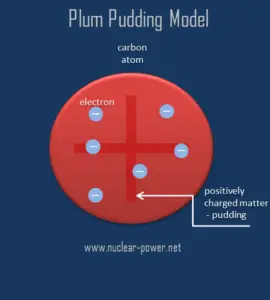
But the original idea was different. The original model of an atom, based on the discovery of the electron, was proposed by J. J. Thomson in 1904 and is known as the Plum pudding model or the Thomson model of the atom. It must be noted, this model was proposed before the discovery of the atomic nucleus.

The Plum pudding model represented an attempt to consolidate the known properties of atoms at the time:

1) Electrons are negatively-charged particles

2) Atoms are neutrally-charged.

According to this model, an atom consist of a sphere of positive matter within which electrostatic forces determined the positioning of the negatively charged corpuscles. This fact explains the overall neutral charge of the atom, Thomson proposed that the corpuscles were distributed in a uniform sea of positive charge, in which they are scattered like “the plums in a pudding”.

References:
Nuclear and Reactor Physics:
  1. J. R. Lamarsh, Introduction to Nuclear Reactor Theory, 2nd ed., Addison-Wesley, Reading, MA (1983).
  2. J. R. Lamarsh, A. J. Baratta, Introduction to Nuclear Engineering, 3d ed., Prentice-Hall, 2001, ISBN: 0-201-82498-1.
  3. W. M. Stacey, Nuclear Reactor Physics, John Wiley & Sons, 2001, ISBN: 0- 471-39127-1.
  4. Glasstone, Sesonske. Nuclear Reactor Engineering: Reactor Systems Engineering, Springer; 4th edition, 1994, ISBN: 978-0412985317
  5. W.S.C. Williams. Nuclear and Particle Physics. Clarendon Press; 1 edition, 1991, ISBN: 978-0198520467
  6. G.R.Keepin. Physics of Nuclear Kinetics. Addison-Wesley Pub. Co; 1st edition, 1965
  7. Robert Reed Burn, Introduction to Nuclear Reactor Operation, 1988.
  8. U.S. Department of Energy, Nuclear Physics and Reactor Theory. DOE Fundamentals Handbook, Volume 1 and 2. January 1993.
  9. Paul Reuss, Neutron Physics. EDP Sciences, 2008. ISBN: 978-2759800414.

Advanced Reactor Physics:

  1. K. O. Ott, W. A. Bezella, Introductory Nuclear Reactor Statics, American Nuclear Society, Revised edition (1989), 1989, ISBN: 0-894-48033-2.
  2. K. O. Ott, R. J. Neuhold, Introductory Nuclear Reactor Dynamics, American Nuclear Society, 1985, ISBN: 0-894-48029-4.
  3. D. L. Hetrick, Dynamics of Nuclear Reactors, American Nuclear Society, 1993, ISBN: 0-894-48453-2.
  4. E. E. Lewis, W. F. Miller, Computational Methods of Neutron Transport, American Nuclear Society, 1993, ISBN: 0-894-48452-4.

See also:

Atomic Theory

We hope, this article, Discovery of Electron, helps you. If so, give us a like in the sidebar. Main purpose of this website is to help the public to learn some interesting and important information about materials and their properties.

What is Thomson Model of the Atom – Plum Pudding Model – Definition

The original model of an atom, based on the discovery of the electron, was proposed by J. J. Thomson in 1904 and is known as the Plum pudding model or the Thomson model of the atom. Material Properties

Thomson Model of the Atom – Plum Pudding Model

For almost 100 years (from Dalton’s A New System of Chemical Philosophy) atoms were thought to be the smallest possible division of matter. All of the results of chemical experiments during this time indicated that the atom was indivisible. Eventually, experimentation into electricity and radioactivity indicated that particles of matter smaller than the atom did indeed exist.

In 1897, an English physicist J.J. Thomson showed that cathode rays were composed of previously unknown negatively charged particles, which he calculated must have bodies much smaller than atoms and a very large value for their charge-to-mass ratio. He showed that these charged particles could be obtained from just about any material. For example, by the action of ultra-violet light on metals, by heating metal wires or by the ionising action of X-rays. Thomson originally called these particles “corpuscles,” and the name electron was proposed for these particles by the Irish physicist George Johnstone Stoney. It was evident that electrons are a component of all neutral atoms, the counterbalancing positive charge being carried by one or more of their other constituent parts. Thomson thus concluded that atoms are divisible, and that the corpuscles are their building blocks.

In 1906, J. J. Thompson won the Nobel Prize in physics for establishing the existence of electrons. According to current state of knowledge, the electrons are negatively charged (-1e), almost massless particles that nevertheless account for most of the size of the atom. Their rest mass equal to 9.109 × 10⁻³¹ kg (510.998 keV/c2) (approximately 1/1836 that of the proton). Electrons are located in an electron cloud, which is the area surrounding the nucleus of the atom.

But the original idea was different. The original model of an atom, based on the discovery of the electron, was proposed by J. J. Thomson in 1904 and is known as the Plum pudding model or the Thomson model of the atom. It must be noted, this model was proposed before the discovery of the atomic nucleus.

Plum pudding model - ThomsonThe Plum pudding model represented an attempt to consolidate the known properties of atoms at the time:

1) Electrons are negatively-charged particles

2) Atoms are neutrally-charged.

According to this model, an atom consist of a sphere of positive matter within which electrostatic forces determined the positioning of the negatively charged corpuscles. This fact explains the overall neutral charge of the atom, Thomson proposed that the corpuscles were distributed in a uniform sea of positive charge, in which they are scattered like “the plums in a pudding”.

The plum pudding model usefully inspired his student, Ernest Rutherford, to further explore the composition of atoms. As well, the Thomson model of the atom were useful predecessors of the more correct Rutherford model of the atom and especially the solar-system-like Bohr model of the atom. There were several problems, that could not be explained by this model. The most important experiments, which lead to the need to formulate another model, was the Geiger-Marsden Experiments (also called the Rutherford gold foil experiment).

References:
Nuclear and Reactor Physics:
  1. J. R. Lamarsh, Introduction to Nuclear Reactor Theory, 2nd ed., Addison-Wesley, Reading, MA (1983).
  2. J. R. Lamarsh, A. J. Baratta, Introduction to Nuclear Engineering, 3d ed., Prentice-Hall, 2001, ISBN: 0-201-82498-1.
  3. W. M. Stacey, Nuclear Reactor Physics, John Wiley & Sons, 2001, ISBN: 0- 471-39127-1.
  4. Glasstone, Sesonske. Nuclear Reactor Engineering: Reactor Systems Engineering, Springer; 4th edition, 1994, ISBN: 978-0412985317
  5. W.S.C. Williams. Nuclear and Particle Physics. Clarendon Press; 1 edition, 1991, ISBN: 978-0198520467
  6. G.R.Keepin. Physics of Nuclear Kinetics. Addison-Wesley Pub. Co; 1st edition, 1965
  7. Robert Reed Burn, Introduction to Nuclear Reactor Operation, 1988.
  8. U.S. Department of Energy, Nuclear Physics and Reactor Theory. DOE Fundamentals Handbook, Volume 1 and 2. January 1993.
  9. Paul Reuss, Neutron Physics. EDP Sciences, 2008. ISBN: 978-2759800414.

Advanced Reactor Physics:

  1. K. O. Ott, W. A. Bezella, Introductory Nuclear Reactor Statics, American Nuclear Society, Revised edition (1989), 1989, ISBN: 0-894-48033-2.
  2. K. O. Ott, R. J. Neuhold, Introductory Nuclear Reactor Dynamics, American Nuclear Society, 1985, ISBN: 0-894-48029-4.
  3. D. L. Hetrick, Dynamics of Nuclear Reactors, American Nuclear Society, 1993, ISBN: 0-894-48453-2.
  4. E. E. Lewis, W. F. Miller, Computational Methods of Neutron Transport, American Nuclear Society, 1993, ISBN: 0-894-48452-4.

See also:

Atomic Theory

We hope, this article, Thomson Model of the Atom – Plum Pudding Model, helps you. If so, give us a like in the sidebar. Main purpose of this website is to help the public to learn some interesting and important information about materials and their properties.

What is Dalton’s Theory – Definition

In 1803 John Dalton published the first comprehensive atomic theory in A New System of Chemical Philosophy. He proposed that the elements are comprised of indestructible atoms. Material Properties

Dalton’s Theory

Near the end of the 18th century, two laws about chemical reactions emerged without referring to the notion of an atomic theory.

  • Law of Conservation of Matter. Historically, already the ancient Greeks proposed the idea that the total amount of matter in the universe is constant. The principle of conservation of mass was first outlined by Mikhail Lomonosov in 1748. However, the law of conservation of matter (or the principle of mass/matter conservation) as a fundamental principle of physics was discovered in by Antoine Lavoisier in the late 18th century. It was of great importance in progressing from alchemy to modern chemistry.
  • Law of Definite Proportions. This law (proven by the French chemist Joseph Louis Proust) states that a given chemical compound always contains its component elements in fixed ratio, regardless of the quantity or source of the original substance. John Dalton studied and expanded upon this previous work and developed the law of multiple proportions.

In the early 19th century atomic theory entered the scientific mainstream when discoveries in the field of chemistry showed that matter did indeed behave as if it were made up of atoms. The modern proof for the atomic nature of matter was first proposed by the English chemist John Dalton. His theory shows that the early Greeks held the correct concept that matter consists of a combination of basic elements.

In 1803 John Dalton published the first comprehensive atomic theory in A New System of Chemical Philosophy. He proposed that the elements are comprised of indestructible atoms, each chemical element possesses a particular kind of atom and all the atoms of a particular element being identical. These atoms can combine to form more complex structures (chemical compounds or molecules).

References:
Nuclear and Reactor Physics:
  1. J. R. Lamarsh, Introduction to Nuclear Reactor Theory, 2nd ed., Addison-Wesley, Reading, MA (1983).
  2. J. R. Lamarsh, A. J. Baratta, Introduction to Nuclear Engineering, 3d ed., Prentice-Hall, 2001, ISBN: 0-201-82498-1.
  3. W. M. Stacey, Nuclear Reactor Physics, John Wiley & Sons, 2001, ISBN: 0- 471-39127-1.
  4. Glasstone, Sesonske. Nuclear Reactor Engineering: Reactor Systems Engineering, Springer; 4th edition, 1994, ISBN: 978-0412985317
  5. W.S.C. Williams. Nuclear and Particle Physics. Clarendon Press; 1 edition, 1991, ISBN: 978-0198520467
  6. G.R.Keepin. Physics of Nuclear Kinetics. Addison-Wesley Pub. Co; 1st edition, 1965
  7. Robert Reed Burn, Introduction to Nuclear Reactor Operation, 1988.
  8. U.S. Department of Energy, Nuclear Physics and Reactor Theory. DOE Fundamentals Handbook, Volume 1 and 2. January 1993.
  9. Paul Reuss, Neutron Physics. EDP Sciences, 2008. ISBN: 978-2759800414.

Advanced Reactor Physics:

  1. K. O. Ott, W. A. Bezella, Introductory Nuclear Reactor Statics, American Nuclear Society, Revised edition (1989), 1989, ISBN: 0-894-48033-2.
  2. K. O. Ott, R. J. Neuhold, Introductory Nuclear Reactor Dynamics, American Nuclear Society, 1985, ISBN: 0-894-48029-4.
  3. D. L. Hetrick, Dynamics of Nuclear Reactors, American Nuclear Society, 1993, ISBN: 0-894-48453-2.
  4. E. E. Lewis, W. F. Miller, Computational Methods of Neutron Transport, American Nuclear Society, 1993, ISBN: 0-894-48452-4.

See also:

Atomic Theory

We hope, this article, Dalton’s Theory, helps you. If so, give us a like in the sidebar. Main purpose of this website is to help the public to learn some interesting and important information about materials and their properties.

What is Atomism – Atomos – Philosophy – Definition

Atomic theory began as a philosophical concept in ancient Greece and India. It must be added, atomism was one of a number of competing theories on the nature of matter. comes from the Ancient Greek adjective atomos, meaning “indivisible“. Material Properties

Atomism

Atomic TheoryAtomic theory began as a philosophical concept in ancient Greece and India. It must be added, atomism was one of a number of competing theories on the nature of matter.  These ancient philosophers speculated that the earth was made up of different combinations of basic substances, or elements.

The word “atom” was coined by the ancient Greek philosophers Leucippus, Epicurus and Democritus. They supposed that the properties of materials were determined by the different shapes and forms of their atoms. This word comes from the Ancient Greek adjective atomos, meaning “indivisible“.

Other ancient Greek philosophers (Empedocles, Heraclitus and Aristotle) considered these basic elements to be earth, air, water, and fire. According to their philosophy, lead differs from gold only in the proportions of the these four elements it contains and so the problem of converting lead into gold is just a matter of correctly blending the right combination of elements. Unlike the atomism of Democritus and Epicurus, the Aristotelian “natural minimum” was not conceptualized as physically indivisible.

Modem ideas about the structure of matter originated in the 17th century. In 1661 the English chemist Robert Boyle laid down the modern criterion of an element published the modern criterion for an element:

“a basic substance that cannot be broken down into any simpler substance after it is isolated from a compound, but can be combined with other elements to form compounds”

To date, 105 different elements have been confirmed to exist. Of the 105 confirmed elements, 90 exist in nature and 15 are man-made.

References:
Nuclear and Reactor Physics:
  1. J. R. Lamarsh, Introduction to Nuclear Reactor Theory, 2nd ed., Addison-Wesley, Reading, MA (1983).
  2. J. R. Lamarsh, A. J. Baratta, Introduction to Nuclear Engineering, 3d ed., Prentice-Hall, 2001, ISBN: 0-201-82498-1.
  3. W. M. Stacey, Nuclear Reactor Physics, John Wiley & Sons, 2001, ISBN: 0- 471-39127-1.
  4. Glasstone, Sesonske. Nuclear Reactor Engineering: Reactor Systems Engineering, Springer; 4th edition, 1994, ISBN: 978-0412985317
  5. W.S.C. Williams. Nuclear and Particle Physics. Clarendon Press; 1 edition, 1991, ISBN: 978-0198520467
  6. G.R.Keepin. Physics of Nuclear Kinetics. Addison-Wesley Pub. Co; 1st edition, 1965
  7. Robert Reed Burn, Introduction to Nuclear Reactor Operation, 1988.
  8. U.S. Department of Energy, Nuclear Physics and Reactor Theory. DOE Fundamentals Handbook, Volume 1 and 2. January 1993.
  9. Paul Reuss, Neutron Physics. EDP Sciences, 2008. ISBN: 978-2759800414.

Advanced Reactor Physics:

  1. K. O. Ott, W. A. Bezella, Introductory Nuclear Reactor Statics, American Nuclear Society, Revised edition (1989), 1989, ISBN: 0-894-48033-2.
  2. K. O. Ott, R. J. Neuhold, Introductory Nuclear Reactor Dynamics, American Nuclear Society, 1985, ISBN: 0-894-48029-4.
  3. D. L. Hetrick, Dynamics of Nuclear Reactors, American Nuclear Society, 1993, ISBN: 0-894-48453-2.
  4. E. E. Lewis, W. F. Miller, Computational Methods of Neutron Transport, American Nuclear Society, 1993, ISBN: 0-894-48452-4.

See also:

Atomic Theory

We hope, this article, Atomism – Atomos – Philosophy, helps you. If so, give us a like in the sidebar. Main purpose of this website is to help the public to learn some interesting and important information about materials and their properties.