Facebook Instagram Youtube Twitter

Hastelloy – Material Table – Applications – Price

About Hastelloy

Hastelloy is a nickel-molybdenum-chromium wrought superalloy that is generally considered a versatile corrosion-resistant alloy. This alloy resists the formation of grain-boundary precipitates in the weld heat affected zone, thus making it suitable for most chemical process applications in the as-welded condition. Super alloys have good oxidation and creep resistance and can be strengthened by precipitation hardening, solid-solution hardening and work hardening methods. They can also function under high mechanical stress and high temperatures and also in places that require high surface stability.

hastelloy properties density strength price

Summary

Name Hastelloy
Phase at STP solid
Density 8890 kg/m3
Ultimate Tensile Strength 600 MPa
Yield Strength 300 MPa
Young’s Modulus of Elasticity 205 GPa
Brinell Hardness 180 BHN
Melting Point 1327 °C
Thermal Conductivity 10.2 W/mK
Heat Capacity 420 J/g K
Price 50 $/kg

Composition of Hastelloy

Hastelloy is a nickel-molybdenum-chromium wrought superalloy.

57%Nickel in Periodic Table
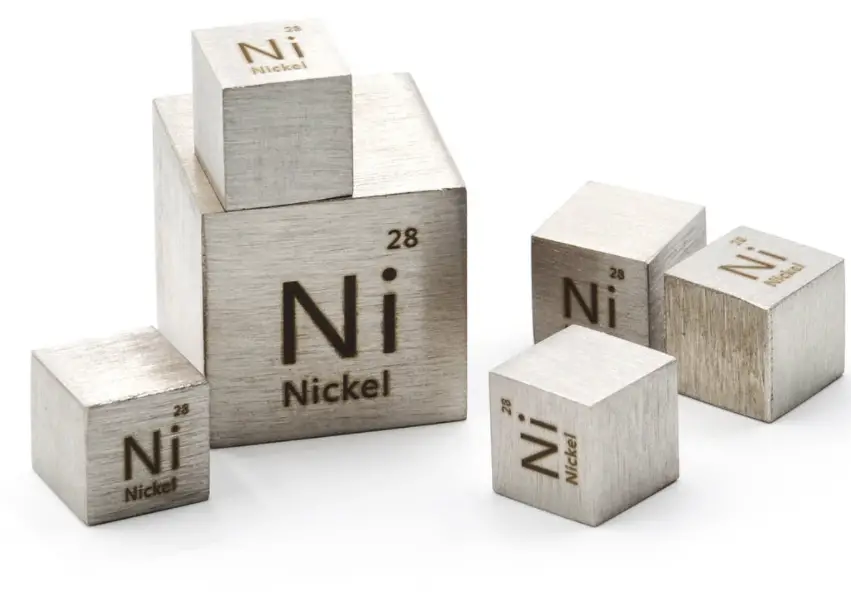
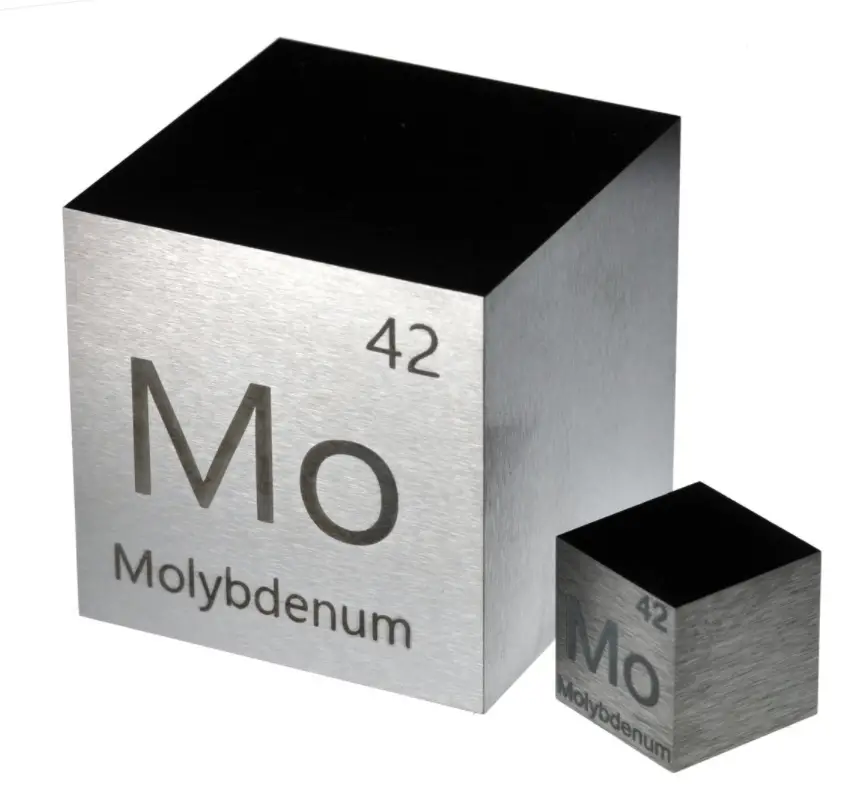
16%Molybdenum in Periodic Table

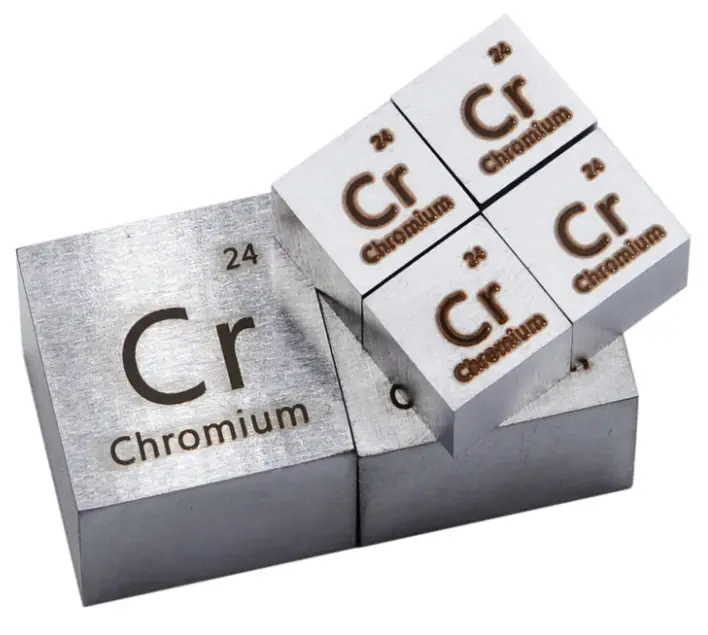
15%Chromium in Periodic Table

Applications of Hastelloy

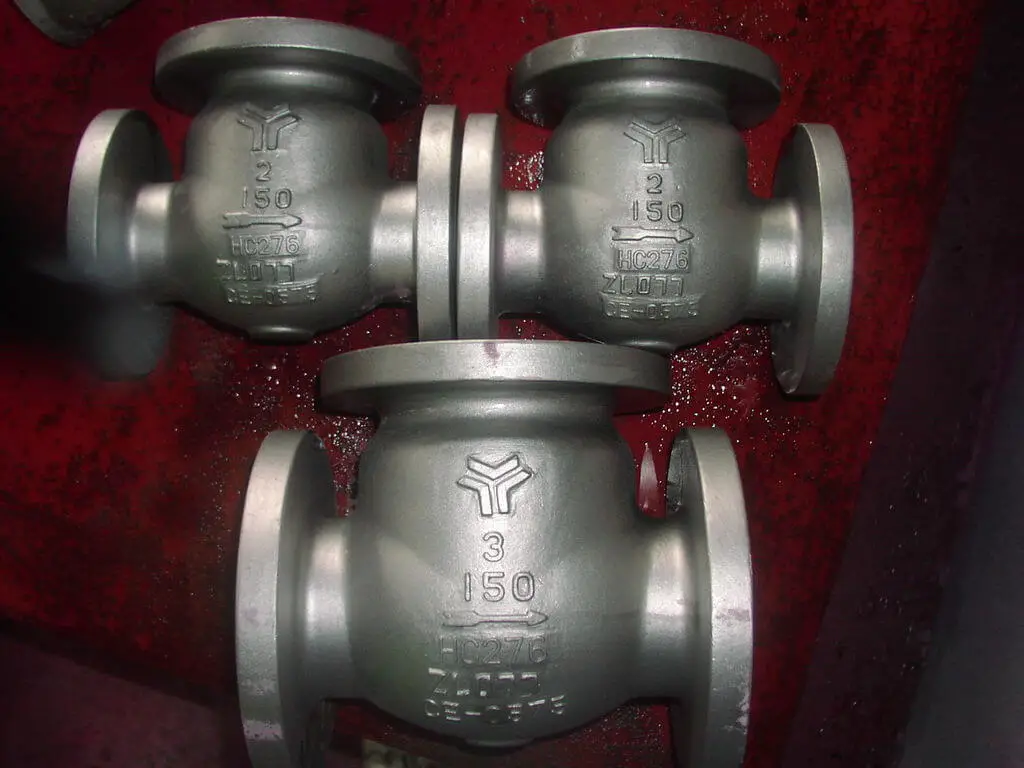
Hastelloy - Material Table - Applications - Price
Source: wikipedia.org License: CC-BY SA 3.0

Hastelloy is widely used is used for desulphurization of flue gas equipment and for chemical process equipment.

Mechanical Properties of Hastelloy

Strength of Hastelloy

In mechanics of materials, the strength of a material is its ability to withstand an applied load without failure or plastic deformation. Strength of materials basically considers the relationship between the external loads applied to a material and the resulting deformation or change in material dimensions. In designing structures and machines, it is important to consider these factors, in order that the material selected will have adequate strength to resist applied loads or forces and retain its original shape.

Strength of a material is its ability to withstand this applied load without failure or plastic deformation. For tensile stress, the capacity of a material or structure to withstand loads tending to elongate is known as ultimate tensile strength (UTS). Yield strength or yield stress is the material property defined as the stress at which a material begins to deform plastically whereas yield point is the point where nonlinear (elastic + plastic) deformation begins. In case of tensional stress of a uniform bar (stress-strain curve), the Hooke’s law describes behaviour of a bar in the elastic region. The Young’s modulus of elasticity is the elastic modulus for tensile and compressive stress in the linear elasticity regime of a uniaxial deformation and is usually assessed by tensile tests.

See also: Strength of Materials

Ultimate Tensile Strength of Hastelloy

Ultimate tensile strength of Hastelloy is 600 MPa.

Yield Strength of Hastelloy

Yield strength of Hastelloy is 300 MPa.

Modulus of Elasticity of Hastelloy

The Young’s modulus of elasticity of Hastelloy is 205 GPa.

Hardness of Hastelloy

In materials science, hardness is the ability to withstand surface indentation (localized plastic deformation) and scratching. Brinell hardness test is one of indentation hardness tests, that has been developed for hardness testing. In Brinell tests, a hard, spherical indenter is forced under a specific load into the surface of the metal to be tested.

The Brinell hardness number (HB) is the load divided by the surface area of the indentation. The diameter of the impression is measured with a microscope with a superimposed scale. The Brinell hardness number is computed from the equation:
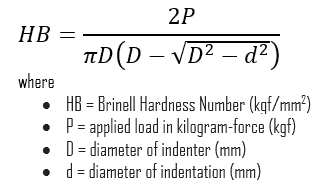
brinell hardness number - definition

Brinell hardness of Hastelloy is approximately 180 BHN (converted).

See also: Hardness of Materials

Strength of Materials

Material Table - Strength of Materials

Elasticity of Materials

Material Table - Elasticity of Materials

Hardness of Materials

Material Table - Hardness of Materials  

Thermal Properties of Hastelloy

Hastelloy – Melting Point

Melting point of Hastelloy is 1327 °C.

Note that, these points are associated with the standard atmospheric pressure. In general, melting is a phase change of a substance from the solid to the liquid phase. The melting point of a substance is the temperature at which this phase change occurs. The melting point also defines a condition in which the solid and liquid can exist in equilibrium. For various chemical compounds and alloys, it is difficult to define the melting point, since they are usually a mixture of various chemical elements.

Hastelloy – Thermal Conductivity

Thermal conductivity of Hastelloy is 10.2 W/(m·K).

The heat transfer characteristics of a solid material are measured by a property called the thermal conductivity, k (or λ), measured in W/m.K. It is a measure of a substance’s ability to transfer heat through a material by conduction. Note that Fourier’s law applies for all matter, regardless of its state (solid, liquid, or gas), therefore, it is also defined for liquids and gases.

The thermal conductivity of most liquids and solids varies with temperature. For vapors, it also depends upon pressure. In general:
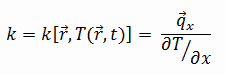
thermal conductivity - definition

Most materials are very nearly homogeneous, therefore we can usually write k = k (T). Similar definitions are associated with thermal conductivities in the y- and z-directions (ky, kz), but for an isotropic material the thermal conductivity is independent of the direction of transfer, kx = ky = kz = k.

Hastelloy – Specific Heat

Specific heat of Hastelloy is 420 J/g K.

Specific heat, or specific heat capacity, is a property related to internal energy that is very important in thermodynamics. The intensive properties cv and cp are defined for pure, simple compressible substances as partial derivatives of the internal energy u(T, v) and enthalpy h(T, p), respectively:
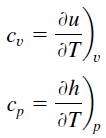
where the subscripts v and p denote the variables held fixed during differentiation. The properties cv and cp are referred to as specific heats (or heat capacities) because under certain special conditions they relate the temperature change of a system to the amount of energy added by heat transfer. Their SI units are J/kg K or J/mol K.

Melting Point of Materials

Material Table - Melting Point

Thermal Conductivity of Materials

Material Table - Thermal Conductivity

Heat Capacity of Materials

Material Table - Heat Capacity

Properties and prices of other materials

material-table-in-8k-resolution

Mo-25 Re Alloy – Material Table – Applications – Price

About Mo-25 Re Alloy

Molybdenum and rhenium are both refractory metals. These metals are well known for their extraordinary resistance to heat and wear. Key requirement to withstand high temperatures is a high melting point and stable mechanical properties (e.g. high hardness) even at high temperatures. These metals are usually combined together to obtain desired fabricability, thermal and mechanical properties. The molybdenum-rhenium alloys exhibiting good low-temperature ductility. The Mo-35Re alloy also has a low ductile-to-brittle transition temperature in the as-cast condition. The alloy is extremely difficult to fracture by hammering as-cast material at temperatures down to -196°C.

mo 25 re alloy properties density strength price

Summary

Name Mo-25 Re Alloy
Phase at STP solid
Density 11200 kg/m3
Ultimate Tensile Strength 1100 MPa
Yield Strength N/A
Young’s Modulus of Elasticity 360 GPa
Brinell Hardness 350 BHN
Melting Point 2527 °C
Thermal Conductivity 70 W/mK
Heat Capacity 220 J/g K
Price 3000 $/kg

Composition of Mo-25 Re Alloy

Molybdenum-rhenium alloys containing up to 40% rhenium are predominantly single-phase body-centered cubic solid-solution alloys.

75%Molybdenum in Periodic Table

25%Rhenium in Periodic Table

Applications of Mo-25 Re Alloy

Rhenium is considered highly desirable as an alloying addition with other refractory metals. Molybdenum-rhenium alloys offer high temperature strength; the combination drastically increases ductility and tensile strength. Rhenium is gaining acceptance in nuclear reactors, rockets, and other commercial and aerospace applications.

Mechanical Properties of Mo-25 Re Alloy

Strength of Mo-25 Re Alloy

In mechanics of materials, the strength of a material is its ability to withstand an applied load without failure or plastic deformation. Strength of materials basically considers the relationship between the external loads applied to a material and the resulting deformation or change in material dimensions. In designing structures and machines, it is important to consider these factors, in order that the material selected will have adequate strength to resist applied loads or forces and retain its original shape.

Strength of a material is its ability to withstand this applied load without failure or plastic deformation. For tensile stress, the capacity of a material or structure to withstand loads tending to elongate is known as ultimate tensile strength (UTS). Yield strength or yield stress is the material property defined as the stress at which a material begins to deform plastically whereas yield point is the point where nonlinear (elastic + plastic) deformation begins. In case of tensional stress of a uniform bar (stress-strain curve), the Hooke’s law describes behaviour of a bar in the elastic region. The Young’s modulus of elasticity is the elastic modulus for tensile and compressive stress in the linear elasticity regime of a uniaxial deformation and is usually assessed by tensile tests.

See also: Strength of Materials

Ultimate Tensile Strength of Mo-25 Re Alloy

Ultimate tensile strength of Mo-25 Re Alloy is 1100 MPa.

Yield Strength of Mo-25 Re Alloy

Yield strength of Mo-25 Re Alloy is N/A.

Modulus of Elasticity of Mo-25 Re Alloy

The Young’s modulus of elasticity of Mo-25 Re Alloy is 360 GPa.

Hardness of Mo-25 Re Alloy

In materials science, hardness is the ability to withstand surface indentation (localized plastic deformation) and scratching. Brinell hardness test is one of indentation hardness tests, that has been developed for hardness testing. In Brinell tests, a hard, spherical indenter is forced under a specific load into the surface of the metal to be tested.

The Brinell hardness number (HB) is the load divided by the surface area of the indentation. The diameter of the impression is measured with a microscope with a superimposed scale. The Brinell hardness number is computed from the equation:

brinell hardness number - definition

Brinell hardness of Mo-25 Re Alloy is approximately 350 BHN (converted).

See also: Hardness of Materials

Strength of Materials

Material Table - Strength of Materials

Elasticity of Materials

Material Table - Elasticity of Materials

Hardness of Materials

Material Table - Hardness of Materials  

Thermal Properties of Mo-25 Re Alloy

Mo-25 Re Alloy – Melting Point

Melting point of Mo-25 Re Alloy is 2527 °C.

Note that, these points are associated with the standard atmospheric pressure. In general, melting is a phase change of a substance from the solid to the liquid phase. The melting point of a substance is the temperature at which this phase change occurs. The melting point also defines a condition in which the solid and liquid can exist in equilibrium. For various chemical compounds and alloys, it is difficult to define the melting point, since they are usually a mixture of various chemical elements.

Mo-25 Re Alloy – Thermal Conductivity

Thermal conductivity of Mo-25 Re Alloy is 70 W/(m·K).

The heat transfer characteristics of a solid material are measured by a property called the thermal conductivity, k (or λ), measured in W/m.K. It is a measure of a substance’s ability to transfer heat through a material by conduction. Note that Fourier’s law applies for all matter, regardless of its state (solid, liquid, or gas), therefore, it is also defined for liquids and gases.

The thermal conductivity of most liquids and solids varies with temperature. For vapors, it also depends upon pressure. In general:

thermal conductivity - definition

Most materials are very nearly homogeneous, therefore we can usually write k = k (T). Similar definitions are associated with thermal conductivities in the y- and z-directions (ky, kz), but for an isotropic material the thermal conductivity is independent of the direction of transfer, kx = ky = kz = k.

Mo-25 Re Alloy – Specific Heat

Specific heat of Mo-25 Re Alloy is 220 J/g K.

Specific heat, or specific heat capacity, is a property related to internal energy that is very important in thermodynamics. The intensive properties cv and cp are defined for pure, simple compressible substances as partial derivatives of the internal energy u(T, v) and enthalpy h(T, p), respectively:

where the subscripts v and p denote the variables held fixed during differentiation. The properties cv and cp are referred to as specific heats (or heat capacities) because under certain special conditions they relate the temperature change of a system to the amount of energy added by heat transfer. Their SI units are J/kg K or J/mol K.

Melting Point of Materials

Material Table - Melting Point

Thermal Conductivity of Materials

Material Table - Thermal Conductivity

Heat Capacity of Materials

Material Table - Heat Capacity

Properties and prices of other materials

material-table-in-8k-resolution

Granite – Material Table – Applications – Price

About Granite

Granite is a coarse-grained igneous rock composed mostly of quartz, alkali feldspar, and plagioclase.

granite properties density strength price

Summary

Name Granite
Phase at STP solid
Density 2750 kg/m3
Ultimate Tensile Strength 4.8 MPa
Yield Strength N/A
Young’s Modulus of Elasticity N/A
Brinell Hardness 6 Mohs
Melting Point 1260 °C
Thermal Conductivity 3.2 W/mK
Heat Capacity 790 J/g K
Price 0.04 $/kg

Composition of Granite

Most granites have a composition such that almost all their aluminum and alkali metals (sodium and potassium) are combined as feldspar.

35%Silicon in Periodic Table

8%Aluminium in Periodic Table

53%Oxygen in Periodic Table

Applications of Granite

Granite - Material Table - Applications - Price
Source: wikipedia.org License: CC-BY SA 3.0

Granite has been extensively used as a dimension stone and as flooring tiles in public and commercial buildings and monuments.

Mechanical Properties of Granite

Strength of Granite

In mechanics of materials, the strength of a material is its ability to withstand an applied load without failure or plastic deformation. Strength of materials basically considers the relationship between the external loads applied to a material and the resulting deformation or change in material dimensions. In designing structures and machines, it is important to consider these factors, in order that the material selected will have adequate strength to resist applied loads or forces and retain its original shape.

Strength of a material is its ability to withstand this applied load without failure or plastic deformation. For tensile stress, the capacity of a material or structure to withstand loads tending to elongate is known as ultimate tensile strength (UTS). Yield strength or yield stress is the material property defined as the stress at which a material begins to deform plastically whereas yield point is the point where nonlinear (elastic + plastic) deformation begins. In case of tensional stress of a uniform bar (stress-strain curve), the Hooke’s law describes behaviour of a bar in the elastic region. The Young’s modulus of elasticity is the elastic modulus for tensile and compressive stress in the linear elasticity regime of a uniaxial deformation and is usually assessed by tensile tests.

See also: Strength of Materials

Ultimate Tensile Strength of Granite

Ultimate tensile strength of Granite is 4.8 MPa.

Yield Strength of Granite

Yield strength of Granite is N/A.

Modulus of Elasticity of Granite

The Young’s modulus of elasticity of Granite is N/A.

Hardness of Granite

In materials science, hardness is the ability to withstand surface indentation (localized plastic deformation) and scratching. Brinell hardness test is one of indentation hardness tests, that has been developed for hardness testing. In Brinell tests, a hard, spherical indenter is forced under a specific load into the surface of the metal to be tested.

The Brinell hardness number (HB) is the load divided by the surface area of the indentation. The diameter of the impression is measured with a microscope with a superimposed scale. The Brinell hardness number is computed from the equation:

brinell hardness number - definition

Hardness of Granite is approximately 6 Mohs.

See also: Hardness of Materials

Strength of Materials

Material Table - Strength of Materials

Elasticity of Materials

Material Table - Elasticity of Materials

Hardness of Materials

Material Table - Hardness of Materials  

Thermal Properties of Granite

Granite – Melting Point

Melting point of Granite is 1260 °C.

Note that, these points are associated with the standard atmospheric pressure. In general, melting is a phase change of a substance from the solid to the liquid phase. The melting point of a substance is the temperature at which this phase change occurs. The melting point also defines a condition in which the solid and liquid can exist in equilibrium. For various chemical compounds and alloys, it is difficult to define the melting point, since they are usually a mixture of various chemical elements.

Granite – Thermal Conductivity

Thermal conductivity of Granite is 3.2 W/(m·K).

The heat transfer characteristics of a solid material are measured by a property called the thermal conductivity, k (or λ), measured in W/m.K. It is a measure of a substance’s ability to transfer heat through a material by conduction. Note that Fourier’s law applies for all matter, regardless of its state (solid, liquid, or gas), therefore, it is also defined for liquids and gases.

The thermal conductivity of most liquids and solids varies with temperature. For vapors, it also depends upon pressure. In general:

thermal conductivity - definition

Most materials are very nearly homogeneous, therefore we can usually write k = k (T). Similar definitions are associated with thermal conductivities in the y- and z-directions (ky, kz), but for an isotropic material the thermal conductivity is independent of the direction of transfer, kx = ky = kz = k.

Granite – Specific Heat

Specific heat of Granite is 790 J/g K.

Specific heat, or specific heat capacity, is a property related to internal energy that is very important in thermodynamics. The intensive properties cv and cp are defined for pure, simple compressible substances as partial derivatives of the internal energy u(T, v) and enthalpy h(T, p), respectively:

where the subscripts v and p denote the variables held fixed during differentiation. The properties cv and cp are referred to as specific heats (or heat capacities) because under certain special conditions they relate the temperature change of a system to the amount of energy added by heat transfer. Their SI units are J/kg K or J/mol K.

Melting Point of Materials

Material Table - Melting Point

Thermal Conductivity of Materials

Material Table - Thermal Conductivity

Heat Capacity of Materials

Material Table - Heat Capacity

Properties and prices of other materials

material-table-in-8k-resolution

Concrete – Material Table – Applications – Price

About Concrete

Concrete is a composite material made from sand, gravel and cement. The cement is a binder, a substance used for construction that sets, hardens, and adheres to other materials to bind them together. Portland cement is the most common type of cement in general use around the world. Most concrete is poured with reinforcing materials (such as rebar) embedded to provide tensile strength, yielding reinforced concrete.

concrete properties density strength price

Summary

Name Concrete
Phase at STP solid
Density 2400 kg/m3
Ultimate Tensile Strength 2 MPa
Yield Strength N/A
Young’s Modulus of Elasticity 60 GPa
Brinell Hardness 6 Mohs
Melting Point 1527 °C
Thermal Conductivity 0.5 W/mK
Heat Capacity 1050 J/g K
Price 0.07 $/kg

Composition of Concrete

Portland cement clinker is a hydraulic material which shall consist of at least two-thirds by mass of calcium silicates, (3 CaO·SiO2, and 2 CaO·SiO2), the remainder consisting of aluminium- and iron-containing clinker phases and other compounds. The ratio of CaO to SiO2 shall not be less than 2.0. The magnesium oxide content (MgO) shall not exceed 5.0% by mass.

30%Silicon in Periodic Table

25%Calcium in Periodic Table

45%Oxygen in Periodic Table

Applications of Concrete

Concrete - Material Table - Applications - Price
Source: wikipedia.org License: CC-BY SA 3.0

Concrete is one of the most frequently used building materials. Its usage worldwide, ton for ton, is twice that of steel, wood, plastics, and aluminum combined.

Mechanical Properties of Concrete

Strength of Concrete

In mechanics of materials, the strength of a material is its ability to withstand an applied load without failure or plastic deformation. Strength of materials basically considers the relationship between the external loads applied to a material and the resulting deformation or change in material dimensions. In designing structures and machines, it is important to consider these factors, in order that the material selected will have adequate strength to resist applied loads or forces and retain its original shape.

Strength of a material is its ability to withstand this applied load without failure or plastic deformation. For tensile stress, the capacity of a material or structure to withstand loads tending to elongate is known as ultimate tensile strength (UTS). Yield strength or yield stress is the material property defined as the stress at which a material begins to deform plastically whereas yield point is the point where nonlinear (elastic + plastic) deformation begins. In case of tensional stress of a uniform bar (stress-strain curve), the Hooke’s law describes behaviour of a bar in the elastic region. The Young’s modulus of elasticity is the elastic modulus for tensile and compressive stress in the linear elasticity regime of a uniaxial deformation and is usually assessed by tensile tests.

See also: Strength of Materials

Ultimate Tensile Strength of Concrete

Ultimate tensile strength of Concrete is 2 MPa.

Yield Strength of Concrete

Yield strength of Concrete is N/A.

Modulus of Elasticity of Concrete

The Young’s modulus of elasticity of Concrete is 60 GPa.

Hardness of Concrete

In materials science, hardness is the ability to withstand surface indentation (localized plastic deformation) and scratching. Brinell hardness test is one of indentation hardness tests, that has been developed for hardness testing. In Brinell tests, a hard, spherical indenter is forced under a specific load into the surface of the metal to be tested.

The Brinell hardness number (HB) is the load divided by the surface area of the indentation. The diameter of the impression is measured with a microscope with a superimposed scale. The Brinell hardness number is computed from the equation:

brinell hardness number - definition

Hardness of Concrete is approximately 6 Mohs.

See also: Hardness of Materials

Strength of Materials

Material Table - Strength of Materials

Elasticity of Materials

Material Table - Elasticity of Materials

Hardness of Materials

Material Table - Hardness of Materials  

Thermal Properties of Concrete

Concrete – Melting Point

Melting point of Concrete is 1527 °C.

Note that, these points are associated with the standard atmospheric pressure. In general, melting is a phase change of a substance from the solid to the liquid phase. The melting point of a substance is the temperature at which this phase change occurs. The melting point also defines a condition in which the solid and liquid can exist in equilibrium. For various chemical compounds and alloys, it is difficult to define the melting point, since they are usually a mixture of various chemical elements.

Concrete – Thermal Conductivity

Thermal conductivity of Concrete is 0.5 W/(m·K).

The heat transfer characteristics of a solid material are measured by a property called the thermal conductivity, k (or λ), measured in W/m.K. It is a measure of a substance’s ability to transfer heat through a material by conduction. Note that Fourier’s law applies for all matter, regardless of its state (solid, liquid, or gas), therefore, it is also defined for liquids and gases.

The thermal conductivity of most liquids and solids varies with temperature. For vapors, it also depends upon pressure. In general:

thermal conductivity - definition

Most materials are very nearly homogeneous, therefore we can usually write k = k (T). Similar definitions are associated with thermal conductivities in the y- and z-directions (ky, kz), but for an isotropic material the thermal conductivity is independent of the direction of transfer, kx = ky = kz = k.

Concrete – Specific Heat

Specific heat of Concrete is 1050 J/g K.

Specific heat, or specific heat capacity, is a property related to internal energy that is very important in thermodynamics. The intensive properties cv and cp are defined for pure, simple compressible substances as partial derivatives of the internal energy u(T, v) and enthalpy h(T, p), respectively:

where the subscripts v and p denote the variables held fixed during differentiation. The properties cv and cp are referred to as specific heats (or heat capacities) because under certain special conditions they relate the temperature change of a system to the amount of energy added by heat transfer. Their SI units are J/kg K or J/mol K.

Melting Point of Materials

Material Table - Melting Point

Thermal Conductivity of Materials

Material Table - Thermal Conductivity

Heat Capacity of Materials

Material Table - Heat Capacity

Properties and prices of other materials

material-table-in-8k-resolution

Nitrous Oxide – Material Table – Applications – Price

About Nitrous Oxide

Nitrous Oxide, commonly known as laughing gas or nitrous, is a chemical compound, an oxide of nitrogen with the formula N2O. Nitrous Oxide is a naturally occurring gas that is colorless and non flammable.

nitrous oxide properties density strength price

Summary

Name Nitrous Oxide
Phase at STP gaseous
Density 2 kg/m3
Ultimate Tensile Strength N/A
Yield Strength N/A
Young’s Modulus of Elasticity N/A
Brinell Hardness N/A
Melting Point -91 °C
Thermal Conductivity 0.042 W/mK
Heat Capacity 880 J/g K
Price 20 $/kg

Composition of Nitrous Oxide

Nitrous Oxide is a chemical compound, an oxide of nitrogen with the formula N2O. Nitrous Oxide is usually prepared on an industrial scale by careful heating of ammonium nitrate at about 250°C, which decomposes into nitrous oxide and water vapour.

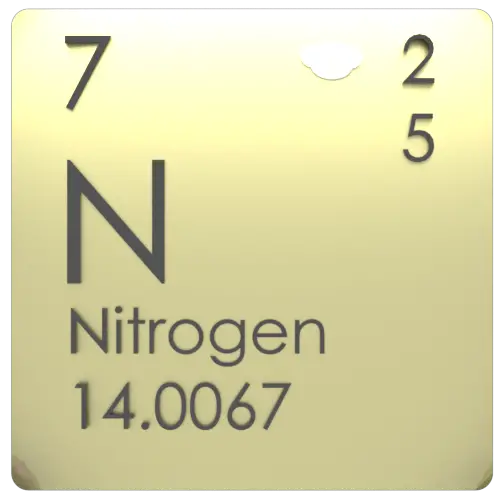
64%Nitrogen in Periodic Table

36%Oxygen in Periodic Table

Applications of Nitrous Oxide

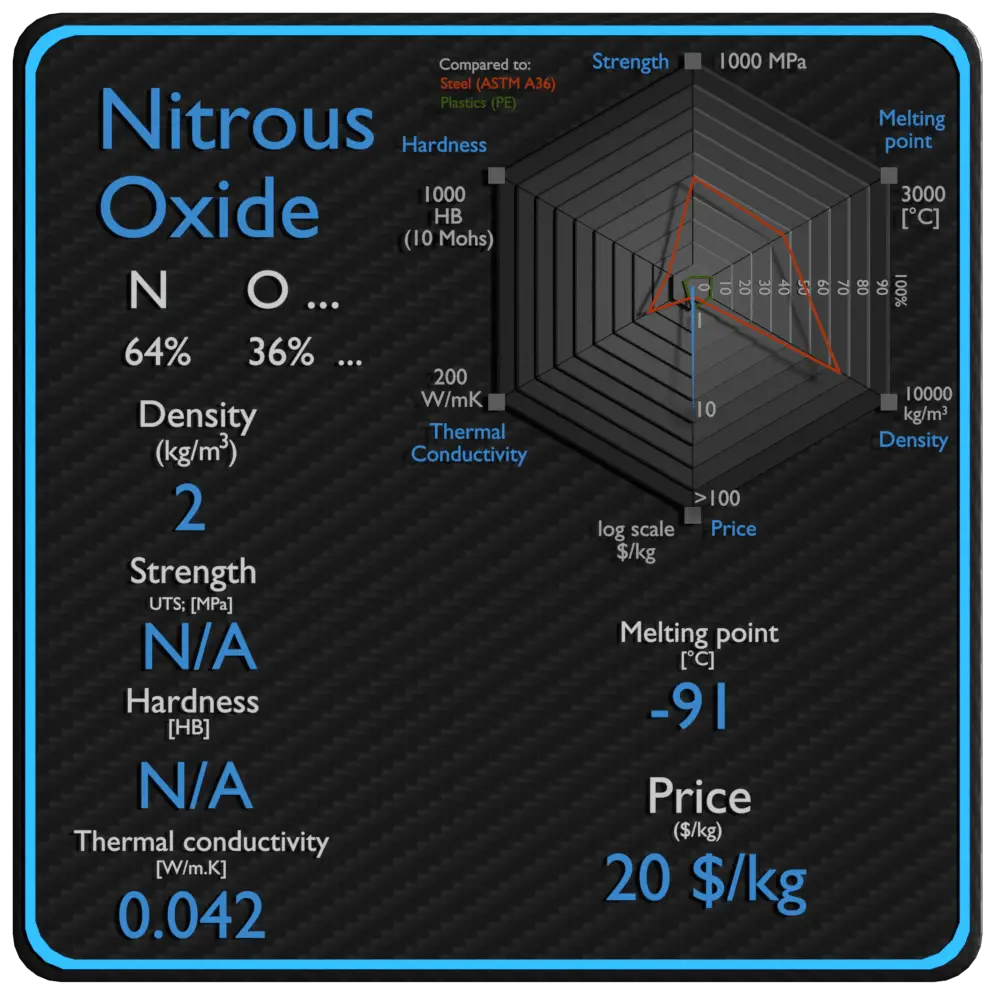
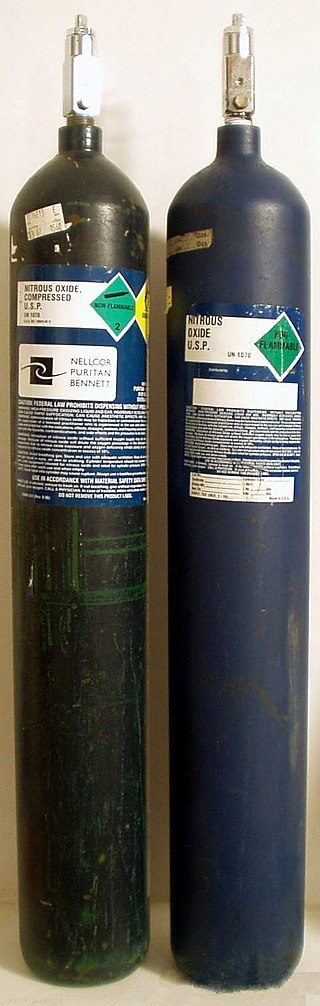
Nitrous Oxide - Material Table - Applications - Price
Source: wikipedia.org License: CC-BY SA 3.0

Nitrous Oxide can be manufactured and used for a variety of things such as a pharmacologic agent to produce anesthesia, a food additive as a propellant, and an additive to fuels to increase available oxygen in combustion.For anaesthesia, it is commonly used in a concentration of 50-70% in oxygen as part of a balanced technique in association with other inhalation or intravenous agents. Nitrous oxide may be used as an oxidiser in a rocket motor. In vehicle racing, nitrous oxide allows the engine to burn more fuel by providing more oxygen during combustion. Nitous delivers more oxygen than atmospheric air by breaking down at elevated temperatures

Strength of Materials

Material Table - Strength of Materials

Elasticity of Materials

Material Table - Elasticity of Materials

Hardness of Materials

Material Table - Hardness of Materials  

Thermal Properties of Nitrous Oxide

Nitrous Oxide – Melting Point

Melting point of Nitrous Oxide is -91 °C.

Note that, these points are associated with the standard atmospheric pressure. In general, melting is a phase change of a substance from the solid to the liquid phase. The melting point of a substance is the temperature at which this phase change occurs. The melting point also defines a condition in which the solid and liquid can exist in equilibrium. For various chemical compounds and alloys, it is difficult to define the melting point, since they are usually a mixture of various chemical elements.

Nitrous Oxide – Thermal Conductivity

Thermal conductivity of Nitrous Oxide is 0.042 W/(m·K).

The heat transfer characteristics of a solid material are measured by a property called the thermal conductivity, k (or λ), measured in W/m.K. It is a measure of a substance’s ability to transfer heat through a material by conduction. Note that Fourier’s law applies for all matter, regardless of its state (solid, liquid, or gas), therefore, it is also defined for liquids and gases.

The thermal conductivity of most liquids and solids varies with temperature. For vapors, it also depends upon pressure. In general:

thermal conductivity - definition

Most materials are very nearly homogeneous, therefore we can usually write k = k (T). Similar definitions are associated with thermal conductivities in the y- and z-directions (ky, kz), but for an isotropic material the thermal conductivity is independent of the direction of transfer, kx = ky = kz = k.

Nitrous Oxide – Specific Heat

Specific heat of Nitrous Oxidee is 880 J/g K.

Specific heat, or specific heat capacity, is a property related to internal energy that is very important in thermodynamics. The intensive properties cv and cp are defined for pure, simple compressible substances as partial derivatives of the internal energy u(T, v) and enthalpy h(T, p), respectively:

where the subscripts v and p denote the variables held fixed during differentiation. The properties cv and cp are referred to as specific heats (or heat capacities) because under certain special conditions they relate the temperature change of a system to the amount of energy added by heat transfer. Their SI units are J/kg K or J/mol K.

Melting Point of Materials

Material Table - Melting Point

Thermal Conductivity of Materials

Material Table - Thermal Conductivity

Heat Capacity of Materials

Material Table - Heat Capacity

Properties and prices of other materials

material-table-in-8k-resolution
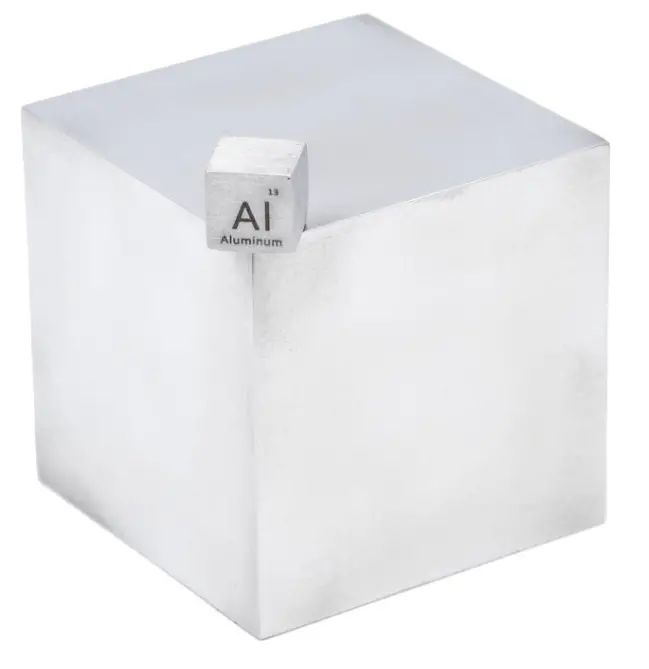
Polyvinyl Chloride – Material Table – Applications – Price

About Polyvinyl Chloride

Polyvinyl chloride is the world’s third-most widely produced synthetic plastic polymer (after polyethylene and polypropylene). There are two basic forms of PVC: rigid and plasticized. Rigid PVC, as its name suggests, is an unmodified polymer and exhibits high rigidity. Unmodified PVC is stronger and stiffer than PE and PP. Plasticized PVC is modified by the addition of a low-molecular-weight species (plasticizer) to flexibilize the polymer.

polyvinyl chloride properties density strength price

Summary

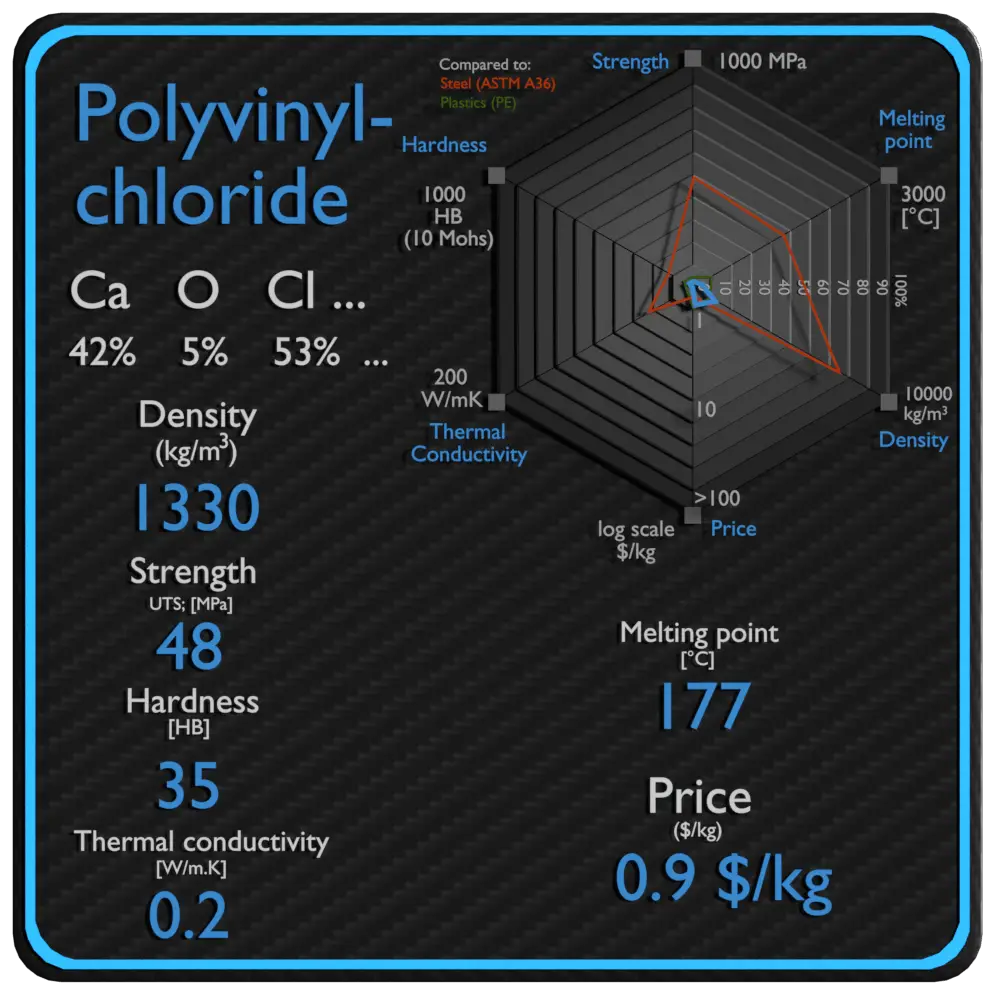
Name Polyvinyl Chloride
Phase at STP solid
Density 1330 kg/m3
Ultimate Tensile Strength 48 MPa
Yield Strength N/A
Young’s Modulus of Elasticity 3.4 GPa
Brinell Hardness 35 BHN
Melting Point 177 °C
Thermal Conductivity 0.2 W/mK
Heat Capacity 880 J/g K
Price 0.9 $/kg

Composition of Polyvinyl Chloride

Polyvinyl chloride polymers (PVC), generally referred to as vinyl resins, are prepared by the polymerization of vinyl chloride in a free radical addition polymerization reaction. Vinyl chloride monomer is prepared by reacting ethylene with chlorine to form 1,2-dichloroethane.

42%Carbon in Periodic Table

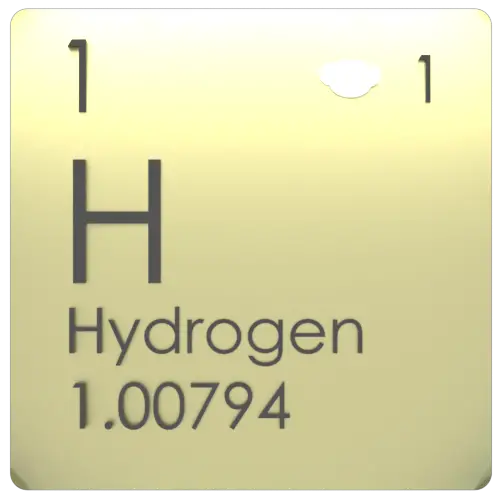
5%Hydrogen in Periodic Table

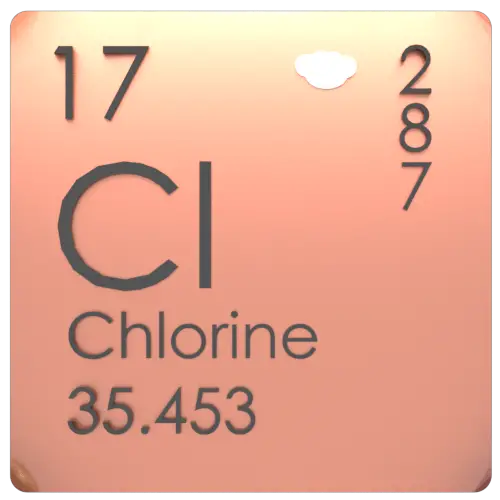
53%Chlorine in Periodic Table

Applications of Polyvinyl Chloride

Polyvinyl Chloride - Material Table - Applications - Price
Source: wikipedia.org License: CC-BY SA 3.0

Rigid PVC products include house siding, extruded pipe, thermoformed, and injectionmolded parts. Rigid PVC is calendered into credit cards. Plasticized PVC is used in plumbing, electrical cable insulation, imitation leather, flooring, signage, phonograph records. About 40 million tons of PVC are produced each year. PVC is one of the four plastics whose combined usage accounts for 75 percent of the worldwide usage of plastics. These four commodity thermoplastics are PE, PP, PVC, and PS.

Mechanical Properties of Polyvinyl Chloride

Strength of Polyvinyl Chloride

In mechanics of materials, the strength of a material is its ability to withstand an applied load without failure or plastic deformation. Strength of materials basically considers the relationship between the external loads applied to a material and the resulting deformation or change in material dimensions. In designing structures and machines, it is important to consider these factors, in order that the material selected will have adequate strength to resist applied loads or forces and retain its original shape.

Strength of a material is its ability to withstand this applied load without failure or plastic deformation. For tensile stress, the capacity of a material or structure to withstand loads tending to elongate is known as ultimate tensile strength (UTS). Yield strength or yield stress is the material property defined as the stress at which a material begins to deform plastically whereas yield point is the point where nonlinear (elastic + plastic) deformation begins. In case of tensional stress of a uniform bar (stress-strain curve), the Hooke’s law describes behaviour of a bar in the elastic region. The Young’s modulus of elasticity is the elastic modulus for tensile and compressive stress in the linear elasticity regime of a uniaxial deformation and is usually assessed by tensile tests.

See also: Strength of Materials

Ultimate Tensile Strength of Polyvinyl Chloride

Ultimate tensile strength of Polyvinyl Chloride is 48 MPa.

Yield Strength of Polyvinyl Chloride

Yield strength of Polyvinyl Chloride is N/A.

Modulus of Elasticity of Polyvinyl Chloride

The Young’s modulus of elasticity of Polyvinyl Chloride is 3.4 GPa.

Hardness of Polyvinyl Chloride

In materials science, hardness is the ability to withstand surface indentation (localized plastic deformation) and scratching. Brinell hardness test is one of indentation hardness tests, that has been developed for hardness testing. In Brinell tests, a hard, spherical indenter is forced under a specific load into the surface of the metal to be tested.

The Brinell hardness number (HB) is the load divided by the surface area of the indentation. The diameter of the impression is measured with a microscope with a superimposed scale. The Brinell hardness number is computed from the equation:

brinell hardness number - definition

Brinell hardness of Polyvinyl Chloride is approximately 35 BHN (converted).

See also: Hardness of Materials

Strength of Materials

Material Table - Strength of Materials

Elasticity of Materials

Material Table - Elasticity of Materials

Hardness of Materials

Material Table - Hardness of Materials  

Thermal Properties of Polyvinyl Chloride

Polyvinyl Chloride – Melting Point

Melting point of Polyvinyl Chloride is 177 °C.

Note that, these points are associated with the standard atmospheric pressure. In general, melting is a phase change of a substance from the solid to the liquid phase. The melting point of a substance is the temperature at which this phase change occurs. The melting point also defines a condition in which the solid and liquid can exist in equilibrium. For various chemical compounds and alloys, it is difficult to define the melting point, since they are usually a mixture of various chemical elements.

Polyvinyl Chloride – Thermal Conductivity

Thermal conductivity of Polyvinyl Chloride is 0.2 W/(m·K).

The heat transfer characteristics of a solid material are measured by a property called the thermal conductivity, k (or λ), measured in W/m.K. It is a measure of a substance’s ability to transfer heat through a material by conduction. Note that Fourier’s law applies for all matter, regardless of its state (solid, liquid, or gas), therefore, it is also defined for liquids and gases.

The thermal conductivity of most liquids and solids varies with temperature. For vapors, it also depends upon pressure. In general:

thermal conductivity - definition

Most materials are very nearly homogeneous, therefore we can usually write k = k (T). Similar definitions are associated with thermal conductivities in the y- and z-directions (ky, kz), but for an isotropic material the thermal conductivity is independent of the direction of transfer, kx = ky = kz = k.

Polyvinyl Chloride – Specific Heat

Specific heat of Polyvinyl Chloride is 880 J/g K.

Specific heat, or specific heat capacity, is a property related to internal energy that is very important in thermodynamics. The intensive properties cv and cp are defined for pure, simple compressible substances as partial derivatives of the internal energy u(T, v) and enthalpy h(T, p), respectively:

where the subscripts v and p denote the variables held fixed during differentiation. The properties cv and cp are referred to as specific heats (or heat capacities) because under certain special conditions they relate the temperature change of a system to the amount of energy added by heat transfer. Their SI units are J/kg K or J/mol K.

Melting Point of Materials

Material Table - Melting Point

Thermal Conductivity of Materials

Material Table - Thermal Conductivity

Heat Capacity of Materials

Material Table - Heat Capacity

Properties and prices of other materials

material-table-in-8k-resolution

Polystyrene – Material Table – Applications – Price

About Polystyrene

Polystyrene, abbreviated as PS, is a synthetic aromatic hydrocarbon polymer made from the monomer known as styrene, which is derived from benzene and ethylene, both petroleum products. Polystyrene can be solid or foamed. General-purpose polystyrene is clear, hard, and rather brittle. Polystyrene is a colorless, transparent thermoplastic, which is commonly used to make foam board or beadboard insulation and a type of loose-fill insulation consisting of small beads of polystyrene. Polystyrene foams are 95-98% air. Polystyrene foams are good thermal insulators and are therefore often used as building insulation materials, such as in insulating concrete forms and structural insulated panel building systems. Expanded (EPS) and extruded polystyrene (XPS) are both made from polystyrene, but EPS is composed of small plastic beads that are fused together and XPS begins as a molten material that is pressed out of a form into sheets. XPS is most commonly used as foam board insulation.

polystyrene properties density strength price

Summary

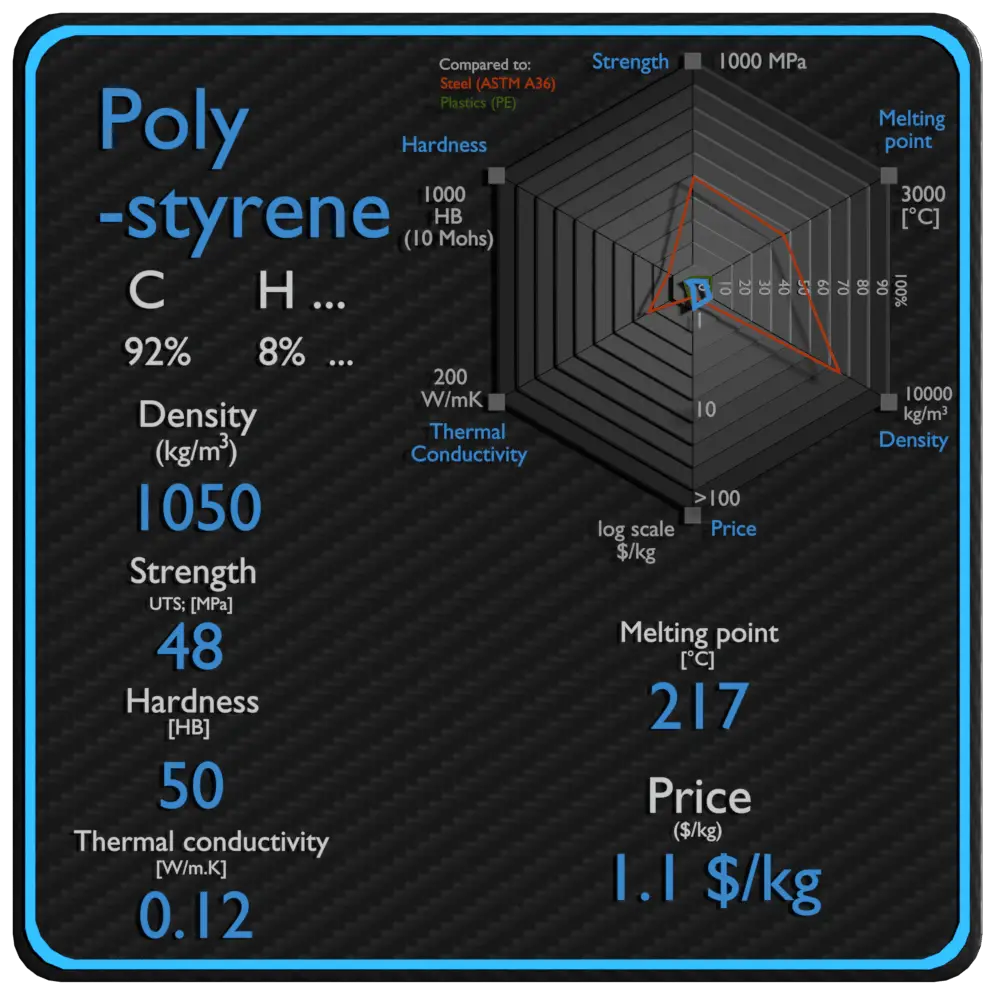
Name Polystyrene
Phase at STP solid
Density 1050 kg/m3
Ultimate Tensile Strength 48 MPa
Yield Strength N/A
Young’s Modulus of Elasticity 3.4 GPa
Brinell Hardness 50 BHN
Melting Point 217 °C
Thermal Conductivity 0.12 W/mK
Heat Capacity 1100 J/g K
Price 1.1 $/kg

Composition of Polystyrene

In chemical terms, polystyrene is a long chain hydrocarbon wherein alternating carbon centers are attached to phenyl groups (a derivative of benzene). Polystyrene’s chemical formula is (C8H8)n; it contains the chemical elements carbon and hydrogen.

92%Carbon in Periodic Table

8%Hydrogen in Periodic Table

Applications of Polystyrene

Polystyrene - Material Table - Applications - Price
Source: wikipedia.org License: CC-BY SA 3.0

PS is one of the four plastics whose combined usage accounts for 75 percent of the worldwide usage of plastics. These four commodity thermoplastics are PE, PP, PVC, and PS. Applications include toys, light diffusers, beakers, cutlery, general household appliances, video/audio cassette cases, electronic housings, refrigerator liners, housewares, containers.

Mechanical Properties of Polystyrene

Strength of Polystyrene

In mechanics of materials, the strength of a material is its ability to withstand an applied load without failure or plastic deformation. Strength of materials basically considers the relationship between the external loads applied to a material and the resulting deformation or change in material dimensions. In designing structures and machines, it is important to consider these factors, in order that the material selected will have adequate strength to resist applied loads or forces and retain its original shape.

Strength of a material is its ability to withstand this applied load without failure or plastic deformation. For tensile stress, the capacity of a material or structure to withstand loads tending to elongate is known as ultimate tensile strength (UTS). Yield strength or yield stress is the material property defined as the stress at which a material begins to deform plastically whereas yield point is the point where nonlinear (elastic + plastic) deformation begins. In case of tensional stress of a uniform bar (stress-strain curve), the Hooke’s law describes behaviour of a bar in the elastic region. The Young’s modulus of elasticity is the elastic modulus for tensile and compressive stress in the linear elasticity regime of a uniaxial deformation and is usually assessed by tensile tests.

See also: Strength of Materials

Ultimate Tensile Strength of Polystyrene

Ultimate tensile strength of Polystyrene is 48 MPa.

Yield Strength of Polystyrene

Yield strength of Polystyrene is N/A.

Modulus of Elasticity of Polystyrene

The Young’s modulus of elasticity of Polystyrene is 3.4 GPa.

Hardness of Polystyrene

In materials science, hardness is the ability to withstand surface indentation (localized plastic deformation) and scratching. Brinell hardness test is one of indentation hardness tests, that has been developed for hardness testing. In Brinell tests, a hard, spherical indenter is forced under a specific load into the surface of the metal to be tested.

The Brinell hardness number (HB) is the load divided by the surface area of the indentation. The diameter of the impression is measured with a microscope with a superimposed scale. The Brinell hardness number is computed from the equation:

brinell hardness number - definition

Brinell hardness of Polystyrene is approximately 50 BHN (converted).

See also: Hardness of Materials

Strength of Materials

Material Table - Strength of Materials

Elasticity of Materials

Material Table - Elasticity of Materials

Hardness of Materials

Material Table - Hardness of Materials  

Thermal Properties of Polystyrene

Polystyrene – Melting Point

Melting point of Polystyrene is 217 °C.

Note that, these points are associated with the standard atmospheric pressure. In general, melting is a phase change of a substance from the solid to the liquid phase. The melting point of a substance is the temperature at which this phase change occurs. The melting point also defines a condition in which the solid and liquid can exist in equilibrium. For various chemical compounds and alloys, it is difficult to define the melting point, since they are usually a mixture of various chemical elements.

Polystyrene – Thermal Conductivity

Thermal conductivity of Polystyrene is 0.12 W/(m·K).

The heat transfer characteristics of a solid material are measured by a property called the thermal conductivity, k (or λ), measured in W/m.K. It is a measure of a substance’s ability to transfer heat through a material by conduction. Note that Fourier’s law applies for all matter, regardless of its state (solid, liquid, or gas), therefore, it is also defined for liquids and gases.

The thermal conductivity of most liquids and solids varies with temperature. For vapors, it also depends upon pressure. In general:

thermal conductivity - definition

Most materials are very nearly homogeneous, therefore we can usually write k = k (T). Similar definitions are associated with thermal conductivities in the y- and z-directions (ky, kz), but for an isotropic material the thermal conductivity is independent of the direction of transfer, kx = ky = kz = k.

Polystyrene – Specific Heat

Specific heat of Polystyrene is 1100 J/g K.

Specific heat, or specific heat capacity, is a property related to internal energy that is very important in thermodynamics. The intensive properties cv and cp are defined for pure, simple compressible substances as partial derivatives of the internal energy u(T, v) and enthalpy h(T, p), respectively:

where the subscripts v and p denote the variables held fixed during differentiation. The properties cv and cp are referred to as specific heats (or heat capacities) because under certain special conditions they relate the temperature change of a system to the amount of energy added by heat transfer. Their SI units are J/kg K or J/mol K.

Melting Point of Materials

Material Table - Melting Point

Thermal Conductivity of Materials

Material Table - Thermal Conductivity

Heat Capacity of Materials

Material Table - Heat Capacity

Properties and prices of other materials

material-table-in-8k-resolution

Uranium Dioxide – Material Table – Applications – Price

About Uranium Dioxide

Uranium dioxide is a ceramic refractory uranium compound, in many cases used as a nuclear fuel. Most of LWRs use the uranium fuel, which is in the form of uranium dioxide (chemically UO2). Uranium dioxide is a black semiconducting solid with very low thermal conductivity. On the other hand the uranium dioxide has very high melting point and has well known behavior. Uranium dioxide has significantly lower density than uranium in the metal form. Uranium dioxide has a density of 10.97 g/cm3, but this value may vary with fuel burnup, because at low burnup densification of pellets can occurs and at higher burnup swelling occurs.

uranium dioxide properties density strength price

Summary

Name Uranium Dioxide
Phase at STP solid
Density 10970 kg/m3
Ultimate Tensile Strength N/A
Yield Strength N/A
Young’s Modulus of Elasticity N/A
Brinell Hardness N/A
Melting Point 2847 °C
Thermal Conductivity 8.68 W/mK
Heat Capacity 235 J/g K
Price 60 $/kg

Composition of Uranium Dioxide

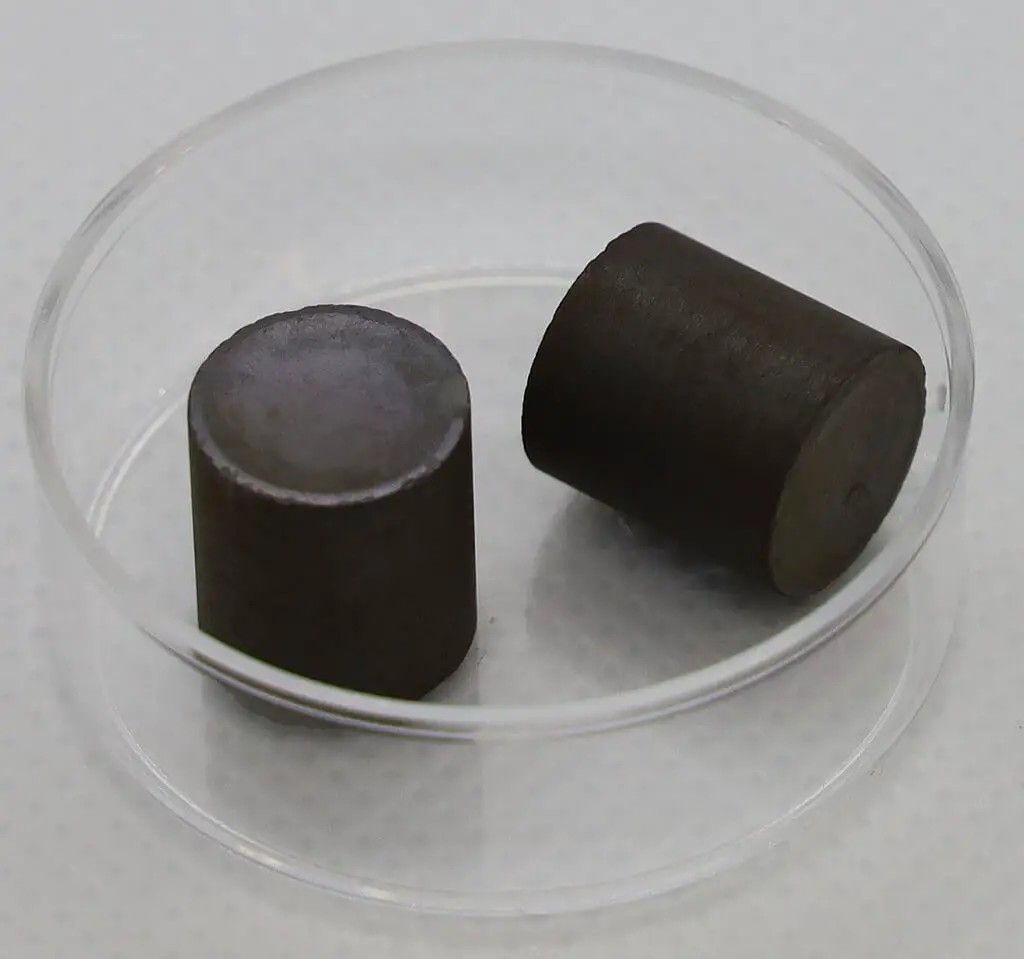
The UO2 is pressed into pellets, these pellets are then sintered into the solid cylinder (with a height, and diameter of about 1 centimeter, the height being greater than the diameter).

88%Uranium in Periodic Table

12%Oxygen in Periodic Table

Applications of Uranium Dioxide

Uranium Dioxide - Material Table - Applications - Price
Source: wikipedia.org License: CC-BY SA 3.0

Most of PWRs use the uranium fuel, which is in the form of uranium dioxide.

Thermal Properties of Uranium Dioxide

Uranium Dioxide – Melting Point

Melting point of Uranium Dioxide is 2847 °C.

Note that, these points are associated with the standard atmospheric pressure. In general, melting is a phase change of a substance from the solid to the liquid phase. The melting point of a substance is the temperature at which this phase change occurs. The melting point also defines a condition in which the solid and liquid can exist in equilibrium. For various chemical compounds and alloys, it is difficult to define the melting point, since they are usually a mixture of various chemical elements.

Uranium Dioxide – Thermal Conductivity

Thermal conductivity of Uranium Dioxide is 8.68 W/(m·K).

The heat transfer characteristics of a solid material are measured by a property called the thermal conductivity, k (or λ), measured in W/m.K. It is a measure of a substance’s ability to transfer heat through a material by conduction. Note that Fourier’s law applies for all matter, regardless of its state (solid, liquid, or gas), therefore, it is also defined for liquids and gases.

The thermal conductivity of most liquids and solids varies with temperature. For vapors, it also depends upon pressure. In general:

thermal conductivity - definition

Most materials are very nearly homogeneous, therefore we can usually write k = k (T). Similar definitions are associated with thermal conductivities in the y- and z-directions (ky, kz), but for an isotropic material the thermal conductivity is independent of the direction of transfer, kx = ky = kz = k.

Uranium Dioxide – Specific Heat

Specific heat of Uranium Dioxide is 235 J/g K.

Specific heat, or specific heat capacity, is a property related to internal energy that is very important in thermodynamics. The intensive properties cv and cp are defined for pure, simple compressible substances as partial derivatives of the internal energy u(T, v) and enthalpy h(T, p), respectively:

where the subscripts v and p denote the variables held fixed during differentiation. The properties cv and cp are referred to as specific heats (or heat capacities) because under certain special conditions they relate the temperature change of a system to the amount of energy added by heat transfer. Their SI units are J/kg K or J/mol K.

Melting Point of Materials

Material Table - Melting Point

Thermal Conductivity of Materials

Material Table - Thermal Conductivity

Heat Capacity of Materials

Material Table - Heat Capacity

Strength of Materials

Material Table - Strength of Materials

Elasticity of Materials

Material Table - Elasticity of Materials

Hardness of Materials

Material Table - Hardness of Materials  

Properties and prices of other materials

material-table-in-8k-resolution

Ruby – Material Table – Applications – Price

About Ruby

A ruby is a pink to blood-red coloured gemstone, a variety of the mineral corundum (aluminium oxide). Other varieties of gem-quality corundum are called sapphires. Rubies have a hardness of 9.0 on the Mohs scale of mineral hardness.

ruby properties density strength price

Summary

Name Ruby
Phase at STP solid
Density 3980 kg/m3
Ultimate Tensile Strength 2100 MPa
Yield Strength N/A
Young’s Modulus of Elasticity 350 GPa
Brinell Hardness 9 Mohs
Melting Point 2047 °C
Thermal Conductivity 40 W/mK
Heat Capacity 750 J/g K
Price 50000000 $/kg

Composition of Ruby

Sapphire, ruby, and pure corundum are α-alumina, the most stable form of Al2O3.

53%Aluminium in Periodic Table

47%Oxygen in Periodic Table

Applications of Ruby

Ruby - Material Table - Applications - Price
Source: wikipedia.org License: CC-BY SA 3.0

Like other gemstones, rubies are becoming an increasingly popular choice for engagement rings and other jewelry.

Mechanical Properties of Ruby

Strength of Ruby

In mechanics of materials, the strength of a material is its ability to withstand an applied load without failure or plastic deformation. Strength of materials basically considers the relationship between the external loads applied to a material and the resulting deformation or change in material dimensions. In designing structures and machines, it is important to consider these factors, in order that the material selected will have adequate strength to resist applied loads or forces and retain its original shape.

Strength of a material is its ability to withstand this applied load without failure or plastic deformation. For tensile stress, the capacity of a material or structure to withstand loads tending to elongate is known as ultimate tensile strength (UTS). Yield strength or yield stress is the material property defined as the stress at which a material begins to deform plastically whereas yield point is the point where nonlinear (elastic + plastic) deformation begins. In case of tensional stress of a uniform bar (stress-strain curve), the Hooke’s law describes behaviour of a bar in the elastic region. The Young’s modulus of elasticity is the elastic modulus for tensile and compressive stress in the linear elasticity regime of a uniaxial deformation and is usually assessed by tensile tests.

See also: Strength of Materials

Ultimate Tensile Strength of Ruby

Ultimate tensile strength of Ruby is 2100 MPa (compressive).

Yield Strength of Ruby

Yield strength of Ruby is N/A.

Modulus of Elasticity of Ruby

The Young’s modulus of elasticity of Ruby is 350 GPa.

Hardness of Ruby

In materials science, hardness is the ability to withstand surface indentation (localized plastic deformation) and scratching. Brinell hardness test is one of indentation hardness tests, that has been developed for hardness testing. In Brinell tests, a hard, spherical indenter is forced under a specific load into the surface of the metal to be tested.

The Brinell hardness number (HB) is the load divided by the surface area of the indentation. The diameter of the impression is measured with a microscope with a superimposed scale. The Brinell hardness number is computed from the equation:

brinell hardness number - definition

Hardness of Ruby is approximately 9 Mohs.

See also: Hardness of Materials

Strength of Materials

Material Table - Strength of Materials

Elasticity of Materials

Material Table - Elasticity of Materials

Hardness of Materials

Material Table - Hardness of Materials  

Thermal Properties of Ruby

Ruby – Melting Point

Melting point of Ruby is 2047 °C.

Note that, these points are associated with the standard atmospheric pressure. In general, melting is a phase change of a substance from the solid to the liquid phase. The melting point of a substance is the temperature at which this phase change occurs. The melting point also defines a condition in which the solid and liquid can exist in equilibrium. For various chemical compounds and alloys, it is difficult to define the melting point, since they are usually a mixture of various chemical elements.

Ruby – Thermal Conductivity

Thermal conductivity of Ruby is 40 W/(m·K).

The heat transfer characteristics of a solid material are measured by a property called the thermal conductivity, k (or λ), measured in W/m.K. It is a measure of a substance’s ability to transfer heat through a material by conduction. Note that Fourier’s law applies for all matter, regardless of its state (solid, liquid, or gas), therefore, it is also defined for liquids and gases.

The thermal conductivity of most liquids and solids varies with temperature. For vapors, it also depends upon pressure. In general:

thermal conductivity - definition

Most materials are very nearly homogeneous, therefore we can usually write k = k (T). Similar definitions are associated with thermal conductivities in the y- and z-directions (ky, kz), but for an isotropic material the thermal conductivity is independent of the direction of transfer, kx = ky = kz = k.

Ruby – Specific Heat

Specific heat of Ruby is 750 J/g K.

Specific heat, or specific heat capacity, is a property related to internal energy that is very important in thermodynamics. The intensive properties cv and cp are defined for pure, simple compressible substances as partial derivatives of the internal energy u(T, v) and enthalpy h(T, p), respectively:

where the subscripts v and p denote the variables held fixed during differentiation. The properties cv and cp are referred to as specific heats (or heat capacities) because under certain special conditions they relate the temperature change of a system to the amount of energy added by heat transfer. Their SI units are J/kg K or J/mol K.

Melting Point of Materials

Material Table - Melting Point

Thermal Conductivity of Materials

Material Table - Thermal Conductivity

Heat Capacity of Materials

Material Table - Heat Capacity

Properties and prices of other materials

material-table-in-8k-resolution
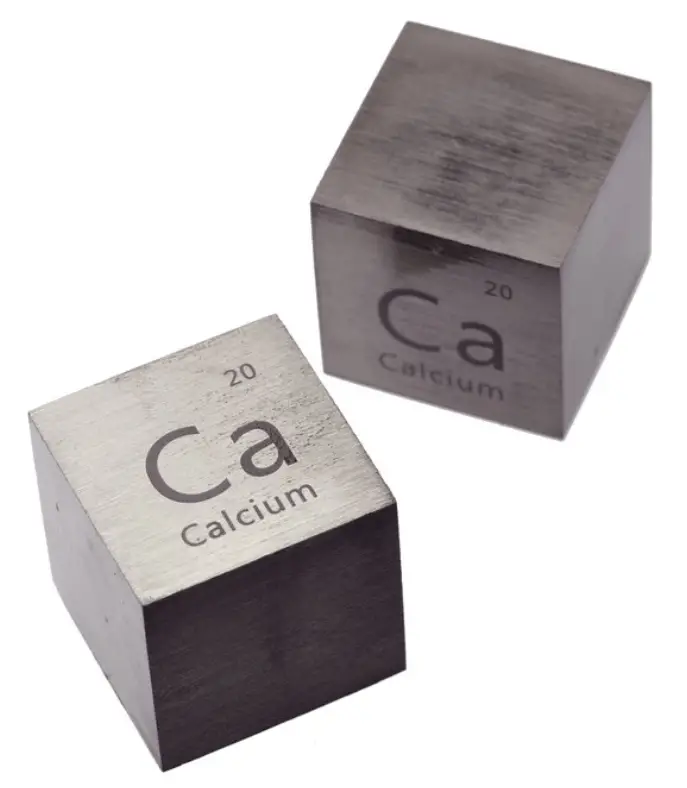
TZM Alloy – Material Table – Applications – Price

About TZM Alloy

Molybdenum-titanium-zirconium (TZM) alloys contain small amounts of titanium and zirconium doped with small amounts of very fine carbides. This alloy belongs to refractory alloys, which are well known for their extraordinary resistance to heat and wear. Key requirement to withstand high temperatures is a high melting point and stable mechanical properties (e.g. high hardness) even at high temperatures. This alloy functions most efficiently in temperature ranges of 700-1400°C. The alloy exhibits a higher creep resistance and strength at high temperatures, making service temperatures of above 1060 °C possible for the material. It is typically manufactured by powder metallurgy or arc-casting processes.

TZM alloy properties density strength price

Summary

Name TZM Alloy
Phase at STP solid
Density 10220 kg/m3
Ultimate Tensile Strength 800 MPa
Yield Strength N/A
Young’s Modulus of Elasticity 320 GPa
Brinell Hardness 220 BHN
Melting Point 2597 °C
Thermal Conductivity 126 W/mK
Heat Capacity 305 J/g K
Price 100 $/kg

Composition of TZM Alloy

TZM alloys are molybdenum-titanium-zirconium alloys and contain small amounts of titanium and zirconium doped with small amounts of very fine carbides.

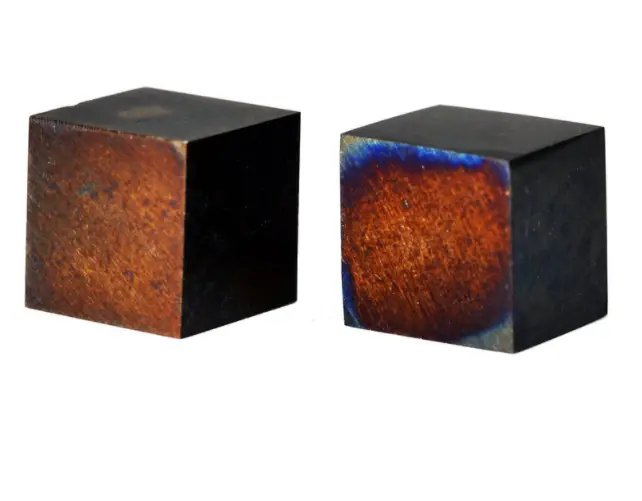
99%Molybdenum in Periodic Table

0.5%Titanium in Periodic Table

0.1%Zirconium in Periodic Table

Applications of TZM Alloy

TZM alloys are used in virtually all major industries, where high temperature applications with heavy mechanical load is required. For example, aerospace, automotive, chemicals, mining, nuclear technology and metal processing.

Mechanical Properties of TZM Alloy

Strength of TZM Alloy

In mechanics of materials, the strength of a material is its ability to withstand an applied load without failure or plastic deformation. Strength of materials basically considers the relationship between the external loads applied to a material and the resulting deformation or change in material dimensions. In designing structures and machines, it is important to consider these factors, in order that the material selected will have adequate strength to resist applied loads or forces and retain its original shape.

Strength of a material is its ability to withstand this applied load without failure or plastic deformation. For tensile stress, the capacity of a material or structure to withstand loads tending to elongate is known as ultimate tensile strength (UTS). Yield strength or yield stress is the material property defined as the stress at which a material begins to deform plastically whereas yield point is the point where nonlinear (elastic + plastic) deformation begins. In case of tensional stress of a uniform bar (stress-strain curve), the Hooke’s law describes behaviour of a bar in the elastic region. The Young’s modulus of elasticity is the elastic modulus for tensile and compressive stress in the linear elasticity regime of a uniaxial deformation and is usually assessed by tensile tests.

See also: Strength of Materials

Ultimate Tensile Strength of TZM Alloy

Ultimate tensile strength of TZM Alloy is 800 MPa.

Yield Strength of TZM Alloy

Yield strength of TZM Alloy is N/A.

Modulus of Elasticity of TZM Alloy

The Young’s modulus of elasticity of TZM Alloy is 320 GPa.

Hardness of TZM Alloy

In materials science, hardness is the ability to withstand surface indentation (localized plastic deformation) and scratching. Brinell hardness test is one of indentation hardness tests, that has been developed for hardness testing. In Brinell tests, a hard, spherical indenter is forced under a specific load into the surface of the metal to be tested.

The Brinell hardness number (HB) is the load divided by the surface area of the indentation. The diameter of the impression is measured with a microscope with a superimposed scale. The Brinell hardness number is computed from the equation:

brinell hardness number - definition

Brinell hardness of TZM Alloy is approximately 220 BHN (converted).

See also: Hardness of Materials

Strength of Materials

Material Table - Strength of Materials

Elasticity of Materials

Material Table - Elasticity of Materials

Hardness of Materials

Material Table - Hardness of Materials  

Thermal Properties of TZM Alloy

TZM Alloy – Melting Point

Melting point of TZM Alloy is 2597 °C.

Note that, these points are associated with the standard atmospheric pressure. In general, melting is a phase change of a substance from the solid to the liquid phase. The melting point of a substance is the temperature at which this phase change occurs. The melting point also defines a condition in which the solid and liquid can exist in equilibrium. For various chemical compounds and alloys, it is difficult to define the melting point, since they are usually a mixture of various chemical elements.

TZM Alloy – Thermal Conductivity

Thermal conductivity of TZM Alloy is 126 W/(m·K).

The heat transfer characteristics of a solid material are measured by a property called the thermal conductivity, k (or λ), measured in W/m.K. It is a measure of a substance’s ability to transfer heat through a material by conduction. Note that Fourier’s law applies for all matter, regardless of its state (solid, liquid, or gas), therefore, it is also defined for liquids and gases.

The thermal conductivity of most liquids and solids varies with temperature. For vapors, it also depends upon pressure. In general:

thermal conductivity - definition

Most materials are very nearly homogeneous, therefore we can usually write k = k (T). Similar definitions are associated with thermal conductivities in the y- and z-directions (ky, kz), but for an isotropic material the thermal conductivity is independent of the direction of transfer, kx = ky = kz = k.

TZM Alloy – Specific Heat

Specific heat of TZM Alloy is 305 J/g K.

Specific heat, or specific heat capacity, is a property related to internal energy that is very important in thermodynamics. The intensive properties cv and cp are defined for pure, simple compressible substances as partial derivatives of the internal energy u(T, v) and enthalpy h(T, p), respectively:

where the subscripts v and p denote the variables held fixed during differentiation. The properties cv and cp are referred to as specific heats (or heat capacities) because under certain special conditions they relate the temperature change of a system to the amount of energy added by heat transfer. Their SI units are J/kg K or J/mol K.

Melting Point of Materials

Material Table - Melting Point

Thermal Conductivity of Materials

Material Table - Thermal Conductivity

Heat Capacity of Materials

Material Table - Heat Capacity

Properties and prices of other materials

material-table-in-8k-resolution