Facebook Instagram Youtube Twitter

Stellite – Material Table – Applications – Price

About Stellite

Stellite alloys are a group of cobalt-chromium ‘super-alloys’ consisting of complex carbides in an alloy matrix predominantly designed for high wear resistance and superior chemical and corrosion performance in hostile environments. Unlike other superalloys, cobalt-base alloys are characterized by a solid-solution-strengthened austenitic (fcc) matrix in which a small quantity of carbide is distributed. While not used commercially to the extent of Ni-based superalloys, alloying elements found in research Co-based alloys are C, Cr, W, Ni, Ti, Al, Ir, and Ta. They possess better weldability and thermal fatigue resistance as compared to nickel based alloy. Moreover, they have excellent corrosion resistance at high temperatures (980-1100 °C) because of their higher chromium contents.

stellite properties density strength price

Summary

Name Stellite
Phase at STP solid
Density 8690 kg/m3
Ultimate Tensile Strength 1200 MPa
Yield Strength 1050 MPa
Young’s Modulus of Elasticity 230 GPa
Brinell Hardness 550 BHN
Melting Point 1297 °C
Thermal Conductivity 14.8 W/mK
Heat Capacity 423 J/g K
Price 50 $/kg

Composition of Stellite

Stellite alloys are composed of various amounts of cobalt, nickel, iron, aluminium, boron, carbon, chromium, manganese, molybdenum, phosphorus, sulfur, silicon, and titanium, in various proportions; most alloys contain four to six of these elements.

57%Cobalt in Periodic Table
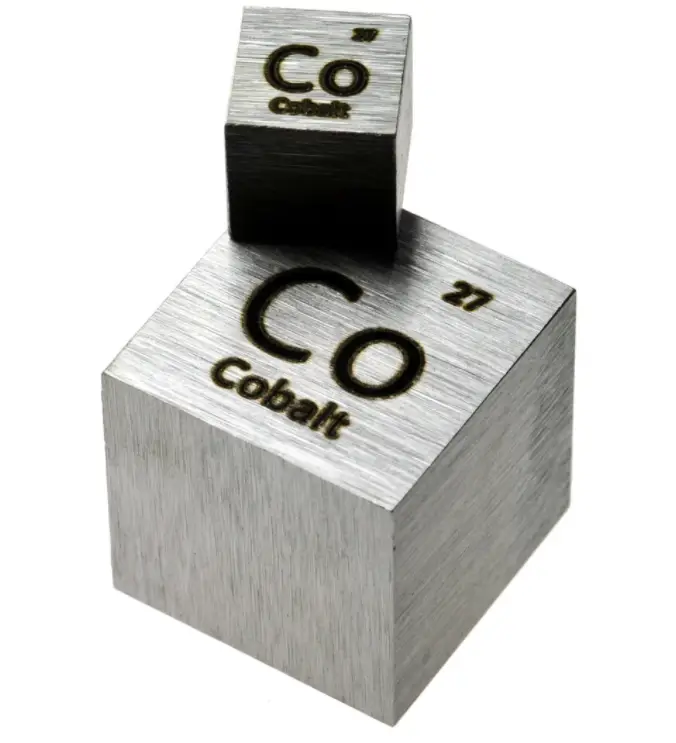
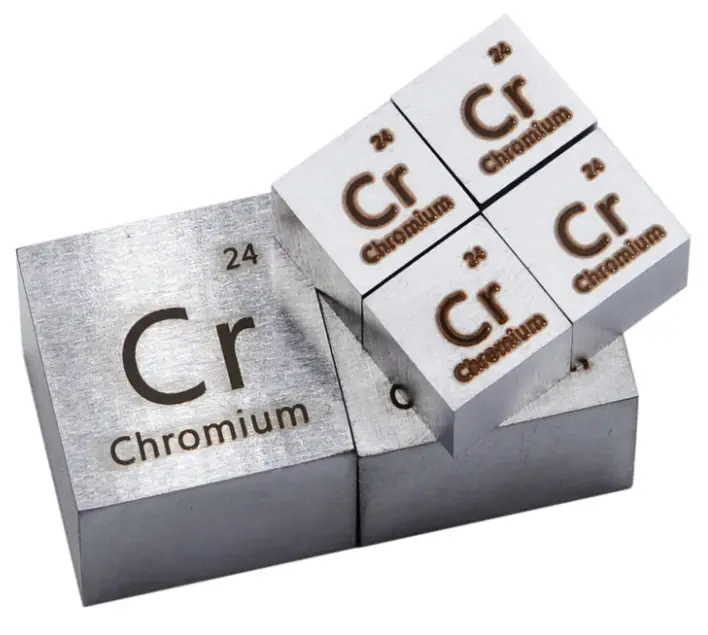
30%Chromium in Periodic Table

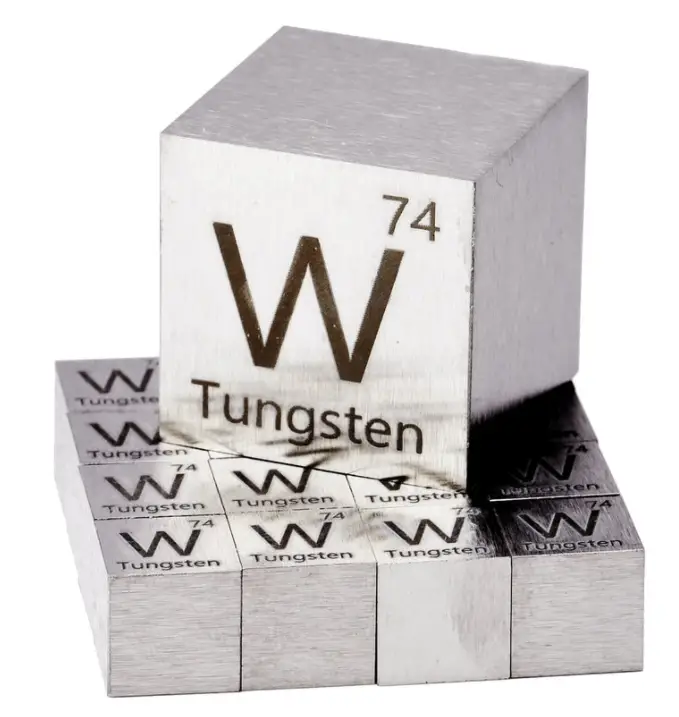
12%Tungsten in Periodic Table

Applications of Stellite

Typical applications include saw teeth, hardfacing, and acid-resistant machine parts. Stellite was a major improvement in the production of poppet valves and valve seats for the valves, particularly exhaust valves, of internal combustion engines.

Mechanical Properties of Stellite

Strength of Stellite

In mechanics of materials, the strength of a material is its ability to withstand an applied load without failure or plastic deformation. Strength of materials basically considers the relationship between the external loads applied to a material and the resulting deformation or change in material dimensions. In designing structures and machines, it is important to consider these factors, in order that the material selected will have adequate strength to resist applied loads or forces and retain its original shape.

Strength of a material is its ability to withstand this applied load without failure or plastic deformation. For tensile stress, the capacity of a material or structure to withstand loads tending to elongate is known as ultimate tensile strength (UTS). Yield strength or yield stress is the material property defined as the stress at which a material begins to deform plastically whereas yield point is the point where nonlinear (elastic + plastic) deformation begins. In case of tensional stress of a uniform bar (stress-strain curve), the Hooke’s law describes behaviour of a bar in the elastic region. The Young’s modulus of elasticity is the elastic modulus for tensile and compressive stress in the linear elasticity regime of a uniaxial deformation and is usually assessed by tensile tests.

See also: Strength of Materials

Ultimate Tensile Strength of Stellite

Ultimate tensile strength of Stellite is 1200 MPa.

Yield Strength of Stellite

Yield strength of Stellite is 1050 MPa.

Modulus of Elasticity of Stellite

The Young’s modulus of elasticity of Stellite is 230 GPa.

Hardness of Stellite

In materials science, hardness is the ability to withstand surface indentation (localized plastic deformation) and scratching. Brinell hardness test is one of indentation hardness tests, that has been developed for hardness testing. In Brinell tests, a hard, spherical indenter is forced under a specific load into the surface of the metal to be tested.

The Brinell hardness number (HB) is the load divided by the surface area of the indentation. The diameter of the impression is measured with a microscope with a superimposed scale. The Brinell hardness number is computed from the equation:
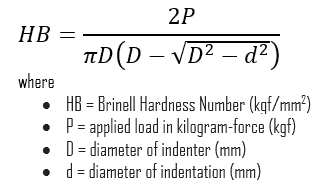
brinell hardness number - definition

Brinell hardness of Stellite is approximately 550 BHN (converted).

See also: Hardness of Materials

Strength of Materials

Material Table - Strength of Materials

Elasticity of Materials

Material Table - Elasticity of Materials

Hardness of Materials

Material Table - Hardness of Materials  

Thermal Properties of Stellite

Stellite – Melting Point

Melting point of Stellite is 1297 °C.

Note that, these points are associated with the standard atmospheric pressure. In general, melting is a phase change of a substance from the solid to the liquid phase. The melting point of a substance is the temperature at which this phase change occurs. The melting point also defines a condition in which the solid and liquid can exist in equilibrium. For various chemical compounds and alloys, it is difficult to define the melting point, since they are usually a mixture of various chemical elements.

Stellite – Thermal Conductivity

Thermal conductivity of Stellite is 14.8 W/(m·K).

The heat transfer characteristics of a solid material are measured by a property called the thermal conductivity, k (or λ), measured in W/m.K. It is a measure of a substance’s ability to transfer heat through a material by conduction. Note that Fourier’s law applies for all matter, regardless of its state (solid, liquid, or gas), therefore, it is also defined for liquids and gases.

The thermal conductivity of most liquids and solids varies with temperature. For vapors, it also depends upon pressure. In general:
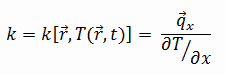
thermal conductivity - definition

Most materials are very nearly homogeneous, therefore we can usually write k = k (T). Similar definitions are associated with thermal conductivities in the y- and z-directions (ky, kz), but for an isotropic material the thermal conductivity is independent of the direction of transfer, kx = ky = kz = k.

Stellite – Specific Heat

Specific heat of Stellite is 423 J/g K.

Specific heat, or specific heat capacity, is a property related to internal energy that is very important in thermodynamics. The intensive properties cv and cp are defined for pure, simple compressible substances as partial derivatives of the internal energy u(T, v) and enthalpy h(T, p), respectively:
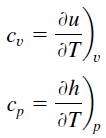
where the subscripts v and p denote the variables held fixed during differentiation. The properties cv and cp are referred to as specific heats (or heat capacities) because under certain special conditions they relate the temperature change of a system to the amount of energy added by heat transfer. Their SI units are J/kg K or J/mol K.

Melting Point of Materials

Material Table - Melting Point

Thermal Conductivity of Materials

Material Table - Thermal Conductivity

Heat Capacity of Materials

Material Table - Heat Capacity

Properties and prices of other materials

material-table-in-8k-resolution

Tungsten-Rhenium Alloy – Material Table – Applications – Price

About Tungsten-Rhenium Alloy

Tungsten and rhenium are both refractory metals. These metals are well known for their extraordinary resistance to heat and wear. Key requirement to withstand high temperatures is a high melting point and stable mechanical properties (e.g. high hardness) even at high temperatures. These metals are usually combined together to obtain desired fabricability, thermal and mechanical properties. Powder-metallurgy methods can be used in consolidating tungsten-rhenium alloys. Up to 22% rhenium is alloyed with tungsten to improve its high temperature strength and corrosion resistance. The hardness of as-cast W – 30Re alloy is around 500 BHN. This hardness strongly depends on rhenium content.

tungsten rhenium alloy properties density strength price

Summary

Name Tungsten-Rhenium Alloy
Phase at STP solid
Density 19700 kg/m3
Ultimate Tensile Strength 2100 MPa
Yield Strength N/A
Young’s Modulus of Elasticity 400 GPa
Brinell Hardness 500 BHN
Melting Point 3027 °C
Thermal Conductivity 70 W/mK
Heat Capacity 140 J/g K
Price 3000 $/kg

Composition of Tungsten-Rhenium Alloy

Tungsten-rhenium alloys typically contains 10, 20, 30, 35, and 40% of rhenium.

75%Tungsten in Periodic Table

25%Rhenium in Periodic Table

Applications of Tungsten-Rhenium Alloy

Historically Tungsten 25% Rhenium alloy has been produced into wire for the thermocouple market, but recent demands for high temperature structural components have forced the development of novel processing techniques for Tungsten-Rhenium and Tungsten-Rhenium with hafnium carbide. The hafnium carbide addition is known to increase strength of refractory metals. The applications for these materials are in the joining, medical, aerospace, furnace, and heat treat industries. Rhenium is considered highly desirable as an alloying addition with other refractory metals. Tungsten-rhenium alloys offer the highest temperature strength of any metal; the combination drastically increases ductility and tensile strength. Rhenium is gaining acceptance in nuclear reactors, miniature rockets, and other commercial and aerospace applications.

Mechanical Properties of Tungsten-Rhenium Alloy

Strength of Tungsten-Rhenium Alloy

In mechanics of materials, the strength of a material is its ability to withstand an applied load without failure or plastic deformation. Strength of materials basically considers the relationship between the external loads applied to a material and the resulting deformation or change in material dimensions. In designing structures and machines, it is important to consider these factors, in order that the material selected will have adequate strength to resist applied loads or forces and retain its original shape.

Strength of a material is its ability to withstand this applied load without failure or plastic deformation. For tensile stress, the capacity of a material or structure to withstand loads tending to elongate is known as ultimate tensile strength (UTS). Yield strength or yield stress is the material property defined as the stress at which a material begins to deform plastically whereas yield point is the point where nonlinear (elastic + plastic) deformation begins. In case of tensional stress of a uniform bar (stress-strain curve), the Hooke’s law describes behaviour of a bar in the elastic region. The Young’s modulus of elasticity is the elastic modulus for tensile and compressive stress in the linear elasticity regime of a uniaxial deformation and is usually assessed by tensile tests.

See also: Strength of Materials

Ultimate Tensile Strength of Tungsten-Rhenium Alloy

Ultimate tensile strength of Tungsten-Rhenium Alloy is 2100 MPa.

Yield Strength of Tungsten-Rhenium Alloy

Yield strength of Tungsten-Rhenium Alloy is N/A.

Modulus of Elasticity of Tungsten-Rhenium Alloy

The Young’s modulus of elasticity of Tungsten-Rhenium Alloy is 400 GPa.

Hardness of Tungsten-Rhenium Alloy

In materials science, hardness is the ability to withstand surface indentation (localized plastic deformation) and scratching. Brinell hardness test is one of indentation hardness tests, that has been developed for hardness testing. In Brinell tests, a hard, spherical indenter is forced under a specific load into the surface of the metal to be tested.

The Brinell hardness number (HB) is the load divided by the surface area of the indentation. The diameter of the impression is measured with a microscope with a superimposed scale. The Brinell hardness number is computed from the equation:

brinell hardness number - definition

Brinell hardness of Tungsten-Rhenium Alloy is approximately 500 BHN (converted).

See also: Hardness of Materials

Strength of Materials

Material Table - Strength of Materials

Elasticity of Materials

Material Table - Elasticity of Materials

Hardness of Materials

Material Table - Hardness of Materials  

Thermal Properties of Tungsten-Rhenium Alloy

Tungsten-Rhenium Alloy – Melting Point

Melting point of Tungsten-Rhenium Alloy is 3027 °C.

Note that, these points are associated with the standard atmospheric pressure. In general, melting is a phase change of a substance from the solid to the liquid phase. The melting point of a substance is the temperature at which this phase change occurs. The melting point also defines a condition in which the solid and liquid can exist in equilibrium. For various chemical compounds and alloys, it is difficult to define the melting point, since they are usually a mixture of various chemical elements.

Tungsten-Rhenium Alloy – Thermal Conductivity

Thermal conductivity of Tungsten-Rhenium Alloy is 70 W/(m·K).

The heat transfer characteristics of a solid material are measured by a property called the thermal conductivity, k (or λ), measured in W/m.K. It is a measure of a substance’s ability to transfer heat through a material by conduction. Note that Fourier’s law applies for all matter, regardless of its state (solid, liquid, or gas), therefore, it is also defined for liquids and gases.

The thermal conductivity of most liquids and solids varies with temperature. For vapors, it also depends upon pressure. In general:

thermal conductivity - definition

Most materials are very nearly homogeneous, therefore we can usually write k = k (T). Similar definitions are associated with thermal conductivities in the y- and z-directions (ky, kz), but for an isotropic material the thermal conductivity is independent of the direction of transfer, kx = ky = kz = k.

Tungsten-Rhenium Alloy – Specific Heat

Specific heat of Tungsten-Rhenium Alloy is 140 J/g K.

Specific heat, or specific heat capacity, is a property related to internal energy that is very important in thermodynamics. The intensive properties cv and cp are defined for pure, simple compressible substances as partial derivatives of the internal energy u(T, v) and enthalpy h(T, p), respectively:

where the subscripts v and p denote the variables held fixed during differentiation. The properties cv and cp are referred to as specific heats (or heat capacities) because under certain special conditions they relate the temperature change of a system to the amount of energy added by heat transfer. Their SI units are J/kg K or J/mol K.

Melting Point of Materials

Material Table - Melting Point

Thermal Conductivity of Materials

Material Table - Thermal Conductivity

Heat Capacity of Materials

Material Table - Heat Capacity

Properties and prices of other materials

material-table-in-8k-resolution

7068 Alloy – Material Table – Applications – Price

About 7068 Alloy

7068 aluminium alloy is a heat treatable wrought alloy with good fatigue strength, good anodizing response, and high thermal conductivity. It is alloyed with zinc, magnesium and copper. 7068 aluminium alloy is one of the strongest commercially available aluminium alloys, with a tensile strength comparable to that of some steels.

7068 alloy properties density strength price

Summary

Name 7068 Alloy
Phase at STP solid
Density 2850 kg/m3
Ultimate Tensile Strength 640 MPa
Yield Strength 590 MPa
Young’s Modulus of Elasticity 73 GPa
Brinell Hardness 190 BHN
Melting Point 597 °C
Thermal Conductivity 190 W/mK
Heat Capacity 1050 J/g K
Price 7 $/kg

Composition of 7068 Alloy

The main alloying elements are zinc (7.3–8.3%), magnesium (2.2–3.0%), copper (1.6–2.4%) and zirconium (0.05–0.15%), with traces of silicon, iron, manganese, chromium, and titanium.

86%Aluminium in Periodic Table

8%Zinc in Periodic Table

3%Magnesium in Periodic Table

Applications of 7068 Alloy

Alloy 7068 is now being used or considered for markets like the aerospace and automotive industries (valve body and connecting rod applications), medical devices, such as prosthetic limbs, as well as recreational products like bicycles and mountain climbing equipment.

Mechanical Properties of 7068 Alloy

Strength of 7068 Alloy

In mechanics of materials, the strength of a material is its ability to withstand an applied load without failure or plastic deformation. Strength of materials basically considers the relationship between the external loads applied to a material and the resulting deformation or change in material dimensions. In designing structures and machines, it is important to consider these factors, in order that the material selected will have adequate strength to resist applied loads or forces and retain its original shape.

Strength of a material is its ability to withstand this applied load without failure or plastic deformation. For tensile stress, the capacity of a material or structure to withstand loads tending to elongate is known as ultimate tensile strength (UTS). Yield strength or yield stress is the material property defined as the stress at which a material begins to deform plastically whereas yield point is the point where nonlinear (elastic + plastic) deformation begins. In case of tensional stress of a uniform bar (stress-strain curve), the Hooke’s law describes behaviour of a bar in the elastic region. The Young’s modulus of elasticity is the elastic modulus for tensile and compressive stress in the linear elasticity regime of a uniaxial deformation and is usually assessed by tensile tests.

See also: Strength of Materials

Ultimate Tensile Strength of 7068 Alloy

Ultimate tensile strength of 7068 Alloy is 640 MPa.

Yield Strength of 7068 Alloy

Yield strength of 7068 Alloy is 590 MPa.

Modulus of Elasticity of 7068 Alloy

The Young’s modulus of elasticity of 7068 Alloy is 73 GPa.

Hardness of 7068 Alloy

In materials science, hardness is the ability to withstand surface indentation (localized plastic deformation) and scratching. Brinell hardness test is one of indentation hardness tests, that has been developed for hardness testing. In Brinell tests, a hard, spherical indenter is forced under a specific load into the surface of the metal to be tested.

The Brinell hardness number (HB) is the load divided by the surface area of the indentation. The diameter of the impression is measured with a microscope with a superimposed scale. The Brinell hardness number is computed from the equation:

brinell hardness number - definition

Brinell hardness of 7068 Alloy is approximately 190 BHN.

See also: Hardness of Materials

Strength of Materials

Material Table - Strength of Materials

Elasticity of Materials

Material Table - Elasticity of Materials

Hardness of Materials

Material Table - Hardness of Materials  

Thermal Properties of 7068 Alloy

7068 Alloy – Melting Point

Melting point of 7068 Alloy is 597 °C.

Note that, these points are associated with the standard atmospheric pressure. In general, melting is a phase change of a substance from the solid to the liquid phase. The melting point of a substance is the temperature at which this phase change occurs. The melting point also defines a condition in which the solid and liquid can exist in equilibrium. For various chemical compounds and alloys, it is difficult to define the melting point, since they are usually a mixture of various chemical elements.

7068 Alloy – Thermal Conductivity

Thermal conductivity of 7068 Alloy is 190 W/(m·K).

The heat transfer characteristics of a solid material are measured by a property called the thermal conductivity, k (or λ), measured in W/m.K. It is a measure of a substance’s ability to transfer heat through a material by conduction. Note that Fourier’s law applies for all matter, regardless of its state (solid, liquid, or gas), therefore, it is also defined for liquids and gases.

The thermal conductivity of most liquids and solids varies with temperature. For vapors, it also depends upon pressure. In general:

thermal conductivity - definition

Most materials are very nearly homogeneous, therefore we can usually write k = k (T). Similar definitions are associated with thermal conductivities in the y- and z-directions (ky, kz), but for an isotropic material the thermal conductivity is independent of the direction of transfer, kx = ky = kz = k.

7068 Alloy – Specific Heat

Specific heat of 7068 Alloy is 1050 J/g K.

Specific heat, or specific heat capacity, is a property related to internal energy that is very important in thermodynamics. The intensive properties cv and cp are defined for pure, simple compressible substances as partial derivatives of the internal energy u(T, v) and enthalpy h(T, p), respectively:

where the subscripts v and p denote the variables held fixed during differentiation. The properties cv and cp are referred to as specific heats (or heat capacities) because under certain special conditions they relate the temperature change of a system to the amount of energy added by heat transfer. Their SI units are J/kg K or J/mol K.

Melting Point of Materials

Material Table - Melting Point

Thermal Conductivity of Materials

Material Table - Thermal Conductivity

Heat Capacity of Materials

Material Table - Heat Capacity

Properties and prices of other materials

material-table-in-8k-resolution

Quartz – Material Table – Applications – Price

About Quartz

Quartz is very abundant mineral of many varieties that consists primarily of silica, or silicon dioxide (SiO2). There are many different varieties of quartz, several of which are semi-precious gemstones. Amethyst is a form of quartz that ranges from a bright vivid violet to dark or dull lavender shade. Citrine is a variety of quartz whose color ranges from a pale yellow to brown due to ferric impurities. Quartz is the mineral defining the value of 7 on the Mohs scale of hardness, a qualitative scratch method for determining the hardness of a material to abrasion.

quartz properties density strength price

Summary

Name Quartz
Phase at STP solid
Density 2650 kg/m3
Ultimate Tensile Strength 48 MPa
Yield Strength N/A
Young’s Modulus of Elasticity 37 GPa
Brinell Hardness 7 Mohs
Melting Point 1667 °C
Thermal Conductivity 3 W/mK
Heat Capacity 741 J/g K
Price 20 $/kg

Composition of Quartz

Quartz is a chemical compound consisting of one part silicon and two parts oxygen. It is silicon dioxide (SiO2). The atoms are linked in a continuous framework of SiO4 silicon-oxygen tetrahedra, with each oxygen being shared between two tetrahedra, giving an overall chemical formula of SiO2.

47%Silicon in Periodic Table

53%Oxygen in Periodic Table

Applications of Quartz

Quartz - Material Table - Applications - Price
Source: wikipedia.org License: CC-BY SA 3.0

Quartz has great economic importance. Many varieties are gemstones, including amethyst, citrine, smoky quartz, and rose quartz. It has electrical properties (e.g. its piezoelectricity) and heat resistance that make it valuable in electronic products. Sandstone, composed mainly of quartz, is an important building stone. Large amounts of quartz sand (also known as silica sand) are used in the manufacture of glass and ceramics and for foundry molds in metal casting.Crushed quartz is used as an abrasive in sandpaper, silica sand is employed in sandblasting.

Mechanical Properties of Quartz

Strength of Quartz

In mechanics of materials, the strength of a material is its ability to withstand an applied load without failure or plastic deformation. Strength of materials basically considers the relationship between the external loads applied to a material and the resulting deformation or change in material dimensions. In designing structures and machines, it is important to consider these factors, in order that the material selected will have adequate strength to resist applied loads or forces and retain its original shape.

Strength of a material is its ability to withstand this applied load without failure or plastic deformation. For tensile stress, the capacity of a material or structure to withstand loads tending to elongate is known as ultimate tensile strength (UTS). Yield strength or yield stress is the material property defined as the stress at which a material begins to deform plastically whereas yield point is the point where nonlinear (elastic + plastic) deformation begins. In case of tensional stress of a uniform bar (stress-strain curve), the Hooke’s law describes behaviour of a bar in the elastic region. The Young’s modulus of elasticity is the elastic modulus for tensile and compressive stress in the linear elasticity regime of a uniaxial deformation and is usually assessed by tensile tests.

See also: Strength of Materials

Ultimate Tensile Strength of Quartz

Ultimate tensile strength of Quartz is 48 MPa.

Yield Strength of Quartz

Yield strength of Quartz is N/A.

Modulus of Elasticity of Quartz

The Young’s modulus of elasticity of Quartz is 37 GPa.

Hardness of Quartz

In materials science, hardness is the ability to withstand surface indentation (localized plastic deformation) and scratching. Brinell hardness test is one of indentation hardness tests, that has been developed for hardness testing. In Brinell tests, a hard, spherical indenter is forced under a specific load into the surface of the metal to be tested.

The Brinell hardness number (HB) is the load divided by the surface area of the indentation. The diameter of the impression is measured with a microscope with a superimposed scale. The Brinell hardness number is computed from the equation:

brinell hardness number - definition

Hardness of Quartz is approximately 7 Mohs.

See also: Hardness of Materials

Strength of Materials

Material Table - Strength of Materials

Elasticity of Materials

Material Table - Elasticity of Materials

Hardness of Materials

Material Table - Hardness of Materials  

Thermal Properties of Quartz

Quartz – Melting Point

Melting point of Quartz is 1667 °C.

Note that, these points are associated with the standard atmospheric pressure. In general, melting is a phase change of a substance from the solid to the liquid phase. The melting point of a substance is the temperature at which this phase change occurs. The melting point also defines a condition in which the solid and liquid can exist in equilibrium. For various chemical compounds and alloys, it is difficult to define the melting point, since they are usually a mixture of various chemical elements.

Quartz – Thermal Conductivity

Thermal conductivity of Quartz is 3 W/(m·K).

The heat transfer characteristics of a solid material are measured by a property called the thermal conductivity, k (or λ), measured in W/m.K. It is a measure of a substance’s ability to transfer heat through a material by conduction. Note that Fourier’s law applies for all matter, regardless of its state (solid, liquid, or gas), therefore, it is also defined for liquids and gases.

The thermal conductivity of most liquids and solids varies with temperature. For vapors, it also depends upon pressure. In general:

thermal conductivity - definition

Most materials are very nearly homogeneous, therefore we can usually write k = k (T). Similar definitions are associated with thermal conductivities in the y- and z-directions (ky, kz), but for an isotropic material the thermal conductivity is independent of the direction of transfer, kx = ky = kz = k.

Quartz – Specific Heat

Specific heat of Quartz is 741 J/g K.

Specific heat, or specific heat capacity, is a property related to internal energy that is very important in thermodynamics. The intensive properties cv and cp are defined for pure, simple compressible substances as partial derivatives of the internal energy u(T, v) and enthalpy h(T, p), respectively:

where the subscripts v and p denote the variables held fixed during differentiation. The properties cv and cp are referred to as specific heats (or heat capacities) because under certain special conditions they relate the temperature change of a system to the amount of energy added by heat transfer. Their SI units are J/kg K or J/mol K.

Melting Point of Materials

Material Table - Melting Point

Thermal Conductivity of Materials

Material Table - Thermal Conductivity

Heat Capacity of Materials

Material Table - Heat Capacity

Properties and prices of other materials

material-table-in-8k-resolution
Stone Wool – Material Table – Applications – Price

About Stone Wool

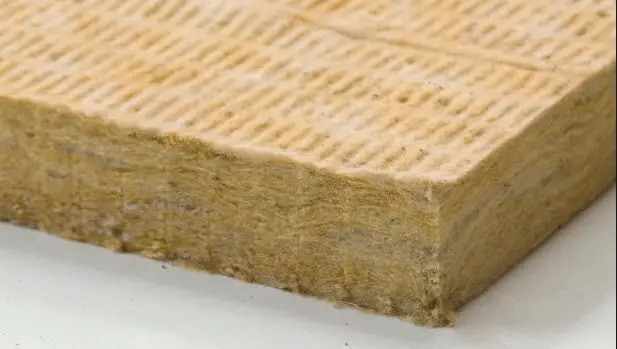
Stone Wool, also known as rock wool, is based on natural minerals present in large quantities throughout the earth, e.g. volcanic rock, typically basalt or dolomite. Next to raw materials, also recycled rock wool can be added to the process as well as slag residues from the metal industry. It combines mechanical resistance with good thermal performance, fire safety and high temperature suitability.

stone wool properties density strength price

Summary

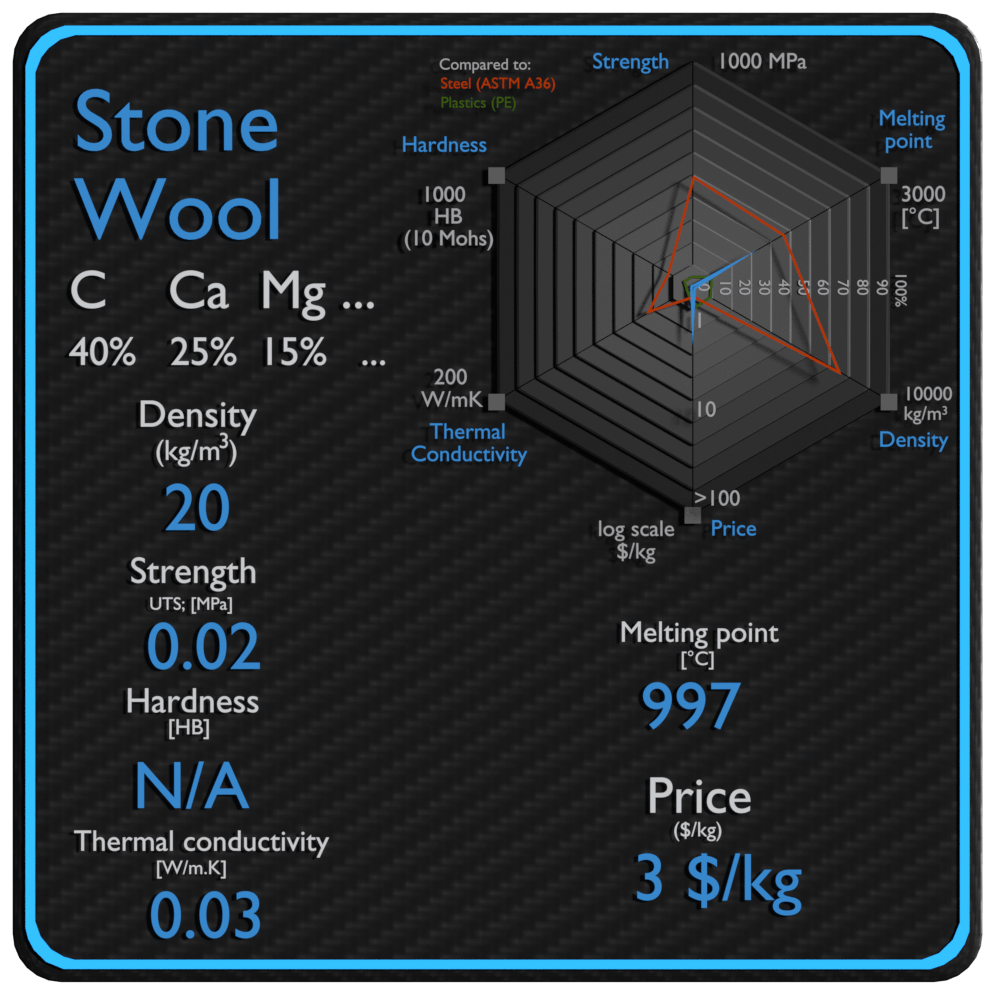
Name Stone Wool
Phase at STP solid
Density 20 kg/m3
Ultimate Tensile Strength 0.02 MPa
Yield Strength N/A
Young’s Modulus of Elasticity N/A
Brinell Hardness N/A
Melting Point 997 °C
Thermal Conductivity 0.03 W/mK
Heat Capacity 700 J/g K
Price 3 $/kg

Composition of Stone Wool

Glass‐ and stone wool are produced from mineral fibres and are therefore often referred to as ‘mineral wools’. Mineral wool is a general name for fiber materials that are formed by spinning or drawing molten minerals. Stone wool is a furnace product of molten rock at a temperature of about 1600 °C, through which a stream of air or steam is blown. More advanced production techniques are based on spinning molten rock in high-speed spinning heads somewhat like the process used to produce cotton candy.

40%Carbon in Periodic Table

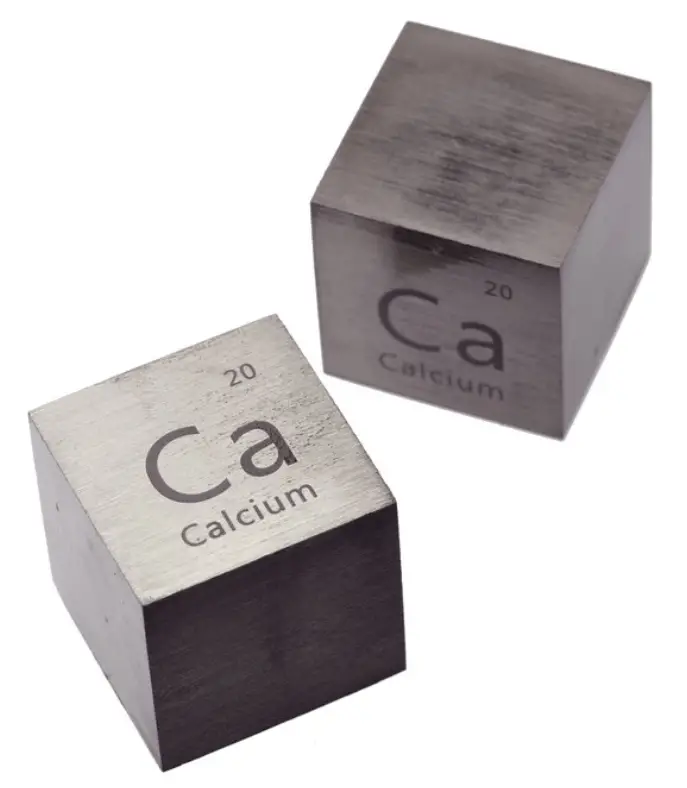
25%Calcium in Periodic Table

15%Magnesium in Periodic Table

Applications of Stone Wool

stone wool - rock wool - thermal insulationApplications of stone wool include structural insulation pipe insulation, filtration, soundproofing, and hydroponic growth medium. Stone wool is a versatile material that can be used for the insulation of walls, roofs and floors. During the installation of the stone wool, it should be kept dry at all times, since an increase of the moisture content causes a significant increase in thermal conductivity.

Mechanical Properties of Stone Wool

Strength of Stone Wool

In mechanics of materials, the strength of a material is its ability to withstand an applied load without failure or plastic deformation. Strength of materials basically considers the relationship between the external loads applied to a material and the resulting deformation or change in material dimensions. In designing structures and machines, it is important to consider these factors, in order that the material selected will have adequate strength to resist applied loads or forces and retain its original shape.

Strength of a material is its ability to withstand this applied load without failure or plastic deformation. For tensile stress, the capacity of a material or structure to withstand loads tending to elongate is known as ultimate tensile strength (UTS). Yield strength or yield stress is the material property defined as the stress at which a material begins to deform plastically whereas yield point is the point where nonlinear (elastic + plastic) deformation begins. In case of tensional stress of a uniform bar (stress-strain curve), the Hooke’s law describes behaviour of a bar in the elastic region. The Young’s modulus of elasticity is the elastic modulus for tensile and compressive stress in the linear elasticity regime of a uniaxial deformation and is usually assessed by tensile tests.

See also: Strength of Materials

Ultimate Tensile Strength of Stone Wool

Ultimate tensile strength of Stone Wool is 0.02 MPa.

Yield Strength of Stone Wool

Yield strength of Stone Wool is N/A.

Modulus of Elasticity of Stone Wool

The Young’s modulus of elasticity of Stone Wool is N/A.

Hardness of Stone Wool

In materials science, hardness is the ability to withstand surface indentation (localized plastic deformation) and scratching. Brinell hardness test is one of indentation hardness tests, that has been developed for hardness testing. In Brinell tests, a hard, spherical indenter is forced under a specific load into the surface of the metal to be tested.

The Brinell hardness number (HB) is the load divided by the surface area of the indentation. The diameter of the impression is measured with a microscope with a superimposed scale. The Brinell hardness number is computed from the equation:

brinell hardness number - definition

Brinell hardness of Stone Wool is approximately N/A.

See also: Hardness of Materials

Strength of Materials

Material Table - Strength of Materials

Elasticity of Materials

Material Table - Elasticity of Materials

Hardness of Materials

Material Table - Hardness of Materials  

Thermal Properties of Stone Wool

Stone Wool – Melting Point

Melting point of Stone Wool is 997 °C.

Note that, these points are associated with the standard atmospheric pressure. In general, melting is a phase change of a substance from the solid to the liquid phase. The melting point of a substance is the temperature at which this phase change occurs. The melting point also defines a condition in which the solid and liquid can exist in equilibrium. For various chemical compounds and alloys, it is difficult to define the melting point, since they are usually a mixture of various chemical elements.

Stone Wool – Thermal Conductivity

Thermal conductivity of Stone Wool is 0.03 W/(m·K).

The heat transfer characteristics of a solid material are measured by a property called the thermal conductivity, k (or λ), measured in W/m.K. It is a measure of a substance’s ability to transfer heat through a material by conduction. Note that Fourier’s law applies for all matter, regardless of its state (solid, liquid, or gas), therefore, it is also defined for liquids and gases.

The thermal conductivity of most liquids and solids varies with temperature. For vapors, it also depends upon pressure. In general:

thermal conductivity - definition

Most materials are very nearly homogeneous, therefore we can usually write k = k (T). Similar definitions are associated with thermal conductivities in the y- and z-directions (ky, kz), but for an isotropic material the thermal conductivity is independent of the direction of transfer, kx = ky = kz = k.

Stone Wool – Specific Heat

Specific heat of Stone Wool is 700 J/g K.

Specific heat, or specific heat capacity, is a property related to internal energy that is very important in thermodynamics. The intensive properties cv and cp are defined for pure, simple compressible substances as partial derivatives of the internal energy u(T, v) and enthalpy h(T, p), respectively:

where the subscripts v and p denote the variables held fixed during differentiation. The properties cv and cp are referred to as specific heats (or heat capacities) because under certain special conditions they relate the temperature change of a system to the amount of energy added by heat transfer. Their SI units are J/kg K or J/mol K.

Melting Point of Materials

Material Table - Melting Point

Thermal Conductivity of Materials

Material Table - Thermal Conductivity

Heat Capacity of Materials

Material Table - Heat Capacity

Properties and prices of other materials

material-table-in-8k-resolution
Methane – Material Table – Applications – Price

About Methane

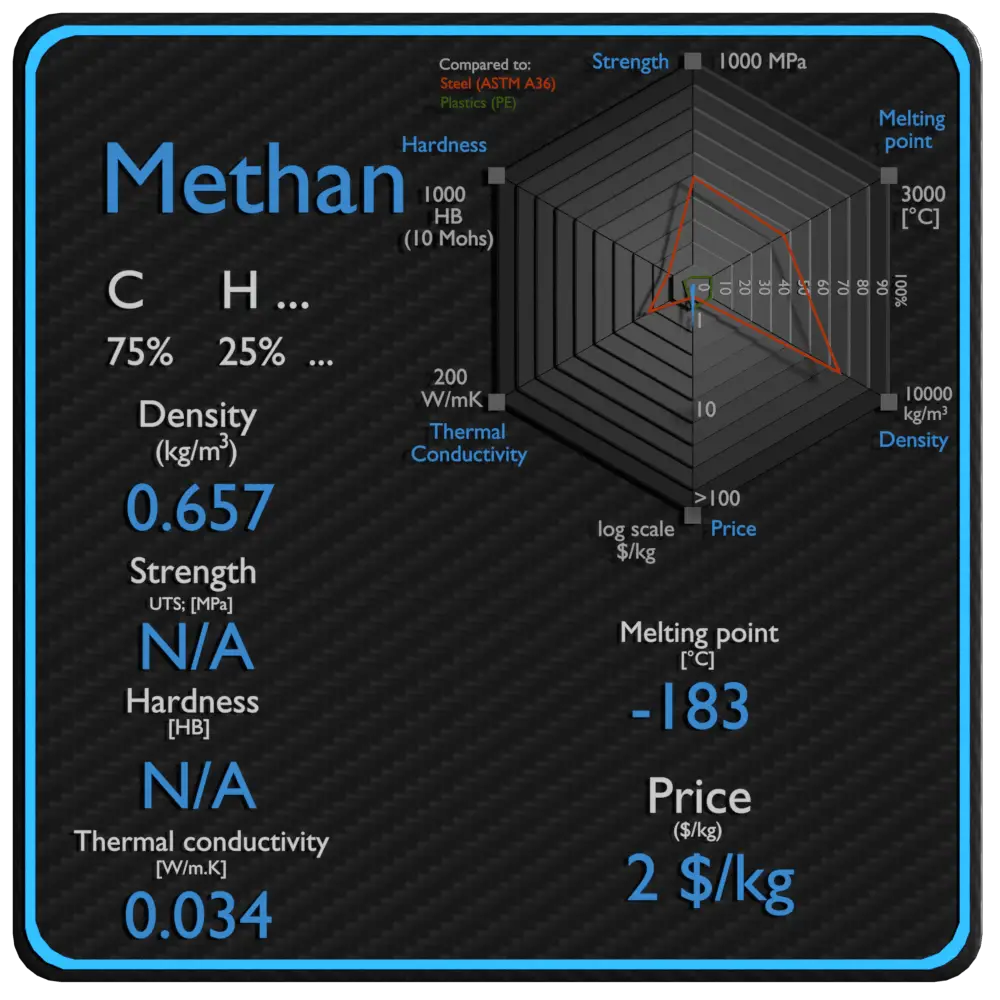
Methane, CH4, is a colorless odorless gas. It is also known as marsh gas or methyl hydride. The vapors are lighter than air. It is a group-14 hydride and the simplest alkane, and is the main constituent of natural gas.

methan properties density strength price

Summary

Name Methane
Phase at STP gas
Density 0.657 kg/m3
Ultimate Tensile Strength N/A
Yield Strength N/A
Young’s Modulus of Elasticity N/A
Brinell Hardness N/A
Melting Point -183 °C
Thermal Conductivity 0.034 W/mK
Heat Capacity 2200 J/g K
Price 2 $/kg

Composition of Methane

Methane is a chemical compound with the chemical formula CH4 (one atom of carbon and four atoms of hydrogen).

75%Carbon in Periodic Table

25%Hydrogen in Periodic Table

Applications of Methane

Methane is a fuel and can be used in industrial chemical processes and may be transported as a refrigerated liquid (liquefied natural gas, or LNG). Methane is used as a fuel for ovens, homes, water heaters, kilns, automobiles, turbines, and other things. Natural gas is a naturally occurring hydrocarbon gas mixture consisting primarily of methane, but commonly including varying amounts of other higher alkanes.


Strength of Materials

Material Table - Strength of Materials

Elasticity of Materials

Material Table - Elasticity of Materials

Hardness of Materials

Material Table - Hardness of Materials  

Thermal Properties of Methane

Methane – Melting Point

Melting point of Methane is -183 °C.

Note that, these points are associated with the standard atmospheric pressure. In general, melting is a phase change of a substance from the solid to the liquid phase. The melting point of a substance is the temperature at which this phase change occurs. The melting point also defines a condition in which the solid and liquid can exist in equilibrium. For various chemical compounds and alloys, it is difficult to define the melting point, since they are usually a mixture of various chemical elements.

Methane – Thermal Conductivity

Thermal conductivity of Methane is 0.034 W/(m·K).

The heat transfer characteristics of a solid material are measured by a property called the thermal conductivity, k (or λ), measured in W/m.K. It is a measure of a substance’s ability to transfer heat through a material by conduction. Note that Fourier’s law applies for all matter, regardless of its state (solid, liquid, or gas), therefore, it is also defined for liquids and gases.

The thermal conductivity of most liquids and solids varies with temperature. For vapors, it also depends upon pressure. In general:

thermal conductivity - definition

Most materials are very nearly homogeneous, therefore we can usually write k = k (T). Similar definitions are associated with thermal conductivities in the y- and z-directions (ky, kz), but for an isotropic material the thermal conductivity is independent of the direction of transfer, kx = ky = kz = k.

Methane – Specific Heat

Specific heat of Methane is 2200 J/g K.

Specific heat, or specific heat capacity, is a property related to internal energy that is very important in thermodynamics. The intensive properties cv and cp are defined for pure, simple compressible substances as partial derivatives of the internal energy u(T, v) and enthalpy h(T, p), respectively:

where the subscripts v and p denote the variables held fixed during differentiation. The properties cv and cp are referred to as specific heats (or heat capacities) because under certain special conditions they relate the temperature change of a system to the amount of energy added by heat transfer. Their SI units are J/kg K or J/mol K.

Melting Point of Materials

Material Table - Melting Point

Thermal Conductivity of Materials

Material Table - Thermal Conductivity

Heat Capacity of Materials

Material Table - Heat Capacity

Properties and prices of other materials

material-table-in-8k-resolution
Rubber – Material Table – Applications – Price

About Rubber

Rubber is a material, which can stretch and shrink. It is a polymer. It can be produced from natural sources (e.g. natural rubber) or can be synthesised on an industrial scale. For example, car tires are usually made from Styrene-butadiene or styrene-butadiene rubber (SBR). These materials have good abrasion resistance and good aging stability when protected by additives. In 2012, more than 5.4 million tonnes of SBR were processed worldwide. Many other things are made from rubber, like gloves, tires, plugs, and masks. Natural rubber, also called caucho or caoutchouc, as initially produced, consists of polymers of the organic compound isoprene, with minor impurities of other organic compounds, plus water.

rubber properties density strength price

Summary

Name Rubber
Phase at STP solid
Density 1100 kg/m3
Ultimate Tensile Strength 5 MPa
Yield Strength 15 MPa
Young’s Modulus of Elasticity 0.05 GPa
Brinell Hardness N/A
Melting Point 177 °C
Thermal Conductivity 0.5 W/mK
Heat Capacity 1300 J/g K
Price 2.2 $/kg

Composition of Rubber

Natural rubber is the polymer cis-1,4-polyisoprene. Typically, a small percentage (up to 5% of dry mass) of other materials, such as proteins, fatty acids, resins, and inorganic materials (salts) are found in natural rubber. Polyisoprene can also be created synthetically, producing what is sometimes referred to as “synthetic natural rubber”, but the synthetic and natural routes are distinct.

90%Carbon in Periodic Table

10%Hydrogen in Periodic Table

Applications of Rubber

Rubber - Material Table - Applications - Price
Source: wikipedia.org License: CC-BY SA 3.0

Rubber moulded products are widely used industrially (and in some household applications) in the form of rubber goods and appliances. Rubber is used in garden hoses and pipes for small scale gardening applications. Most of the tyres and tubes used in automobiles are made up of rubber.

Mechanical Properties of Rubber

Strength of Rubber

In mechanics of materials, the strength of a material is its ability to withstand an applied load without failure or plastic deformation. Strength of materials basically considers the relationship between the external loads applied to a material and the resulting deformation or change in material dimensions. In designing structures and machines, it is important to consider these factors, in order that the material selected will have adequate strength to resist applied loads or forces and retain its original shape.

Strength of a material is its ability to withstand this applied load without failure or plastic deformation. For tensile stress, the capacity of a material or structure to withstand loads tending to elongate is known as ultimate tensile strength (UTS). Yield strength or yield stress is the material property defined as the stress at which a material begins to deform plastically whereas yield point is the point where nonlinear (elastic + plastic) deformation begins. In case of tensional stress of a uniform bar (stress-strain curve), the Hooke’s law describes behaviour of a bar in the elastic region. The Young’s modulus of elasticity is the elastic modulus for tensile and compressive stress in the linear elasticity regime of a uniaxial deformation and is usually assessed by tensile tests.

See also: Strength of Materials

Ultimate Tensile Strength of Rubber

Ultimate tensile strength of Rubber is 5 MPa.

Yield Strength of Rubber

Yield strength of Rubber is 15 MPa.

Modulus of Elasticity of Rubber

The Young’s modulus of elasticity of Rubber is 0.05 GPa.

Hardness of Rubber

In materials science, hardness is the ability to withstand surface indentation (localized plastic deformation) and scratching. Brinell hardness test is one of indentation hardness tests, that has been developed for hardness testing. In Brinell tests, a hard, spherical indenter is forced under a specific load into the surface of the metal to be tested.

The Brinell hardness number (HB) is the load divided by the surface area of the indentation. The diameter of the impression is measured with a microscope with a superimposed scale. The Brinell hardness number is computed from the equation:

brinell hardness number - definition

Brinell hardness of Rubber is approximately N/A.

See also: Hardness of Materials

Strength of Materials

Material Table - Strength of Materials

Elasticity of Materials

Material Table - Elasticity of Materials

Hardness of Materials

Material Table - Hardness of Materials  

Thermal Properties of Rubber

Rubber – Melting Point

Melting point of Rubber is 177 °C.

Note that, these points are associated with the standard atmospheric pressure. In general, melting is a phase change of a substance from the solid to the liquid phase. The melting point of a substance is the temperature at which this phase change occurs. The melting point also defines a condition in which the solid and liquid can exist in equilibrium. For various chemical compounds and alloys, it is difficult to define the melting point, since they are usually a mixture of various chemical elements.

Rubber – Thermal Conductivity

Thermal conductivity of Rubber is 0.5 W/(m·K).

The heat transfer characteristics of a solid material are measured by a property called the thermal conductivity, k (or λ), measured in W/m.K. It is a measure of a substance’s ability to transfer heat through a material by conduction. Note that Fourier’s law applies for all matter, regardless of its state (solid, liquid, or gas), therefore, it is also defined for liquids and gases.

The thermal conductivity of most liquids and solids varies with temperature. For vapors, it also depends upon pressure. In general:

thermal conductivity - definition

Most materials are very nearly homogeneous, therefore we can usually write k = k (T). Similar definitions are associated with thermal conductivities in the y- and z-directions (ky, kz), but for an isotropic material the thermal conductivity is independent of the direction of transfer, kx = ky = kz = k.

Rubber – Specific Heat

Specific heat of Rubber is 1300 J/g K.

Specific heat, or specific heat capacity, is a property related to internal energy that is very important in thermodynamics. The intensive properties cv and cp are defined for pure, simple compressible substances as partial derivatives of the internal energy u(T, v) and enthalpy h(T, p), respectively:

where the subscripts v and p denote the variables held fixed during differentiation. The properties cv and cp are referred to as specific heats (or heat capacities) because under certain special conditions they relate the temperature change of a system to the amount of energy added by heat transfer. Their SI units are J/kg K or J/mol K.

Melting Point of Materials

Material Table - Melting Point

Thermal Conductivity of Materials

Material Table - Thermal Conductivity

Heat Capacity of Materials

Material Table - Heat Capacity

Properties and prices of other materials

material-table-in-8k-resolution

Polyamide – Nylon – Material Table – Applications – Price

About Polyamide – Nylon

A polyamide is a polymer with repeating units linked by amide bonds. Artificially made polyamides can be made through step-growth polymerization or solid-phase synthesis yielding materials such as nylons, aramids, and sodium poly. Nylon is a crystalline polymer with high modulus, strength, and impact properties, and low coefficient of friction and resistance to abrasion. A variety of commercial nylons are available, including nylon 6, nylon 11, nylon 12, nylon 6,6, nylon 6,10, and nylon 6,12. Nylon fibers do have a tendency to pick up a static charge, so antistatic agents are often added for carpeting and other applications.

polyamide nylon properties density strength price

Summary

Name Polyamide – Nylon
Phase at STP solid
Density 1140 kg/m3
Ultimate Tensile Strength 40 MPa
Yield Strength N/A
Young’s Modulus of Elasticity 2.9 GPa
Brinell Hardness 100 BHN
Melting Point 257 °C
Thermal Conductivity 0.2 W/mK
Heat Capacity 1500 J/g K
Price 2.5 $/kg

Composition of Polyamide – Nylon

Nylons, also known as polyamides, are synthesized by condensation polymerization methods, often an aliphatic diamine and a diacid. Although the materials possess a wide range of properties, they all contain the amide (-CONH-) linkage in their backbone.

75%Carbon in Periodic Table

11%Hydrogen in Periodic Table

14%Nitrogen in Periodic Table

Applications of Polyamide – Nylon

Nylons can be used as gears, cams, rollers, bearings, nuts and bolts, power tool housings, electrical connectors, combs, coil formers, fuel tanks for cars, kitchen utensils.

Mechanical Properties of Polyamide – Nylon

Strength of Polyamide – Nylon

In mechanics of materials, the strength of a material is its ability to withstand an applied load without failure or plastic deformation. Strength of materials basically considers the relationship between the external loads applied to a material and the resulting deformation or change in material dimensions. In designing structures and machines, it is important to consider these factors, in order that the material selected will have adequate strength to resist applied loads or forces and retain its original shape.

Strength of a material is its ability to withstand this applied load without failure or plastic deformation. For tensile stress, the capacity of a material or structure to withstand loads tending to elongate is known as ultimate tensile strength (UTS). Yield strength or yield stress is the material property defined as the stress at which a material begins to deform plastically whereas yield point is the point where nonlinear (elastic + plastic) deformation begins. In case of tensional stress of a uniform bar (stress-strain curve), the Hooke’s law describes behaviour of a bar in the elastic region. The Young’s modulus of elasticity is the elastic modulus for tensile and compressive stress in the linear elasticity regime of a uniaxial deformation and is usually assessed by tensile tests.

See also: Strength of Materials

Ultimate Tensile Strength of Polyamide – Nylon

Ultimate tensile strength of Polyamide – Nylon is 40 MPa.

Yield Strength of Polyamide – Nylon

Yield strength of Polyamide – Nylon is N/A.

Modulus of Elasticity of Polyamide – Nylon

The Young’s modulus of elasticity of Polyamide – Nylon is 2.9 GPa.

Hardness of Polyamide – Nylon

In materials science, hardness is the ability to withstand surface indentation (localized plastic deformation) and scratching. Brinell hardness test is one of indentation hardness tests, that has been developed for hardness testing. In Brinell tests, a hard, spherical indenter is forced under a specific load into the surface of the metal to be tested.

The Brinell hardness number (HB) is the load divided by the surface area of the indentation. The diameter of the impression is measured with a microscope with a superimposed scale. The Brinell hardness number is computed from the equation:

brinell hardness number - definition

Brinell hardness of Polyamide – Nylon is approximately 100 BHN (converted).

See also: Hardness of Materials

Strength of Materials

Material Table - Strength of Materials

Elasticity of Materials

Material Table - Elasticity of Materials

Hardness of Materials

Material Table - Hardness of Materials  

Thermal Properties of Polyamide – Nylon

Polyamide – Nylon – Melting Point

Melting point of Polyamide – Nylon is 257 °C.

Note that, these points are associated with the standard atmospheric pressure. In general, melting is a phase change of a substance from the solid to the liquid phase. The melting point of a substance is the temperature at which this phase change occurs. The melting point also defines a condition in which the solid and liquid can exist in equilibrium. For various chemical compounds and alloys, it is difficult to define the melting point, since they are usually a mixture of various chemical elements.

Polyamide – Nylon – Thermal Conductivity

Thermal conductivity of Polyamide – Nylon is 0.2 W/(m·K).

The heat transfer characteristics of a solid material are measured by a property called the thermal conductivity, k (or λ), measured in W/m.K. It is a measure of a substance’s ability to transfer heat through a material by conduction. Note that Fourier’s law applies for all matter, regardless of its state (solid, liquid, or gas), therefore, it is also defined for liquids and gases.

The thermal conductivity of most liquids and solids varies with temperature. For vapors, it also depends upon pressure. In general:

thermal conductivity - definition

Most materials are very nearly homogeneous, therefore we can usually write k = k (T). Similar definitions are associated with thermal conductivities in the y- and z-directions (ky, kz), but for an isotropic material the thermal conductivity is independent of the direction of transfer, kx = ky = kz = k.

Polyamide – Nylon – Specific Heat

Specific heat of Polyamide – Nylon is 1500 J/g K.

Specific heat, or specific heat capacity, is a property related to internal energy that is very important in thermodynamics. The intensive properties cv and cp are defined for pure, simple compressible substances as partial derivatives of the internal energy u(T, v) and enthalpy h(T, p), respectively:

where the subscripts v and p denote the variables held fixed during differentiation. The properties cv and cp are referred to as specific heats (or heat capacities) because under certain special conditions they relate the temperature change of a system to the amount of energy added by heat transfer. Their SI units are J/kg K or J/mol K.

Melting Point of Materials

Material Table - Melting Point

Thermal Conductivity of Materials

Material Table - Thermal Conductivity

Heat Capacity of Materials

Material Table - Heat Capacity

Properties and prices of other materials

material-table-in-8k-resolution

Kevlar – Material Table – Applications – Price

About Kevlar

Kevlar has many applications, ranging from bicycle tires and racing sails to bulletproof vests, because of its high tensile strength-to-weight ratio; by this measure it is five times stronger than steel. The high tenacity and thermally stable fibers are used for lightweight bulletproof body armor, and also due to weight-saving it can also replace heavier materials in airplanes, for fuel saving.

kevlar properties density strength price

Summary

Name Kevlar
Phase at STP solid
Density 1440 kg/m3
Ultimate Tensile Strength 3600 MPa
Yield Strength N/A
Young’s Modulus of Elasticity 130 GPa
Brinell Hardness N/A
Melting Point 477 °C
Thermal Conductivity 0.04 W/mK
Heat Capacity 1420 J/g K
Price 50 $/kg

Composition of Kevlar

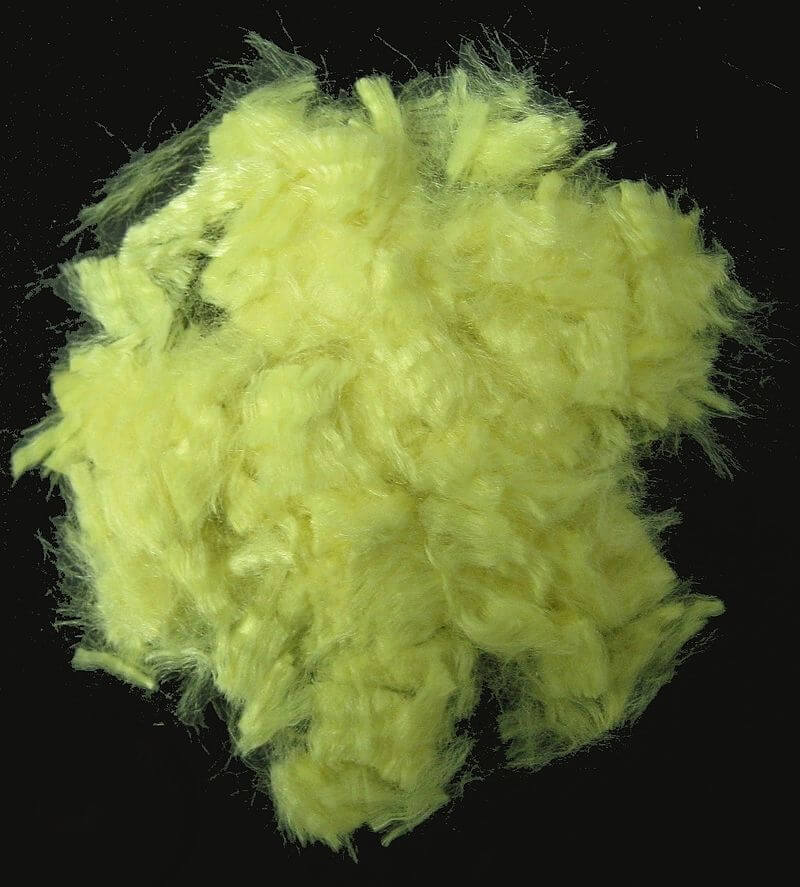
Typically it is spun into ropes or fabric sheets that can be used as such or as an ingredient in composite material components. When Kevlar is spun, the resulting fiber has a tensile strength of about 3,620 MPa, and a relative density of 1.44. The polymer owes its high strength to the many inter-chain bonds. These inter-molecular hydrogen bonds form between the carbonyl groups and NH centers.

75%Carbon in Periodic Table

10%Hydrogen in Periodic Table

15%Nitrogen in Periodic Table

Applications of Kevlar

Kevlar - Material Table - Applications - Price
Source: wikipedia.org License: CC-BY SA 3.0

Kevlar has many applications, ranging from bicycle tires and racing sails to bulletproof vests, because of its high tensile strength-to-weight ratio; by this measure it is five times stronger than steel. The high tenacity and thermally stable fibers are used for lightweight bulletproof body armor, and also due to weight-saving it can also replace heavier materials in airplanes, for fuel saving.

Mechanical Properties of Kevlar

Strength of Kevlar

In mechanics of materials, the strength of a material is its ability to withstand an applied load without failure or plastic deformation. Strength of materials basically considers the relationship between the external loads applied to a material and the resulting deformation or change in material dimensions. In designing structures and machines, it is important to consider these factors, in order that the material selected will have adequate strength to resist applied loads or forces and retain its original shape.

Strength of a material is its ability to withstand this applied load without failure or plastic deformation. For tensile stress, the capacity of a material or structure to withstand loads tending to elongate is known as ultimate tensile strength (UTS). Yield strength or yield stress is the material property defined as the stress at which a material begins to deform plastically whereas yield point is the point where nonlinear (elastic + plastic) deformation begins. In case of tensional stress of a uniform bar (stress-strain curve), the Hooke’s law describes behaviour of a bar in the elastic region. The Young’s modulus of elasticity is the elastic modulus for tensile and compressive stress in the linear elasticity regime of a uniaxial deformation and is usually assessed by tensile tests.

See also: Strength of Materials

Ultimate Tensile Strength of Kevlar

Ultimate tensile strength of Kevlar is 3600 MPa.

Yield Strength of Kevlar

Yield strength of Kevlar is N/A.

Modulus of Elasticity of Kevlar

The Young’s modulus of elasticity of Kevlar is 130 GPa.

Hardness of Kevlar

In materials science, hardness is the ability to withstand surface indentation (localized plastic deformation) and scratching. Brinell hardness test is one of indentation hardness tests, that has been developed for hardness testing. In Brinell tests, a hard, spherical indenter is forced under a specific load into the surface of the metal to be tested.

The Brinell hardness number (HB) is the load divided by the surface area of the indentation. The diameter of the impression is measured with a microscope with a superimposed scale. The Brinell hardness number is computed from the equation:

brinell hardness number - definition

Brinell hardness of Kevlar is approximately N/A.

See also: Hardness of Materials

Strength of Materials

Material Table - Strength of Materials

Elasticity of Materials

Material Table - Elasticity of Materials

Hardness of Materials

Material Table - Hardness of Materials  

Thermal Properties of Kevlar

Kevlar – Melting Point

Melting point of Kevlar is 477 °C.

Note that, these points are associated with the standard atmospheric pressure. In general, melting is a phase change of a substance from the solid to the liquid phase. The melting point of a substance is the temperature at which this phase change occurs. The melting point also defines a condition in which the solid and liquid can exist in equilibrium. For various chemical compounds and alloys, it is difficult to define the melting point, since they are usually a mixture of various chemical elements.

Kevlar – Thermal Conductivity

Thermal conductivity of Kevlar is 0.04 W/(m·K).

The heat transfer characteristics of a solid material are measured by a property called the thermal conductivity, k (or λ), measured in W/m.K. It is a measure of a substance’s ability to transfer heat through a material by conduction. Note that Fourier’s law applies for all matter, regardless of its state (solid, liquid, or gas), therefore, it is also defined for liquids and gases.

The thermal conductivity of most liquids and solids varies with temperature. For vapors, it also depends upon pressure. In general:

thermal conductivity - definition

Most materials are very nearly homogeneous, therefore we can usually write k = k (T). Similar definitions are associated with thermal conductivities in the y- and z-directions (ky, kz), but for an isotropic material the thermal conductivity is independent of the direction of transfer, kx = ky = kz = k.

Kevlar – Specific Heat

Specific heat of Kevlar is 1420 J/g K.

Specific heat, or specific heat capacity, is a property related to internal energy that is very important in thermodynamics. The intensive properties cv and cp are defined for pure, simple compressible substances as partial derivatives of the internal energy u(T, v) and enthalpy h(T, p), respectively:

where the subscripts v and p denote the variables held fixed during differentiation. The properties cv and cp are referred to as specific heats (or heat capacities) because under certain special conditions they relate the temperature change of a system to the amount of energy added by heat transfer. Their SI units are J/kg K or J/mol K.

Melting Point of Materials

Material Table - Melting Point

Thermal Conductivity of Materials

Material Table - Thermal Conductivity

Heat Capacity of Materials

Material Table - Heat Capacity

Properties and prices of other materials

material-table-in-8k-resolution

Salt – Material Table – Applications – Price

About Salt

Salt is a mineral composed primarily of sodium chloride (NaCl), a chemical compound belonging to the larger class of salts; salt in its natural form as a crystalline mineral is known as rock salt or halite. Halite is mainly a sedimentary mineral that usually forms in arid climates where ocean water evaporates. The mineral is typically colorless or white, but may also be light blue, dark blue, purple, pink, red, orange, yellow or gray depending on inclusion of other materials, impurities, and structural or isotopic abnormalities in the crystals.

salt properties density strength price

Summary

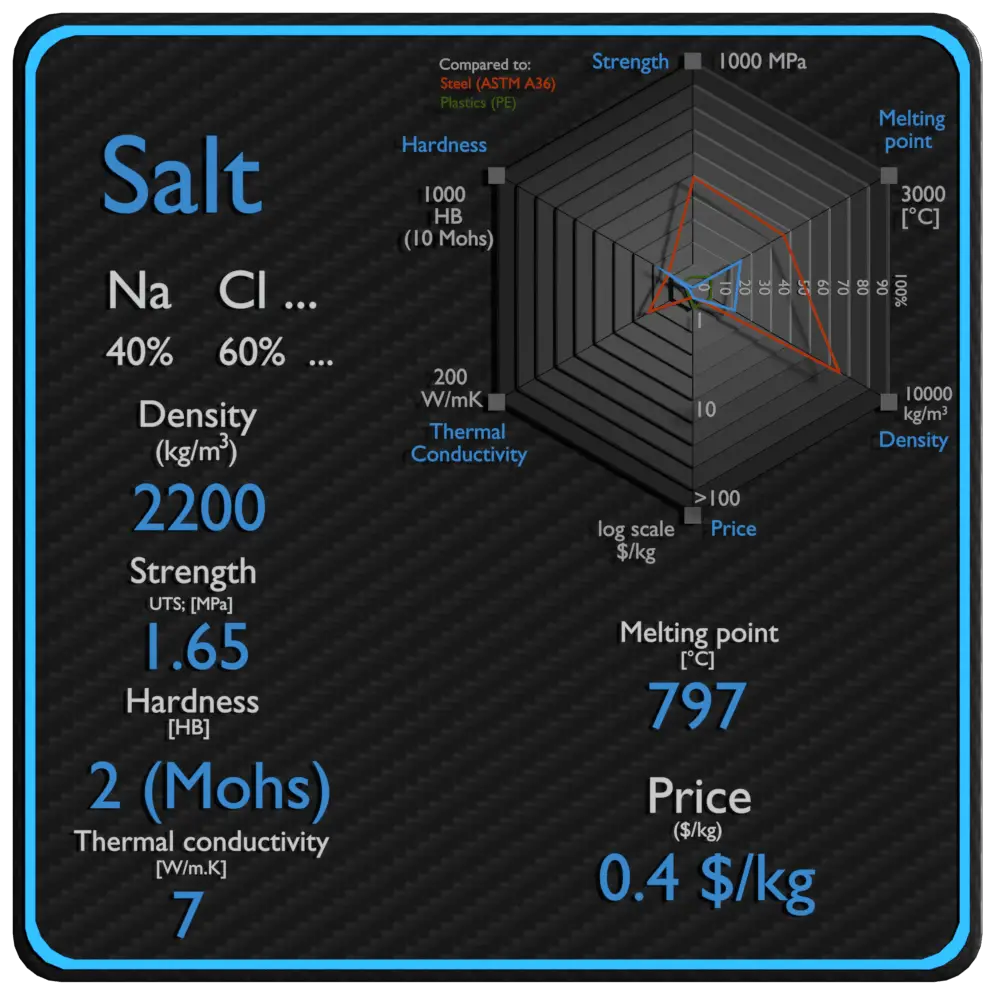
Name Salt
Phase at STP solid
Density 2200 kg/m3
Ultimate Tensile Strength 1.65 MPa
Yield Strength N/A
Young’s Modulus of Elasticity 20 GPa
Brinell Hardness 6 Mohs
Melting Point 797 °C
Thermal Conductivity 7 W/mK
Heat Capacity 880 J/g K
Price 0.4 $/kg

Composition of Salt

Salt is mostly sodium chloride, the ionic compound with the formula NaCl, representing equal proportions of sodium and chlorine. Sea salt and freshly mined salt (much of which is sea salt from prehistoric seas) also contain small amounts of trace elements (which in these small amounts are generally good for plant and animal health.

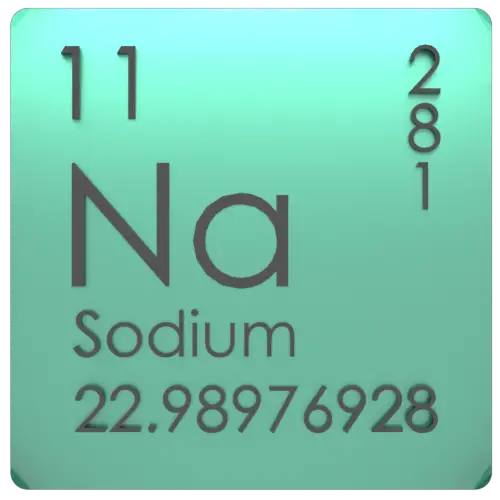
40%Sodium in Periodic Table

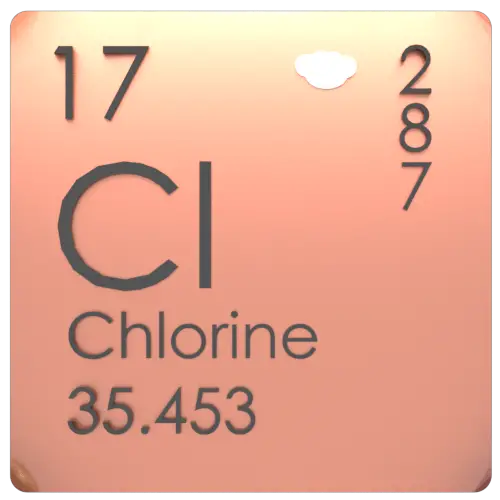
60%Chlorine in Periodic Table

Applications of Salt

Salt - Material Table - Applications - Price
Source: wikipedia.org License: CC-BY SA 3.0

Salt has many uses. Most of the salt produced is crushed and used in the winter on roads to control the accumulation of snow and ice. Significant amounts of salt are also used by the chemical industry. Salt is an essential nutrient for humans and most animals, and it is also a favorite seasoning for many types of food. Salt is a mineral that everyone knows.

Mechanical Properties of Salt

Strength of Salt

In mechanics of materials, the strength of a material is its ability to withstand an applied load without failure or plastic deformation. Strength of materials basically considers the relationship between the external loads applied to a material and the resulting deformation or change in material dimensions. In designing structures and machines, it is important to consider these factors, in order that the material selected will have adequate strength to resist applied loads or forces and retain its original shape.

Strength of a material is its ability to withstand this applied load without failure or plastic deformation. For tensile stress, the capacity of a material or structure to withstand loads tending to elongate is known as ultimate tensile strength (UTS). Yield strength or yield stress is the material property defined as the stress at which a material begins to deform plastically whereas yield point is the point where nonlinear (elastic + plastic) deformation begins. In case of tensional stress of a uniform bar (stress-strain curve), the Hooke’s law describes behaviour of a bar in the elastic region. The Young’s modulus of elasticity is the elastic modulus for tensile and compressive stress in the linear elasticity regime of a uniaxial deformation and is usually assessed by tensile tests.

See also: Strength of Materials

Ultimate Tensile Strength of Salt

Ultimate tensile strength of Salt is 1.65 MPa.

Yield Strength of Salt

Yield strength of Salt is N/A.

Modulus of Elasticity of Salt

The Young’s modulus of elasticity of Salt is 20 GPa.

Hardness of Salt

In materials science, hardness is the ability to withstand surface indentation (localized plastic deformation) and scratching. Brinell hardness test is one of indentation hardness tests, that has been developed for hardness testing. In Brinell tests, a hard, spherical indenter is forced under a specific load into the surface of the metal to be tested.

The Brinell hardness number (HB) is the load divided by the surface area of the indentation. The diameter of the impression is measured with a microscope with a superimposed scale. The Brinell hardness number is computed from the equation:

brinell hardness number - definition

Hardness of Salt is approximately 2 Mohs.

See also: Hardness of Materials

Strength of Materials

Material Table - Strength of Materials

Elasticity of Materials

Material Table - Elasticity of Materials

Hardness of Materials

Material Table - Hardness of Materials  

Thermal Properties of Salt

Salt – Melting Point

Melting point of Salt is 797 °C.

Note that, these points are associated with the standard atmospheric pressure. In general, melting is a phase change of a substance from the solid to the liquid phase. The melting point of a substance is the temperature at which this phase change occurs. The melting point also defines a condition in which the solid and liquid can exist in equilibrium. For various chemical compounds and alloys, it is difficult to define the melting point, since they are usually a mixture of various chemical elements.

Salt – Thermal Conductivity

Thermal conductivity of Salt is 7 W/(m·K).

The heat transfer characteristics of a solid material are measured by a property called the thermal conductivity, k (or λ), measured in W/m.K. It is a measure of a substance’s ability to transfer heat through a material by conduction. Note that Fourier’s law applies for all matter, regardless of its state (solid, liquid, or gas), therefore, it is also defined for liquids and gases.

The thermal conductivity of most liquids and solids varies with temperature. For vapors, it also depends upon pressure. In general:

thermal conductivity - definition

Most materials are very nearly homogeneous, therefore we can usually write k = k (T). Similar definitions are associated with thermal conductivities in the y- and z-directions (ky, kz), but for an isotropic material the thermal conductivity is independent of the direction of transfer, kx = ky = kz = k.

Salt – Specific Heat

Specific heat of Salt is 880 J/g K.

Specific heat, or specific heat capacity, is a property related to internal energy that is very important in thermodynamics. The intensive properties cv and cp are defined for pure, simple compressible substances as partial derivatives of the internal energy u(T, v) and enthalpy h(T, p), respectively:

where the subscripts v and p denote the variables held fixed during differentiation. The properties cv and cp are referred to as specific heats (or heat capacities) because under certain special conditions they relate the temperature change of a system to the amount of energy added by heat transfer. Their SI units are J/kg K or J/mol K.

Melting Point of Materials

Material Table - Melting Point

Thermal Conductivity of Materials

Material Table - Thermal Conductivity

Heat Capacity of Materials

Material Table - Heat Capacity

Properties and prices of other materials

material-table-in-8k-resolution