Facebook Instagram Youtube Twitter

Lawrencium – Periodic Table – Atomic Properties

Lawrencium-density-atomic-number-mass-radius

Lawrencium is the final member of the actinide series. Like all elements with atomic number over 100, lawrencium can only be produced in particle accelerators by bombarding lighter elements with charged particles.

Summary

Element Lawrencium
Atomic number 103
Atomic mass [amu] 262
Atomic mass [pm] —
Density at STP [g/cm3] 16
Number of protons 103
Number of neutrons (typical isotopes) 254-256,259-262,266
Number of electrons 103
Electron configuration [Rn] 5f14 7s2 7p1
Oxidation states +3
Electron affinity [kJ/mol] —
Electronegativity [Pauling scale] —
First ionization energy [eV] —

Atomic Number – Protons, Electrons and Neutrons in Lawrencium
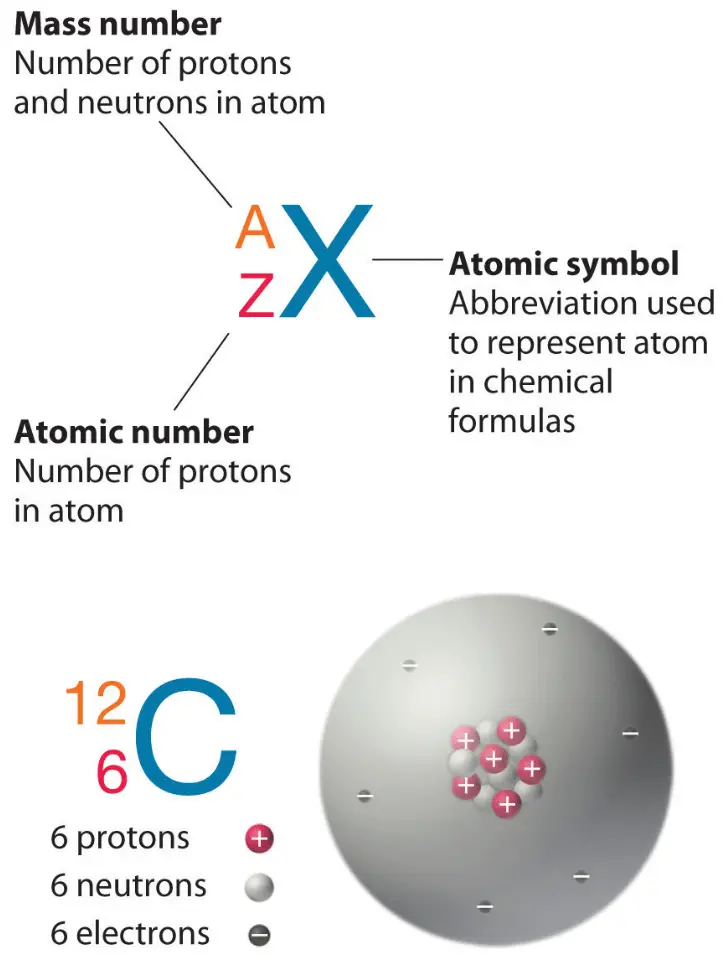
Proton Number - Atomic NumberLawrencium is a chemical element with atomic number 103 which means there are 103 protons in its nucleus. Total number of protons in the nucleus is called the atomic number of the atom and is given the symbol Z. The total electrical charge of the nucleus is therefore +Ze, where e (elementary charge) equals to 1,602 x 10-19 coulombs.

The total number of neutrons in the nucleus of an atom is called the neutron number of the atom and is given the symbol N. Neutron number plus atomic number equals atomic mass number: N+Z=A. The difference between the neutron number and the atomic number is known as the neutron excess: D = N – Z = A – 2Z.

For stable elements, there is usually a variety of stable isotopes. Isotopes are nuclides that have the same atomic number and are therefore the same element, but differ in the number of neutrons. Mass numbers of typical isotopes of Lawrencium are 254-256,259-262,266.

Atomic Mass of Lawrencium

Atomic mass of Lawrencium is 262 u. 

The atomic mass is the mass of an atom. The atomic mass or relative isotopic mass refers to the mass of a single particle, and therefore is tied to a certain specific isotope of an element. The atomic mass is carried by the atomic nucleus, which occupies only about 10-12 of the total volume of the atom or less, but it contains all the positive charge and at least 99.95% of the total mass of the atom. Note that, each element may contain more isotopes, therefore this resulting atomic mass is calculated from naturally-occuring isotopes and their abundance.

Atomic Radius of Lawrencium

The atomic radius of Lawrencium atom is –pm (covalent radius).

Atomic Radius of Chemical Elements

It must be noted, atoms lack a well-defined outer boundary. The atomic radius of a chemical element is a measure of the distance out to which the electron cloud extends from the nucleus. However, this assumes the atom to exhibit a spherical shape, which is only obeyed for atoms in vacuum or free space. Therefore, there are various non-equivalent definitions of atomic radius.

Electrons and Electron Configuration

The number of electrons in an electrically-neutral atom is the same as the number of protons in the nucleus. Therefore, the number of electrons in neutral atom of Lawrencium is 103. Each electron is influenced by the electric fields produced by the positive nuclear charge and the other (Z – 1) negative electrons in the atom.

Since the number of electrons and their arrangement are responsible for the chemical behavior of atoms, the atomic number identifies the various chemical elements. The configuration of these electrons follows from the principles of quantum mechanics. The number of electrons in each element’s electron shells, particularly the outermost valence shell, is the primary factor in determining its chemical bonding behavior. In the periodic table, the elements are listed in order of increasing atomic number Z.

Electron configuration of Lawrencium is [Rn] 5f14 7s2 7p1.

Possible oxidation states are +3.

Density of Lawrencium

Density of Lawrencium is 16g/cm3.

Typical densities of various substances are at atmospheric pressure.

Density is defined as the mass per unit volume. It is an intensive property, which is mathematically defined as mass divided by volume:

ρ = m/V

Atomic Masses of Elements
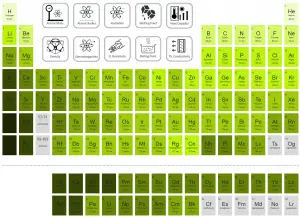
Periodic Table of Elements - atomic mass

Atomic Radii of Elements

Periodic Table of Elements - atomic radius

Densities of Elements

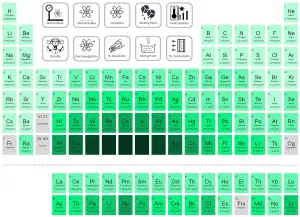
Periodic Table of Elements - density

Lawrencium-protons-neutrons-electrons-configuration

Lawrencium-affinity-electronegativity-ionization

Electron Affinity – Lawrencium

Electron affinity of Lawrencium is — kJ/mol.

In chemistry and atomic physics, the electron affinity of an atom or molecule is defined as:

the change in energy (in kJ/mole) of a neutral atom or molecule (in the gaseous phase) when an electron is added to the atom to form a negative ion.

X + e– → X– + energy        Affinity = – ∆H

In other words, it can be expressed as the neutral atom’s likelihood of gaining an electron. Note that, ionization energies measure the tendency of a neutral atom to resist the loss of electrons. Electron affinities are more difficult to measure than ionization energies.

Electronegativity of Lawrencium

Electronegativity of Lawrencium is —.

Electronegativity, symbol χ, is a chemical property that describes the tendency of an atom to attract electrons towards this atom. For this purposes, a dimensionless quantity the Pauling scale, symbol χ, is the most commonly used.

The electronegativity of Lawrencium is: χ = —

First Ionization Energy of Lawrencium

First Ionization Energy of Lawrencium is — eV.

Ionization energy, also called ionization potential, is the energy necessary to remove an electron from the neutral atom.

X + energy → X+ + e−

where X is any atom or molecule capable of being ionized, X+ is that atom or molecule with an electron removed (positive ion), and e− is the removed electron.

A Lawrencium atom, for example, requires the following ionization energy to remove the outermost electron.

Lr + IE → Lr+ + e−        IE = — eV

Electronegativity of Elements
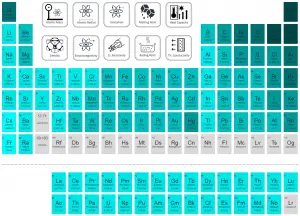
Periodic Table of Elements - electronegativity

Ionization Energy of Elements

Periodic Table of Elements - ionization energy

Lawrencium-periodic-table

Source: www.luciteria.com


Properties of other elements

Lawrencium - Comparison of Atomic Properties

Periodic Table in 8K resolution

Other properties of Lawrencium

 

Nobelium – Periodic Table – Atomic Properties

Nobelium-density-atomic-number-mass-radius

Nobelium is the tenth transuranic element and is the penultimate member of the actinide series. Like all elements with atomic number over 100, nobelium can only be produced in particle accelerators by bombarding lighter elements with charged particles.

Summary

Element Nobelium
Atomic number 102
Atomic mass [amu] 259
Atomic mass [pm] —
Density at STP [g/cm3] 9.9
Number of protons 102
Number of neutrons (typical isotopes) 253-255,257,259
Number of electrons 102
Electron configuration [Rn] 5f14 7s2
Oxidation states +2,3
Electron affinity [kJ/mol] —
Electronegativity [Pauling scale] 1.3
First ionization energy [eV] 6.65

Atomic Number – Protons, Electrons and Neutrons in Nobelium

Proton Number - Atomic NumberNobelium is a chemical element with atomic number 102 which means there are 102 protons in its nucleus. Total number of protons in the nucleus is called the atomic number of the atom and is given the symbol Z. The total electrical charge of the nucleus is therefore +Ze, where e (elementary charge) equals to 1,602 x 10-19 coulombs.

The total number of neutrons in the nucleus of an atom is called the neutron number of the atom and is given the symbol N. Neutron number plus atomic number equals atomic mass number: N+Z=A. The difference between the neutron number and the atomic number is known as the neutron excess: D = N – Z = A – 2Z.

For stable elements, there is usually a variety of stable isotopes. Isotopes are nuclides that have the same atomic number and are therefore the same element, but differ in the number of neutrons. Mass numbers of typical isotopes of Nobelium are 253-255,257,259.

Atomic Mass of Nobelium

Atomic mass of Nobelium is 259 u. 

The atomic mass is the mass of an atom. The atomic mass or relative isotopic mass refers to the mass of a single particle, and therefore is tied to a certain specific isotope of an element. The atomic mass is carried by the atomic nucleus, which occupies only about 10-12 of the total volume of the atom or less, but it contains all the positive charge and at least 99.95% of the total mass of the atom. Note that, each element may contain more isotopes, therefore this resulting atomic mass is calculated from naturally-occuring isotopes and their abundance.

Atomic Radius of Nobelium

The atomic radius of Nobelium atom is –pm (covalent radius).

Atomic Radius of Chemical Elements

It must be noted, atoms lack a well-defined outer boundary. The atomic radius of a chemical element is a measure of the distance out to which the electron cloud extends from the nucleus. However, this assumes the atom to exhibit a spherical shape, which is only obeyed for atoms in vacuum or free space. Therefore, there are various non-equivalent definitions of atomic radius.

Electrons and Electron Configuration

The number of electrons in an electrically-neutral atom is the same as the number of protons in the nucleus. Therefore, the number of electrons in neutral atom of Nobelium is 102. Each electron is influenced by the electric fields produced by the positive nuclear charge and the other (Z – 1) negative electrons in the atom.

Since the number of electrons and their arrangement are responsible for the chemical behavior of atoms, the atomic number identifies the various chemical elements. The configuration of these electrons follows from the principles of quantum mechanics. The number of electrons in each element’s electron shells, particularly the outermost valence shell, is the primary factor in determining its chemical bonding behavior. In the periodic table, the elements are listed in order of increasing atomic number Z.

Electron configuration of Nobelium is [Rn] 5f14 7s2.

Possible oxidation states are +2,3.

Density of Nobelium

Density of Nobelium is 9.9g/cm3.

Typical densities of various substances are at atmospheric pressure.

Density is defined as the mass per unit volume. It is an intensive property, which is mathematically defined as mass divided by volume:

ρ = m/V

Atomic Masses of Elements

Periodic Table of Elements - atomic mass

Atomic Radii of Elements

Periodic Table of Elements - atomic radius

Densities of Elements

Periodic Table of Elements - density

Nobelium-protons-neutrons-electrons-configuration

Nobelium-affinity-electronegativity-ionization

Electron Affinity – Nobelium

Electron affinity of Nobelium is — kJ/mol.

In chemistry and atomic physics, the electron affinity of an atom or molecule is defined as:

the change in energy (in kJ/mole) of a neutral atom or molecule (in the gaseous phase) when an electron is added to the atom to form a negative ion.

X + e– → X– + energy        Affinity = – ∆H

In other words, it can be expressed as the neutral atom’s likelihood of gaining an electron. Note that, ionization energies measure the tendency of a neutral atom to resist the loss of electrons. Electron affinities are more difficult to measure than ionization energies.

Electronegativity of Nobelium

Electronegativity of Nobelium is 1.3.

Electronegativity, symbol χ, is a chemical property that describes the tendency of an atom to attract electrons towards this atom. For this purposes, a dimensionless quantity the Pauling scale, symbol χ, is the most commonly used.

The electronegativity of Nobelium is: χ = 1.3

First Ionization Energy of Nobelium

First Ionization Energy of Nobelium is 6.65 eV.

Ionization energy, also called ionization potential, is the energy necessary to remove an electron from the neutral atom.

X + energy → X+ + e−

where X is any atom or molecule capable of being ionized, X+ is that atom or molecule with an electron removed (positive ion), and e− is the removed electron.

A Nobelium atom, for example, requires the following ionization energy to remove the outermost electron.

No + IE → No+ + e−        IE = 6.65 eV

Electronegativity of Elements

Periodic Table of Elements - electronegativity

Ionization Energy of Elements

Periodic Table of Elements - ionization energy

Nobelium-periodic-table

Source: www.luciteria.com


Properties of other elements

Nobelium - Comparison of Atomic Properties

Periodic Table in 8K resolution

Other properties of Nobelium


Mendelevium – Periodic Table – Atomic Properties

Mendelevium-density-atomic-number-mass-radius

Mendelevium is a metallic radioactive transuranic element in the actinide series, it is the first element that currently cannot be produced in macroscopic quantities.

Summary

Element Mendelevium
Atomic number 101
Atomic mass [amu] 258
Atomic mass [pm] —
Density at STP [g/cm3] 10.3
Number of protons 101
Number of neutrons (typical isotopes) 257,258,260
Number of electrons 101
Electron configuration [Rn] 5f13 7s2
Oxidation states +2,3
Electron affinity [kJ/mol] —
Electronegativity [Pauling scale] 1.3
First ionization energy [eV] 6.58

Atomic Number – Protons, Electrons and Neutrons in Mendelevium

Proton Number - Atomic NumberMendelevium is a chemical element with atomic number 101 which means there are 101 protons in its nucleus. Total number of protons in the nucleus is called the atomic number of the atom and is given the symbol Z. The total electrical charge of the nucleus is therefore +Ze, where e (elementary charge) equals to 1,602 x 10-19 coulombs.

The total number of neutrons in the nucleus of an atom is called the neutron number of the atom and is given the symbol N. Neutron number plus atomic number equals atomic mass number: N+Z=A. The difference between the neutron number and the atomic number is known as the neutron excess: D = N – Z = A – 2Z.

For stable elements, there is usually a variety of stable isotopes. Isotopes are nuclides that have the same atomic number and are therefore the same element, but differ in the number of neutrons. Mass numbers of typical isotopes of Mendelevium are 257,258,260.

Atomic Mass of Mendelevium

Atomic mass of Mendelevium is 258 u. 

The atomic mass is the mass of an atom. The atomic mass or relative isotopic mass refers to the mass of a single particle, and therefore is tied to a certain specific isotope of an element. The atomic mass is carried by the atomic nucleus, which occupies only about 10-12 of the total volume of the atom or less, but it contains all the positive charge and at least 99.95% of the total mass of the atom. Note that, each element may contain more isotopes, therefore this resulting atomic mass is calculated from naturally-occuring isotopes and their abundance.

Atomic Radius of Mendelevium

The atomic radius of Mendelevium atom is –pm (covalent radius).

Atomic Radius of Chemical Elements

It must be noted, atoms lack a well-defined outer boundary. The atomic radius of a chemical element is a measure of the distance out to which the electron cloud extends from the nucleus. However, this assumes the atom to exhibit a spherical shape, which is only obeyed for atoms in vacuum or free space. Therefore, there are various non-equivalent definitions of atomic radius.

Electrons and Electron Configuration

The number of electrons in an electrically-neutral atom is the same as the number of protons in the nucleus. Therefore, the number of electrons in neutral atom of Mendelevium is 101. Each electron is influenced by the electric fields produced by the positive nuclear charge and the other (Z – 1) negative electrons in the atom.

Since the number of electrons and their arrangement are responsible for the chemical behavior of atoms, the atomic number identifies the various chemical elements. The configuration of these electrons follows from the principles of quantum mechanics. The number of electrons in each element’s electron shells, particularly the outermost valence shell, is the primary factor in determining its chemical bonding behavior. In the periodic table, the elements are listed in order of increasing atomic number Z.

Electron configuration of Mendelevium is [Rn] 5f13 7s2.

Possible oxidation states are +2,3.

Density of Mendelevium

Density of Mendelevium is 10.3g/cm3.

Typical densities of various substances are at atmospheric pressure.

Density is defined as the mass per unit volume. It is an intensive property, which is mathematically defined as mass divided by volume:

ρ = m/V

Atomic Masses of Elements

Periodic Table of Elements - atomic mass

Atomic Radii of Elements

Periodic Table of Elements - atomic radius

Densities of Elements

Periodic Table of Elements - density

Mendelevium-protons-neutrons-electrons-configuration

Mendelevium-affinity-electronegativity-ionization

Electron Affinity – Mendelevium

Electron affinity of Mendelevium is — kJ/mol.

In chemistry and atomic physics, the electron affinity of an atom or molecule is defined as:

the change in energy (in kJ/mole) of a neutral atom or molecule (in the gaseous phase) when an electron is added to the atom to form a negative ion.

X + e– → X– + energy        Affinity = – ∆H

In other words, it can be expressed as the neutral atom’s likelihood of gaining an electron. Note that, ionization energies measure the tendency of a neutral atom to resist the loss of electrons. Electron affinities are more difficult to measure than ionization energies.

Electronegativity of Mendelevium

Electronegativity of Mendelevium is 1.3.

Electronegativity, symbol χ, is a chemical property that describes the tendency of an atom to attract electrons towards this atom. For this purposes, a dimensionless quantity the Pauling scale, symbol χ, is the most commonly used.

The electronegativity of Mendelevium is: χ = 1.3

First Ionization Energy of Mendelevium

First Ionization Energy of Mendelevium is 6.58 eV.

Ionization energy, also called ionization potential, is the energy necessary to remove an electron from the neutral atom.

X + energy → X+ + e−

where X is any atom or molecule capable of being ionized, X+ is that atom or molecule with an electron removed (positive ion), and e− is the removed electron.

A Mendelevium atom, for example, requires the following ionization energy to remove the outermost electron.

Md + IE → Md+ + e−        IE = 6.58 eV

Electronegativity of Elements

Periodic Table of Elements - electronegativity

Ionization Energy of Elements

Periodic Table of Elements - ionization energy

Mendelevium-periodic-table

Source: www.luciteria.com


Properties of other elements

Mendelevium - Comparison of Atomic Properties

Periodic Table in 8K resolution

Other properties of Mendelevium


Uranium – Latent Heat of Vaporization – Fusion – Heat Capacity

Uranium-latent-heat-fusion-vaporization-specific-heat

About Uranium

Uranium is a silvery-white metal in the actinide series of the periodic table. Uranium is weakly radioactive because all isotopes of uranium are unstable, with half-lives varying between 159,200 years and 4.5 billion years. Uranium has the highest atomic weight of the primordially occurring elements. Its density is about 70% higher than that of lead, and slightly lower than that of gold or tungsten. Uranium is commonly found at low levels (a few ppm – parts per million) in all rocks, soil, water, plants, and animals (including humans). Uranium occurs also in seawater, and can be recovered from the ocean water. Significant concentrations of uranium occur in some substances such as uraninite (the most common uranium ore), phosphate rock deposits, and other minerals.

Uranium – Specific Heat, Latent Heat of Fusion, Latent Heat of Vaporization

Specific heat of Uranium is 0.12 J/g K.

Heat capacity is an extensive property of matter, meaning it is proportional to the size of the system. Heat capacity C has the unit of energy per degree or energy per kelvin. When expressing the same phenomenon as an intensive property, the heat capacity is divided by the amount of substance, mass, or volume, thus the quantity is independent of the size or extent of the sample.

Latent Heat of Fusion of Uranium is 8.52 kJ/mol.

Latent Heat of Vaporization of Uranium is 417 kJ/mol.

Latent heat is the amount of heat added to or removed from a substance to produce a change in phase. This energy breaks down the intermolecular attractive forces, and also must provide the energy necessary to expand the gas (the pΔV work). When latent heat is added, no temperature change occurs. The enthalpy of vaporization is a function of the pressure at which that transformation takes place.

See also: Mechanical Properties of Uranium

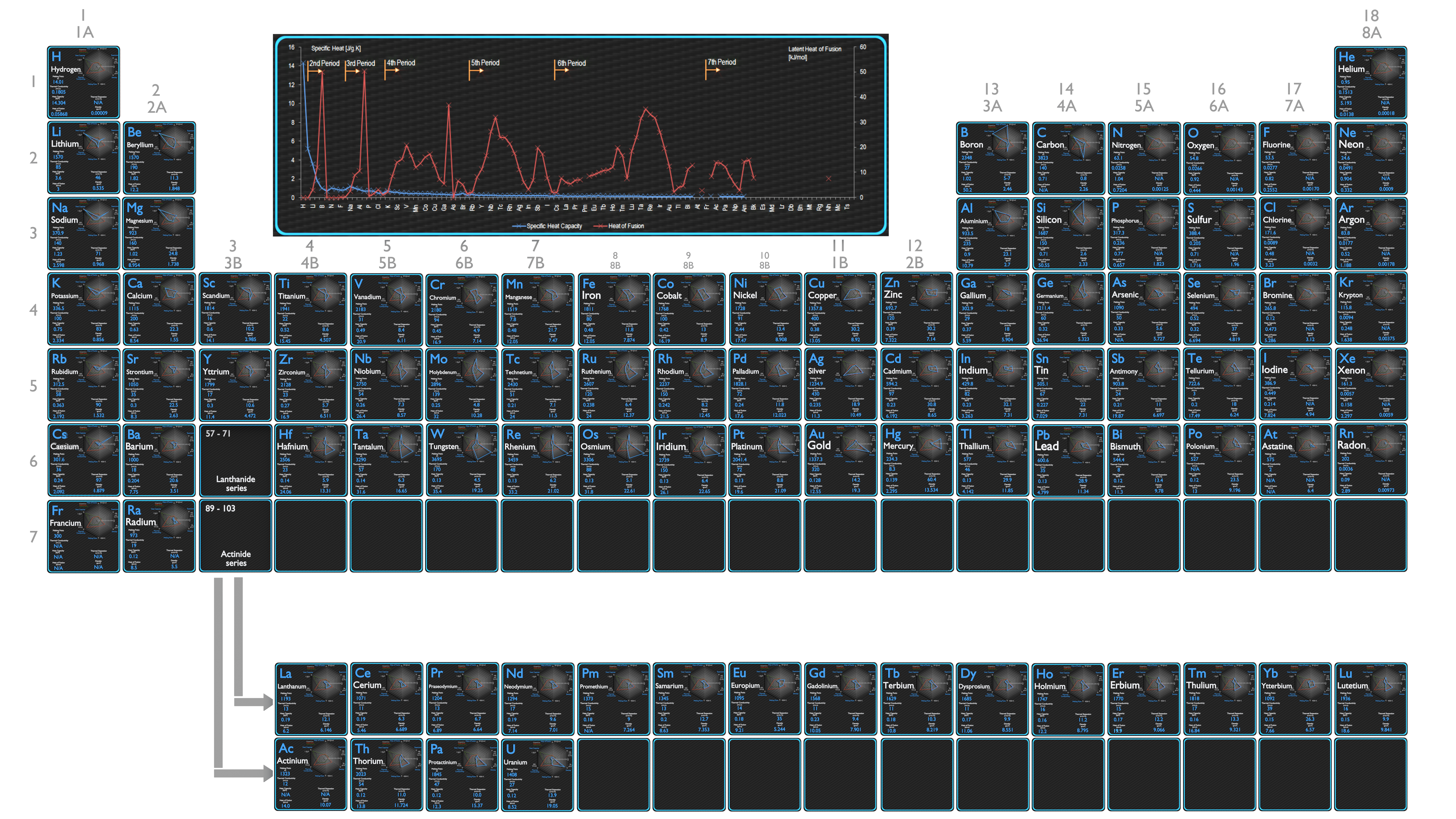
Heat Capacity of Elements

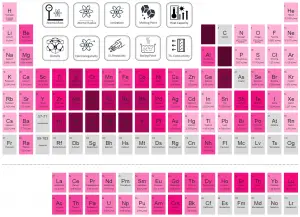
Periodic Table of Elements - heat capacity

Heat of Fusion of Elements

Periodic Table of Elements - latent heat fusion

Heat of Vaporization of Elements

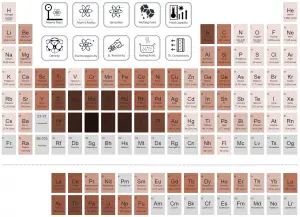
Periodic Table of Elements - latent heat vaporization

About Specific Heat Capacity

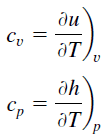
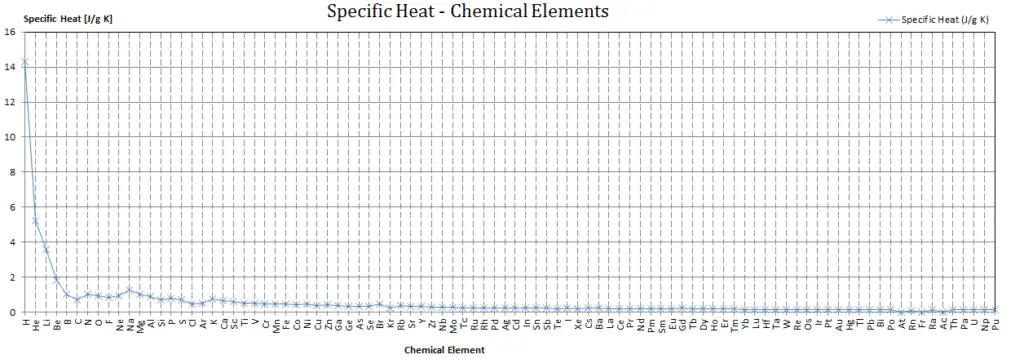
Specific heat, or specific heat capacity, is a property related to internal energy that is very important in thermodynamics. The intensive properties cv and cp are defined for pure, simple compressible substances as partial derivatives of the internal energy u(T, v) and enthalpy h(T, p), respectively:

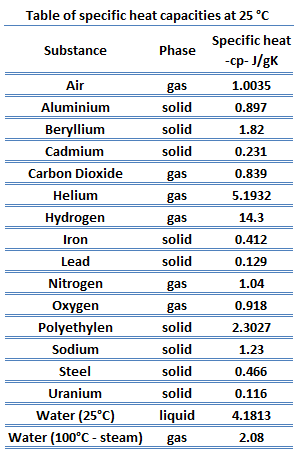
Table of specific heat capacitieswhere the subscripts v and p denote the variables held fixed during differentiation. The properties cv and cp are referred to as specific heats(or heat capacities) because under certain special conditions they relate the temperature change of a system to the amount of energy added by heat transfer. Their SI units are J/kg K or J/mol K.

Different substances are affected to different magnitudes by the addition of heat. When a given amount of heat is added to different substances, their temperatures increase by different amounts.

Heat capacity is an extensive property of matter, meaning it is proportional to the size of the system. Heat capacity C has the unit of energy per degree or energy per kelvin. When expressing the same phenomenon as an intensive property, the heat capacity is divided by the amount of substance, mass, or volume, thus the quantity is independent of the size or extent of the sample.

specific-heat-chemical-elements-chart

About Latent Heat

Latent Heat of Vaporization

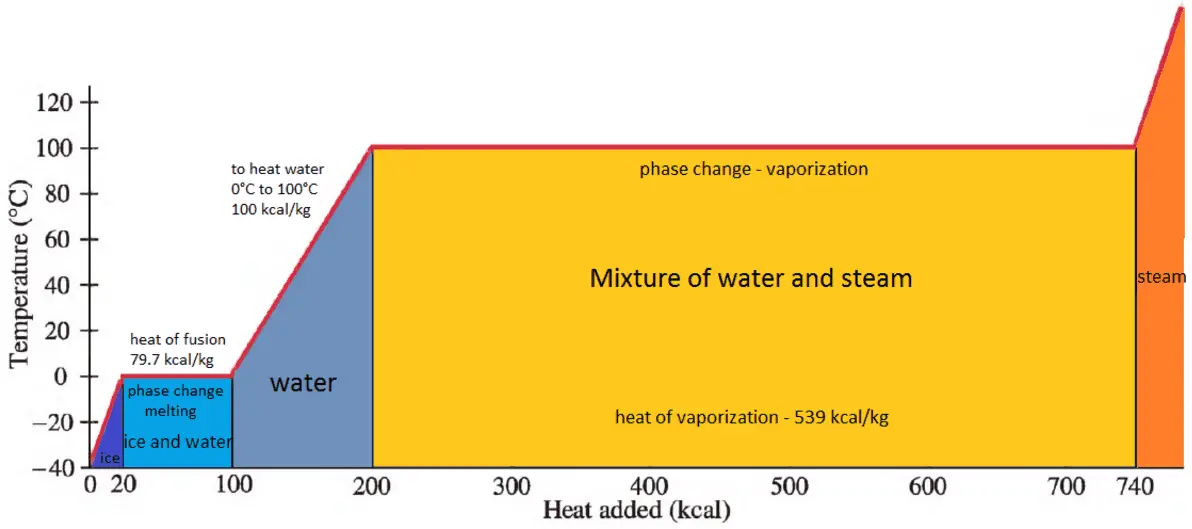
Phase-Changes-Heat-of-VaporizationIn general, when a material changes phase from solid to liquid, or from liquid to gas a certain amount of energy is involved in this change of phase. In case of liquid to gas phase change, this amount of energy is known as the enthalpy of vaporization, (symbol ∆Hvap; unit: J) also known as the (latent) heat of vaporization or heat of evaporation. As an example, see the figure, which descibes phase transitions of water.

Latent heat is the amount of heat added to or removed from a substance to produce a change in phase. This energy breaks down the intermolecular attractive forces, and also must provide the energy necessary to expand the gas (the pΔV work). When latent heat is added, no temperature change occurs. The enthalpy of vaporization is a function of the pressure at which that transformation takes place.

The temperature at which vaporization (boiling) starts to occur for a given pressure is also known as the saturation temperature and at this conditions a mixture of vapor and liquid can exist together. The liquid can be said to be saturated with thermal energy. Any addition of thermal energy results in a phase transition. At the boiling point the two phases of a substance, liquid and vapor, have identical free energies and therefore are equally likely to exist. Below the boiling point, the liquid is the more stable state of the two, whereas above the gaseous form is preferred.

Latent Heat of Fusion

In case of solid to liquid phase change, the change in enthalpy required to change its state is known as the enthalpy of fusion, (symbol ∆Hfus; unit: J) also known as the (latent) heat of fusion. Latent heat is the amount of heat added to or removed from a substance to produce a change in phase. This energy breaks down the intermolecular attractive forces, and also must provide the energy necessary to expand the system (the pΔV work).

The liquid phase has a higher internal energy than the solid phase. This means energy must be supplied to a solid in order to melt it and energy is released from a liquid when it freezes, because the molecules in the liquid experience weaker intermolecular forces and so have a higher potential energy (a kind of bond-dissociation energy for intermolecular forces).

The temperature at which the phase transition occurs is the melting point. The melting point also defines a condition in which the solid and liquid can exist in equilibrium. Adding a heat will convert the solid into a liquid with no temperature change. At the melting point the two phases of a substance, liquid and vapor, have identical free energies and therefore are equally likely to exist. Below the melting point, the solid is the more stable state of the two, whereas above the liquid form is preferred. The melting point of a substance depends on pressure and is usually specified at standard pressure. When considered as the temperature of the reverse change from liquid to solid, it is referred to as the freezing point or crystallization point.

heat-of-fusion-and-vaporization-chemical-elements

Summary

Element Uranium
Specific Heat 0.12 J/g K
Heat of Fusion 8.52 kJ/mol
Heat of Vaporization 417 kJ/mol
Density 19.05 g/cm3

Uranium-periodic-table

Source: www.luciteria.com


Properties of other elements

Uranium - Comparison of Latent Heat and Specific Heat

Periodic Table in 8K resolution

Other properties of Uranium


Protactinium – Latent Heat of Vaporization – Fusion – Heat Capacity

Protactinium-latent-heat-fusion-vaporization-specific-heat

About Protactinium

Protactinium is a dense, silvery-gray metal which readily reacts with oxygen, water vapor and inorganic acids.

Protactinium – Specific Heat, Latent Heat of Fusion, Latent Heat of Vaporization

Specific heat of Protactinium is 0.12 J/g K.

Heat capacity is an extensive property of matter, meaning it is proportional to the size of the system. Heat capacity C has the unit of energy per degree or energy per kelvin. When expressing the same phenomenon as an intensive property, the heat capacity is divided by the amount of substance, mass, or volume, thus the quantity is independent of the size or extent of the sample.

Latent Heat of Fusion of Protactinium is 12.3 kJ/mol.

Latent Heat of Vaporization of Protactinium is 481 kJ/mol.

Latent heat is the amount of heat added to or removed from a substance to produce a change in phase. This energy breaks down the intermolecular attractive forces, and also must provide the energy necessary to expand the gas (the pΔV work). When latent heat is added, no temperature change occurs. The enthalpy of vaporization is a function of the pressure at which that transformation takes place.

See also: Mechanical Properties of Protactinium

Heat Capacity of Elements

Periodic Table of Elements - heat capacity

Heat of Fusion of Elements

Periodic Table of Elements - latent heat fusion

Heat of Vaporization of Elements

Periodic Table of Elements - latent heat vaporization

About Specific Heat Capacity

Specific heat, or specific heat capacity, is a property related to internal energy that is very important in thermodynamics. The intensive properties cv and cp are defined for pure, simple compressible substances as partial derivatives of the internal energy u(T, v) and enthalpy h(T, p), respectively:

Table of specific heat capacitieswhere the subscripts v and p denote the variables held fixed during differentiation. The properties cv and cp are referred to as specific heats(or heat capacities) because under certain special conditions they relate the temperature change of a system to the amount of energy added by heat transfer. Their SI units are J/kg K or J/mol K.

Different substances are affected to different magnitudes by the addition of heat. When a given amount of heat is added to different substances, their temperatures increase by different amounts.

Heat capacity is an extensive property of matter, meaning it is proportional to the size of the system. Heat capacity C has the unit of energy per degree or energy per kelvin. When expressing the same phenomenon as an intensive property, the heat capacity is divided by the amount of substance, mass, or volume, thus the quantity is independent of the size or extent of the sample.

specific-heat-chemical-elements-chart

About Latent Heat

Latent Heat of Vaporization

Phase-Changes-Heat-of-VaporizationIn general, when a material changes phase from solid to liquid, or from liquid to gas a certain amount of energy is involved in this change of phase. In case of liquid to gas phase change, this amount of energy is known as the enthalpy of vaporization, (symbol ∆Hvap; unit: J) also known as the (latent) heat of vaporization or heat of evaporation. As an example, see the figure, which descibes phase transitions of water.

Latent heat is the amount of heat added to or removed from a substance to produce a change in phase. This energy breaks down the intermolecular attractive forces, and also must provide the energy necessary to expand the gas (the pΔV work). When latent heat is added, no temperature change occurs. The enthalpy of vaporization is a function of the pressure at which that transformation takes place.

The temperature at which vaporization (boiling) starts to occur for a given pressure is also known as the saturation temperature and at this conditions a mixture of vapor and liquid can exist together. The liquid can be said to be saturated with thermal energy. Any addition of thermal energy results in a phase transition. At the boiling point the two phases of a substance, liquid and vapor, have identical free energies and therefore are equally likely to exist. Below the boiling point, the liquid is the more stable state of the two, whereas above the gaseous form is preferred.

Latent Heat of Fusion

In case of solid to liquid phase change, the change in enthalpy required to change its state is known as the enthalpy of fusion, (symbol ∆Hfus; unit: J) also known as the (latent) heat of fusion. Latent heat is the amount of heat added to or removed from a substance to produce a change in phase. This energy breaks down the intermolecular attractive forces, and also must provide the energy necessary to expand the system (the pΔV work).

The liquid phase has a higher internal energy than the solid phase. This means energy must be supplied to a solid in order to melt it and energy is released from a liquid when it freezes, because the molecules in the liquid experience weaker intermolecular forces and so have a higher potential energy (a kind of bond-dissociation energy for intermolecular forces).

The temperature at which the phase transition occurs is the melting point. The melting point also defines a condition in which the solid and liquid can exist in equilibrium. Adding a heat will convert the solid into a liquid with no temperature change. At the melting point the two phases of a substance, liquid and vapor, have identical free energies and therefore are equally likely to exist. Below the melting point, the solid is the more stable state of the two, whereas above the liquid form is preferred. The melting point of a substance depends on pressure and is usually specified at standard pressure. When considered as the temperature of the reverse change from liquid to solid, it is referred to as the freezing point or crystallization point.

heat-of-fusion-and-vaporization-chemical-elements

Summary

Element Protactinium
Specific Heat 0.12 J/g K
Heat of Fusion 12.3 kJ/mol
Heat of Vaporization 481 kJ/mol
Density 15.37 g/cm3

Protactinium-periodic-table

Source: www.luciteria.com


Properties of other elements

Protactinium - Comparison of Latent Heat and Specific Heat

Periodic Table in 8K resolution

Other properties of Protactinium


Thorium – Latent Heat of Vaporization – Fusion – Heat Capacity

Thorium-latent-heat-fusion-vaporization-specific-heat

About Thorium

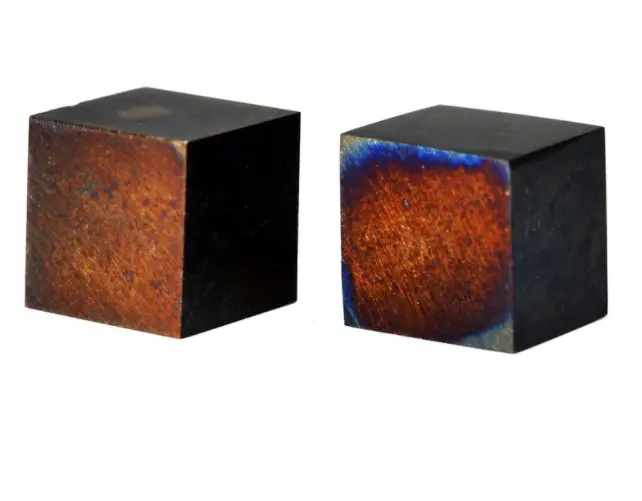
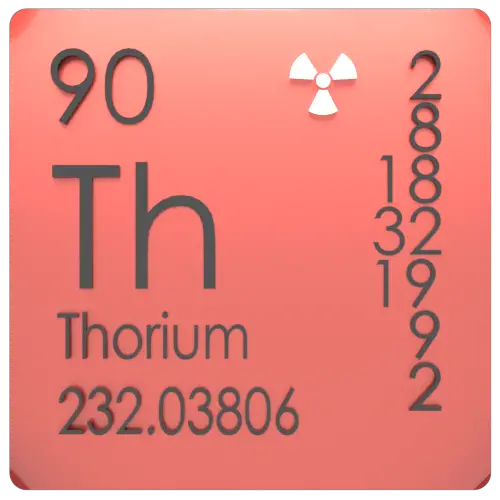
Thorium metal is silvery and tarnishes black when exposed to air, forming the dioxide. Thorium is moderately hard, malleable, and has a high melting point. Thorium is a naturally-occurring element and it is estimated to be about three times more abundant than uranium. Thorium is commonly found in monazite sands (rare earth metals containing phosphate mineral).

Thorium – Specific Heat, Latent Heat of Fusion, Latent Heat of Vaporization

Specific heat of Thorium is 0.12 J/g K.

Heat capacity is an extensive property of matter, meaning it is proportional to the size of the system. Heat capacity C has the unit of energy per degree or energy per kelvin. When expressing the same phenomenon as an intensive property, the heat capacity is divided by the amount of substance, mass, or volume, thus the quantity is independent of the size or extent of the sample.

Latent Heat of Fusion of Thorium is 13.8 kJ/mol.

Latent Heat of Vaporization of Thorium is 514.4 kJ/mol.

Latent heat is the amount of heat added to or removed from a substance to produce a change in phase. This energy breaks down the intermolecular attractive forces, and also must provide the energy necessary to expand the gas (the pΔV work). When latent heat is added, no temperature change occurs. The enthalpy of vaporization is a function of the pressure at which that transformation takes place.

See also: Mechanical Properties of Thorium

Heat Capacity of Elements

Periodic Table of Elements - heat capacity

Heat of Fusion of Elements

Periodic Table of Elements - latent heat fusion

Heat of Vaporization of Elements

Periodic Table of Elements - latent heat vaporization

About Specific Heat Capacity

Specific heat, or specific heat capacity, is a property related to internal energy that is very important in thermodynamics. The intensive properties cv and cp are defined for pure, simple compressible substances as partial derivatives of the internal energy u(T, v) and enthalpy h(T, p), respectively:

Table of specific heat capacitieswhere the subscripts v and p denote the variables held fixed during differentiation. The properties cv and cp are referred to as specific heats(or heat capacities) because under certain special conditions they relate the temperature change of a system to the amount of energy added by heat transfer. Their SI units are J/kg K or J/mol K.

Different substances are affected to different magnitudes by the addition of heat. When a given amount of heat is added to different substances, their temperatures increase by different amounts.

Heat capacity is an extensive property of matter, meaning it is proportional to the size of the system. Heat capacity C has the unit of energy per degree or energy per kelvin. When expressing the same phenomenon as an intensive property, the heat capacity is divided by the amount of substance, mass, or volume, thus the quantity is independent of the size or extent of the sample.

specific-heat-chemical-elements-chart

About Latent Heat

Latent Heat of Vaporization

Phase-Changes-Heat-of-VaporizationIn general, when a material changes phase from solid to liquid, or from liquid to gas a certain amount of energy is involved in this change of phase. In case of liquid to gas phase change, this amount of energy is known as the enthalpy of vaporization, (symbol ∆Hvap; unit: J) also known as the (latent) heat of vaporization or heat of evaporation. As an example, see the figure, which descibes phase transitions of water.

Latent heat is the amount of heat added to or removed from a substance to produce a change in phase. This energy breaks down the intermolecular attractive forces, and also must provide the energy necessary to expand the gas (the pΔV work). When latent heat is added, no temperature change occurs. The enthalpy of vaporization is a function of the pressure at which that transformation takes place.

The temperature at which vaporization (boiling) starts to occur for a given pressure is also known as the saturation temperature and at this conditions a mixture of vapor and liquid can exist together. The liquid can be said to be saturated with thermal energy. Any addition of thermal energy results in a phase transition. At the boiling point the two phases of a substance, liquid and vapor, have identical free energies and therefore are equally likely to exist. Below the boiling point, the liquid is the more stable state of the two, whereas above the gaseous form is preferred.

Latent Heat of Fusion

In case of solid to liquid phase change, the change in enthalpy required to change its state is known as the enthalpy of fusion, (symbol ∆Hfus; unit: J) also known as the (latent) heat of fusion. Latent heat is the amount of heat added to or removed from a substance to produce a change in phase. This energy breaks down the intermolecular attractive forces, and also must provide the energy necessary to expand the system (the pΔV work).

The liquid phase has a higher internal energy than the solid phase. This means energy must be supplied to a solid in order to melt it and energy is released from a liquid when it freezes, because the molecules in the liquid experience weaker intermolecular forces and so have a higher potential energy (a kind of bond-dissociation energy for intermolecular forces).

The temperature at which the phase transition occurs is the melting point. The melting point also defines a condition in which the solid and liquid can exist in equilibrium. Adding a heat will convert the solid into a liquid with no temperature change. At the melting point the two phases of a substance, liquid and vapor, have identical free energies and therefore are equally likely to exist. Below the melting point, the solid is the more stable state of the two, whereas above the liquid form is preferred. The melting point of a substance depends on pressure and is usually specified at standard pressure. When considered as the temperature of the reverse change from liquid to solid, it is referred to as the freezing point or crystallization point.

heat-of-fusion-and-vaporization-chemical-elements

Summary

Element Thorium
Specific Heat 0.12 J/g K
Heat of Fusion 13.8 kJ/mol
Heat of Vaporization 514.4 kJ/mol
Density 11.724 g/cm3

Thorium-periodic-table

Source: www.luciteria.com


Properties of other elements

Thorium - Comparison of Latent Heat and Specific Heat

Periodic Table in 8K resolution

Other properties of Thorium


Actinium – Latent Heat of Vaporization – Fusion – Heat Capacity

Actinium-latent-heat-fusion-vaporization-specific-heat

About Actinium

Actinium is a soft, silvery-white radioactive metal. Actinium gave the name to the actinide series, a group of 15 similar elements between actinium and lawrencium in the periodic table.
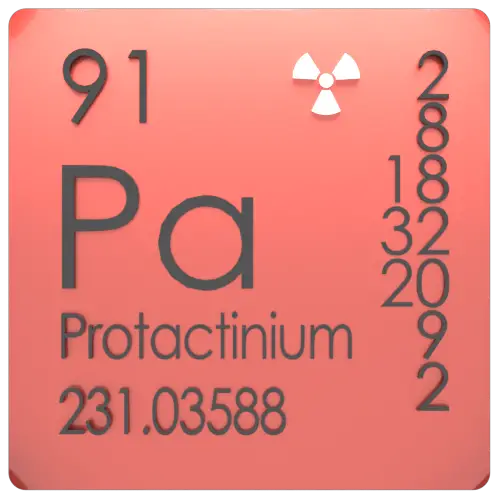
Actinium – Specific Heat, Latent Heat of Fusion, Latent Heat of Vaporization

Specific heat of Actinium is — J/g K.

Heat capacity is an extensive property of matter, meaning it is proportional to the size of the system. Heat capacity C has the unit of energy per degree or energy per kelvin. When expressing the same phenomenon as an intensive property, the heat capacity is divided by the amount of substance, mass, or volume, thus the quantity is independent of the size or extent of the sample.

Latent Heat of Fusion of Actinium is 14 kJ/mol.

Latent Heat of Vaporization of Actinium is 400 kJ/mol.

Latent heat is the amount of heat added to or removed from a substance to produce a change in phase. This energy breaks down the intermolecular attractive forces, and also must provide the energy necessary to expand the gas (the pΔV work). When latent heat is added, no temperature change occurs. The enthalpy of vaporization is a function of the pressure at which that transformation takes place.

See also: Mechanical Properties of Actinium

Heat Capacity of Elements

Periodic Table of Elements - heat capacity

Heat of Fusion of Elements

Periodic Table of Elements - latent heat fusion

Heat of Vaporization of Elements

Periodic Table of Elements - latent heat vaporization

About Specific Heat Capacity

Specific heat, or specific heat capacity, is a property related to internal energy that is very important in thermodynamics. The intensive properties cv and cp are defined for pure, simple compressible substances as partial derivatives of the internal energy u(T, v) and enthalpy h(T, p), respectively:

Table of specific heat capacitieswhere the subscripts v and p denote the variables held fixed during differentiation. The properties cv and cp are referred to as specific heats(or heat capacities) because under certain special conditions they relate the temperature change of a system to the amount of energy added by heat transfer. Their SI units are J/kg K or J/mol K.

Different substances are affected to different magnitudes by the addition of heat. When a given amount of heat is added to different substances, their temperatures increase by different amounts.

Heat capacity is an extensive property of matter, meaning it is proportional to the size of the system. Heat capacity C has the unit of energy per degree or energy per kelvin. When expressing the same phenomenon as an intensive property, the heat capacity is divided by the amount of substance, mass, or volume, thus the quantity is independent of the size or extent of the sample.

specific-heat-chemical-elements-chart

About Latent Heat

Latent Heat of Vaporization

Phase-Changes-Heat-of-VaporizationIn general, when a material changes phase from solid to liquid, or from liquid to gas a certain amount of energy is involved in this change of phase. In case of liquid to gas phase change, this amount of energy is known as the enthalpy of vaporization, (symbol ∆Hvap; unit: J) also known as the (latent) heat of vaporization or heat of evaporation. As an example, see the figure, which descibes phase transitions of water.

Latent heat is the amount of heat added to or removed from a substance to produce a change in phase. This energy breaks down the intermolecular attractive forces, and also must provide the energy necessary to expand the gas (the pΔV work). When latent heat is added, no temperature change occurs. The enthalpy of vaporization is a function of the pressure at which that transformation takes place.

The temperature at which vaporization (boiling) starts to occur for a given pressure is also known as the saturation temperature and at this conditions a mixture of vapor and liquid can exist together. The liquid can be said to be saturated with thermal energy. Any addition of thermal energy results in a phase transition. At the boiling point the two phases of a substance, liquid and vapor, have identical free energies and therefore are equally likely to exist. Below the boiling point, the liquid is the more stable state of the two, whereas above the gaseous form is preferred.

Latent Heat of Fusion

In case of solid to liquid phase change, the change in enthalpy required to change its state is known as the enthalpy of fusion, (symbol ∆Hfus; unit: J) also known as the (latent) heat of fusion. Latent heat is the amount of heat added to or removed from a substance to produce a change in phase. This energy breaks down the intermolecular attractive forces, and also must provide the energy necessary to expand the system (the pΔV work).

The liquid phase has a higher internal energy than the solid phase. This means energy must be supplied to a solid in order to melt it and energy is released from a liquid when it freezes, because the molecules in the liquid experience weaker intermolecular forces and so have a higher potential energy (a kind of bond-dissociation energy for intermolecular forces).

The temperature at which the phase transition occurs is the melting point. The melting point also defines a condition in which the solid and liquid can exist in equilibrium. Adding a heat will convert the solid into a liquid with no temperature change. At the melting point the two phases of a substance, liquid and vapor, have identical free energies and therefore are equally likely to exist. Below the melting point, the solid is the more stable state of the two, whereas above the liquid form is preferred. The melting point of a substance depends on pressure and is usually specified at standard pressure. When considered as the temperature of the reverse change from liquid to solid, it is referred to as the freezing point or crystallization point.

heat-of-fusion-and-vaporization-chemical-elements

Summary

Element Actinium
Specific Heat — J/g K
Heat of Fusion 14 kJ/mol
Heat of Vaporization 400 kJ/mol
Density 10.07 g/cm3

Actinium-periodic-table

Source: www.luciteria.com


Properties of other elements

Actinium - Comparison of Latent Heat and Specific Heat

Periodic Table in 8K resolution

Other properties of Actinium


Radium – Latent Heat of Vaporization – Fusion – Heat Capacity

Radium-latent-heat-fusion-vaporization-specific-heat

About Radium

Pure radium is silvery-white alkaline earth metal. All isotopes of radium are highly radioactive, with the most stable isotope being radium-226.

Radium – Specific Heat, Latent Heat of Fusion, Latent Heat of Vaporization

Specific heat of Radium is 0.12 J/g K.

Heat capacity is an extensive property of matter, meaning it is proportional to the size of the system. Heat capacity C has the unit of energy per degree or energy per kelvin. When expressing the same phenomenon as an intensive property, the heat capacity is divided by the amount of substance, mass, or volume, thus the quantity is independent of the size or extent of the sample.

Latent Heat of Fusion of Radium is 8.5 kJ/mol.

Latent Heat of Vaporization of Radium is 113 kJ/mol.

Latent heat is the amount of heat added to or removed from a substance to produce a change in phase. This energy breaks down the intermolecular attractive forces, and also must provide the energy necessary to expand the gas (the pΔV work). When latent heat is added, no temperature change occurs. The enthalpy of vaporization is a function of the pressure at which that transformation takes place.

See also: Mechanical Properties of Radium

Heat Capacity of Elements

Periodic Table of Elements - heat capacity

Heat of Fusion of Elements

Periodic Table of Elements - latent heat fusion

Heat of Vaporization of Elements

Periodic Table of Elements - latent heat vaporization

About Specific Heat Capacity

Specific heat, or specific heat capacity, is a property related to internal energy that is very important in thermodynamics. The intensive properties cv and cp are defined for pure, simple compressible substances as partial derivatives of the internal energy u(T, v) and enthalpy h(T, p), respectively:

Table of specific heat capacitieswhere the subscripts v and p denote the variables held fixed during differentiation. The properties cv and cp are referred to as specific heats(or heat capacities) because under certain special conditions they relate the temperature change of a system to the amount of energy added by heat transfer. Their SI units are J/kg K or J/mol K.

Different substances are affected to different magnitudes by the addition of heat. When a given amount of heat is added to different substances, their temperatures increase by different amounts.

Heat capacity is an extensive property of matter, meaning it is proportional to the size of the system. Heat capacity C has the unit of energy per degree or energy per kelvin. When expressing the same phenomenon as an intensive property, the heat capacity is divided by the amount of substance, mass, or volume, thus the quantity is independent of the size or extent of the sample.

specific-heat-chemical-elements-chart

About Latent Heat

Latent Heat of Vaporization

Phase-Changes-Heat-of-VaporizationIn general, when a material changes phase from solid to liquid, or from liquid to gas a certain amount of energy is involved in this change of phase. In case of liquid to gas phase change, this amount of energy is known as the enthalpy of vaporization, (symbol ∆Hvap; unit: J) also known as the (latent) heat of vaporization or heat of evaporation. As an example, see the figure, which descibes phase transitions of water.

Latent heat is the amount of heat added to or removed from a substance to produce a change in phase. This energy breaks down the intermolecular attractive forces, and also must provide the energy necessary to expand the gas (the pΔV work). When latent heat is added, no temperature change occurs. The enthalpy of vaporization is a function of the pressure at which that transformation takes place.

The temperature at which vaporization (boiling) starts to occur for a given pressure is also known as the saturation temperature and at this conditions a mixture of vapor and liquid can exist together. The liquid can be said to be saturated with thermal energy. Any addition of thermal energy results in a phase transition. At the boiling point the two phases of a substance, liquid and vapor, have identical free energies and therefore are equally likely to exist. Below the boiling point, the liquid is the more stable state of the two, whereas above the gaseous form is preferred.

Latent Heat of Fusion

In case of solid to liquid phase change, the change in enthalpy required to change its state is known as the enthalpy of fusion, (symbol ∆Hfus; unit: J) also known as the (latent) heat of fusion. Latent heat is the amount of heat added to or removed from a substance to produce a change in phase. This energy breaks down the intermolecular attractive forces, and also must provide the energy necessary to expand the system (the pΔV work).

The liquid phase has a higher internal energy than the solid phase. This means energy must be supplied to a solid in order to melt it and energy is released from a liquid when it freezes, because the molecules in the liquid experience weaker intermolecular forces and so have a higher potential energy (a kind of bond-dissociation energy for intermolecular forces).

The temperature at which the phase transition occurs is the melting point. The melting point also defines a condition in which the solid and liquid can exist in equilibrium. Adding a heat will convert the solid into a liquid with no temperature change. At the melting point the two phases of a substance, liquid and vapor, have identical free energies and therefore are equally likely to exist. Below the melting point, the solid is the more stable state of the two, whereas above the liquid form is preferred. The melting point of a substance depends on pressure and is usually specified at standard pressure. When considered as the temperature of the reverse change from liquid to solid, it is referred to as the freezing point or crystallization point.

heat-of-fusion-and-vaporization-chemical-elements

Summary

Element Radium
Specific Heat 0.12 J/g K
Heat of Fusion 8.5 kJ/mol
Heat of Vaporization 113 kJ/mol
Density 5.5 g/cm3

Radium-periodic-table

Source: www.luciteria.com


Properties of other elements

Radium - Comparison of Latent Heat and Specific Heat

Periodic Table in 8K resolution

Other properties of Radium


Francium – Latent Heat of Vaporization – Fusion – Heat Capacity

Francium-latent-heat-fusion-vaporization-specific-heat

About Francium

Francium is an alkali metal, that has one valence electron. Francium is the second-least electronegative element, behind only caesium, and is the second rarest naturally occurring element (after astatine). Francium is a highly radioactive metal that decays into astatine, radium, and radon.
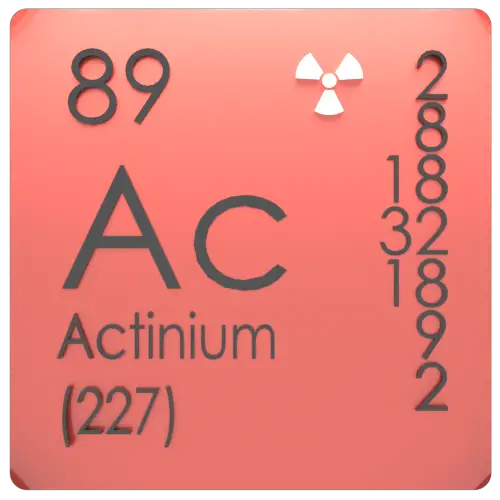
Francium – Specific Heat, Latent Heat of Fusion, Latent Heat of Vaporization

Specific heat of Francium is — J/g K.

Heat capacity is an extensive property of matter, meaning it is proportional to the size of the system. Heat capacity C has the unit of energy per degree or energy per kelvin. When expressing the same phenomenon as an intensive property, the heat capacity is divided by the amount of substance, mass, or volume, thus the quantity is independent of the size or extent of the sample.

Latent Heat of Fusion of Francium is — kJ/mol.

Latent Heat of Vaporization of Francium is — kJ/mol.

Latent heat is the amount of heat added to or removed from a substance to produce a change in phase. This energy breaks down the intermolecular attractive forces, and also must provide the energy necessary to expand the gas (the pΔV work). When latent heat is added, no temperature change occurs. The enthalpy of vaporization is a function of the pressure at which that transformation takes place.

See also: Mechanical Properties of Francium

Heat Capacity of Elements

Periodic Table of Elements - heat capacity

Heat of Fusion of Elements

Periodic Table of Elements - latent heat fusion

Heat of Vaporization of Elements

Periodic Table of Elements - latent heat vaporization

About Specific Heat Capacity

Specific heat, or specific heat capacity, is a property related to internal energy that is very important in thermodynamics. The intensive properties cv and cp are defined for pure, simple compressible substances as partial derivatives of the internal energy u(T, v) and enthalpy h(T, p), respectively:

Table of specific heat capacitieswhere the subscripts v and p denote the variables held fixed during differentiation. The properties cv and cp are referred to as specific heats(or heat capacities) because under certain special conditions they relate the temperature change of a system to the amount of energy added by heat transfer. Their SI units are J/kg K or J/mol K.

Different substances are affected to different magnitudes by the addition of heat. When a given amount of heat is added to different substances, their temperatures increase by different amounts.

Heat capacity is an extensive property of matter, meaning it is proportional to the size of the system. Heat capacity C has the unit of energy per degree or energy per kelvin. When expressing the same phenomenon as an intensive property, the heat capacity is divided by the amount of substance, mass, or volume, thus the quantity is independent of the size or extent of the sample.

specific-heat-chemical-elements-chart

About Latent Heat

Latent Heat of Vaporization

Phase-Changes-Heat-of-VaporizationIn general, when a material changes phase from solid to liquid, or from liquid to gas a certain amount of energy is involved in this change of phase. In case of liquid to gas phase change, this amount of energy is known as the enthalpy of vaporization, (symbol ∆Hvap; unit: J) also known as the (latent) heat of vaporization or heat of evaporation. As an example, see the figure, which descibes phase transitions of water.

Latent heat is the amount of heat added to or removed from a substance to produce a change in phase. This energy breaks down the intermolecular attractive forces, and also must provide the energy necessary to expand the gas (the pΔV work). When latent heat is added, no temperature change occurs. The enthalpy of vaporization is a function of the pressure at which that transformation takes place.

The temperature at which vaporization (boiling) starts to occur for a given pressure is also known as the saturation temperature and at this conditions a mixture of vapor and liquid can exist together. The liquid can be said to be saturated with thermal energy. Any addition of thermal energy results in a phase transition. At the boiling point the two phases of a substance, liquid and vapor, have identical free energies and therefore are equally likely to exist. Below the boiling point, the liquid is the more stable state of the two, whereas above the gaseous form is preferred.

Latent Heat of Fusion

In case of solid to liquid phase change, the change in enthalpy required to change its state is known as the enthalpy of fusion, (symbol ∆Hfus; unit: J) also known as the (latent) heat of fusion. Latent heat is the amount of heat added to or removed from a substance to produce a change in phase. This energy breaks down the intermolecular attractive forces, and also must provide the energy necessary to expand the system (the pΔV work).

The liquid phase has a higher internal energy than the solid phase. This means energy must be supplied to a solid in order to melt it and energy is released from a liquid when it freezes, because the molecules in the liquid experience weaker intermolecular forces and so have a higher potential energy (a kind of bond-dissociation energy for intermolecular forces).

The temperature at which the phase transition occurs is the melting point. The melting point also defines a condition in which the solid and liquid can exist in equilibrium. Adding a heat will convert the solid into a liquid with no temperature change. At the melting point the two phases of a substance, liquid and vapor, have identical free energies and therefore are equally likely to exist. Below the melting point, the solid is the more stable state of the two, whereas above the liquid form is preferred. The melting point of a substance depends on pressure and is usually specified at standard pressure. When considered as the temperature of the reverse change from liquid to solid, it is referred to as the freezing point or crystallization point.

heat-of-fusion-and-vaporization-chemical-elements

Summary

Element Francium
Specific Heat — J/g K
Heat of Fusion — kJ/mol
Heat of Vaporization — kJ/mol
Density — g/cm3

Francium-periodic-table

Source: www.luciteria.com


Properties of other elements

Francium - Comparison of Latent Heat and Specific Heat

Periodic Table in 8K resolution

Other properties of Francium


Radon – Latent Heat of Vaporization – Fusion – Heat Capacity

Radon-latent-heat-fusion-vaporization-specific-heat

About Radon

Radon is a radioactive, colorless, odorless, tasteless noble gas. Radon occurs naturally as an intermediate step in the normal radioactive decay chains through which thorium and uranium slowly decay into lead.

Radon – Specific Heat, Latent Heat of Fusion, Latent Heat of Vaporization

Specific heat of Radon is 0.09 J/g K.

Heat capacity is an extensive property of matter, meaning it is proportional to the size of the system. Heat capacity C has the unit of energy per degree or energy per kelvin. When expressing the same phenomenon as an intensive property, the heat capacity is divided by the amount of substance, mass, or volume, thus the quantity is independent of the size or extent of the sample.

Latent Heat of Fusion of Radon is 2.89 kJ/mol.

Latent Heat of Vaporization of Radon is 16.4 kJ/mol.

Latent heat is the amount of heat added to or removed from a substance to produce a change in phase. This energy breaks down the intermolecular attractive forces, and also must provide the energy necessary to expand the gas (the pΔV work). When latent heat is added, no temperature change occurs. The enthalpy of vaporization is a function of the pressure at which that transformation takes place.

See also: Mechanical Properties of Radon

Heat Capacity of Elements

Periodic Table of Elements - heat capacity

Heat of Fusion of Elements

Periodic Table of Elements - latent heat fusion

Heat of Vaporization of Elements

Periodic Table of Elements - latent heat vaporization

About Specific Heat Capacity

Specific heat, or specific heat capacity, is a property related to internal energy that is very important in thermodynamics. The intensive properties cv and cp are defined for pure, simple compressible substances as partial derivatives of the internal energy u(T, v) and enthalpy h(T, p), respectively:

Table of specific heat capacitieswhere the subscripts v and p denote the variables held fixed during differentiation. The properties cv and cp are referred to as specific heats(or heat capacities) because under certain special conditions they relate the temperature change of a system to the amount of energy added by heat transfer. Their SI units are J/kg K or J/mol K.

Different substances are affected to different magnitudes by the addition of heat. When a given amount of heat is added to different substances, their temperatures increase by different amounts.

Heat capacity is an extensive property of matter, meaning it is proportional to the size of the system. Heat capacity C has the unit of energy per degree or energy per kelvin. When expressing the same phenomenon as an intensive property, the heat capacity is divided by the amount of substance, mass, or volume, thus the quantity is independent of the size or extent of the sample.

specific-heat-chemical-elements-chart

About Latent Heat

Latent Heat of Vaporization

Phase-Changes-Heat-of-VaporizationIn general, when a material changes phase from solid to liquid, or from liquid to gas a certain amount of energy is involved in this change of phase. In case of liquid to gas phase change, this amount of energy is known as the enthalpy of vaporization, (symbol ∆Hvap; unit: J) also known as the (latent) heat of vaporization or heat of evaporation. As an example, see the figure, which descibes phase transitions of water.

Latent heat is the amount of heat added to or removed from a substance to produce a change in phase. This energy breaks down the intermolecular attractive forces, and also must provide the energy necessary to expand the gas (the pΔV work). When latent heat is added, no temperature change occurs. The enthalpy of vaporization is a function of the pressure at which that transformation takes place.

The temperature at which vaporization (boiling) starts to occur for a given pressure is also known as the saturation temperature and at this conditions a mixture of vapor and liquid can exist together. The liquid can be said to be saturated with thermal energy. Any addition of thermal energy results in a phase transition. At the boiling point the two phases of a substance, liquid and vapor, have identical free energies and therefore are equally likely to exist. Below the boiling point, the liquid is the more stable state of the two, whereas above the gaseous form is preferred.

Latent Heat of Fusion

In case of solid to liquid phase change, the change in enthalpy required to change its state is known as the enthalpy of fusion, (symbol ∆Hfus; unit: J) also known as the (latent) heat of fusion. Latent heat is the amount of heat added to or removed from a substance to produce a change in phase. This energy breaks down the intermolecular attractive forces, and also must provide the energy necessary to expand the system (the pΔV work).

The liquid phase has a higher internal energy than the solid phase. This means energy must be supplied to a solid in order to melt it and energy is released from a liquid when it freezes, because the molecules in the liquid experience weaker intermolecular forces and so have a higher potential energy (a kind of bond-dissociation energy for intermolecular forces).

The temperature at which the phase transition occurs is the melting point. The melting point also defines a condition in which the solid and liquid can exist in equilibrium. Adding a heat will convert the solid into a liquid with no temperature change. At the melting point the two phases of a substance, liquid and vapor, have identical free energies and therefore are equally likely to exist. Below the melting point, the solid is the more stable state of the two, whereas above the liquid form is preferred. The melting point of a substance depends on pressure and is usually specified at standard pressure. When considered as the temperature of the reverse change from liquid to solid, it is referred to as the freezing point or crystallization point.

heat-of-fusion-and-vaporization-chemical-elements

Summary

Element Radon
Specific Heat 0.09 J/g K
Heat of Fusion 2.89 kJ/mol
Heat of Vaporization 16.4 kJ/mol
Density 0.00973 g/cm3

Radon-periodic-table

Source: www.luciteria.com


Properties of other elements

Radon - Comparison of Latent Heat and Specific Heat

Periodic Table in 8K resolution

Other properties of Radon