Facebook Instagram Youtube Twitter

Lanthanum – Protons – Neutrons – Electrons – Electron Configuration

Lanthanum-protons-neutrons-electrons-configuration

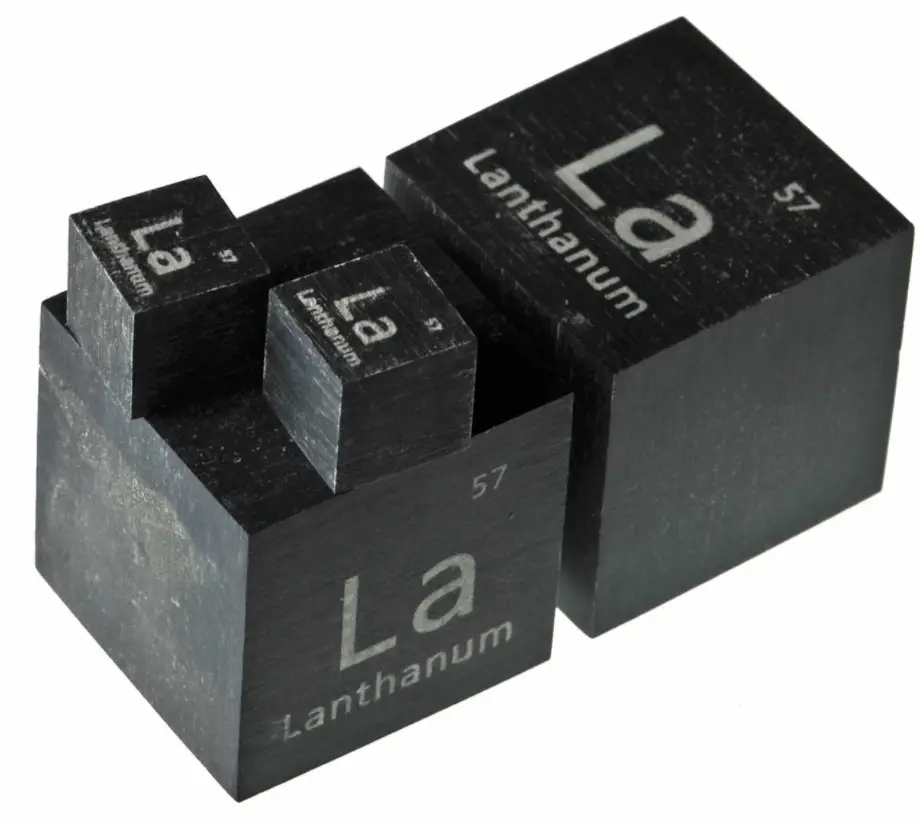
Lanthanum is a soft, ductile, silvery-white metal that tarnishes rapidly when exposed to air and is soft enough to be cut with a knife. It is the eponym of the lanthanide series, a group of 15 similar elements between lanthanum and lutetium in the periodic table, of which lanthanum is the first and the prototype. It is also sometimes considered the first element of the 6th-period transition metals and is traditionally counted among the rare earth elements.

Protons and Neutrons in Lanthanum
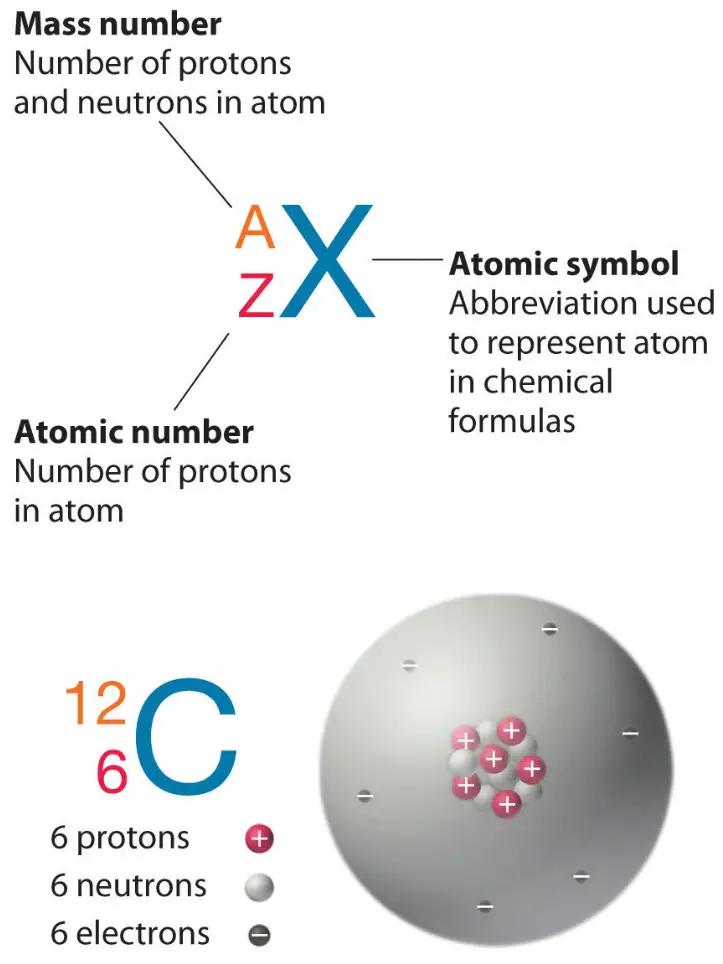
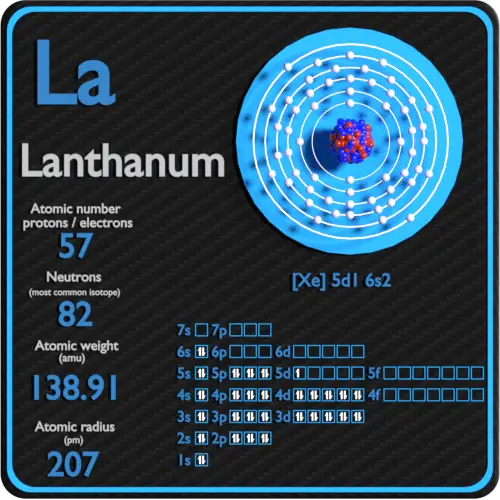
Proton Number - Atomic NumberLanthanum is a chemical element with atomic number 57 which means there are 57 protons in its nucleus. Total number of protons in the nucleus is called the atomic number of the atom and is given the symbol Z. The total electrical charge of the nucleus is therefore +Ze, where e (elementary charge) equals to 1,602 x 10-19 coulombs.

The total number of neutrons in the nucleus of an atom is called the neutron number of the atom and is given the symbol N. Neutron number plus atomic number equals atomic mass number: N+Z=A. The difference between the neutron number and the atomic number is known as the neutron excess: D = N – Z = A – 2Z.

For stable elements, there is usually a variety of stable isotopes. Isotopes are nuclides that have the same atomic number and are therefore the same element, but differ in the number of neutrons. Mass numbers of typical isotopes of Lanthanum are 139. 

Main Isotopes of Lanthanum

Lanthanum occurs in 2 natural isotopes: 138La and 139La. 138La is very slightly radioactive, decaying by beta decay with a half-life of 1.05×10¹¹ years. 139La is the most common isotope, having a natural abundance of approximately 99%.

Lanthanum-138 is composed of 57 protons, 81 neutrons, and 57 electrons.

Lanthanum-139 is composed of 57 protons, 82 neutrons, and 57 electrons.

Naturally Occuring Isotopes

Isotope Abundance Neutron Number
138La (unstable) 0.089% 81
139La 99.911% 82

Typical Unstable Isotopes

Isotope Half-life Decay Mode Product
137La 6×10⁴ y electron capture 137Ba
138La 1.05×10¹¹ y electron capture or beta decay 138Ba or 138Ce

Electrons and Electron Configuration

The number of electrons in an electrically-neutral atom is the same as the number of protons in the nucleus. Therefore, the number of electrons in neutral atom of Lanthanum is 57. Each electron is influenced by the electric fields produced by the positive nuclear charge and the other (Z – 1) negative electrons in the atom.

Since the number of electrons and their arrangement are responsible for the chemical behavior of atoms, the atomic number identifies the various chemical elements. The configuration of these electrons follows from the principles of quantum mechanics. The number of electrons in each element’s electron shells, particularly the outermost valence shell, is the primary factor in determining its chemical bonding behavior. In the periodic table, the elements are listed in order of increasing atomic number Z.

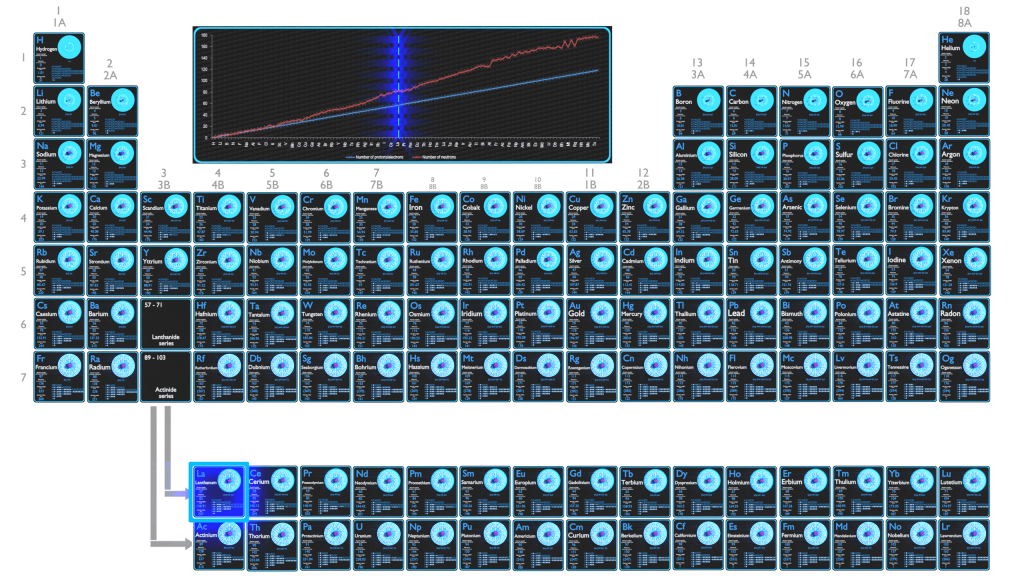
Electron configuration of Lanthanum is [Xe] 5d1 6s2.

Possible oxidation states are +3.

Most Common Application of Lanthanum

A lanthanum-nickel alloy is used to store hydrogen gas for use in hydrogen-powered vehicles. Lanthanum is also found in the anode of nickel metal hydride batteries (NiMH) used in hybrid cars. Lanthanum is an important component of mischmetal alloy. A typical composition includes approximately 55% cerium, 25% lanthanum, and 15-18% neodymium with other rare earth metals following. The best-known use for this alloy is in ‘flints’ for cigarette lighters.
About Protons

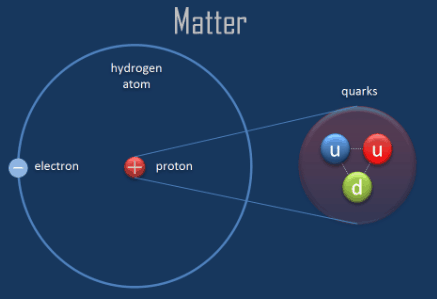
protonA proton is one of the subatomic particles that make up matter. In the universe, protons are abundant, making up about half of all visible matter. It has a positive electric charge (+1e) and a rest mass equal to 1.67262 × 10⁻²⁷ kg (938.272 MeV/c2)— marginally lighter than that of the neutron but nearly 1836 times greater than that of the electron. The proton has a mean square radius of about 0.87 × 10⁻¹⁵ m, or 0.87 fm, and it is a spin – ½ fermion.

The protons exist in the nuclei of typical atoms, along with their neutral counterparts, the neutrons. Neutrons and protons, commonly called nucleons, are bound together in the atomic nucleus, where they account for 99.9 percent of the atom’s mass. Research in high-energy particle physics in the 20th century revealed that neither the neutron nor the proton is not the smallest building block of matter.

About Neutrons

A neutron is one of the subatomic particles that make up matter. In the universe, neutrons are abundant, making up more than half of all visible matter. It has no electric charge and a rest mass equal to 1.67493 × 10⁻²⁷ kg—marginally greater than that of the proton but nearly 1839 times greater than that of the electron. The neutron has a mean square radius of about 0.8×10⁻¹⁵ m, or 0.8 fm, and it is a spin-½ fermion.

Atomic nuclei consist of protons and neutrons, which attract each other through the nuclear force, while protons repel each other via the electric force due to their positive charge. These two forces compete, leading to various stability of nuclei. There are only certain combinations of neutrons and protons, which forms stable nuclei.

Neutrons stabilize the nucleus, because they attract each other and protons , which helps offset the electrical repulsion between protons. As a result, as the number of protons increases, an increasing ratio of neutrons to protons is needed to form a stable nucleus. If there are too many or too few neutrons for a given number of protons, the resulting nucleus is not stable and it undergoes radioactive decay. Unstable isotopes decay through various radioactive decay pathways, most commonly alpha decay, beta decay, or electron capture. Many other rare types of decay, such as spontaneous fission or neutron emission are known. It should be noted that all of these decay pathways may be accompanied by the subsequent emission of gamma radiation. Pure alpha or beta decays are very rare.

About Electrons and Electron Configuration

The periodic table is a tabular display of the chemical elements organized on the basis of their atomic numbers, electron configurations, and chemical properties. The electron configuration is the distribution of electrons of an atom or molecule (or other physical structure) in atomic or molecular orbitals. Knowledge of the electron configuration of different atoms is useful in understanding the structure of the periodic table of elements.

Every solid, liquid, gas, and plasma is composed of neutral or ionized atoms. The chemical properties of the atom are determined by the number of protons, in fact, by number and arrangement of electrons. The configuration of these electrons follows from the principles of quantum mechanics. The number of electrons in each element’s electron shells, particularly the outermost valence shell, is the primary factor in determining its chemical bonding behavior. In the periodic table, the elements are listed in order of increasing atomic number Z.

It is the Pauli exclusion principle that requires the electrons in an atom to occupy different energy levels instead of them all condensing in the ground state. The ordering of the electrons in the ground state of multielectron atoms, starts with the lowest energy state (ground state) and moves progressively from there up the energy scale until each of the atom’s electrons has been assigned a unique set of quantum numbers. This fact has key implications for the building up of the periodic table of elements.
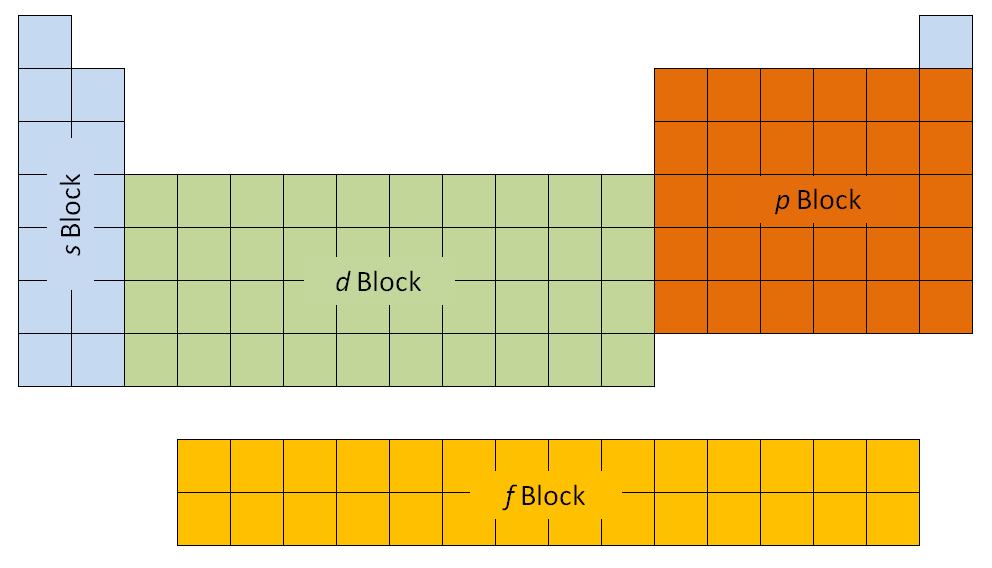
electron configuration - blocks - elementsThe first two columns on the left side of the periodic table are where the s subshells are being occupied. Because of this, the first two rows of the periodic table are labeled the s block. Similarly, the p block are the right-most six columns of the periodic table, the d block is the middle 10 columns of the periodic table, while the f block is the 14-column section that is normally depicted as detached from the main body of the periodic table. It could be part of the main body, but then the periodic table would be rather long and cumbersome.

For atoms with many electrons, this notation can become lengthy and so an abbreviated notation is used. The electron configuration can be visualized as the core electrons, equivalent to the noble gas of the preceding period, and the valence electrons (e.g. [Xe] 6s2 for barium).

Oxidation States

Oxidation states are typically represented by integers which may be positive, zero, or negative. Most elements have more than one possible oxidation state. For example, carbon has nine possible integer oxidation states from −4 to +4.

The current IUPAC Gold Book definition of oxidation state is:

“Oxidation state of an atom is the charge of this atom after ionic approximation of its heteronuclear bonds…”

and the term oxidation number is nearly synonymous. An element that is not combined with any other different elements has an oxidation state of 0. Oxidation state 0 occurs for all elements – it is simply the element in its elemental form. An atom of an element in a compound will have a positive oxidation state if it has had electrons removed. Similarly, adding electrons results in a negative oxidation state. We have also distinguish between the possible and common oxidation states of every element. For example, silicon has nine possible integer oxidation states from −4 to +4, but only -4, 0 and +4 are common oxidation states.

Summary

Element Lanthanum
Number of protons 57
Number of neutrons (typical isotopes) 139
Number of electrons 57
Electron configuration [Xe] 5d1 6s2
Oxidation states +3

Lanthanum-periodic-table

Source: www.luciteria.com


Properties of other elements

Lanthanum - Comparison of Protons - Neutrons and Electrons

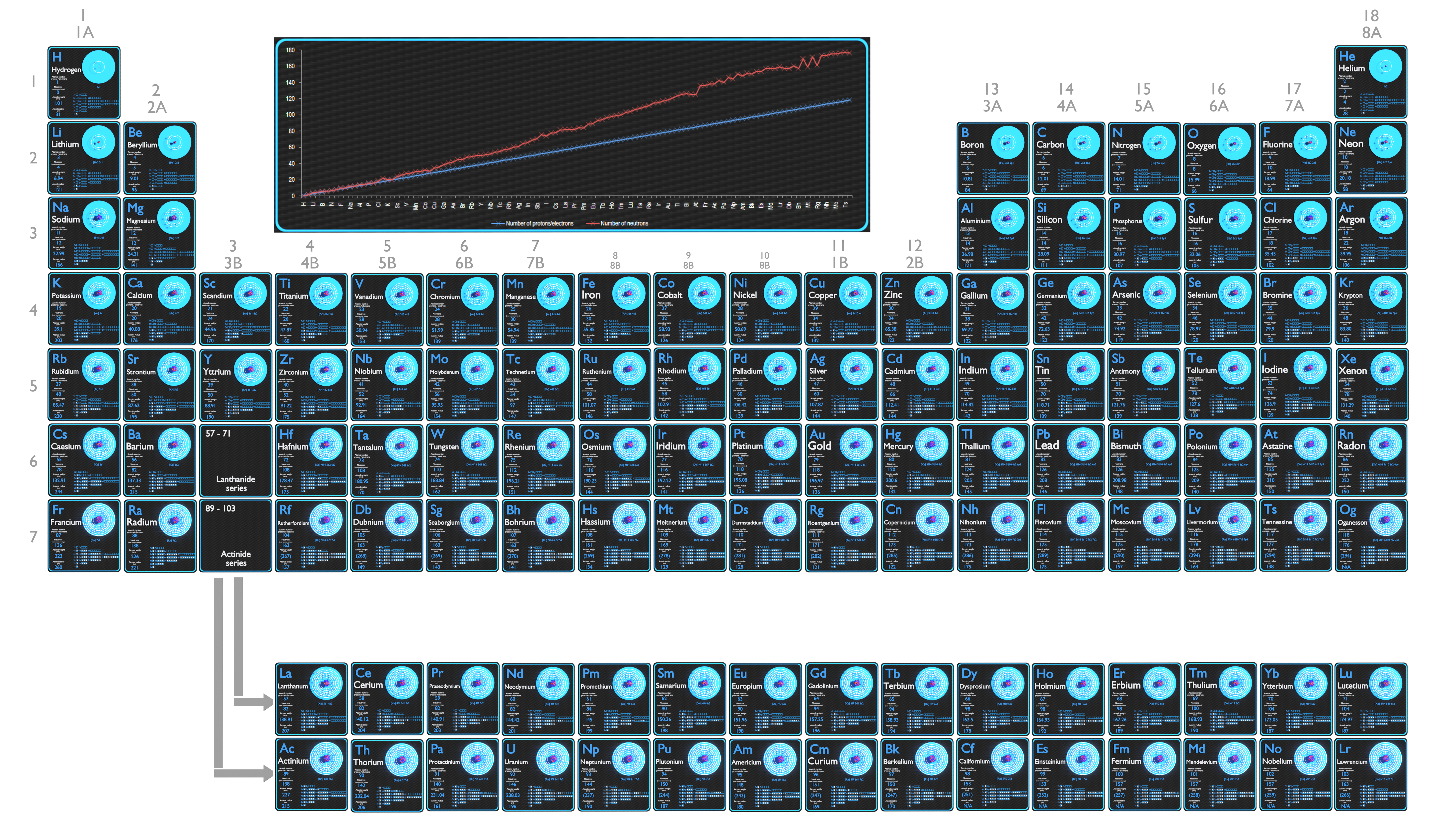
Periodic Table in 8K resolution

Other properties of Lanthanum
 

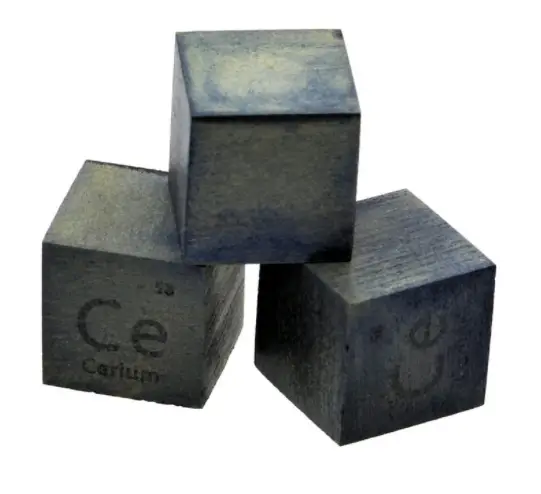
Cerium – Protons – Neutrons – Electrons – Electron Configuration

Cerium-protons-neutrons-electrons-configuration

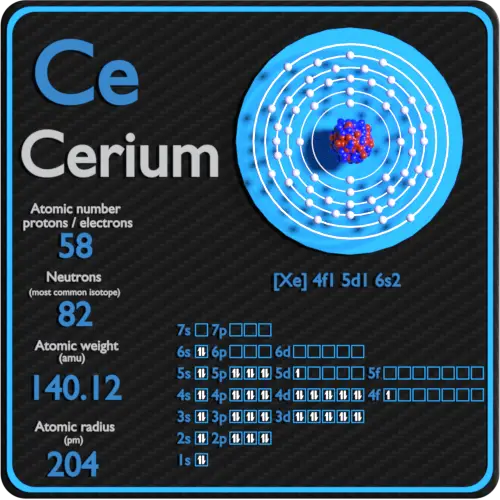
Cerium is a soft, ductile and silvery-white metal that tarnishes when exposed to air, and it is soft enough to be cut with a knife. Cerium is the second element in the lanthanide series. Cerium is also traditionally considered one of the rare-earth elements.

Protons and Neutrons in Cerium

Proton Number - Atomic NumberCerium is a chemical element with atomic number 58 which means there are 58 protons in its nucleus. Total number of protons in the nucleus is called the atomic number of the atom and is given the symbol Z. The total electrical charge of the nucleus is therefore +Ze, where e (elementary charge) equals to 1,602 x 10-19 coulombs.

The total number of neutrons in the nucleus of an atom is called the neutron number of the atom and is given the symbol N. Neutron number plus atomic number equals atomic mass number: N+Z=A. The difference between the neutron number and the atomic number is known as the neutron excess: D = N – Z = A – 2Z.

For stable elements, there is usually a variety of stable isotopes. Isotopes are nuclides that have the same atomic number and are therefore the same element, but differ in the number of neutrons. Mass numbers of typical isotopes of Cerium are 140, 142. 

Main Isotopes of Cerium

Cerium occurs in 4 natural isotopes: 136Ce, 138Ce, 140Ce and 142Ce. 140Ce is the most common isotope, having a natural abundance of approximately 88%.

Cerium-136 is composed of 58 protons, 78 neutrons, and 58 electrons.

Cerium-138 is composed of 58 protons, 80 neutrons, and 58 electrons.

Cerium-140 is composed of 58 protons, 82 neutrons, and 58 electrons.

Cerium-142 is composed of 58 protons, 84 neutrons, and 58 electrons.

Naturally Occuring Isotopes

Isotope Abundance Neutron Number
136Ce 0.186%% 78
138Ce 0.251% 80
140Ce 88.449% 82
142Ce 11.114% 84

Typical Unstable Isotopes

Isotope Half-life Decay Mode Product
134Ce 3.16 d electron capture 134La
139Ce 137.640 d electron capture 139La
141Ce 32.501 d beta decay 141Pr
143Ce 33.039 h beta decay 143Pr
144Ce 284.893 d beta decay 144Pr

Electrons and Electron Configuration

The number of electrons in an electrically-neutral atom is the same as the number of protons in the nucleus. Therefore, the number of electrons in neutral atom of Cerium is 58. Each electron is influenced by the electric fields produced by the positive nuclear charge and the other (Z – 1) negative electrons in the atom.

Since the number of electrons and their arrangement are responsible for the chemical behavior of atoms, the atomic number identifies the various chemical elements. The configuration of these electrons follows from the principles of quantum mechanics. The number of electrons in each element’s electron shells, particularly the outermost valence shell, is the primary factor in determining its chemical bonding behavior. In the periodic table, the elements are listed in order of increasing atomic number Z.

Electron configuration of Cerium is [Xe] 4f1 5d1 6s2.

Possible oxidation states are +3,4.

Most Common Application of Cerium

Cerium is an important component of mischmetal alloy. Ferrocerium is a synthetic pyrophoric alloy that produces hot sparks that can reach temperatures of 3,000 °C (5,430 °F) when rapidly oxidized by the process of striking the rod, thereby fragmenting it and exposing those fragments to the oxygen in the air. A typical composition includes approximately 55% cerium, 25% lanthanum, and 15-18% neodymium with other rare earth metals following. The best-known use for this alloy is in ‘flints’ for cigarette lighters.

About Protons

protonA proton is one of the subatomic particles that make up matter. In the universe, protons are abundant, making up about half of all visible matter. It has a positive electric charge (+1e) and a rest mass equal to 1.67262 × 10⁻²⁷ kg (938.272 MeV/c2)— marginally lighter than that of the neutron but nearly 1836 times greater than that of the electron. The proton has a mean square radius of about 0.87 × 10⁻¹⁵ m, or 0.87 fm, and it is a spin – ½ fermion.

The protons exist in the nuclei of typical atoms, along with their neutral counterparts, the neutrons. Neutrons and protons, commonly called nucleons, are bound together in the atomic nucleus, where they account for 99.9 percent of the atom’s mass. Research in high-energy particle physics in the 20th century revealed that neither the neutron nor the proton is not the smallest building block of matter.

About Neutrons

A neutron is one of the subatomic particles that make up matter. In the universe, neutrons are abundant, making up more than half of all visible matter. It has no electric charge and a rest mass equal to 1.67493 × 10⁻²⁷ kg—marginally greater than that of the proton but nearly 1839 times greater than that of the electron. The neutron has a mean square radius of about 0.8×10⁻¹⁵ m, or 0.8 fm, and it is a spin-½ fermion.

Atomic nuclei consist of protons and neutrons, which attract each other through the nuclear force, while protons repel each other via the electric force due to their positive charge. These two forces compete, leading to various stability of nuclei. There are only certain combinations of neutrons and protons, which forms stable nuclei.

Neutrons stabilize the nucleus, because they attract each other and protons , which helps offset the electrical repulsion between protons. As a result, as the number of protons increases, an increasing ratio of neutrons to protons is needed to form a stable nucleus. If there are too many or too few neutrons for a given number of protons, the resulting nucleus is not stable and it undergoes radioactive decay. Unstable isotopes decay through various radioactive decay pathways, most commonly alpha decay, beta decay, or electron capture. Many other rare types of decay, such as spontaneous fission or neutron emission are known. It should be noted that all of these decay pathways may be accompanied by the subsequent emission of gamma radiation. Pure alpha or beta decays are very rare.

About Electrons and Electron Configuration

The periodic table is a tabular display of the chemical elements organized on the basis of their atomic numbers, electron configurations, and chemical properties. The electron configuration is the distribution of electrons of an atom or molecule (or other physical structure) in atomic or molecular orbitals. Knowledge of the electron configuration of different atoms is useful in understanding the structure of the periodic table of elements.

Every solid, liquid, gas, and plasma is composed of neutral or ionized atoms. The chemical properties of the atom are determined by the number of protons, in fact, by number and arrangement of electrons. The configuration of these electrons follows from the principles of quantum mechanics. The number of electrons in each element’s electron shells, particularly the outermost valence shell, is the primary factor in determining its chemical bonding behavior. In the periodic table, the elements are listed in order of increasing atomic number Z.

It is the Pauli exclusion principle that requires the electrons in an atom to occupy different energy levels instead of them all condensing in the ground state. The ordering of the electrons in the ground state of multielectron atoms, starts with the lowest energy state (ground state) and moves progressively from there up the energy scale until each of the atom’s electrons has been assigned a unique set of quantum numbers. This fact has key implications for the building up of the periodic table of elements.

electron configuration - blocks - elementsThe first two columns on the left side of the periodic table are where the s subshells are being occupied. Because of this, the first two rows of the periodic table are labeled the s block. Similarly, the p block are the right-most six columns of the periodic table, the d block is the middle 10 columns of the periodic table, while the f block is the 14-column section that is normally depicted as detached from the main body of the periodic table. It could be part of the main body, but then the periodic table would be rather long and cumbersome.

For atoms with many electrons, this notation can become lengthy and so an abbreviated notation is used. The electron configuration can be visualized as the core electrons, equivalent to the noble gas of the preceding period, and the valence electrons (e.g. [Xe] 6s2 for barium).

Oxidation States

Oxidation states are typically represented by integers which may be positive, zero, or negative. Most elements have more than one possible oxidation state. For example, carbon has nine possible integer oxidation states from −4 to +4.

The current IUPAC Gold Book definition of oxidation state is:

“Oxidation state of an atom is the charge of this atom after ionic approximation of its heteronuclear bonds…”

and the term oxidation number is nearly synonymous. An element that is not combined with any other different elements has an oxidation state of 0. Oxidation state 0 occurs for all elements – it is simply the element in its elemental form. An atom of an element in a compound will have a positive oxidation state if it has had electrons removed. Similarly, adding electrons results in a negative oxidation state. We have also distinguish between the possible and common oxidation states of every element. For example, silicon has nine possible integer oxidation states from −4 to +4, but only -4, 0 and +4 are common oxidation states.

Summary

Element Cerium
Number of protons 58
Number of neutrons (typical isotopes) 140, 142
Number of electrons 58
Electron configuration [Xe] 4f1 5d1 6s2
Oxidation states +3,4

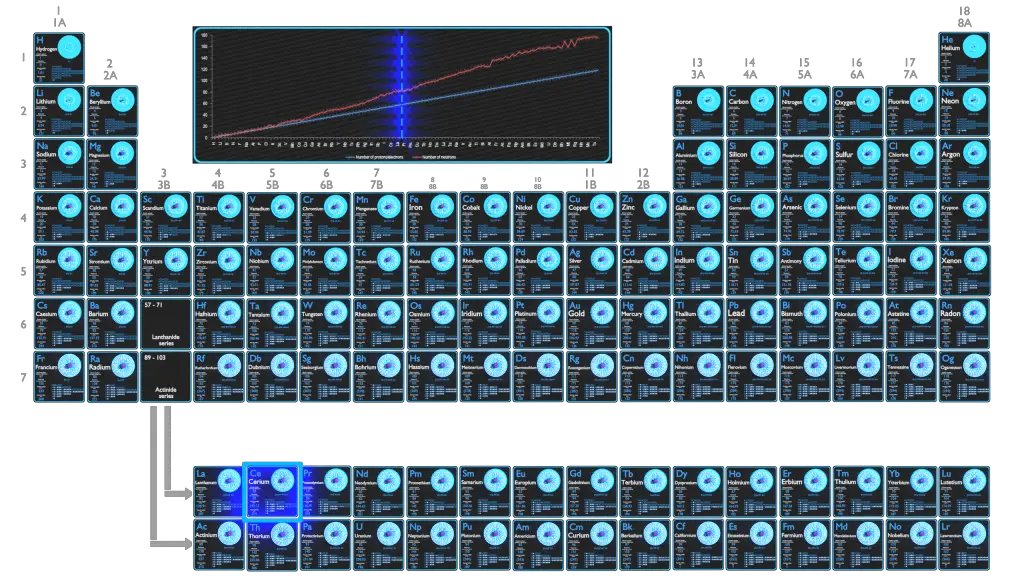
Cerium-periodic-table

Source: www.luciteria.com


Properties of other elements

Cerium - Comparison of Protons - Neutrons and Electrons

Periodic Table in 8K resolution

Other properties of Cerium


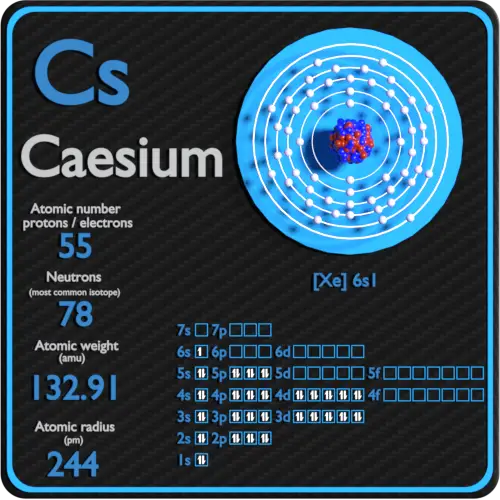
Caesium – Protons – Neutrons – Electrons – Electron Configuration

Caesium-protons-neutrons-electrons-configuration

Caesium is a soft, silvery-gold alkali metal with a melting point of 28.5 °C, which makes it one of only five elemental metals that are liquid at or near room temperature. Caesium has physical and chemical properties similar to those of rubidium and potassium.

Protons and Neutrons in Caesium

Proton Number - Atomic NumberCaesium is a chemical element with atomic number 55 which means there are 55 protons in its nucleus. Total number of protons in the nucleus is called the atomic number of the atom and is given the symbol Z. The total electrical charge of the nucleus is therefore +Ze, where e (elementary charge) equals to 1,602 x 10-19 coulombs.

The total number of neutrons in the nucleus of an atom is called the neutron number of the atom and is given the symbol N. Neutron number plus atomic number equals atomic mass number: N+Z=A. The difference between the neutron number and the atomic number is known as the neutron excess: D = N – Z = A – 2Z.

For stable elements, there is usually a variety of stable isotopes. Isotopes are nuclides that have the same atomic number and are therefore the same element, but differ in the number of neutrons. Mass numbers of typical isotopes of Caesium are 78. 

Main Isotopes of Caesium

Caesium occurs in 2 natural isotopes: 133Cs and 135Cs. 135Cs is very slightly radioactive, decaying by beta decay with a half-life of 2.3×10⁶ years and occurs only in traces. 133Cs is the most common isotope, having a natural abundance of approximately 100%.

Caesium-133 is composed of 55 protons, 78 neutrons, and 55 electrons.

Caesium-135 is composed of 55 protons, 80 neutrons, and 55 electrons.

Naturally Occuring Isotopes

Isotope Abundance Neutron Number
133Cs 100% 78
135Cs (unstable) trace 80

Typical Unstable Isotopes

Isotope Half-life Decay Mode Product
134Cs 2.0648 y beta decay 134Ba
135Cs 2.3×10⁶ y beta decay 135Ba
137Cs 30.17 y beta decay 137Ba

Electrons and Electron Configuration

The number of electrons in an electrically-neutral atom is the same as the number of protons in the nucleus. Therefore, the number of electrons in neutral atom of Caesium is 55. Each electron is influenced by the electric fields produced by the positive nuclear charge and the other (Z – 1) negative electrons in the atom.

Since the number of electrons and their arrangement are responsible for the chemical behavior of atoms, the atomic number identifies the various chemical elements. The configuration of these electrons follows from the principles of quantum mechanics. The number of electrons in each element’s electron shells, particularly the outermost valence shell, is the primary factor in determining its chemical bonding behavior. In the periodic table, the elements are listed in order of increasing atomic number Z.

Electron configuration of Caesium is [Xe] 6s1.

Possible oxidation states are +1.

Most Common Application of Caesium

The largest present-day use of nonradioactive caesium is in caesium formate drilling fluids for the extractive oil industry. Cesium formate is the heaviest of the monovalent alkali metal salts, all of which are very soluble in water and form high density fluids with a range of beneficial properties.

About Protons

protonA proton is one of the subatomic particles that make up matter. In the universe, protons are abundant, making up about half of all visible matter. It has a positive electric charge (+1e) and a rest mass equal to 1.67262 × 10⁻²⁷ kg (938.272 MeV/c2)— marginally lighter than that of the neutron but nearly 1836 times greater than that of the electron. The proton has a mean square radius of about 0.87 × 10⁻¹⁵ m, or 0.87 fm, and it is a spin – ½ fermion.

The protons exist in the nuclei of typical atoms, along with their neutral counterparts, the neutrons. Neutrons and protons, commonly called nucleons, are bound together in the atomic nucleus, where they account for 99.9 percent of the atom’s mass. Research in high-energy particle physics in the 20th century revealed that neither the neutron nor the proton is not the smallest building block of matter.

About Neutrons

A neutron is one of the subatomic particles that make up matter. In the universe, neutrons are abundant, making up more than half of all visible matter. It has no electric charge and a rest mass equal to 1.67493 × 10⁻²⁷ kg—marginally greater than that of the proton but nearly 1839 times greater than that of the electron. The neutron has a mean square radius of about 0.8×10⁻¹⁵ m, or 0.8 fm, and it is a spin-½ fermion.

Atomic nuclei consist of protons and neutrons, which attract each other through the nuclear force, while protons repel each other via the electric force due to their positive charge. These two forces compete, leading to various stability of nuclei. There are only certain combinations of neutrons and protons, which forms stable nuclei.

Neutrons stabilize the nucleus, because they attract each other and protons , which helps offset the electrical repulsion between protons. As a result, as the number of protons increases, an increasing ratio of neutrons to protons is needed to form a stable nucleus. If there are too many or too few neutrons for a given number of protons, the resulting nucleus is not stable and it undergoes radioactive decay. Unstable isotopes decay through various radioactive decay pathways, most commonly alpha decay, beta decay, or electron capture. Many other rare types of decay, such as spontaneous fission or neutron emission are known. It should be noted that all of these decay pathways may be accompanied by the subsequent emission of gamma radiation. Pure alpha or beta decays are very rare.

About Electrons and Electron Configuration

The periodic table is a tabular display of the chemical elements organized on the basis of their atomic numbers, electron configurations, and chemical properties. The electron configuration is the distribution of electrons of an atom or molecule (or other physical structure) in atomic or molecular orbitals. Knowledge of the electron configuration of different atoms is useful in understanding the structure of the periodic table of elements.

Every solid, liquid, gas, and plasma is composed of neutral or ionized atoms. The chemical properties of the atom are determined by the number of protons, in fact, by number and arrangement of electrons. The configuration of these electrons follows from the principles of quantum mechanics. The number of electrons in each element’s electron shells, particularly the outermost valence shell, is the primary factor in determining its chemical bonding behavior. In the periodic table, the elements are listed in order of increasing atomic number Z.

It is the Pauli exclusion principle that requires the electrons in an atom to occupy different energy levels instead of them all condensing in the ground state. The ordering of the electrons in the ground state of multielectron atoms, starts with the lowest energy state (ground state) and moves progressively from there up the energy scale until each of the atom’s electrons has been assigned a unique set of quantum numbers. This fact has key implications for the building up of the periodic table of elements.

electron configuration - blocks - elementsThe first two columns on the left side of the periodic table are where the s subshells are being occupied. Because of this, the first two rows of the periodic table are labeled the s block. Similarly, the p block are the right-most six columns of the periodic table, the d block is the middle 10 columns of the periodic table, while the f block is the 14-column section that is normally depicted as detached from the main body of the periodic table. It could be part of the main body, but then the periodic table would be rather long and cumbersome.

For atoms with many electrons, this notation can become lengthy and so an abbreviated notation is used. The electron configuration can be visualized as the core electrons, equivalent to the noble gas of the preceding period, and the valence electrons (e.g. [Xe] 6s2 for barium).

Oxidation States

Oxidation states are typically represented by integers which may be positive, zero, or negative. Most elements have more than one possible oxidation state. For example, carbon has nine possible integer oxidation states from −4 to +4.

The current IUPAC Gold Book definition of oxidation state is:

“Oxidation state of an atom is the charge of this atom after ionic approximation of its heteronuclear bonds…”

and the term oxidation number is nearly synonymous. An element that is not combined with any other different elements has an oxidation state of 0. Oxidation state 0 occurs for all elements – it is simply the element in its elemental form. An atom of an element in a compound will have a positive oxidation state if it has had electrons removed. Similarly, adding electrons results in a negative oxidation state. We have also distinguish between the possible and common oxidation states of every element. For example, silicon has nine possible integer oxidation states from −4 to +4, but only -4, 0 and +4 are common oxidation states.

Summary

Element Caesium
Number of protons 55
Number of neutrons (typical isotopes) 78
Number of electrons 55
Electron configuration [Xe] 6s1
Oxidation states +1

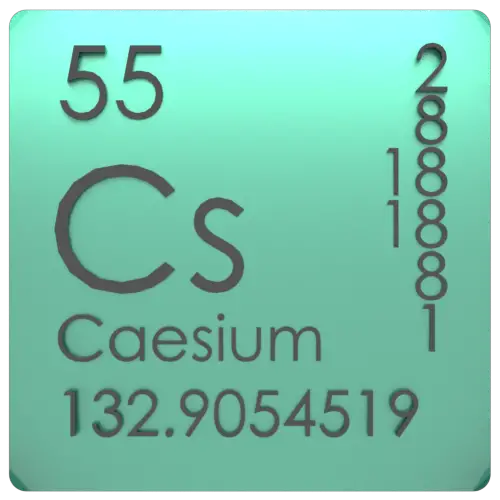
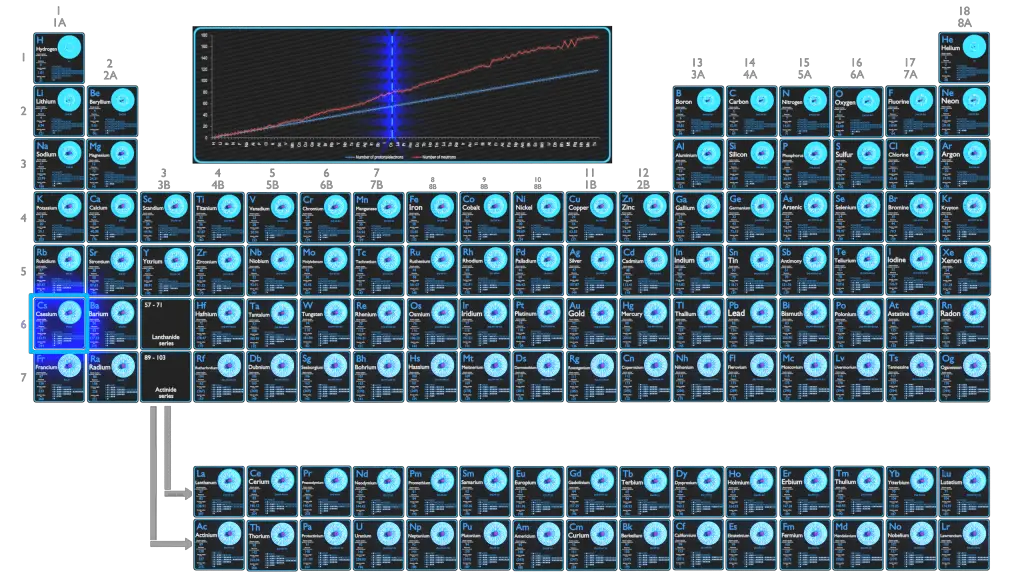
Caesium-periodic-table

Source: www.luciteria.com


Properties of other elements

Caesium - Comparison of Protons - Neutrons and Electrons

Periodic Table in 8K resolution

Other properties of Caesium


Barium – Protons – Neutrons – Electrons – Electron Configuration

Barium-protons-neutrons-electrons-configuration

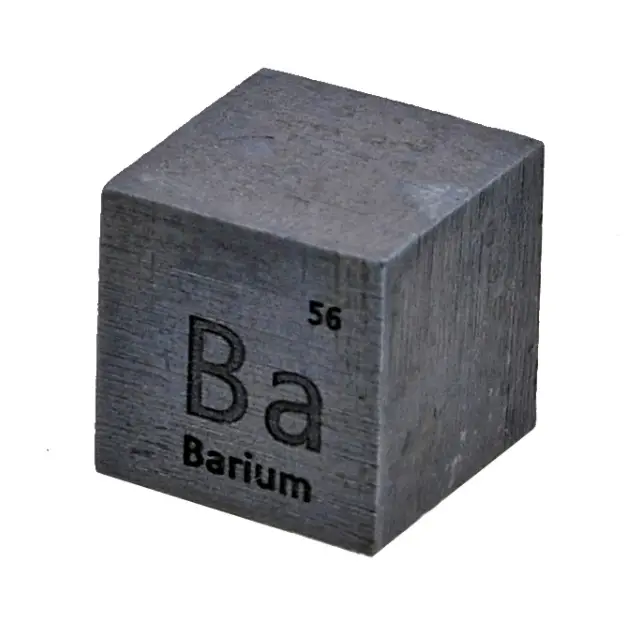
Barium is the fifth element in group 2 and is a soft, silvery alkaline earth metal. Because of its high chemical reactivity, barium is never found in nature as a free element. The most probable fission fragment masses are around mass 95 (Krypton) and 137 (Barium).

Protons and Neutrons in Barium

Proton Number - Atomic NumberBarium is a chemical element with atomic number 56 which means there are 56 protons in its nucleus. Total number of protons in the nucleus is called the atomic number of the atom and is given the symbol Z. The total electrical charge of the nucleus is therefore +Ze, where e (elementary charge) equals to 1,602 x 10-19 coulombs.

The total number of neutrons in the nucleus of an atom is called the neutron number of the atom and is given the symbol N. Neutron number plus atomic number equals atomic mass number: N+Z=A. The difference between the neutron number and the atomic number is known as the neutron excess: D = N – Z = A – 2Z.

For stable elements, there is usually a variety of stable isotopes. Isotopes are nuclides that have the same atomic number and are therefore the same element, but differ in the number of neutrons. Mass numbers of typical isotopes of Barium are 134-138. 

Main Isotopes of Barium

Barium occurs in 6 natural isotopes: 132Ba, 134Ba, 135Ba, 136Ba, 137Ba and 138Ba.  138Ba is the most common isotope, having a natural abundance of approximately 71%.

Barium-132 is composed of 56 protons, 76 neutrons, and 56 electrons.

Barium-134 is composed of 56 protons, 78 neutrons, and 56 electrons.

Barium-135 is composed of 56 protons, 79 neutrons, and 56 electrons.

Barium-136 is composed of 56 protons, 80 neutrons, and 56 electrons.

Barium-137 is composed of 56 protons, 81 neutrons, and 56 electrons.

Barium-138 is composed of 56 protons, 82 neutrons, and 56 electrons.

Naturally Occuring Isotopes

Isotope Abundance Neutron Number
132Ba 0.10% 76
134Ba 2.42% 78
135Ba 6.59% 79
136Ba 7.85% 79
137Ba 11.23% 79
138Ba 71.70% 79

Typical Unstable Isotopes

Isotope Half-life Decay Mode Product
130Ba (0.5–2.7)×1021 y double electron capture 130Xe
133Ba 10.51 y electron capture 133Cs

Electrons and Electron Configuration

The number of electrons in an electrically-neutral atom is the same as the number of protons in the nucleus. Therefore, the number of electrons in neutral atom of Barium is 56. Each electron is influenced by the electric fields produced by the positive nuclear charge and the other (Z – 1) negative electrons in the atom.

Since the number of electrons and their arrangement are responsible for the chemical behavior of atoms, the atomic number identifies the various chemical elements. The configuration of these electrons follows from the principles of quantum mechanics. The number of electrons in each element’s electron shells, particularly the outermost valence shell, is the primary factor in determining its chemical bonding behavior. In the periodic table, the elements are listed in order of increasing atomic number Z.

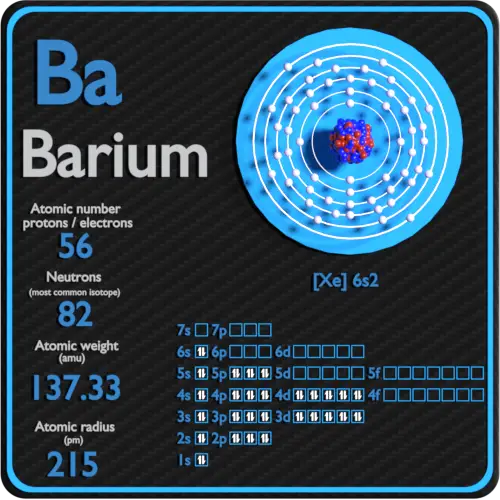
Electron configuration of Barium is [Xe] 6s2.

Possible oxidation states are +2.

Most Common Compound of Barium

Barium is a key element in the production of ceramic superconductors. Lanthanum barium copper oxide, or LBCO, was discovered in 1986 and was the first high temperature superconductor. An yttrium–barium cuprate, YBa2Cu3O7−x (or Y123), was the first superconductor found above liquid nitrogen boiling point. There are two atoms of Barium for each atom of Yttrium.
About Protons

protonA proton is one of the subatomic particles that make up matter. In the universe, protons are abundant, making up about half of all visible matter. It has a positive electric charge (+1e) and a rest mass equal to 1.67262 × 10⁻²⁷ kg (938.272 MeV/c2)— marginally lighter than that of the neutron but nearly 1836 times greater than that of the electron. The proton has a mean square radius of about 0.87 × 10⁻¹⁵ m, or 0.87 fm, and it is a spin – ½ fermion.

The protons exist in the nuclei of typical atoms, along with their neutral counterparts, the neutrons. Neutrons and protons, commonly called nucleons, are bound together in the atomic nucleus, where they account for 99.9 percent of the atom’s mass. Research in high-energy particle physics in the 20th century revealed that neither the neutron nor the proton is not the smallest building block of matter.

About Neutrons

A neutron is one of the subatomic particles that make up matter. In the universe, neutrons are abundant, making up more than half of all visible matter. It has no electric charge and a rest mass equal to 1.67493 × 10⁻²⁷ kg—marginally greater than that of the proton but nearly 1839 times greater than that of the electron. The neutron has a mean square radius of about 0.8×10⁻¹⁵ m, or 0.8 fm, and it is a spin-½ fermion.

Atomic nuclei consist of protons and neutrons, which attract each other through the nuclear force, while protons repel each other via the electric force due to their positive charge. These two forces compete, leading to various stability of nuclei. There are only certain combinations of neutrons and protons, which forms stable nuclei.

Neutrons stabilize the nucleus, because they attract each other and protons , which helps offset the electrical repulsion between protons. As a result, as the number of protons increases, an increasing ratio of neutrons to protons is needed to form a stable nucleus. If there are too many or too few neutrons for a given number of protons, the resulting nucleus is not stable and it undergoes radioactive decay. Unstable isotopes decay through various radioactive decay pathways, most commonly alpha decay, beta decay, or electron capture. Many other rare types of decay, such as spontaneous fission or neutron emission are known. It should be noted that all of these decay pathways may be accompanied by the subsequent emission of gamma radiation. Pure alpha or beta decays are very rare.

About Electrons and Electron Configuration

The periodic table is a tabular display of the chemical elements organized on the basis of their atomic numbers, electron configurations, and chemical properties. The electron configuration is the distribution of electrons of an atom or molecule (or other physical structure) in atomic or molecular orbitals. Knowledge of the electron configuration of different atoms is useful in understanding the structure of the periodic table of elements.

Every solid, liquid, gas, and plasma is composed of neutral or ionized atoms. The chemical properties of the atom are determined by the number of protons, in fact, by number and arrangement of electrons. The configuration of these electrons follows from the principles of quantum mechanics. The number of electrons in each element’s electron shells, particularly the outermost valence shell, is the primary factor in determining its chemical bonding behavior. In the periodic table, the elements are listed in order of increasing atomic number Z.

It is the Pauli exclusion principle that requires the electrons in an atom to occupy different energy levels instead of them all condensing in the ground state. The ordering of the electrons in the ground state of multielectron atoms, starts with the lowest energy state (ground state) and moves progressively from there up the energy scale until each of the atom’s electrons has been assigned a unique set of quantum numbers. This fact has key implications for the building up of the periodic table of elements.

electron configuration - blocks - elementsThe first two columns on the left side of the periodic table are where the s subshells are being occupied. Because of this, the first two rows of the periodic table are labeled the s block. Similarly, the p block are the right-most six columns of the periodic table, the d block is the middle 10 columns of the periodic table, while the f block is the 14-column section that is normally depicted as detached from the main body of the periodic table. It could be part of the main body, but then the periodic table would be rather long and cumbersome.

For atoms with many electrons, this notation can become lengthy and so an abbreviated notation is used. The electron configuration can be visualized as the core electrons, equivalent to the noble gas of the preceding period, and the valence electrons (e.g. [Xe] 6s2 for barium).

Oxidation States

Oxidation states are typically represented by integers which may be positive, zero, or negative. Most elements have more than one possible oxidation state. For example, carbon has nine possible integer oxidation states from −4 to +4.

The current IUPAC Gold Book definition of oxidation state is:

“Oxidation state of an atom is the charge of this atom after ionic approximation of its heteronuclear bonds…”

and the term oxidation number is nearly synonymous. An element that is not combined with any other different elements has an oxidation state of 0. Oxidation state 0 occurs for all elements – it is simply the element in its elemental form. An atom of an element in a compound will have a positive oxidation state if it has had electrons removed. Similarly, adding electrons results in a negative oxidation state. We have also distinguish between the possible and common oxidation states of every element. For example, silicon has nine possible integer oxidation states from −4 to +4, but only -4, 0 and +4 are common oxidation states.

Summary

Element Barium
Number of protons 56
Number of neutrons (typical isotopes) 134-138
Number of electrons 56
Electron configuration [Xe] 6s2
Oxidation states +2

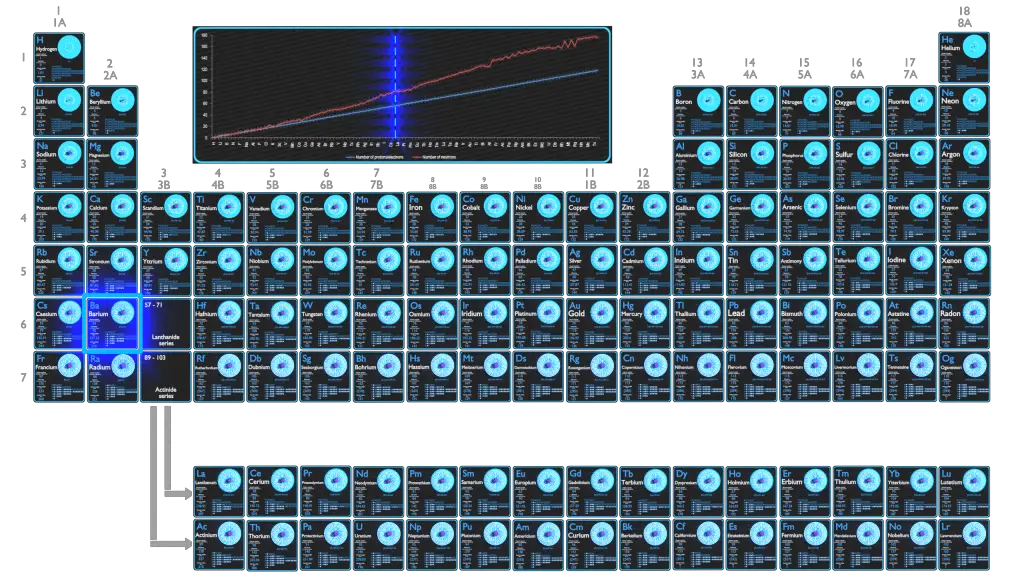
Barium-periodic-table

Source: www.luciteria.com


Properties of other elements

Barium - Comparison of Protons - Neutrons and Electrons

Periodic Table in 8K resolution

Other properties of Barium


Iodine – Protons – Neutrons – Electrons – Electron Configuration

Iodine-protons-neutrons-electrons-configuration

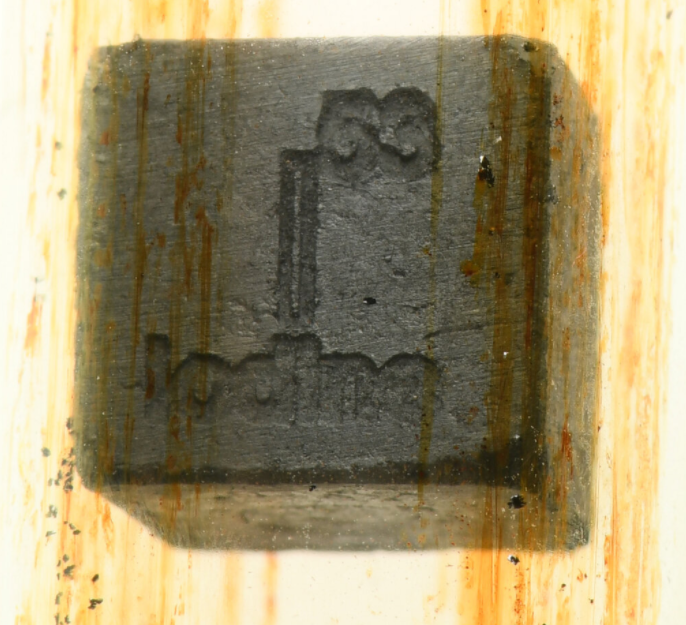
Iodine is the heaviest of the stable halogens, it exists as a lustrous, purple-black metallic solid at standard conditions that sublimes readily to form a violet gas. Iodine is the least abundant of the stable halogens, being the sixty-first most abundant element. It is even less abundant than the so-called rare earths. It is the heaviest essential mineral nutrient.

Protons and Neutrons in Iodine

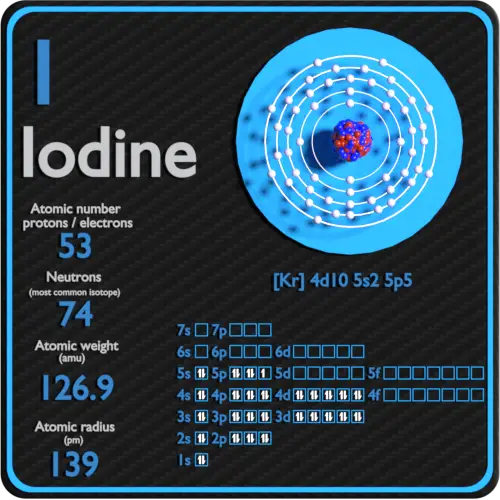
Proton Number - Atomic NumberIodine is a chemical element with atomic number 53 which means there are 53 protons in its nucleus. Total number of protons in the nucleus is called the atomic number of the atom and is given the symbol Z. The total electrical charge of the nucleus is therefore +Ze, where e (elementary charge) equals to 1,602 x 10-19 coulombs.

The total number of neutrons in the nucleus of an atom is called the neutron number of the atom and is given the symbol N. Neutron number plus atomic number equals atomic mass number: N+Z=A. The difference between the neutron number and the atomic number is known as the neutron excess: D = N – Z = A – 2Z.

For stable elements, there is usually a variety of stable isotopes. Isotopes are nuclides that have the same atomic number and are therefore the same element, but differ in the number of neutrons. Mass numbers of typical isotopes of Iodine are 127. 

Main Isotopes of Iodine

Iodine occurs in 2 natural isotopes: 127I and 129I. 129I is very slightly radioactive, decaying by beta decay with a half-life of 1.57×10⁷ years and occurs only in traces. 127I is the most common isotope, having a natural abundance of approximately 100%.

Iodine-127 is composed of 53 protons, 74 neutrons, and 53 electrons.

Iodine-129 is composed of 53 protons, 76 neutrons, and 53 electrons.

Naturally Occuring Isotopes

Isotope Abundance Neutron Number
127I 100% 74
129I (unstable) trace 76

Typical Unstable Isotopes

Isotope Half-life Decay Mode Product
124I 4.176 d electron capture 124Te
125I 59.40 d electron capture 125Te
129I 1.57×10⁷ y beta decay 129Xe
131I 8.02070 d beta decay 131Xe

Electrons and Electron Configuration

The number of electrons in an electrically-neutral atom is the same as the number of protons in the nucleus. Therefore, the number of electrons in neutral atom of Iodine is 53. Each electron is influenced by the electric fields produced by the positive nuclear charge and the other (Z – 1) negative electrons in the atom.

Since the number of electrons and their arrangement are responsible for the chemical behavior of atoms, the atomic number identifies the various chemical elements. The configuration of these electrons follows from the principles of quantum mechanics. The number of electrons in each element’s electron shells, particularly the outermost valence shell, is the primary factor in determining its chemical bonding behavior. In the periodic table, the elements are listed in order of increasing atomic number Z.

Electron configuration of Iodine is [Kr] 4d10 5s2 5p5.

Possible oxidation states are +1,5,7/-1.

Most Common Application of Iodine

Common application of iodine is the tincture of iodine, which is an antiseptic. It is usually 2 to 7% elemental iodine, along with potassium iodide or sodium iodide, dissolved in a mixture of ethanol and water. Tincture solutions are characterized by the presence of alcohol.

About Protons

protonA proton is one of the subatomic particles that make up matter. In the universe, protons are abundant, making up about half of all visible matter. It has a positive electric charge (+1e) and a rest mass equal to 1.67262 × 10⁻²⁷ kg (938.272 MeV/c2)— marginally lighter than that of the neutron but nearly 1836 times greater than that of the electron. The proton has a mean square radius of about 0.87 × 10⁻¹⁵ m, or 0.87 fm, and it is a spin – ½ fermion.

The protons exist in the nuclei of typical atoms, along with their neutral counterparts, the neutrons. Neutrons and protons, commonly called nucleons, are bound together in the atomic nucleus, where they account for 99.9 percent of the atom’s mass. Research in high-energy particle physics in the 20th century revealed that neither the neutron nor the proton is not the smallest building block of matter.

About Neutrons

A neutron is one of the subatomic particles that make up matter. In the universe, neutrons are abundant, making up more than half of all visible matter. It has no electric charge and a rest mass equal to 1.67493 × 10⁻²⁷ kg—marginally greater than that of the proton but nearly 1839 times greater than that of the electron. The neutron has a mean square radius of about 0.8×10⁻¹⁵ m, or 0.8 fm, and it is a spin-½ fermion.

Atomic nuclei consist of protons and neutrons, which attract each other through the nuclear force, while protons repel each other via the electric force due to their positive charge. These two forces compete, leading to various stability of nuclei. There are only certain combinations of neutrons and protons, which forms stable nuclei.

Neutrons stabilize the nucleus, because they attract each other and protons , which helps offset the electrical repulsion between protons. As a result, as the number of protons increases, an increasing ratio of neutrons to protons is needed to form a stable nucleus. If there are too many or too few neutrons for a given number of protons, the resulting nucleus is not stable and it undergoes radioactive decay. Unstable isotopes decay through various radioactive decay pathways, most commonly alpha decay, beta decay, or electron capture. Many other rare types of decay, such as spontaneous fission or neutron emission are known. It should be noted that all of these decay pathways may be accompanied by the subsequent emission of gamma radiation. Pure alpha or beta decays are very rare.

About Electrons and Electron Configuration

The periodic table is a tabular display of the chemical elements organized on the basis of their atomic numbers, electron configurations, and chemical properties. The electron configuration is the distribution of electrons of an atom or molecule (or other physical structure) in atomic or molecular orbitals. Knowledge of the electron configuration of different atoms is useful in understanding the structure of the periodic table of elements.

Every solid, liquid, gas, and plasma is composed of neutral or ionized atoms. The chemical properties of the atom are determined by the number of protons, in fact, by number and arrangement of electrons. The configuration of these electrons follows from the principles of quantum mechanics. The number of electrons in each element’s electron shells, particularly the outermost valence shell, is the primary factor in determining its chemical bonding behavior. In the periodic table, the elements are listed in order of increasing atomic number Z.

It is the Pauli exclusion principle that requires the electrons in an atom to occupy different energy levels instead of them all condensing in the ground state. The ordering of the electrons in the ground state of multielectron atoms, starts with the lowest energy state (ground state) and moves progressively from there up the energy scale until each of the atom’s electrons has been assigned a unique set of quantum numbers. This fact has key implications for the building up of the periodic table of elements.

electron configuration - blocks - elementsThe first two columns on the left side of the periodic table are where the s subshells are being occupied. Because of this, the first two rows of the periodic table are labeled the s block. Similarly, the p block are the right-most six columns of the periodic table, the d block is the middle 10 columns of the periodic table, while the f block is the 14-column section that is normally depicted as detached from the main body of the periodic table. It could be part of the main body, but then the periodic table would be rather long and cumbersome.

For atoms with many electrons, this notation can become lengthy and so an abbreviated notation is used. The electron configuration can be visualized as the core electrons, equivalent to the noble gas of the preceding period, and the valence electrons (e.g. [Xe] 6s2 for barium).

Oxidation States

Oxidation states are typically represented by integers which may be positive, zero, or negative. Most elements have more than one possible oxidation state. For example, carbon has nine possible integer oxidation states from −4 to +4.

The current IUPAC Gold Book definition of oxidation state is:

“Oxidation state of an atom is the charge of this atom after ionic approximation of its heteronuclear bonds…”

and the term oxidation number is nearly synonymous. An element that is not combined with any other different elements has an oxidation state of 0. Oxidation state 0 occurs for all elements – it is simply the element in its elemental form. An atom of an element in a compound will have a positive oxidation state if it has had electrons removed. Similarly, adding electrons results in a negative oxidation state. We have also distinguish between the possible and common oxidation states of every element. For example, silicon has nine possible integer oxidation states from −4 to +4, but only -4, 0 and +4 are common oxidation states.

Summary

Element Iodine
Number of protons 53
Number of neutrons (typical isotopes) 127
Number of electrons 53
Electron configuration [Kr] 4d10 5s2 5p5
Oxidation states +1,5,7/-1

Iodine-periodic-table

Source: www.luciteria.com


Properties of other elements

Iodine - Comparison of Protons - Neutrons and Electrons

Periodic Table in 8K resolution

Other properties of Iodine


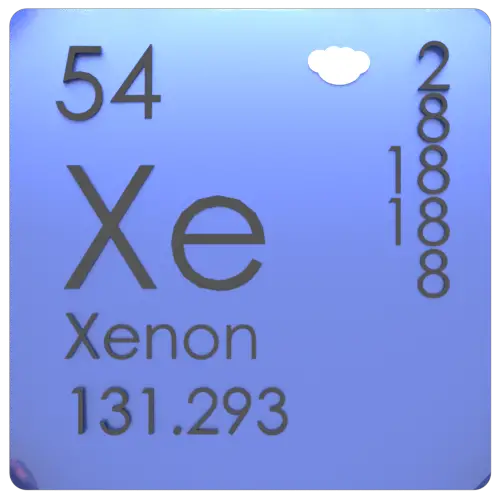
Xenon – Protons – Neutrons – Electrons – Electron Configuration

Xenon-protons-neutrons-electrons-configuration

Xenon is a colorless, dense, odorless noble gas found in the Earth’s atmosphere in trace amounts.[10] Although generally unreactive, xenon can undergo a few chemical reactions. Xenon was first discovered in 1898 by the Scottish chemist William Ramsay and English chemist Morris Travers. The name xenon for this gas comes from the Greek word ξένον [xenon], neuter singular form of ξένος [xenos], meaning ‘foreign(er)’, ‘strange(r)’, or ‘guest’. In nuclear industry, especially artificial xenon 135 has a tremendous impact on the operation of a nuclear reactor. For physicists and for reactor operators, it is important to understand the mechanisms that produce and remove xenon from the reactor to predict how the reactor will respond following changes in power level.

Protons and Neutrons in Xenon

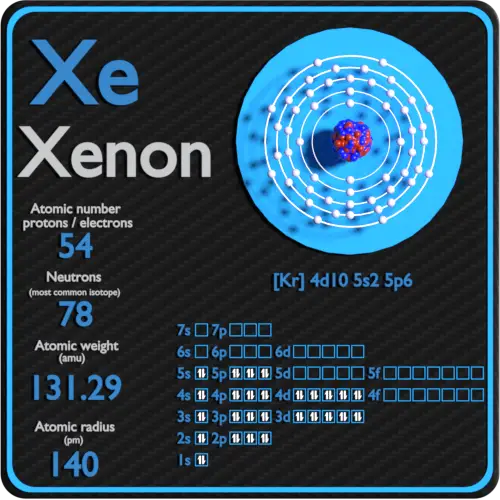
Proton Number - Atomic NumberXenon is a chemical element with atomic number 54 which means there are 54 protons in its nucleus. Total number of protons in the nucleus is called the atomic number of the atom and is given the symbol Z. The total electrical charge of the nucleus is therefore +Ze, where e (elementary charge) equals to 1,602 x 10-19 coulombs.

The total number of neutrons in the nucleus of an atom is called the neutron number of the atom and is given the symbol N. Neutron number plus atomic number equals atomic mass number: N+Z=A. The difference between the neutron number and the atomic number is known as the neutron excess: D = N – Z = A – 2Z.

For stable elements, there is usually a variety of stable isotopes. Isotopes are nuclides that have the same atomic number and are therefore the same element, but differ in the number of neutrons. Mass numbers of typical isotopes of Xenon are 128-135. 

Main Isotopes of Xenon

Xenon occurs in 9 natural isotopes: 124Xe, 126Xe, 128Xe, 129Xe, 130Xe, 131Xe, 132Xe, 134Xe and 136Xe. 124Xe, 126Xe, 134Xe and 136Xe are very slightly radioactive. 132Xe is the most common isotope, having a natural abundance of approximately 26.9%.

Xenon-124 is composed of 54 protons, 70 neutrons, and 54 electrons.

Xenon-126 is composed of 54 protons, 72 neutrons, and 54 electrons.

Xenon-128 is composed of 54 protons, 74 neutrons, and 54 electrons.

Xenon-129 is composed of 54 protons, 75 neutrons, and 54 electrons.

Xenon-130 is composed of 54 protons, 76 neutrons, and 54 electrons.

Xenon-131 is composed of 54 protons, 77 neutrons, and 54 electrons.

Xenon-132 is composed of 54 protons, 78 neutrons, and 54 electrons.

Xenon-134 is composed of 54 protons, 80 neutrons, and 54 electrons.

Xenon-136 is composed of 54 protons, 82 neutrons, and 54 electrons.

Naturally Occuring Isotopes

Isotope Abundance Neutron Number
124Xe (unstable) 0.095% 70
126Xe (unstable) 0.089% 72
128Xe 1.910% 74
129Xe 26.401% 75
130Xe 4.071% 76
131Xe 21.232% 77
132Xe 26.909% 78
134Xe (unstable) 10.436% 80
136Xe (unstable) 8.857% 82

Typical Unstable Isotopes

Isotope Half-life Decay Mode Product
124Xe 1.8×10²² y double electron capture 124Te
127Xe 36.345 d electron capture 127I
133Xe 5.247 d beta decay 133Cs
136Xe 2.165×10²¹ y double beta decay 136Ba

Electrons and Electron Configuration

The number of electrons in an electrically-neutral atom is the same as the number of protons in the nucleus. Therefore, the number of electrons in neutral atom of Xenon is 54. Each electron is influenced by the electric fields produced by the positive nuclear charge and the other (Z – 1) negative electrons in the atom.

Since the number of electrons and their arrangement are responsible for the chemical behavior of atoms, the atomic number identifies the various chemical elements. The configuration of these electrons follows from the principles of quantum mechanics. The number of electrons in each element’s electron shells, particularly the outermost valence shell, is the primary factor in determining its chemical bonding behavior. In the periodic table, the elements are listed in order of increasing atomic number Z.

Electron configuration of Xenon is [Kr] 4d10 5s2 5p6.

Possible oxidation states are 0.

Most Common Application of Xenon

Xenon is used in light-emitting devices called xenon flash lamps, used in photographic flashes and stroboscopic lamps. Although generally unreactive, xenon can undergo a few chemical reactions such as the formation of xenon hexafluoroplatinate, the first noble gas compound to be synthesized.

About Protons

protonA proton is one of the subatomic particles that make up matter. In the universe, protons are abundant, making up about half of all visible matter. It has a positive electric charge (+1e) and a rest mass equal to 1.67262 × 10⁻²⁷ kg (938.272 MeV/c2)— marginally lighter than that of the neutron but nearly 1836 times greater than that of the electron. The proton has a mean square radius of about 0.87 × 10⁻¹⁵ m, or 0.87 fm, and it is a spin – ½ fermion.

The protons exist in the nuclei of typical atoms, along with their neutral counterparts, the neutrons. Neutrons and protons, commonly called nucleons, are bound together in the atomic nucleus, where they account for 99.9 percent of the atom’s mass. Research in high-energy particle physics in the 20th century revealed that neither the neutron nor the proton is not the smallest building block of matter.

About Neutrons

A neutron is one of the subatomic particles that make up matter. In the universe, neutrons are abundant, making up more than half of all visible matter. It has no electric charge and a rest mass equal to 1.67493 × 10⁻²⁷ kg—marginally greater than that of the proton but nearly 1839 times greater than that of the electron. The neutron has a mean square radius of about 0.8×10⁻¹⁵ m, or 0.8 fm, and it is a spin-½ fermion.

Atomic nuclei consist of protons and neutrons, which attract each other through the nuclear force, while protons repel each other via the electric force due to their positive charge. These two forces compete, leading to various stability of nuclei. There are only certain combinations of neutrons and protons, which forms stable nuclei.

Neutrons stabilize the nucleus, because they attract each other and protons , which helps offset the electrical repulsion between protons. As a result, as the number of protons increases, an increasing ratio of neutrons to protons is needed to form a stable nucleus. If there are too many or too few neutrons for a given number of protons, the resulting nucleus is not stable and it undergoes radioactive decay. Unstable isotopes decay through various radioactive decay pathways, most commonly alpha decay, beta decay, or electron capture. Many other rare types of decay, such as spontaneous fission or neutron emission are known. It should be noted that all of these decay pathways may be accompanied by the subsequent emission of gamma radiation. Pure alpha or beta decays are very rare.

About Electrons and Electron Configuration

The periodic table is a tabular display of the chemical elements organized on the basis of their atomic numbers, electron configurations, and chemical properties. The electron configuration is the distribution of electrons of an atom or molecule (or other physical structure) in atomic or molecular orbitals. Knowledge of the electron configuration of different atoms is useful in understanding the structure of the periodic table of elements.

Every solid, liquid, gas, and plasma is composed of neutral or ionized atoms. The chemical properties of the atom are determined by the number of protons, in fact, by number and arrangement of electrons. The configuration of these electrons follows from the principles of quantum mechanics. The number of electrons in each element’s electron shells, particularly the outermost valence shell, is the primary factor in determining its chemical bonding behavior. In the periodic table, the elements are listed in order of increasing atomic number Z.

It is the Pauli exclusion principle that requires the electrons in an atom to occupy different energy levels instead of them all condensing in the ground state. The ordering of the electrons in the ground state of multielectron atoms, starts with the lowest energy state (ground state) and moves progressively from there up the energy scale until each of the atom’s electrons has been assigned a unique set of quantum numbers. This fact has key implications for the building up of the periodic table of elements.

electron configuration - blocks - elementsThe first two columns on the left side of the periodic table are where the s subshells are being occupied. Because of this, the first two rows of the periodic table are labeled the s block. Similarly, the p block are the right-most six columns of the periodic table, the d block is the middle 10 columns of the periodic table, while the f block is the 14-column section that is normally depicted as detached from the main body of the periodic table. It could be part of the main body, but then the periodic table would be rather long and cumbersome.

For atoms with many electrons, this notation can become lengthy and so an abbreviated notation is used. The electron configuration can be visualized as the core electrons, equivalent to the noble gas of the preceding period, and the valence electrons (e.g. [Xe] 6s2 for barium).

Oxidation States

Oxidation states are typically represented by integers which may be positive, zero, or negative. Most elements have more than one possible oxidation state. For example, carbon has nine possible integer oxidation states from −4 to +4.

The current IUPAC Gold Book definition of oxidation state is:

“Oxidation state of an atom is the charge of this atom after ionic approximation of its heteronuclear bonds…”

and the term oxidation number is nearly synonymous. An element that is not combined with any other different elements has an oxidation state of 0. Oxidation state 0 occurs for all elements – it is simply the element in its elemental form. An atom of an element in a compound will have a positive oxidation state if it has had electrons removed. Similarly, adding electrons results in a negative oxidation state. We have also distinguish between the possible and common oxidation states of every element. For example, silicon has nine possible integer oxidation states from −4 to +4, but only -4, 0 and +4 are common oxidation states.

Summary

Element Xenon
Number of protons 54
Number of neutrons (typical isotopes) 128-135
Number of electrons 54
Electron configuration [Kr] 4d10 5s2 5p6
Oxidation states 0

Xenon-periodic-table

Source: www.luciteria.com


Properties of other elements

Xenon - Comparison of Protons - Neutrons and Electrons

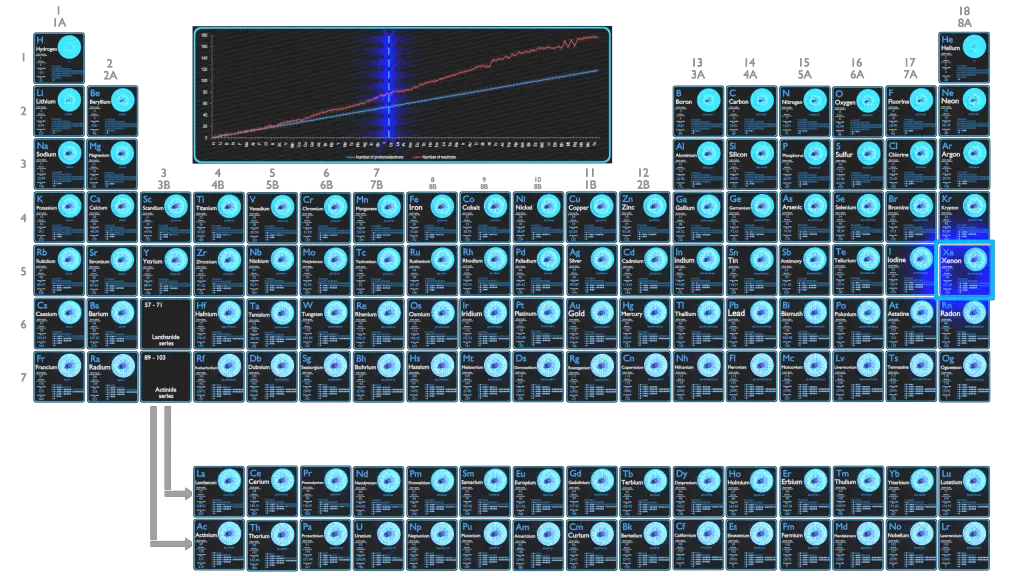
Periodic Table in 8K resolution

Other properties of Xenon


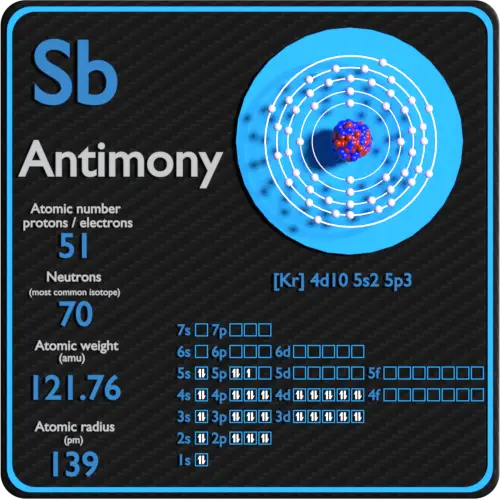
Antimony – Protons – Neutrons – Electrons – Electron Configuration

Antimony-protons-neutrons-electrons-configuration

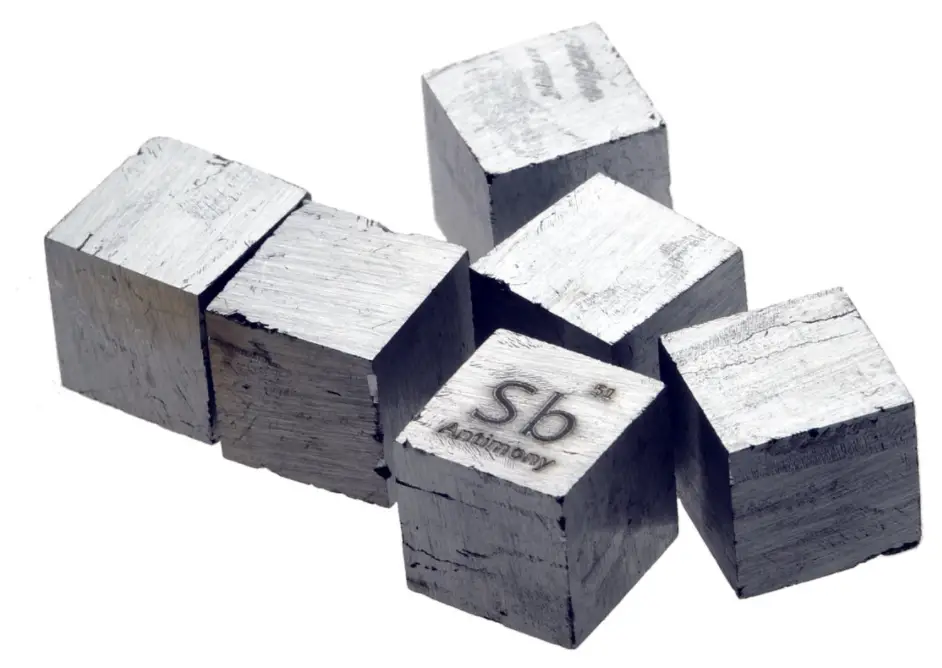
Antimony is a lustrous gray metalloid, it is found in nature mainly as the sulfide mineral stibnite. Antimony compounds have been known since ancient times and were powdered for use as medicine and cosmetics, often known by the Arabic name, kohl.

Protons and Neutrons in Antimony

Proton Number - Atomic NumberAntimony is a chemical element with atomic number 51 which means there are 51 protons in its nucleus. Total number of protons in the nucleus is called the atomic number of the atom and is given the symbol Z. The total electrical charge of the nucleus is therefore +Ze, where e (elementary charge) equals to 1,602 x 10-19 coulombs.

The total number of neutrons in the nucleus of an atom is called the neutron number of the atom and is given the symbol N. Neutron number plus atomic number equals atomic mass number: N+Z=A. The difference between the neutron number and the atomic number is known as the neutron excess: D = N – Z = A – 2Z.

For stable elements, there is usually a variety of stable isotopes. Isotopes are nuclides that have the same atomic number and are therefore the same element, but differ in the number of neutrons. Mass numbers of typical isotopes of Antimony are 121, 123. 

Main Isotopes of Antimony

Antimony occurs in 2 natural isotopes: 121Sb and 123Sb. 121Sb is the most common isotope, having a natural abundance of approximately 57%.

Antimony-121 is composed of 51 protons, 70 neutrons, and 51 electrons.

Antimony-123 is composed of 51 protons, 72 neutrons, and 51 electrons.

Naturally Occuring Isotopes

Isotope Abundance Neutron Number
121Sb 57.21% 70
123Sb 42.79% 72

Typical Unstable Isotopes

Isotope Half-life Decay Mode Product
125Sb 2.7582 y beta decay 125Te

Electrons and Electron Configuration

The number of electrons in an electrically-neutral atom is the same as the number of protons in the nucleus. Therefore, the number of electrons in neutral atom of Antimony is 51. Each electron is influenced by the electric fields produced by the positive nuclear charge and the other (Z – 1) negative electrons in the atom.

Since the number of electrons and their arrangement are responsible for the chemical behavior of atoms, the atomic number identifies the various chemical elements. The configuration of these electrons follows from the principles of quantum mechanics. The number of electrons in each element’s electron shells, particularly the outermost valence shell, is the primary factor in determining its chemical bonding behavior. In the periodic table, the elements are listed in order of increasing atomic number Z.

Electron configuration of Antimony is [Kr] 4d10 5s2 5p3.

Possible oxidation states are +3,5/-3.

Most Common Application of Antimony

The largest applications for metallic antimony are alloys with lead and tin and the lead antimony plates in lead–acid batteries. In lead–acid batteries, this addition improves plate strength and charging characteristics.

About Protons

protonA proton is one of the subatomic particles that make up matter. In the universe, protons are abundant, making up about half of all visible matter. It has a positive electric charge (+1e) and a rest mass equal to 1.67262 × 10⁻²⁷ kg (938.272 MeV/c2)— marginally lighter than that of the neutron but nearly 1836 times greater than that of the electron. The proton has a mean square radius of about 0.87 × 10⁻¹⁵ m, or 0.87 fm, and it is a spin – ½ fermion.

The protons exist in the nuclei of typical atoms, along with their neutral counterparts, the neutrons. Neutrons and protons, commonly called nucleons, are bound together in the atomic nucleus, where they account for 99.9 percent of the atom’s mass. Research in high-energy particle physics in the 20th century revealed that neither the neutron nor the proton is not the smallest building block of matter.

About Neutrons

A neutron is one of the subatomic particles that make up matter. In the universe, neutrons are abundant, making up more than half of all visible matter. It has no electric charge and a rest mass equal to 1.67493 × 10⁻²⁷ kg—marginally greater than that of the proton but nearly 1839 times greater than that of the electron. The neutron has a mean square radius of about 0.8×10⁻¹⁵ m, or 0.8 fm, and it is a spin-½ fermion.

Atomic nuclei consist of protons and neutrons, which attract each other through the nuclear force, while protons repel each other via the electric force due to their positive charge. These two forces compete, leading to various stability of nuclei. There are only certain combinations of neutrons and protons, which forms stable nuclei.

Neutrons stabilize the nucleus, because they attract each other and protons , which helps offset the electrical repulsion between protons. As a result, as the number of protons increases, an increasing ratio of neutrons to protons is needed to form a stable nucleus. If there are too many or too few neutrons for a given number of protons, the resulting nucleus is not stable and it undergoes radioactive decay. Unstable isotopes decay through various radioactive decay pathways, most commonly alpha decay, beta decay, or electron capture. Many other rare types of decay, such as spontaneous fission or neutron emission are known. It should be noted that all of these decay pathways may be accompanied by the subsequent emission of gamma radiation. Pure alpha or beta decays are very rare.

About Electrons and Electron Configuration

The periodic table is a tabular display of the chemical elements organized on the basis of their atomic numbers, electron configurations, and chemical properties. The electron configuration is the distribution of electrons of an atom or molecule (or other physical structure) in atomic or molecular orbitals. Knowledge of the electron configuration of different atoms is useful in understanding the structure of the periodic table of elements.

Every solid, liquid, gas, and plasma is composed of neutral or ionized atoms. The chemical properties of the atom are determined by the number of protons, in fact, by number and arrangement of electrons. The configuration of these electrons follows from the principles of quantum mechanics. The number of electrons in each element’s electron shells, particularly the outermost valence shell, is the primary factor in determining its chemical bonding behavior. In the periodic table, the elements are listed in order of increasing atomic number Z.

It is the Pauli exclusion principle that requires the electrons in an atom to occupy different energy levels instead of them all condensing in the ground state. The ordering of the electrons in the ground state of multielectron atoms, starts with the lowest energy state (ground state) and moves progressively from there up the energy scale until each of the atom’s electrons has been assigned a unique set of quantum numbers. This fact has key implications for the building up of the periodic table of elements.

electron configuration - blocks - elementsThe first two columns on the left side of the periodic table are where the s subshells are being occupied. Because of this, the first two rows of the periodic table are labeled the s block. Similarly, the p block are the right-most six columns of the periodic table, the d block is the middle 10 columns of the periodic table, while the f block is the 14-column section that is normally depicted as detached from the main body of the periodic table. It could be part of the main body, but then the periodic table would be rather long and cumbersome.

For atoms with many electrons, this notation can become lengthy and so an abbreviated notation is used. The electron configuration can be visualized as the core electrons, equivalent to the noble gas of the preceding period, and the valence electrons (e.g. [Xe] 6s2 for barium).

Oxidation States

Oxidation states are typically represented by integers which may be positive, zero, or negative. Most elements have more than one possible oxidation state. For example, carbon has nine possible integer oxidation states from −4 to +4.

The current IUPAC Gold Book definition of oxidation state is:

“Oxidation state of an atom is the charge of this atom after ionic approximation of its heteronuclear bonds…”

and the term oxidation number is nearly synonymous. An element that is not combined with any other different elements has an oxidation state of 0. Oxidation state 0 occurs for all elements – it is simply the element in its elemental form. An atom of an element in a compound will have a positive oxidation state if it has had electrons removed. Similarly, adding electrons results in a negative oxidation state. We have also distinguish between the possible and common oxidation states of every element. For example, silicon has nine possible integer oxidation states from −4 to +4, but only -4, 0 and +4 are common oxidation states.

Summary

Element Antimony
Number of protons 51
Number of neutrons (typical isotopes) 121, 123
Number of electrons 51
Electron configuration [Kr] 4d10 5s2 5p3
Oxidation states +3,5/-3

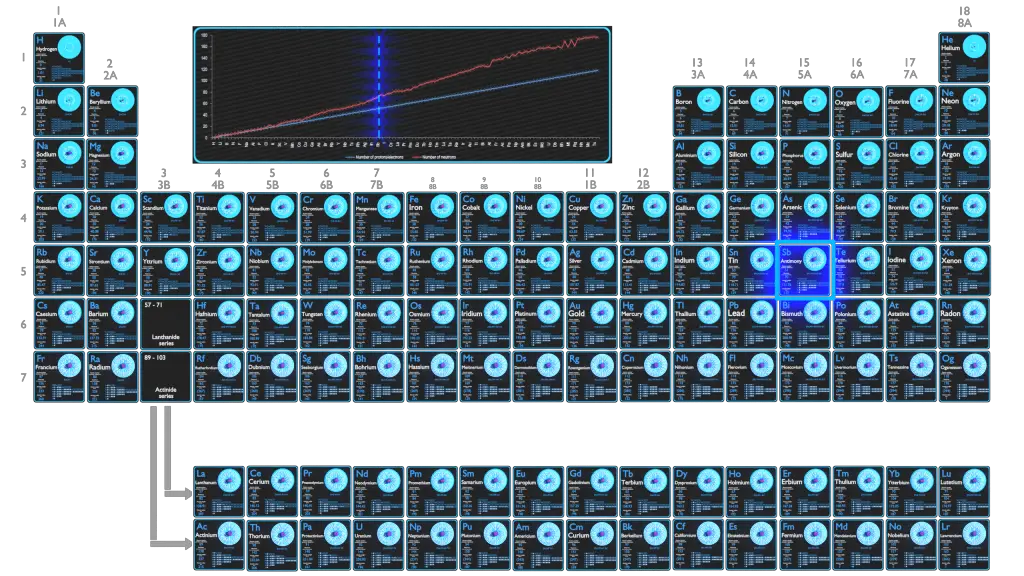
Antimony-periodic-table

Source: www.luciteria.com


Properties of other elements

Antimony - Comparison of Protons - Neutrons and Electrons

Periodic Table in 8K resolution

Other properties of Antimony


Tellurium – Protons – Neutrons – Electrons – Electron Configuration

Tellurium-protons-neutrons-electrons-configuration

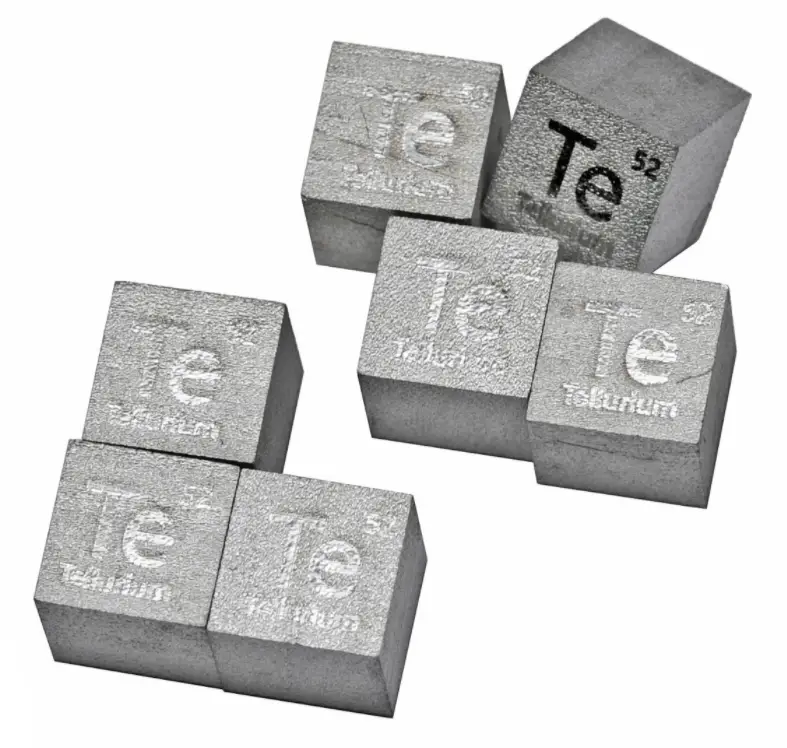
Tellurium is a brittle, mildly toxic, rare, silver-white metalloid. Tellurium is chemically related to selenium and sulfur. It is occasionally found in native form as elemental crystals. Tellurium is far more common in the universe as a whole than on Earth. Its extreme rarity in the Earth’s crust, comparable to that of platinum.

Protons and Neutrons in Tellurium

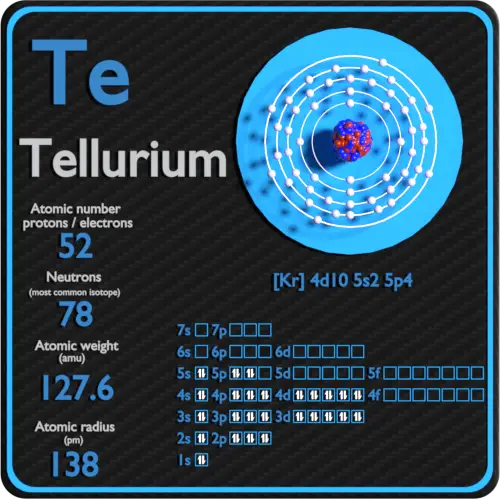
Proton Number - Atomic NumberTellurium is a chemical element with atomic number 52 which means there are 52 protons in its nucleus. Total number of protons in the nucleus is called the atomic number of the atom and is given the symbol Z. The total electrical charge of the nucleus is therefore +Ze, where e (elementary charge) equals to 1,602 x 10-19 coulombs.

The total number of neutrons in the nucleus of an atom is called the neutron number of the atom and is given the symbol N. Neutron number plus atomic number equals atomic mass number: N+Z=A. The difference between the neutron number and the atomic number is known as the neutron excess: D = N – Z = A – 2Z.

For stable elements, there is usually a variety of stable isotopes. Isotopes are nuclides that have the same atomic number and are therefore the same element, but differ in the number of neutrons. Mass numbers of typical isotopes of Tellurium are 122-126. 

Main Isotopes of Tellurium

Tellurium occurs in 8 natural isotopes: 120Te, 122Te, 123Te, 124Te, 125Te, 126Te, 128Te and 130Te. 128Te and 130Te are very slightly radioactive, decaying by beta decay with a half-life of 2.2×1024 years and 7.9×10²⁰ years. 130Te is the most common isotope, having a natural abundance of approximately 34%.

Tellurium-120 is composed of 52 protons, 68 neutrons, and 52 electrons.

Tellurium-122 is composed of 52 protons, 70 neutrons, and 52 electrons.

Tellurium-123 is composed of 52 protons, 71 neutrons, and 52 electrons.

Tellurium-124 is composed of 52 protons, 72 neutrons, and 52 electrons.

Tellurium-125 is composed of 52 protons, 73 neutrons, and 52 electrons.

Tellurium-126 is composed of 52 protons, 74 neutrons, and 52 electrons.

Tellurium-128 is composed of 52 protons, 76 neutrons, and 52 electrons.

Tellurium-130 is composed of 52 protons, 78 neutrons, and 52 electrons.

Naturally Occuring Isotopes

Isotope Abundance Neutron Number
120Te 0.09% 68
122Te 2.55%% 70
123Te 0.89% 71
124Te 4.74% 72
125Te 7.07% 73
126Te 18.84% 74
128Te (unstable) 31.74% 76
130Te (unstable) 34.08% 78

Typical Unstable Isotopes

Isotope Half-life Decay Mode Product
121Te 16.78 d electron capture 121Sb
128Te 2.2×1024 y double beta decay 128Xe
130Te 7.9×10²⁰ y double beta decay 130Xe

Electrons and Electron Configuration

The number of electrons in an electrically-neutral atom is the same as the number of protons in the nucleus. Therefore, the number of electrons in neutral atom of Tellurium is 52. Each electron is influenced by the electric fields produced by the positive nuclear charge and the other (Z – 1) negative electrons in the atom.

Since the number of electrons and their arrangement are responsible for the chemical behavior of atoms, the atomic number identifies the various chemical elements. The configuration of these electrons follows from the principles of quantum mechanics. The number of electrons in each element’s electron shells, particularly the outermost valence shell, is the primary factor in determining its chemical bonding behavior. In the periodic table, the elements are listed in order of increasing atomic number Z.

Electron configuration of Tellurium is [Kr] 4d10 5s2 5p4.

Possible oxidation states are +4,6/-2.

Most Common Application of Tellurium

The largest consumer of tellurium is metallurgy in iron, stainless steel, copper, and lead alloys. Tellurium is used in alloys, mostly with copper and stainless steel, to improve their machinability. When added to lead it makes it more resistant to acids and improves its strength and hardness. Tellurium is usually added to copper to improve machinability (“free cutting”). ASTM specification B301 has 0.5% tellurium.

About Protons

protonA proton is one of the subatomic particles that make up matter. In the universe, protons are abundant, making up about half of all visible matter. It has a positive electric charge (+1e) and a rest mass equal to 1.67262 × 10⁻²⁷ kg (938.272 MeV/c2)— marginally lighter than that of the neutron but nearly 1836 times greater than that of the electron. The proton has a mean square radius of about 0.87 × 10⁻¹⁵ m, or 0.87 fm, and it is a spin – ½ fermion.

The protons exist in the nuclei of typical atoms, along with their neutral counterparts, the neutrons. Neutrons and protons, commonly called nucleons, are bound together in the atomic nucleus, where they account for 99.9 percent of the atom’s mass. Research in high-energy particle physics in the 20th century revealed that neither the neutron nor the proton is not the smallest building block of matter.

About Neutrons

A neutron is one of the subatomic particles that make up matter. In the universe, neutrons are abundant, making up more than half of all visible matter. It has no electric charge and a rest mass equal to 1.67493 × 10⁻²⁷ kg—marginally greater than that of the proton but nearly 1839 times greater than that of the electron. The neutron has a mean square radius of about 0.8×10⁻¹⁵ m, or 0.8 fm, and it is a spin-½ fermion.

Atomic nuclei consist of protons and neutrons, which attract each other through the nuclear force, while protons repel each other via the electric force due to their positive charge. These two forces compete, leading to various stability of nuclei. There are only certain combinations of neutrons and protons, which forms stable nuclei.

Neutrons stabilize the nucleus, because they attract each other and protons , which helps offset the electrical repulsion between protons. As a result, as the number of protons increases, an increasing ratio of neutrons to protons is needed to form a stable nucleus. If there are too many or too few neutrons for a given number of protons, the resulting nucleus is not stable and it undergoes radioactive decay. Unstable isotopes decay through various radioactive decay pathways, most commonly alpha decay, beta decay, or electron capture. Many other rare types of decay, such as spontaneous fission or neutron emission are known. It should be noted that all of these decay pathways may be accompanied by the subsequent emission of gamma radiation. Pure alpha or beta decays are very rare.

About Electrons and Electron Configuration

The periodic table is a tabular display of the chemical elements organized on the basis of their atomic numbers, electron configurations, and chemical properties. The electron configuration is the distribution of electrons of an atom or molecule (or other physical structure) in atomic or molecular orbitals. Knowledge of the electron configuration of different atoms is useful in understanding the structure of the periodic table of elements.

Every solid, liquid, gas, and plasma is composed of neutral or ionized atoms. The chemical properties of the atom are determined by the number of protons, in fact, by number and arrangement of electrons. The configuration of these electrons follows from the principles of quantum mechanics. The number of electrons in each element’s electron shells, particularly the outermost valence shell, is the primary factor in determining its chemical bonding behavior. In the periodic table, the elements are listed in order of increasing atomic number Z.

It is the Pauli exclusion principle that requires the electrons in an atom to occupy different energy levels instead of them all condensing in the ground state. The ordering of the electrons in the ground state of multielectron atoms, starts with the lowest energy state (ground state) and moves progressively from there up the energy scale until each of the atom’s electrons has been assigned a unique set of quantum numbers. This fact has key implications for the building up of the periodic table of elements.

electron configuration - blocks - elementsThe first two columns on the left side of the periodic table are where the s subshells are being occupied. Because of this, the first two rows of the periodic table are labeled the s block. Similarly, the p block are the right-most six columns of the periodic table, the d block is the middle 10 columns of the periodic table, while the f block is the 14-column section that is normally depicted as detached from the main body of the periodic table. It could be part of the main body, but then the periodic table would be rather long and cumbersome.

For atoms with many electrons, this notation can become lengthy and so an abbreviated notation is used. The electron configuration can be visualized as the core electrons, equivalent to the noble gas of the preceding period, and the valence electrons (e.g. [Xe] 6s2 for barium).

Oxidation States

Oxidation states are typically represented by integers which may be positive, zero, or negative. Most elements have more than one possible oxidation state. For example, carbon has nine possible integer oxidation states from −4 to +4.

The current IUPAC Gold Book definition of oxidation state is:

“Oxidation state of an atom is the charge of this atom after ionic approximation of its heteronuclear bonds…”

and the term oxidation number is nearly synonymous. An element that is not combined with any other different elements has an oxidation state of 0. Oxidation state 0 occurs for all elements – it is simply the element in its elemental form. An atom of an element in a compound will have a positive oxidation state if it has had electrons removed. Similarly, adding electrons results in a negative oxidation state. We have also distinguish between the possible and common oxidation states of every element. For example, silicon has nine possible integer oxidation states from −4 to +4, but only -4, 0 and +4 are common oxidation states.

Summary

Element Tellurium
Number of protons 52
Number of neutrons (typical isotopes) 122-126
Number of electrons 52
Electron configuration [Kr] 4d10 5s2 5p4
Oxidation states +4,6/-2

Tellurium-periodic-table

Source: www.luciteria.com


Properties of other elements

Tellurium - Comparison of Protons - Neutrons and Electrons

Periodic Table in 8K resolution

Other properties of Tellurium


Indium – Protons – Neutrons – Electrons – Electron Configuration

Indium-protons-neutrons-electrons-configuration

Indium is a post-transition metal that makes up 0.21 parts per million of the Earth’s crust. Very soft and malleable, indium has a melting point higher than sodium and gallium, but lower than lithium and tin. Chemically, indium is similar to gallium and thallium.

Protons and Neutrons in Indium

Proton Number - Atomic NumberIndium is a chemical element with atomic number 49 which means there are 49 protons in its nucleus. Total number of protons in the nucleus is called the atomic number of the atom and is given the symbol Z. The total electrical charge of the nucleus is therefore +Ze, where e (elementary charge) equals to 1,602 x 10-19 coulombs.

The total number of neutrons in the nucleus of an atom is called the neutron number of the atom and is given the symbol N. Neutron number plus atomic number equals atomic mass number: N+Z=A. The difference between the neutron number and the atomic number is known as the neutron excess: D = N – Z = A – 2Z.

For stable elements, there is usually a variety of stable isotopes. Isotopes are nuclides that have the same atomic number and are therefore the same element, but differ in the number of neutrons. Mass numbers of typical isotopes of Indium are 113. 

Main Isotopes of Indium

Indium occurs in 2 natural isotopes: 113In and 115In. 115In is very slightly radioactive, decaying by beta decay with a half-life of 4.41×10¹⁴ years and at the same time it is the most common isotope, having a natural abundance more than 95%.

Indium-113 is composed of 49 protons, 64 neutrons, and 49 electrons.

Indium-115 is composed of 49 protons, 66 neutrons, and 49 electrons.

Naturally Occuring Isotopes

Isotope Abundance Neutron Number
113In 4.28% 64
115In (unstable) 95.72% 66

Typical Unstable Isotopes

Isotope Half-life Decay Mode Product
111In 2.8 d electron capture 111Cd
115In 4.41×10¹⁴ y beta decay 115Sn

Electrons and Electron Configuration

The number of electrons in an electrically-neutral atom is the same as the number of protons in the nucleus. Therefore, the number of electrons in neutral atom of Indium is 49. Each electron is influenced by the electric fields produced by the positive nuclear charge and the other (Z – 1) negative electrons in the atom.

Since the number of electrons and their arrangement are responsible for the chemical behavior of atoms, the atomic number identifies the various chemical elements. The configuration of these electrons follows from the principles of quantum mechanics. The number of electrons in each element’s electron shells, particularly the outermost valence shell, is the primary factor in determining its chemical bonding behavior. In the periodic table, the elements are listed in order of increasing atomic number Z.

Electron configuration of Indium is [Kr] 4d10 5s2 5p1.

Possible oxidation states are +3.

Most Common Application of Indium

The primary consumption of indium worldwide is for LCD production. Indium tin oxide is one of the most widely used transparent conducting oxides because of its electrical conductivity and optical transparency, as well as the ease with which it can be deposited as a thin film. ITO is a mixed oxide of indium and tin with a melting point in the range 1526–1926 °C, depending on composition.

About Protons

protonA proton is one of the subatomic particles that make up matter. In the universe, protons are abundant, making up about half of all visible matter. It has a positive electric charge (+1e) and a rest mass equal to 1.67262 × 10⁻²⁷ kg (938.272 MeV/c2)— marginally lighter than that of the neutron but nearly 1836 times greater than that of the electron. The proton has a mean square radius of about 0.87 × 10⁻¹⁵ m, or 0.87 fm, and it is a spin – ½ fermion.

The protons exist in the nuclei of typical atoms, along with their neutral counterparts, the neutrons. Neutrons and protons, commonly called nucleons, are bound together in the atomic nucleus, where they account for 99.9 percent of the atom’s mass. Research in high-energy particle physics in the 20th century revealed that neither the neutron nor the proton is not the smallest building block of matter.

About Neutrons

A neutron is one of the subatomic particles that make up matter. In the universe, neutrons are abundant, making up more than half of all visible matter. It has no electric charge and a rest mass equal to 1.67493 × 10⁻²⁷ kg—marginally greater than that of the proton but nearly 1839 times greater than that of the electron. The neutron has a mean square radius of about 0.8×10⁻¹⁵ m, or 0.8 fm, and it is a spin-½ fermion.

Atomic nuclei consist of protons and neutrons, which attract each other through the nuclear force, while protons repel each other via the electric force due to their positive charge. These two forces compete, leading to various stability of nuclei. There are only certain combinations of neutrons and protons, which forms stable nuclei.

Neutrons stabilize the nucleus, because they attract each other and protons , which helps offset the electrical repulsion between protons. As a result, as the number of protons increases, an increasing ratio of neutrons to protons is needed to form a stable nucleus. If there are too many or too few neutrons for a given number of protons, the resulting nucleus is not stable and it undergoes radioactive decay. Unstable isotopes decay through various radioactive decay pathways, most commonly alpha decay, beta decay, or electron capture. Many other rare types of decay, such as spontaneous fission or neutron emission are known. It should be noted that all of these decay pathways may be accompanied by the subsequent emission of gamma radiation. Pure alpha or beta decays are very rare.

About Electrons and Electron Configuration

The periodic table is a tabular display of the chemical elements organized on the basis of their atomic numbers, electron configurations, and chemical properties. The electron configuration is the distribution of electrons of an atom or molecule (or other physical structure) in atomic or molecular orbitals. Knowledge of the electron configuration of different atoms is useful in understanding the structure of the periodic table of elements.

Every solid, liquid, gas, and plasma is composed of neutral or ionized atoms. The chemical properties of the atom are determined by the number of protons, in fact, by number and arrangement of electrons. The configuration of these electrons follows from the principles of quantum mechanics. The number of electrons in each element’s electron shells, particularly the outermost valence shell, is the primary factor in determining its chemical bonding behavior. In the periodic table, the elements are listed in order of increasing atomic number Z.

It is the Pauli exclusion principle that requires the electrons in an atom to occupy different energy levels instead of them all condensing in the ground state. The ordering of the electrons in the ground state of multielectron atoms, starts with the lowest energy state (ground state) and moves progressively from there up the energy scale until each of the atom’s electrons has been assigned a unique set of quantum numbers. This fact has key implications for the building up of the periodic table of elements.

electron configuration - blocks - elementsThe first two columns on the left side of the periodic table are where the s subshells are being occupied. Because of this, the first two rows of the periodic table are labeled the s block. Similarly, the p block are the right-most six columns of the periodic table, the d block is the middle 10 columns of the periodic table, while the f block is the 14-column section that is normally depicted as detached from the main body of the periodic table. It could be part of the main body, but then the periodic table would be rather long and cumbersome.

For atoms with many electrons, this notation can become lengthy and so an abbreviated notation is used. The electron configuration can be visualized as the core electrons, equivalent to the noble gas of the preceding period, and the valence electrons (e.g. [Xe] 6s2 for barium).

Oxidation States

Oxidation states are typically represented by integers which may be positive, zero, or negative. Most elements have more than one possible oxidation state. For example, carbon has nine possible integer oxidation states from −4 to +4.

The current IUPAC Gold Book definition of oxidation state is:

“Oxidation state of an atom is the charge of this atom after ionic approximation of its heteronuclear bonds…”

and the term oxidation number is nearly synonymous. An element that is not combined with any other different elements has an oxidation state of 0. Oxidation state 0 occurs for all elements – it is simply the element in its elemental form. An atom of an element in a compound will have a positive oxidation state if it has had electrons removed. Similarly, adding electrons results in a negative oxidation state. We have also distinguish between the possible and common oxidation states of every element. For example, silicon has nine possible integer oxidation states from −4 to +4, but only -4, 0 and +4 are common oxidation states.

Summary

Element Indium
Number of protons 49
Number of neutrons (typical isotopes) 113
Number of electrons 49
Electron configuration [Kr] 4d10 5s2 5p1
Oxidation states +3

Indium-periodic-table

Source: www.luciteria.com


Properties of other elements

Indium - Comparison of Protons - Neutrons and Electrons

Periodic Table in 8K resolution

Other properties of Indium


Tin – Protons – Neutrons – Electrons – Electron Configuration

Tin-protons-neutrons-electrons-configuration

Tin is a post-transition metal in group 14 of the periodic table. It is obtained chiefly from the mineral cassiterite, which contains tin dioxide. The first alloy used on a large scale was bronze, made of tin and copper, from as early as 3000 BC.

Protons and Neutrons in Tin

Proton Number - Atomic NumberTin is a chemical element with atomic number 50 which means there are 50 protons in its nucleus. Total number of protons in the nucleus is called the atomic number of the atom and is given the symbol Z. The total electrical charge of the nucleus is therefore +Ze, where e (elementary charge) equals to 1,602 x 10-19 coulombs.

The total number of neutrons in the nucleus of an atom is called the neutron number of the atom and is given the symbol N. Neutron number plus atomic number equals atomic mass number: N+Z=A. The difference between the neutron number and the atomic number is known as the neutron excess: D = N – Z = A – 2Z.

For stable elements, there is usually a variety of stable isotopes. Isotopes are nuclides that have the same atomic number and are therefore the same element, but differ in the number of neutrons. Mass numbers of typical isotopes of Tin are 112-124. 

Main Isotopes of Tin

Tin occurs in 8 natural isotopes: 116Sn, 117Sn, 118Sn, 119Sn, 120Sn, 122Sn, 124Sn and 126Sn. 126Sn is very slightly radioactive, decaying by beta decay with a half-life of 2.3×10⁵ years, but it occurs only in trace. 120Sn is the most common isotope, having a natural abundance of approximately 32%.

Tin-116 is composed of 50 protons, 66 neutrons, and 50 electrons.

Tin-117 is composed of 50 protons, 67 neutrons, and 50 electrons.

Tin-118 is composed of 50 protons, 68 neutrons, and 50 electrons.

Tin-119 is composed of 50 protons, 69 neutrons, and 50 electrons.

Tin-120 is composed of 50 protons, 70 neutrons, and 50 electrons.

Tin-122 is composed of 50 protons, 72 neutrons, and 50 electrons.

Tin-124 is composed of 50 protons, 74 neutrons, and 50 electrons.

Tin-126 is composed of 50 protons, 76 neutrons, and 50 electrons.

Naturally Occuring Isotopes

Isotope Abundance Neutron Number
116Sn 14.54% 66
117Sn 7.68% 67
118Sn 24.22% 68
119Sn 8.59% 69
120Sn 32.58% 70
122Sn 4.63% 72
124Sn 5.79% 74
126Sn (unstable) trace 76

Typical Unstable Isotopes

Isotope Half-life Decay Mode Product
126Sn 2.3×10⁵ y beta decay 126Sb

Electrons and Electron Configuration

The number of electrons in an electrically-neutral atom is the same as the number of protons in the nucleus. Therefore, the number of electrons in neutral atom of Tin is 50. Each electron is influenced by the electric fields produced by the positive nuclear charge and the other (Z – 1) negative electrons in the atom.

Since the number of electrons and their arrangement are responsible for the chemical behavior of atoms, the atomic number identifies the various chemical elements. The configuration of these electrons follows from the principles of quantum mechanics. The number of electrons in each element’s electron shells, particularly the outermost valence shell, is the primary factor in determining its chemical bonding behavior. In the periodic table, the elements are listed in order of increasing atomic number Z.

Electron configuration of Tin is [Kr] 4d10 5s2 5p2.

Possible oxidation states are +2,4.

Most Common Application of Tin

The bronzes are a family of copper-based alloys traditionally alloyed with tin, but can refer to alloys of copper and other elements (e.g. aluminum, silicon, and nickel). Bronzes are somewhat stronger than the brasses, yet they still have a high degree of corrosion resistance.

About Protons

protonA proton is one of the subatomic particles that make up matter. In the universe, protons are abundant, making up about half of all visible matter. It has a positive electric charge (+1e) and a rest mass equal to 1.67262 × 10⁻²⁷ kg (938.272 MeV/c2)— marginally lighter than that of the neutron but nearly 1836 times greater than that of the electron. The proton has a mean square radius of about 0.87 × 10⁻¹⁵ m, or 0.87 fm, and it is a spin – ½ fermion.

The protons exist in the nuclei of typical atoms, along with their neutral counterparts, the neutrons. Neutrons and protons, commonly called nucleons, are bound together in the atomic nucleus, where they account for 99.9 percent of the atom’s mass. Research in high-energy particle physics in the 20th century revealed that neither the neutron nor the proton is not the smallest building block of matter.

About Neutrons

A neutron is one of the subatomic particles that make up matter. In the universe, neutrons are abundant, making up more than half of all visible matter. It has no electric charge and a rest mass equal to 1.67493 × 10⁻²⁷ kg—marginally greater than that of the proton but nearly 1839 times greater than that of the electron. The neutron has a mean square radius of about 0.8×10⁻¹⁵ m, or 0.8 fm, and it is a spin-½ fermion.

Atomic nuclei consist of protons and neutrons, which attract each other through the nuclear force, while protons repel each other via the electric force due to their positive charge. These two forces compete, leading to various stability of nuclei. There are only certain combinations of neutrons and protons, which forms stable nuclei.

Neutrons stabilize the nucleus, because they attract each other and protons , which helps offset the electrical repulsion between protons. As a result, as the number of protons increases, an increasing ratio of neutrons to protons is needed to form a stable nucleus. If there are too many or too few neutrons for a given number of protons, the resulting nucleus is not stable and it undergoes radioactive decay. Unstable isotopes decay through various radioactive decay pathways, most commonly alpha decay, beta decay, or electron capture. Many other rare types of decay, such as spontaneous fission or neutron emission are known. It should be noted that all of these decay pathways may be accompanied by the subsequent emission of gamma radiation. Pure alpha or beta decays are very rare.

About Electrons and Electron Configuration

The periodic table is a tabular display of the chemical elements organized on the basis of their atomic numbers, electron configurations, and chemical properties. The electron configuration is the distribution of electrons of an atom or molecule (or other physical structure) in atomic or molecular orbitals. Knowledge of the electron configuration of different atoms is useful in understanding the structure of the periodic table of elements.

Every solid, liquid, gas, and plasma is composed of neutral or ionized atoms. The chemical properties of the atom are determined by the number of protons, in fact, by number and arrangement of electrons. The configuration of these electrons follows from the principles of quantum mechanics. The number of electrons in each element’s electron shells, particularly the outermost valence shell, is the primary factor in determining its chemical bonding behavior. In the periodic table, the elements are listed in order of increasing atomic number Z.

It is the Pauli exclusion principle that requires the electrons in an atom to occupy different energy levels instead of them all condensing in the ground state. The ordering of the electrons in the ground state of multielectron atoms, starts with the lowest energy state (ground state) and moves progressively from there up the energy scale until each of the atom’s electrons has been assigned a unique set of quantum numbers. This fact has key implications for the building up of the periodic table of elements.

electron configuration - blocks - elementsThe first two columns on the left side of the periodic table are where the s subshells are being occupied. Because of this, the first two rows of the periodic table are labeled the s block. Similarly, the p block are the right-most six columns of the periodic table, the d block is the middle 10 columns of the periodic table, while the f block is the 14-column section that is normally depicted as detached from the main body of the periodic table. It could be part of the main body, but then the periodic table would be rather long and cumbersome.

For atoms with many electrons, this notation can become lengthy and so an abbreviated notation is used. The electron configuration can be visualized as the core electrons, equivalent to the noble gas of the preceding period, and the valence electrons (e.g. [Xe] 6s2 for barium).

Oxidation States

Oxidation states are typically represented by integers which may be positive, zero, or negative. Most elements have more than one possible oxidation state. For example, carbon has nine possible integer oxidation states from −4 to +4.

The current IUPAC Gold Book definition of oxidation state is:

“Oxidation state of an atom is the charge of this atom after ionic approximation of its heteronuclear bonds…”

and the term oxidation number is nearly synonymous. An element that is not combined with any other different elements has an oxidation state of 0. Oxidation state 0 occurs for all elements – it is simply the element in its elemental form. An atom of an element in a compound will have a positive oxidation state if it has had electrons removed. Similarly, adding electrons results in a negative oxidation state. We have also distinguish between the possible and common oxidation states of every element. For example, silicon has nine possible integer oxidation states from −4 to +4, but only -4, 0 and +4 are common oxidation states.

Summary

Element Tin
Number of protons 50
Number of neutrons (typical isotopes) 112-124
Number of electrons 50
Electron configuration [Kr] 4d10 5s2 5p2
Oxidation states +2,4

Tin-periodic-table

Source: www.luciteria.com


Properties of other elements

Tin - Comparison of Protons - Neutrons and Electrons

Periodic Table in 8K resolution

Other properties of Tin