Facebook Instagram Youtube Twitter

Magnesium and Zinc – Comparison – Properties

This article contains comparison of key thermal and atomic properties of magnesium and zinc, two comparable chemical elements from the periodic table. It also contains basic descriptions and applications of both elements. Magnesium vs Zinc.

magnesium and zinc - comparison

Compare magnesium with another element

Lithium - Properties - Price - Applications - Production

Beryllium - Properties - Price - Applications - Production

Oxygen - Properties - Price - Applications - Production

Sodium - Properties - Price - Applications - Production

Calcium - Properties - Price - Applications - Production

Potassium - Properties - Price - Applications - Production

Chlorine - Properties - Price - Applications - Production

Zinc - Properties - Price - Applications - Production

Bromine - Properties - Price - Applications - Production

Aluminium - Properties - Price - Applications - Production

Iron - Properties - Price - Applications - Production

Copper - Properties - Price - Applications - Production

Compare zinc with another element

Magnesium - Properties - Price - Applications - Production

Potassium - Properties - Price - Applications - Production

Titanium - Properties - Price - Applications - Production

Chromium - Properties - Price - Applications - Production

Manganese - Properties - Price - Applications - Production

Iron - Properties - Price - Applications - Production

Cobalt - Properties - Price - Applications - Production

Nickel - Properties - Price - Applications - Production

Indium - Properties - Price - Applications - Production

Selenium - Properties - Price - Applications - Production

Magnesium and Zinc – About Elements

Magnesium

Magnesium is a shiny gray solid which bears a close physical resemblance to the other five elements in the second column (group 2, or alkaline earth metals) of the periodic table: all group 2 elements have the same electron configuration in the outer electron shell and a similar crystal structure.

Zinc

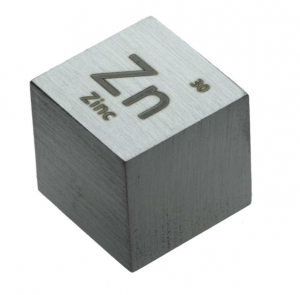
In some respects zinc is chemically similar to magnesium: both elements exhibit only one normal oxidation state (+2), and the Zn2+ and Mg2+ ions are of similar size.

Magnesium in Periodic Table

Zinc in Periodic Table

Source: www.luciteria.com

Magnesium and Zinc – Applications

Magnesium

Magnesium is the third-most-commonly-used structural metal, following iron and aluminium.[35] The main applications of magnesium are, in order: aluminium alloys, die-casting (alloyed with zinc), removing sulfur in the production of iron and steel, and the production of titanium in the Kroll process. Magnesium alloys are used in a wide variety of structural and nonstructural applications. Structural applications include automotive, industrial, materials-handling, commercial, and aerospace equipment. Magnesium alloys are used for parts that operate at high speeds and thus must be light weight to minimize inertial forces. Commercial applications include hand-held tools, laptops, luggage, and ladders, automobiles (e.g., steering wheels and columns, seat frames, transmission cases). Magnox (alloy), whose name is an abbreviation for “magnesium non-oxidizing”, is 99% magnesium and 1% aluminum, and is used in the cladding of fuel rods in magnox nuclear power reactors.

Zinc

Corrosion-resistant zinc plating of iron (hot-dip galvanizing) is the major application for zinc. Coating of steel constitutes the largest single use of zinc, but it is used in large tonnages in zinc alloy castings, as zinc dust and oxide, and in wrought zinc products. Galvanized steel is just plain carbon steel that has been coated with a thin zinc layer. The zinc protects iron by corroding first, but zinc corrodes at much lower rates than do steel. Other applications are in electrical batteries, small non-structural castings, and alloys such as brass. A variety of zinc compounds are commonly used, such as zinc carbonate and zinc gluconate (as dietary supplements), zinc chloride (in deodorants), zinc pyrithione (anti-dandruff shampoos), zinc sulfide (in luminescent paints), and dimethylzinc or diethylzinc in the organic laboratory. A key part of the modern materials world in which zinc finds itself is recycling. Zinc, in common with all metals (and unlike synthetic materials) can be recycled indefinitely without degradation.

Magnesium and Zinc – Comparison in Table

Element Magnesium Zinc
Density 1.738 g/cm3 7.14 g/cm3
Ultimate Tensile Strength 200 MPa 90 MPa
Yield Strength N/A 75 MPa
Young’s Modulus of Elasticity 45 GPa 108 GPa
Mohs Scale 2.5 2.5
Brinell Hardness 260 MPa 330 MPa
Vickers Hardness N/A N/A
Melting Point 649 °C 419.53 °C
Boiling Point 1090 °C 907 °C
Thermal Conductivity 156 W/mK 116 W/mK
Thermal Expansion Coefficient 24.8 µm/mK 30.2 µm/mK
Specific Heat 1.02 J/g K 0.39 J/g K
Heat of Fusion 8.954 kJ/mol 7.322 kJ/mol
Heat of Vaporization 127.4 kJ/mol 115.3 kJ/mol


Magnesium and Chlorine – Comparison – Properties

This article contains comparison of key thermal and atomic properties of magnesium and chlorine, two comparable chemical elements from the periodic table. It also contains basic descriptions and applications of both elements. Magnesium vs Chlorine.

magnesium and chlorine - comparison

Compare magnesium with another element

Lithium - Properties - Price - Applications - Production

Beryllium - Properties - Price - Applications - Production

Oxygen - Properties - Price - Applications - Production

Sodium - Properties - Price - Applications - Production

Calcium - Properties - Price - Applications - Production

Potassium - Properties - Price - Applications - Production

Chlorine - Properties - Price - Applications - Production

Zinc - Properties - Price - Applications - Production

Bromine - Properties - Price - Applications - Production

Aluminium - Properties - Price - Applications - Production

Iron - Properties - Price - Applications - Production

Copper - Properties - Price - Applications - Production

Compare chlorine with another element

Beryllium - Properties - Price - Applications - Production

Boron - Properties - Price - Applications - Production

Carbon - Properties - Price - Applications - Production

Oxygen - Properties - Price - Applications - Production

Fluorine - Properties - Price - Applications - Production

Sodium - Properties - Price - Applications - Production

Magnesium - Properties - Price - Applications - Production

Aluminium - Properties - Price - Applications - Production

Calcium - Properties - Price - Applications - Production

Caesium - Properties - Price - Applications - Production

Barium - Properties - Price - Applications - Production

Copper - Properties - Price - Applications - Production

Silver - Properties - Price - Applications - Production

Iron - Properties - Price - Applications - Production

Bromine - Properties - Price - Applications - Production

Iodine - Properties - Price - Applications - Production

Magnesium and Chlorine – About Elements

Magnesium

Magnesium is a shiny gray solid which bears a close physical resemblance to the other five elements in the second column (group 2, or alkaline earth metals) of the periodic table: all group 2 elements have the same electron configuration in the outer electron shell and a similar crystal structure.

Chlorine

Chlorine is a yellow-green gas at room temperature. It is an extremely reactive element and a strong oxidising agent: among the elements, it has the highest electron affinity and the third-highest electronegativity, behind only oxygen and fluorine.

Magnesium in Periodic Table

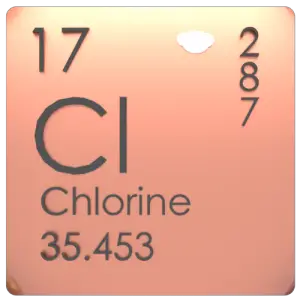
Chlorine in Periodic Table

Source: www.luciteria.com

Magnesium and Chlorine – Applications

Magnesium

Magnesium is the third-most-commonly-used structural metal, following iron and aluminium.[35] The main applications of magnesium are, in order: aluminium alloys, die-casting (alloyed with zinc), removing sulfur in the production of iron and steel, and the production of titanium in the Kroll process. Magnesium alloys are used in a wide variety of structural and nonstructural applications. Structural applications include automotive, industrial, materials-handling, commercial, and aerospace equipment. Magnesium alloys are used for parts that operate at high speeds and thus must be light weight to minimize inertial forces. Commercial applications include hand-held tools, laptops, luggage, and ladders, automobiles (e.g., steering wheels and columns, seat frames, transmission cases). Magnox (alloy), whose name is an abbreviation for “magnesium non-oxidizing”, is 99% magnesium and 1% aluminum, and is used in the cladding of fuel rods in magnox nuclear power reactors.

Chlorine

Chlorine is used in the manufacture of a wide range of consumer products, about two-thirds of them organic chemicals such as polyvinyl chloride (PVC), many intermediates for the production of plastics, and other end products which do not contain the element. As a common disinfectant, elemental chlorine and chlorine-generating compounds are used more directly in swimming pools to keep them sanitary. While perhaps best known for its role in providing clean drinking water, chlorine chemistry also helps provide energy-efficient building materials, electronics, fiber optics, solar energy cells, 93 percent of life-saving pharmaceuticals, 86 percent of crop protection compounds, medical plastics, and much more.

Magnesium and Chlorine – Comparison in Table

Element Magnesium Chlorine
Density 1.738 g/cm3 0.0032 g/cm3
Ultimate Tensile Strength 200 MPa N/A
Yield Strength N/A N/A
Young’s Modulus of Elasticity 45 GPa N/A
Mohs Scale 2.5 N/A
Brinell Hardness 260 MPa N/A
Vickers Hardness N/A N/A
Melting Point 649 °C -101 °C
Boiling Point 1090 °C -34.6 °C
Thermal Conductivity 156 W/mK 0.0089 W/mK
Thermal Expansion Coefficient 24.8 µm/mK N/A
Specific Heat 1.02 J/g K 0.48 J/g K
Heat of Fusion 8.954 kJ/mol 3.23 kJ/mol
Heat of Vaporization 127.4 kJ/mol 10.2 kJ/mol


Magnesium and Potassium – Comparison – Properties

This article contains comparison of key thermal and atomic properties of magnesium and potassium, two comparable chemical elements from the periodic table. It also contains basic descriptions and applications of both elements. Magnesium vs Potassium.

magnesium and potassium - comparison

Compare magnesium with another element

Lithium - Properties - Price - Applications - Production

Beryllium - Properties - Price - Applications - Production

Oxygen - Properties - Price - Applications - Production

Sodium - Properties - Price - Applications - Production

Calcium - Properties - Price - Applications - Production

Potassium - Properties - Price - Applications - Production

Chlorine - Properties - Price - Applications - Production

Zinc - Properties - Price - Applications - Production

Bromine - Properties - Price - Applications - Production

Aluminium - Properties - Price - Applications - Production

Iron - Properties - Price - Applications - Production

Copper - Properties - Price - Applications - Production

Compare potassium with another element

Lithium - Properties - Price - Applications - Production

Oxygen - Properties - Price - Applications - Production

Sodium - Properties - Price - Applications - Production

Magnesium - Properties - Price - Applications - Production

Aluminium - Properties - Price - Applications - Production

Phosphorus - Properties - Price - Applications - Production

Sulfur - Properties - Price - Applications - Production

Calcium - Properties - Price - Applications - Production

Iron - Properties - Price - Applications - Production

Zinc - Properties - Price - Applications - Production

Bromine - Properties - Price - Applications - Production

Magnesium and Potassium – About Elements

Magnesium

Magnesium is a shiny gray solid which bears a close physical resemblance to the other five elements in the second column (group 2, or alkaline earth metals) of the periodic table: all group 2 elements have the same electron configuration in the outer electron shell and a similar crystal structure.

Potassium

Potassium was first isolated from potash, the ashes of plants, from which its name derives. In the periodic table, potassium is one of the alkali metals. All of the alkali metals have a single valence electron in the outer electron shell, which is easily removed to create an ion with a positive charge – a cation, which combines with anions to form salts. Naturally occurring potassium is composed of three isotopes, of which 40K is radioactive. Traces of 40K are found in all potassium, and it is the most common radioisotope in the human body.

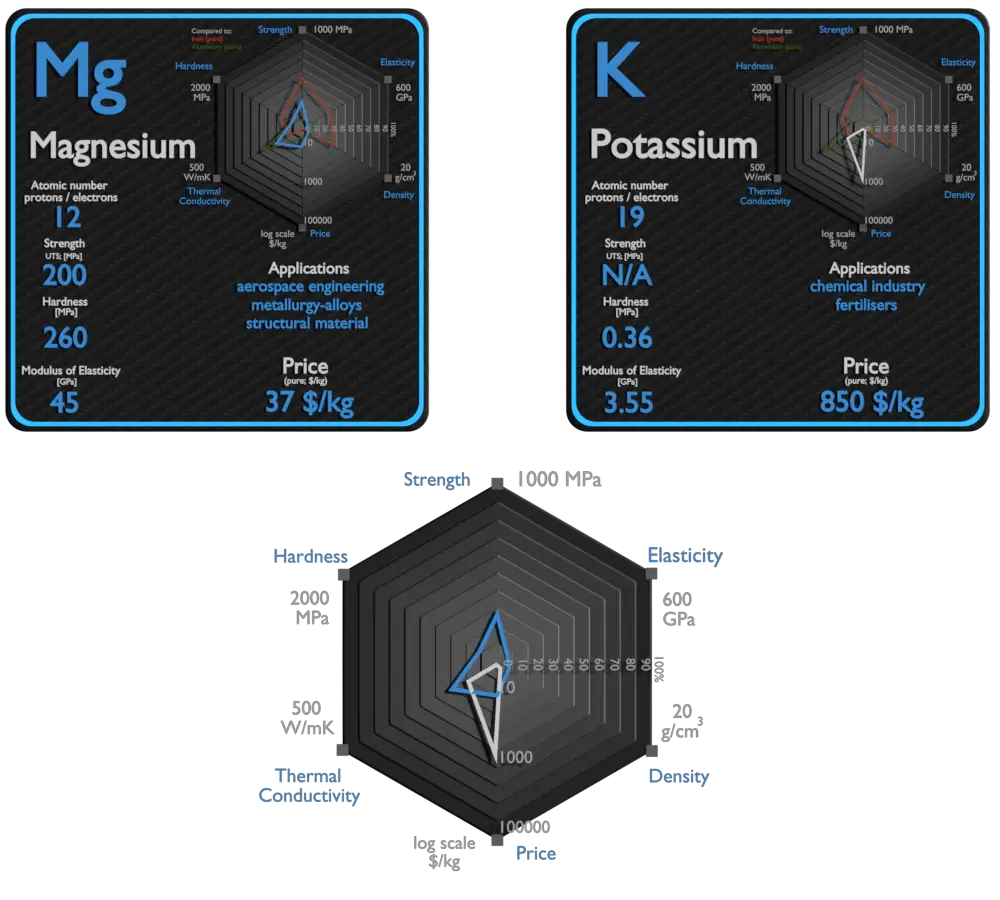
Magnesium in Periodic Table

Potassium in Periodic Table

Source: www.luciteria.com

Magnesium and Potassium – Applications

Magnesium

Magnesium is the third-most-commonly-used structural metal, following iron and aluminium.[35] The main applications of magnesium are, in order: aluminium alloys, die-casting (alloyed with zinc), removing sulfur in the production of iron and steel, and the production of titanium in the Kroll process. Magnesium alloys are used in a wide variety of structural and nonstructural applications. Structural applications include automotive, industrial, materials-handling, commercial, and aerospace equipment. Magnesium alloys are used for parts that operate at high speeds and thus must be light weight to minimize inertial forces. Commercial applications include hand-held tools, laptops, luggage, and ladders, automobiles (e.g., steering wheels and columns, seat frames, transmission cases). Magnox (alloy), whose name is an abbreviation for “magnesium non-oxidizing”, is 99% magnesium and 1% aluminum, and is used in the cladding of fuel rods in magnox nuclear power reactors.

Potassium

Potassium (K) is an essential nutrient for plant growth. It’s classified as a macronutrient because plants take up large quantities of K during their life cycle. Agricultural fertilizers consume 95% of global potassium chemical production, and about 90% of this potassium is supplied as KCl. Due to its high degree of reactivity, pure potassium is rarely used in its elemental /metallic form. It is used as a powerful reducing agent in organic chemistry. Potassium/Sodium alloys are It used as a heat exchange medium . The heat in the potassium warms water and makes it hot enough to boil. Then water is changed into steam, which is used to work devices that generate electricity.

Magnesium and Potassium – Comparison in Table

Element Magnesium Potassium
Density 1.738 g/cm3 0.856 g/cm3
Ultimate Tensile Strength 200 MPa N/A
Yield Strength N/A N/A
Young’s Modulus of Elasticity 45 GPa 3.53 GPa
Mohs Scale 2.5 0.4
Brinell Hardness 260 MPa 0.36 MPa
Vickers Hardness N/A N/A
Melting Point 649 °C 63.25 °C
Boiling Point 1090 °C 760 °C
Thermal Conductivity 156 W/mK 102.4 W/mK
Thermal Expansion Coefficient 24.8 µm/mK 83 µm/mK
Specific Heat 1.02 J/g K 0.75 J/g K
Heat of Fusion 8.954 kJ/mol 2.334 kJ/mol
Heat of Vaporization 127.4 kJ/mol 79.87 kJ/mol


Magnesium and Calcium – Comparison – Properties

This article contains comparison of key thermal and atomic properties of magnesium and calcium, two comparable chemical elements from the periodic table. It also contains basic descriptions and applications of both elements. Magnesium vs Calcium.

magnesium and calcium - comparison

Compare magnesium with another element

Lithium - Properties - Price - Applications - Production

Beryllium - Properties - Price - Applications - Production

Oxygen - Properties - Price - Applications - Production

Sodium - Properties - Price - Applications - Production

Calcium - Properties - Price - Applications - Production

Potassium - Properties - Price - Applications - Production

Chlorine - Properties - Price - Applications - Production

Zinc - Properties - Price - Applications - Production

Bromine - Properties - Price - Applications - Production

Aluminium - Properties - Price - Applications - Production

Iron - Properties - Price - Applications - Production

Copper - Properties - Price - Applications - Production

Compare calcium with another element

Hydrogen - Properties - Price - Applications - Production

Lithium - Properties - Price - Applications - Production

Oxygen - Properties - Price - Applications - Production

Fluorine - Properties - Price - Applications - Production

Sodium - Properties - Price - Applications - Production

Magnesium - Properties - Price - Applications - Production

Phosphorus - Properties - Price - Applications - Production

Sulfur - Properties - Price - Applications - Production

Chlorine - Properties - Price - Applications - Production

Potassium - Properties - Price - Applications - Production

Iron - Properties - Price - Applications - Production

Magnesium and Calcium – About Elements

Magnesium

Magnesium is a shiny gray solid which bears a close physical resemblance to the other five elements in the second column (group 2, or alkaline earth metals) of the periodic table: all group 2 elements have the same electron configuration in the outer electron shell and a similar crystal structure.

Calcium

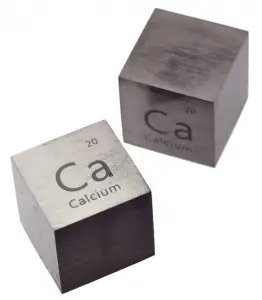
Calcium is an alkaline earth metal, it is a reactive pale yellow metal that forms a dark oxide-nitride layer when exposed to air. Its physical and chemical properties are most similar to its heavier homologues strontium and barium. It is the fifth most abundant element in Earth’s crust and the third most abundant metal, after iron and aluminium.

Magnesium in Periodic Table

Calcium in Periodic Table

Source: www.luciteria.com

Magnesium and Calcium – Applications

Magnesium

Magnesium is the third-most-commonly-used structural metal, following iron and aluminium.[35] The main applications of magnesium are, in order: aluminium alloys, die-casting (alloyed with zinc), removing sulfur in the production of iron and steel, and the production of titanium in the Kroll process. Magnesium alloys are used in a wide variety of structural and nonstructural applications. Structural applications include automotive, industrial, materials-handling, commercial, and aerospace equipment. Magnesium alloys are used for parts that operate at high speeds and thus must be light weight to minimize inertial forces. Commercial applications include hand-held tools, laptops, luggage, and ladders, automobiles (e.g., steering wheels and columns, seat frames, transmission cases). Magnox (alloy), whose name is an abbreviation for “magnesium non-oxidizing”, is 99% magnesium and 1% aluminum, and is used in the cladding of fuel rods in magnox nuclear power reactors.

Calcium

The largest use of metallic calcium is in steelmaking, due to its strong chemical affinity for oxygen and sulfur. Its oxides and sulfides, once formed, give liquid lime aluminate and sulfide inclusions in steel which float out. Calcium compounds are used as manufacture of insecticides, paints, blackboard chalk, textile and fireworks.

Magnesium and Calcium – Comparison in Table

Element Magnesium Calcium
Density 1.738 g/cm3 1.55 g/cm3
Ultimate Tensile Strength 200 MPa 110 MPa
Yield Strength N/A N/A
Young’s Modulus of Elasticity 45 GPa 20 GPa
Mohs Scale 2.5 1.5
Brinell Hardness 260 MPa 170 – 400 MPa
Vickers Hardness N/A N/A
Melting Point 649 °C 842 °C
Boiling Point 1090 °C 1484 °C
Thermal Conductivity 156 W/mK 200 W/mK
Thermal Expansion Coefficient 24.8 µm/mK 22.3 µm/mK
Specific Heat 1.02 J/g K 0.63 J/g K
Heat of Fusion 8.954 kJ/mol 8.54 kJ/mol
Heat of Vaporization 127.4 kJ/mol 153.3 kJ/mol


Sodium and Sulfur – Comparison – Properties

This article contains comparison of key thermal and atomic properties of sodium and sulfur, two comparable chemical elements from the periodic table. It also contains basic descriptions and applications of both elements. Sodium vs Sulfur.

sodium and sulfur - comparison

Compare sodium with another element

Hydrogen - Properties - Price - Applications - Production

Lithium - Properties - Price - Applications - Production

Oxygen - Properties - Price - Applications - Production

Calcium - Properties - Price - Applications - Production

Magnesium - Properties - Price - Applications - Production

Potassium - Properties - Price - Applications - Production

Chlorine - Properties - Price - Applications - Production

Aluminium - Properties - Price - Applications - Production

Silicon - Properties - Price - Applications - Production

Sulfur - Properties - Price - Applications - Production

Compare sulfur with another element

Lithium - Properties - Price - Applications - Production

Oxygen - Properties - Price - Applications - Production

Sodium - Properties - Price - Applications - Production

Chlorine - Properties - Price - Applications - Production

Potassium - Properties - Price - Applications - Production

Calcium - Properties - Price - Applications - Production

Sodium and Sulfur – About Elements

Sodium

Sodium is a soft, silvery-white, highly reactive metal. Sodium is an alkali metal, being in group 1 of the periodic table, because it has a single electron in its outer shell that it readily donates, creating a positively charged atom—the Na+ cation.

Sulfur

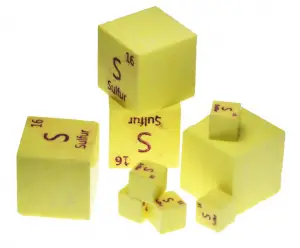
Sulfur is abundant, multivalent, and nonmetallic. Under normal conditions, sulfur atoms form cyclic octatomic molecules with a chemical formula S8. Elemental sulfur is a bright yellow crystalline solid at room temperature. Chemically, sulfur reacts with all elements except for gold, platinum, iridium, tellurium, and the noble gases.

Sodium in Periodic Table

Sulfur in Periodic Table

Source: www.luciteria.com

Sodium and Sulfur – Applications

Sodium

Metallic sodium is used mainly for the production of sodium borohydride, sodium azide, indigo, and triphenylphosphine. A once-common use was the making of tetraethyllead and titanium metal; because of the move away from TEL and new titanium production methods. An electric current and sodium vapor combine to form a yellowish glow. This principle is used for the making of sodium vapor lamps. Sodium is occasionally used as a heat exchange medium in nuclear power plants. Liquid sodium is sealed into pipes surrounding the reactor core. Generated heat is absorbed by sodium and forced through the pipes in a heat exchanger which can be used to generate electricity.

Sulfur

The greatest commercial use of the element is the production of sulfuric acid for sulfate and phosphate fertilizers, and other chemical processes. Sulfur is increasingly used as a component of fertilizers. The most important form of sulfur for fertilizer is the mineral calcium sulfate. The element sulfur is used in matches, insecticides, and fungicides. Many sulfur compounds are odoriferous, and the smells of odorized natural gas, skunk scent, grapefruit, and garlic are due to organosulfur compounds.

Sodium and Sulfur – Comparison in Table

Element Sodium Sulfur
Density 0.968 g/cm3 1.96 g/cm3
Ultimate Tensile Strength N/A N/A
Yield Strength N/A N/A
Young’s Modulus of Elasticity 10 GPa N/A
Mohs Scale 0.4 2
Brinell Hardness 0.69 MPa N/A
Vickers Hardness N/A N/A
Melting Point 97.8 °C 112.8 °C
Boiling Point 883 °C 444.7 °C
Thermal Conductivity 141 W/mK 0.269 W/mK
Thermal Expansion Coefficient 71 µm/mK N/A
Specific Heat 1.23 J/g K 0.71 J/g K
Heat of Fusion 2.598 kJ/mol 1.7175 kJ/mol
Heat of Vaporization 96.96 kJ/mol 45 kJ/mol


Sodium and Silicon – Comparison – Properties

This article contains comparison of key thermal and atomic properties of sodium and silicon, two comparable chemical elements from the periodic table. It also contains basic descriptions and applications of both elements. Sodium vs Silicon.

sodium and silicon - comparison

Compare sodium with another element

Hydrogen - Properties - Price - Applications - Production

Lithium - Properties - Price - Applications - Production

Oxygen - Properties - Price - Applications - Production

Calcium - Properties - Price - Applications - Production

Magnesium - Properties - Price - Applications - Production

Potassium - Properties - Price - Applications - Production

Chlorine - Properties - Price - Applications - Production

Aluminium - Properties - Price - Applications - Production

Silicon - Properties - Price - Applications - Production

Sulfur - Properties - Price - Applications - Production

Compare silicon with another element

Lithium - Properties - Price - Applications - Production

Boron - Properties - Price - Applications - Production

Oxygen - Properties - Price - Applications - Production

Sodium - Properties - Price - Applications - Production

Aluminium - Properties - Price - Applications - Production

Arsenic - Properties - Price - Applications - Production

Germanium - Properties - Price - Applications - Production

Copper - Properties - Price - Applications - Production

Sodium and Silicon – About Elements

Sodium

Sodium is a soft, silvery-white, highly reactive metal. Sodium is an alkali metal, being in group 1 of the periodic table, because it has a single electron in its outer shell that it readily donates, creating a positively charged atom—the Na+ cation.

Silicon

Silicon is a hard and brittle crystalline solid with a blue-grey metallic lustre, it is a tetravalent metalloid and semiconductor.

Sodium in Periodic Table

Silicon in Periodic Table

Source: www.luciteria.com

Sodium and Silicon – Applications

Sodium

Metallic sodium is used mainly for the production of sodium borohydride, sodium azide, indigo, and triphenylphosphine. A once-common use was the making of tetraethyllead and titanium metal; because of the move away from TEL and new titanium production methods. An electric current and sodium vapor combine to form a yellowish glow. This principle is used for the making of sodium vapor lamps. Sodium is occasionally used as a heat exchange medium in nuclear power plants. Liquid sodium is sealed into pipes surrounding the reactor core. Generated heat is absorbed by sodium and forced through the pipes in a heat exchanger which can be used to generate electricity.

Silicon

Most silicon is used industrially without being purified, and indeed, often with comparatively little processing from its natural form. Silicon is a vital ingredient in aluminum, steel, and iron alloys. It is added as a fluxing agent for copper alloys. In the form of clay and sand, it is used to manufacture bricks and concrete; it is a valuable refractory material for high-temperature work, for example, molding sands for castings in foundry applications. Silica is used to make fire brick, a type of ceramic. Silicate minerals are also in whiteware ceramics, an important class of products usually containing various types of fired clay minerals (natural aluminium phyllosilicates). An example is porcelain, which is based on the silicate mineral kaolinite. Traditional glass (silica-based soda-lime glass) also functions in many of the same ways, and also is used for windows and containers. Hyperpure silicon metal and doped hyperpure silicon (doping with boron, phosphorous, gallium, or arsenic) are used in solar cells, transistors and semiconductors.

Sodium and Silicon – Comparison in Table

Element Sodium Silicon
Density 0.968 g/cm3 2.33 g/cm3
Ultimate Tensile Strength N/A 170 MPa
Yield Strength N/A 165 MPa
Young’s Modulus of Elasticity 10 GPa 150 GPa
Mohs Scale 0.4 7
Brinell Hardness 0.69 MPa 2300 MPa
Vickers Hardness N/A N/A
Melting Point 97.8 °C 1410 °C
Boiling Point 883 °C 3265 °C
Thermal Conductivity 141 W/mK 148 W/mK
Thermal Expansion Coefficient 71 µm/mK N/A
Specific Heat 1.23 J/g K 0.71 J/g K
Heat of Fusion 2.598 kJ/mol 50.55 kJ/mol
Heat of Vaporization 96.96 kJ/mol 384.22 kJ/mol


Sodium and Chlorine – Comparison – Properties

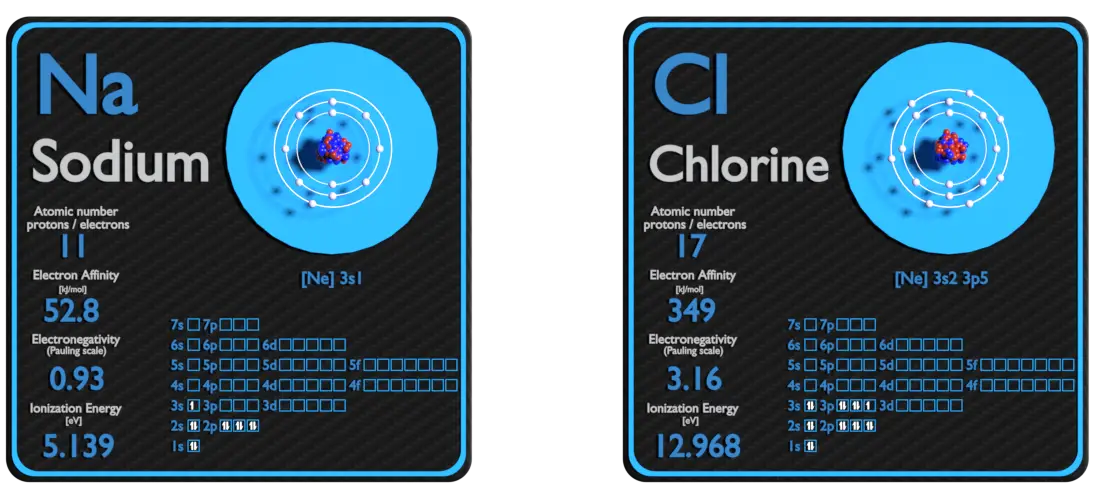
This article contains comparison of key thermal and atomic properties of sodium and chlorine, two comparable chemical elements from the periodic table. It also contains basic descriptions and applications of both elements. Sodium vs Chlorine.

sodium and chlorine - comparison

Compare sodium with another element

Hydrogen - Properties - Price - Applications - Production

Lithium - Properties - Price - Applications - Production

Oxygen - Properties - Price - Applications - Production

Calcium - Properties - Price - Applications - Production

Magnesium - Properties - Price - Applications - Production

Potassium - Properties - Price - Applications - Production

Chlorine - Properties - Price - Applications - Production

Aluminium - Properties - Price - Applications - Production

Silicon - Properties - Price - Applications - Production

Sulfur - Properties - Price - Applications - Production

Compare chlorine with another element

Beryllium - Properties - Price - Applications - Production

Boron - Properties - Price - Applications - Production

Carbon - Properties - Price - Applications - Production

Oxygen - Properties - Price - Applications - Production

Fluorine - Properties - Price - Applications - Production

Sodium - Properties - Price - Applications - Production

Magnesium - Properties - Price - Applications - Production

Aluminium - Properties - Price - Applications - Production

Calcium - Properties - Price - Applications - Production

Caesium - Properties - Price - Applications - Production

Barium - Properties - Price - Applications - Production

Copper - Properties - Price - Applications - Production

Silver - Properties - Price - Applications - Production

Iron - Properties - Price - Applications - Production

Bromine - Properties - Price - Applications - Production

Iodine - Properties - Price - Applications - Production

Sodium and Chlorine – About Elements

Sodium

Sodium is a soft, silvery-white, highly reactive metal. Sodium is an alkali metal, being in group 1 of the periodic table, because it has a single electron in its outer shell that it readily donates, creating a positively charged atom—the Na+ cation.

Chlorine

Chlorine is a yellow-green gas at room temperature. It is an extremely reactive element and a strong oxidising agent: among the elements, it has the highest electron affinity and the third-highest electronegativity, behind only oxygen and fluorine.

Sodium in Periodic Table

Chlorine in Periodic Table

Source: www.luciteria.com

Sodium and Chlorine – Applications

Sodium

Metallic sodium is used mainly for the production of sodium borohydride, sodium azide, indigo, and triphenylphosphine. A once-common use was the making of tetraethyllead and titanium metal; because of the move away from TEL and new titanium production methods. An electric current and sodium vapor combine to form a yellowish glow. This principle is used for the making of sodium vapor lamps. Sodium is occasionally used as a heat exchange medium in nuclear power plants. Liquid sodium is sealed into pipes surrounding the reactor core. Generated heat is absorbed by sodium and forced through the pipes in a heat exchanger which can be used to generate electricity.

Chlorine

Chlorine is used in the manufacture of a wide range of consumer products, about two-thirds of them organic chemicals such as polyvinyl chloride (PVC), many intermediates for the production of plastics, and other end products which do not contain the element. As a common disinfectant, elemental chlorine and chlorine-generating compounds are used more directly in swimming pools to keep them sanitary. While perhaps best known for its role in providing clean drinking water, chlorine chemistry also helps provide energy-efficient building materials, electronics, fiber optics, solar energy cells, 93 percent of life-saving pharmaceuticals, 86 percent of crop protection compounds, medical plastics, and much more.

Sodium and Chlorine – Comparison in Table

Element Sodium Chlorine
Density 0.968 g/cm3 0.0032 g/cm3
Ultimate Tensile Strength N/A N/A
Yield Strength N/A N/A
Young’s Modulus of Elasticity 10 GPa N/A
Mohs Scale 0.4 N/A
Brinell Hardness 0.69 MPa N/A
Vickers Hardness N/A N/A
Melting Point 97.8 °C -101 °C
Boiling Point 883 °C -34.6 °C
Thermal Conductivity 141 W/mK 0.0089 W/mK
Thermal Expansion Coefficient 71 µm/mK N/A
Specific Heat 1.23 J/g K 0.48 J/g K
Heat of Fusion 2.598 kJ/mol 3.23 kJ/mol
Heat of Vaporization 96.96 kJ/mol 10.2 kJ/mol


Sodium and Potassium – Comparison – Properties

This article contains comparison of key thermal and atomic properties of sodium and potassium, two comparable chemical elements from the periodic table. It also contains basic descriptions and applications of both elements. Sodium vs Potassium.

sodium and potassium - comparison

Compare sodium with another element

Hydrogen - Properties - Price - Applications - Production

Lithium - Properties - Price - Applications - Production

Oxygen - Properties - Price - Applications - Production

Calcium - Properties - Price - Applications - Production

Magnesium - Properties - Price - Applications - Production

Potassium - Properties - Price - Applications - Production

Chlorine - Properties - Price - Applications - Production

Aluminium - Properties - Price - Applications - Production

Silicon - Properties - Price - Applications - Production

Sulfur - Properties - Price - Applications - Production

Compare potassium with another element

Lithium - Properties - Price - Applications - Production

Oxygen - Properties - Price - Applications - Production

Sodium - Properties - Price - Applications - Production

Magnesium - Properties - Price - Applications - Production

Aluminium - Properties - Price - Applications - Production

Phosphorus - Properties - Price - Applications - Production

Sulfur - Properties - Price - Applications - Production

Calcium - Properties - Price - Applications - Production

Iron - Properties - Price - Applications - Production

Zinc - Properties - Price - Applications - Production

Bromine - Properties - Price - Applications - Production

Sodium and Potassium – About Elements

Sodium

Sodium is a soft, silvery-white, highly reactive metal. Sodium is an alkali metal, being in group 1 of the periodic table, because it has a single electron in its outer shell that it readily donates, creating a positively charged atom—the Na+ cation.

Potassium

Potassium was first isolated from potash, the ashes of plants, from which its name derives. In the periodic table, potassium is one of the alkali metals. All of the alkali metals have a single valence electron in the outer electron shell, which is easily removed to create an ion with a positive charge – a cation, which combines with anions to form salts. Naturally occurring potassium is composed of three isotopes, of which 40K is radioactive. Traces of 40K are found in all potassium, and it is the most common radioisotope in the human body.

Sodium in Periodic Table

Potassium in Periodic Table

Source: www.luciteria.com

Sodium and Potassium – Applications

Sodium

Metallic sodium is used mainly for the production of sodium borohydride, sodium azide, indigo, and triphenylphosphine. A once-common use was the making of tetraethyllead and titanium metal; because of the move away from TEL and new titanium production methods. An electric current and sodium vapor combine to form a yellowish glow. This principle is used for the making of sodium vapor lamps. Sodium is occasionally used as a heat exchange medium in nuclear power plants. Liquid sodium is sealed into pipes surrounding the reactor core. Generated heat is absorbed by sodium and forced through the pipes in a heat exchanger which can be used to generate electricity.

Potassium

Potassium (K) is an essential nutrient for plant growth. It’s classified as a macronutrient because plants take up large quantities of K during their life cycle. Agricultural fertilizers consume 95% of global potassium chemical production, and about 90% of this potassium is supplied as KCl. Due to its high degree of reactivity, pure potassium is rarely used in its elemental /metallic form. It is used as a powerful reducing agent in organic chemistry. Potassium/Sodium alloys are It used as a heat exchange medium . The heat in the potassium warms water and makes it hot enough to boil. Then water is changed into steam, which is used to work devices that generate electricity.

Sodium and Potassium – Comparison in Table

Element Sodium Potassium
Density 0.968 g/cm3 0.856 g/cm3
Ultimate Tensile Strength N/A N/A
Yield Strength N/A N/A
Young’s Modulus of Elasticity 10 GPa 3.53 GPa
Mohs Scale 0.4 0.4
Brinell Hardness 0.69 MPa 0.36 MPa
Vickers Hardness N/A N/A
Melting Point 97.8 °C 63.25 °C
Boiling Point 883 °C 760 °C
Thermal Conductivity 141 W/mK 102.4 W/mK
Thermal Expansion Coefficient 71 µm/mK 83 µm/mK
Specific Heat 1.23 J/g K 0.75 J/g K
Heat of Fusion 2.598 kJ/mol 2.334 kJ/mol
Heat of Vaporization 96.96 kJ/mol 79.87 kJ/mol


Sodium and Magnesium – Comparison – Properties

This article contains comparison of key thermal and atomic properties of sodium and magnesium, two comparable chemical elements from the periodic table. It also contains basic descriptions and applications of both elements. Sodium vs Magnesium.

sodium and magnesium - comparison

Compare sodium with another element

Hydrogen - Properties - Price - Applications - Production

Lithium - Properties - Price - Applications - Production

Oxygen - Properties - Price - Applications - Production

Calcium - Properties - Price - Applications - Production

Magnesium - Properties - Price - Applications - Production

Potassium - Properties - Price - Applications - Production

Chlorine - Properties - Price - Applications - Production

Aluminium - Properties - Price - Applications - Production

Silicon - Properties - Price - Applications - Production

Sulfur - Properties - Price - Applications - Production

Compare magnesium with another element

Lithium - Properties - Price - Applications - Production

Beryllium - Properties - Price - Applications - Production

Oxygen - Properties - Price - Applications - Production

Sodium - Properties - Price - Applications - Production

Calcium - Properties - Price - Applications - Production

Potassium - Properties - Price - Applications - Production

Chlorine - Properties - Price - Applications - Production

Zinc - Properties - Price - Applications - Production

Bromine - Properties - Price - Applications - Production

Aluminium - Properties - Price - Applications - Production

Iron - Properties - Price - Applications - Production

Copper - Properties - Price - Applications - Production

Sodium and Magnesium – About Elements

Sodium

Sodium is a soft, silvery-white, highly reactive metal. Sodium is an alkali metal, being in group 1 of the periodic table, because it has a single electron in its outer shell that it readily donates, creating a positively charged atom—the Na+ cation.

Magnesium

Magnesium is a shiny gray solid which bears a close physical resemblance to the other five elements in the second column (group 2, or alkaline earth metals) of the periodic table: all group 2 elements have the same electron configuration in the outer electron shell and a similar crystal structure.

Sodium in Periodic Table

Magnesium in Periodic Table

Source: www.luciteria.com

Sodium and Magnesium – Applications

Sodium

Metallic sodium is used mainly for the production of sodium borohydride, sodium azide, indigo, and triphenylphosphine. A once-common use was the making of tetraethyllead and titanium metal; because of the move away from TEL and new titanium production methods. An electric current and sodium vapor combine to form a yellowish glow. This principle is used for the making of sodium vapor lamps. Sodium is occasionally used as a heat exchange medium in nuclear power plants. Liquid sodium is sealed into pipes surrounding the reactor core. Generated heat is absorbed by sodium and forced through the pipes in a heat exchanger which can be used to generate electricity.

Magnesium

Magnesium is the third-most-commonly-used structural metal, following iron and aluminium.[35] The main applications of magnesium are, in order: aluminium alloys, die-casting (alloyed with zinc), removing sulfur in the production of iron and steel, and the production of titanium in the Kroll process. Magnesium alloys are used in a wide variety of structural and nonstructural applications. Structural applications include automotive, industrial, materials-handling, commercial, and aerospace equipment. Magnesium alloys are used for parts that operate at high speeds and thus must be light weight to minimize inertial forces. Commercial applications include hand-held tools, laptops, luggage, and ladders, automobiles (e.g., steering wheels and columns, seat frames, transmission cases). Magnox (alloy), whose name is an abbreviation for “magnesium non-oxidizing”, is 99% magnesium and 1% aluminum, and is used in the cladding of fuel rods in magnox nuclear power reactors.

Sodium and Magnesium – Comparison in Table

Element Sodium Magnesium
Density 0.968 g/cm3 1.738 g/cm3
Ultimate Tensile Strength N/A 200 MPa
Yield Strength N/A N/A
Young’s Modulus of Elasticity 10 GPa 45 GPa
Mohs Scale 0.4 2.5
Brinell Hardness 0.69 MPa 260 MPa
Vickers Hardness N/A N/A
Melting Point 97.8 °C 649 °C
Boiling Point 883 °C 1090 °C
Thermal Conductivity 141 W/mK 156 W/mK
Thermal Expansion Coefficient 71 µm/mK 24.8 µm/mK
Specific Heat 1.23 J/g K 1.02 J/g K
Heat of Fusion 2.598 kJ/mol 8.954 kJ/mol
Heat of Vaporization 96.96 kJ/mol 127.4 kJ/mol


Sodium and Calcium – Comparison – Properties

This article contains comparison of key thermal and atomic properties of sodium and calcium, two comparable chemical elements from the periodic table. It also contains basic descriptions and applications of both elements. Sodium vs Calcium.

sodium and calcium - comparison

Compare sodium with another element

Hydrogen - Properties - Price - Applications - Production

Lithium - Properties - Price - Applications - Production

Oxygen - Properties - Price - Applications - Production

Calcium - Properties - Price - Applications - Production

Magnesium - Properties - Price - Applications - Production

Potassium - Properties - Price - Applications - Production

Chlorine - Properties - Price - Applications - Production

Aluminium - Properties - Price - Applications - Production

Silicon - Properties - Price - Applications - Production

Sulfur - Properties - Price - Applications - Production

Compare calcium with another element

Hydrogen - Properties - Price - Applications - Production

Lithium - Properties - Price - Applications - Production

Oxygen - Properties - Price - Applications - Production

Fluorine - Properties - Price - Applications - Production

Sodium - Properties - Price - Applications - Production

Magnesium - Properties - Price - Applications - Production

Phosphorus - Properties - Price - Applications - Production

Sulfur - Properties - Price - Applications - Production

Chlorine - Properties - Price - Applications - Production

Potassium - Properties - Price - Applications - Production

Iron - Properties - Price - Applications - Production

Sodium and Calcium – About Elements

Sodium

Sodium is a soft, silvery-white, highly reactive metal. Sodium is an alkali metal, being in group 1 of the periodic table, because it has a single electron in its outer shell that it readily donates, creating a positively charged atom—the Na+ cation.

Calcium

Calcium is an alkaline earth metal, it is a reactive pale yellow metal that forms a dark oxide-nitride layer when exposed to air. Its physical and chemical properties are most similar to its heavier homologues strontium and barium. It is the fifth most abundant element in Earth’s crust and the third most abundant metal, after iron and aluminium.

Sodium in Periodic Table

Calcium in Periodic Table

Source: www.luciteria.com

Sodium and Calcium – Applications

Sodium

Metallic sodium is used mainly for the production of sodium borohydride, sodium azide, indigo, and triphenylphosphine. A once-common use was the making of tetraethyllead and titanium metal; because of the move away from TEL and new titanium production methods. An electric current and sodium vapor combine to form a yellowish glow. This principle is used for the making of sodium vapor lamps. Sodium is occasionally used as a heat exchange medium in nuclear power plants. Liquid sodium is sealed into pipes surrounding the reactor core. Generated heat is absorbed by sodium and forced through the pipes in a heat exchanger which can be used to generate electricity.

Calcium

The largest use of metallic calcium is in steelmaking, due to its strong chemical affinity for oxygen and sulfur. Its oxides and sulfides, once formed, give liquid lime aluminate and sulfide inclusions in steel which float out. Calcium compounds are used as manufacture of insecticides, paints, blackboard chalk, textile and fireworks.

Sodium and Calcium – Comparison in Table

Element Sodium Calcium
Density 0.968 g/cm3 1.55 g/cm3
Ultimate Tensile Strength N/A 110 MPa
Yield Strength N/A N/A
Young’s Modulus of Elasticity 10 GPa 20 GPa
Mohs Scale 0.4 1.5
Brinell Hardness 0.69 MPa 170 – 400 MPa
Vickers Hardness N/A N/A
Melting Point 97.8 °C 842 °C
Boiling Point 883 °C 1484 °C
Thermal Conductivity 141 W/mK 200 W/mK
Thermal Expansion Coefficient 71 µm/mK 22.3 µm/mK
Specific Heat 1.23 J/g K 0.63 J/g K
Heat of Fusion 2.598 kJ/mol 8.54 kJ/mol
Heat of Vaporization 96.96 kJ/mol 153.3 kJ/mol