Facebook Instagram Youtube Twitter

Aluminium and Titanium – Comparison – Properties

This article contains comparison of key thermal and atomic properties of aluminium and titanium, two comparable chemical elements from the periodic table. It also contains basic descriptions and applications of both elements. Aluminium vs Titanium.

aluminium and titanium - comparison

Compare aluminium with another element

Hydrogen - Properties - Price - Applications - Production

Lithium - Properties - Price - Applications - Production

Beryllium - Properties - Price - Applications - Production

Carbon - Properties - Price - Applications - Production

Oxygen - Properties - Price - Applications - Production

Fluorine - Properties - Price - Applications - Production

Sodium - Properties - Price - Applications - Production

Magnesium - Properties - Price - Applications - Production

Copper - Properties - Price - Applications - Production

Mercury - Properties - Price - Applications - Production

Potassium - Properties - Price - Applications - Production

Silicon - Properties - Price - Applications - Production

Chlorine - Properties - Price - Applications - Production

Titanium - Properties - Price - Applications - Production

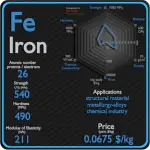
Iron - Properties - Price - Applications - Production

Gallium - Properties - Price - Applications - Production

Compare titanium with another element

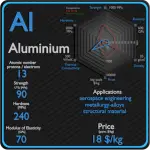
Aluminium - Properties - Price - Applications - Production

Vanadium - Properties - Price - Applications - Production

Tungsten - Properties - Price - Applications - Production

Gold - Properties - Price - Applications - Production

Zinc - Properties - Price - Applications - Production

Zirconium - Properties - Price - Applications - Production

Niobium - Properties - Price - Applications - Production

Tantalum - Properties - Price - Applications - Production

Copper - Properties - Price - Applications - Production

Uranium - Properties - Price - Applications - Production

Aluminium and Titanium – About Elements
Aluminium

Aluminium is a silvery-white, soft, nonmagnetic, ductile metal in the boron group. By mass, aluminium makes up about 8% of the Earth’s crust; it is the third most abundant element after oxygen and silicon and the most abundant metal in the crust, though it is less common in the mantle below.

Titanium

Titanium is a lustrous transition metal with a silver color, low density, and high strength. Titanium is resistant to corrosion in sea water, aqua regia, and chlorine. Titanium can be used in surface condensers. These condensers use tubes that are usually made of stainless steel, copper alloys, or titanium depending on several selection criteria (such as thermal conductivity or corrosion resistance). Titanium condenser tubes are usually the best technical choice, however titanium is very expensive material and the use of titanium condenser tubes is associated with very high initial costs.

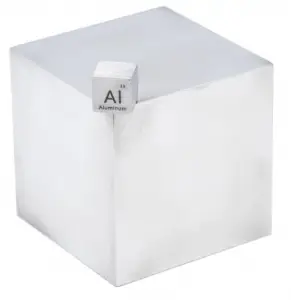
Aluminium in Periodic Table

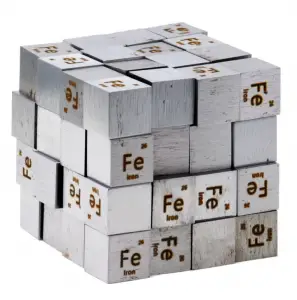
Titanium in Periodic Table

Source: www.luciteria.com

Aluminium and Titanium – Applications

Aluminium

Aluminium and its alloys are used widely in aerospace, automotive, architectural, lithographic, packaging, electrical and electronic applications. It is the prime material of construction for the aircraft industry throughout most of its history. About 70% of commercial civil aircraft airframes are made from aluminium alloys, and without aluminium civil aviation would not be economically viable. Automotive industry now includes aluminium as engine castings, wheels, radiators and increasingly as body parts. 6111 aluminium and 2008 aluminium alloy are extensively used for external automotive body panels. Cylinder blocks and crankcases are often cast made of aluminium alloys.

Titanium

The two most useful properties of the metal are corrosion resistance and strength-to-density ratio, the highest of any metallic element. The corrosion resistance of titanium alloys at normal temperatures is unusually high. These properties determine application of titanium and its alloys. The earliest production application of titanium was in 1952, for the nacelles and firewalls of the Douglas DC-7 airliner. High specific strength, good fatigue resistance and creep life, and good fracture toughness are characteristics that make titanium a preferred metal for aerospace applications. Aerospace applications, including use in both structural (airframe) components and jet engines, still account for the largest share of titanium alloy use. On the supersonic aircraft SR-71, titanium was used for 85% of the structure. Due to very high inertness, titanium has many biomedical applications, which is based on its inertness in the human body, that is, resistance to corrosion by body fluids.

Aluminium and Titanium – Comparison in Table

Element Aluminium Titanium
Density 2.7 g/cm3 4.507 g/cm3
Ultimate Tensile Strength 90 MPa (pure), 600 MPa (alloys) 434 MPa, 293 MPa (pure)
Yield Strength 11 MPa (pure), 400 MPa (alloys) 380 MPa
Young’s Modulus of Elasticity 70 GPa 116 GPa
Mohs Scale 2.8 6
Brinell Hardness 240 MPa 700 – 2700 MPa
Vickers Hardness 167 MPa 800 – 3400 MPa
Melting Point 660 °C 1668 °C
Boiling Point 2467 °C 3287 °C
Thermal Conductivity 237 W/mK 21.9 W/mK
Thermal Expansion Coefficient 23.1 µm/mK 8.6 µm/mK
Specific Heat 0.9 J/g K 0.52 J/g K
Heat of Fusion 10.79 kJ/mol 15.45 kJ/mol
Heat of Vaporization 293.4 kJ/mol 421 kJ/mol


Aluminium and Chlorine – Comparison – Properties

This article contains comparison of key thermal and atomic properties of aluminium and chlorine, two comparable chemical elements from the periodic table. It also contains basic descriptions and applications of both elements. Aluminium vs Chlorine.

aluminium and chlorine - comparison

Compare aluminium with another element

Hydrogen - Properties - Price - Applications - Production

Lithium - Properties - Price - Applications - Production

Beryllium - Properties - Price - Applications - Production

Carbon - Properties - Price - Applications - Production

Oxygen - Properties - Price - Applications - Production

Fluorine - Properties - Price - Applications - Production

Sodium - Properties - Price - Applications - Production

Magnesium - Properties - Price - Applications - Production

Copper - Properties - Price - Applications - Production

Mercury - Properties - Price - Applications - Production

Potassium - Properties - Price - Applications - Production

Silicon - Properties - Price - Applications - Production

Chlorine - Properties - Price - Applications - Production

Titanium - Properties - Price - Applications - Production

Iron - Properties - Price - Applications - Production

Gallium - Properties - Price - Applications - Production

Compare chlorine with another element

Beryllium - Properties - Price - Applications - Production

Boron - Properties - Price - Applications - Production

Carbon - Properties - Price - Applications - Production

Oxygen - Properties - Price - Applications - Production

Fluorine - Properties - Price - Applications - Production

Sodium - Properties - Price - Applications - Production

Magnesium - Properties - Price - Applications - Production

Aluminium - Properties - Price - Applications - Production

Calcium - Properties - Price - Applications - Production

Caesium - Properties - Price - Applications - Production

Barium - Properties - Price - Applications - Production

Copper - Properties - Price - Applications - Production

Silver - Properties - Price - Applications - Production

Iron - Properties - Price - Applications - Production

Bromine - Properties - Price - Applications - Production

Iodine - Properties - Price - Applications - Production

Aluminium and Chlorine – About Elements

Aluminium

Aluminium is a silvery-white, soft, nonmagnetic, ductile metal in the boron group. By mass, aluminium makes up about 8% of the Earth’s crust; it is the third most abundant element after oxygen and silicon and the most abundant metal in the crust, though it is less common in the mantle below.

Chlorine

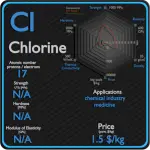
Chlorine is a yellow-green gas at room temperature. It is an extremely reactive element and a strong oxidising agent: among the elements, it has the highest electron affinity and the third-highest electronegativity, behind only oxygen and fluorine.

Aluminium in Periodic Table

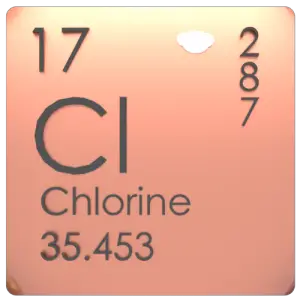
Chlorine in Periodic Table

Source: www.luciteria.com

Aluminium and Chlorine – Applications

Aluminium

Aluminium and its alloys are used widely in aerospace, automotive, architectural, lithographic, packaging, electrical and electronic applications. It is the prime material of construction for the aircraft industry throughout most of its history. About 70% of commercial civil aircraft airframes are made from aluminium alloys, and without aluminium civil aviation would not be economically viable. Automotive industry now includes aluminium as engine castings, wheels, radiators and increasingly as body parts. 6111 aluminium and 2008 aluminium alloy are extensively used for external automotive body panels. Cylinder blocks and crankcases are often cast made of aluminium alloys.

Chlorine

Chlorine is used in the manufacture of a wide range of consumer products, about two-thirds of them organic chemicals such as polyvinyl chloride (PVC), many intermediates for the production of plastics, and other end products which do not contain the element. As a common disinfectant, elemental chlorine and chlorine-generating compounds are used more directly in swimming pools to keep them sanitary. While perhaps best known for its role in providing clean drinking water, chlorine chemistry also helps provide energy-efficient building materials, electronics, fiber optics, solar energy cells, 93 percent of life-saving pharmaceuticals, 86 percent of crop protection compounds, medical plastics, and much more.

Aluminium and Chlorine – Comparison in Table

Element Aluminium Chlorine
Density 2.7 g/cm3 0.0032 g/cm3
Ultimate Tensile Strength 90 MPa (pure), 600 MPa (alloys) N/A
Yield Strength 11 MPa (pure), 400 MPa (alloys) N/A
Young’s Modulus of Elasticity 70 GPa N/A
Mohs Scale 2.8 N/A
Brinell Hardness 240 MPa N/A
Vickers Hardness 167 MPa N/A
Melting Point 660 °C -101 °C
Boiling Point 2467 °C -34.6 °C
Thermal Conductivity 237 W/mK 0.0089 W/mK
Thermal Expansion Coefficient 23.1 µm/mK N/A
Specific Heat 0.9 J/g K 0.48 J/g K
Heat of Fusion 10.79 kJ/mol 3.23 kJ/mol
Heat of Vaporization 293.4 kJ/mol 10.2 kJ/mol


Aluminium and Silicon – Comparison – Properties

This article contains comparison of key thermal and atomic properties of aluminium and silicon, two comparable chemical elements from the periodic table. It also contains basic descriptions and applications of both elements. Aluminium vs Silicon.

aluminium and silicon - comparison

Compare aluminium with another element

Hydrogen - Properties - Price - Applications - Production

Lithium - Properties - Price - Applications - Production

Beryllium - Properties - Price - Applications - Production

Carbon - Properties - Price - Applications - Production

Oxygen - Properties - Price - Applications - Production

Fluorine - Properties - Price - Applications - Production

Sodium - Properties - Price - Applications - Production

Magnesium - Properties - Price - Applications - Production

Copper - Properties - Price - Applications - Production

Mercury - Properties - Price - Applications - Production

Potassium - Properties - Price - Applications - Production

Silicon - Properties - Price - Applications - Production

Chlorine - Properties - Price - Applications - Production

Titanium - Properties - Price - Applications - Production

Iron - Properties - Price - Applications - Production

Gallium - Properties - Price - Applications - Production

Compare silicon with another element

Lithium - Properties - Price - Applications - Production

Boron - Properties - Price - Applications - Production

Oxygen - Properties - Price - Applications - Production

Sodium - Properties - Price - Applications - Production

Aluminium - Properties - Price - Applications - Production

Arsenic - Properties - Price - Applications - Production

Germanium - Properties - Price - Applications - Production

Copper - Properties - Price - Applications - Production

Aluminium and Silicon – About Elements

Aluminium

Aluminium is a silvery-white, soft, nonmagnetic, ductile metal in the boron group. By mass, aluminium makes up about 8% of the Earth’s crust; it is the third most abundant element after oxygen and silicon and the most abundant metal in the crust, though it is less common in the mantle below.

Silicon

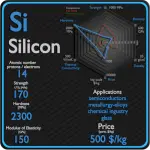
Silicon is a hard and brittle crystalline solid with a blue-grey metallic lustre, it is a tetravalent metalloid and semiconductor.

Aluminium in Periodic Table

Silicon in Periodic Table

Source: www.luciteria.com

Aluminium and Silicon – Applications

Aluminium

Aluminium and its alloys are used widely in aerospace, automotive, architectural, lithographic, packaging, electrical and electronic applications. It is the prime material of construction for the aircraft industry throughout most of its history. About 70% of commercial civil aircraft airframes are made from aluminium alloys, and without aluminium civil aviation would not be economically viable. Automotive industry now includes aluminium as engine castings, wheels, radiators and increasingly as body parts. 6111 aluminium and 2008 aluminium alloy are extensively used for external automotive body panels. Cylinder blocks and crankcases are often cast made of aluminium alloys.

Silicon

Most silicon is used industrially without being purified, and indeed, often with comparatively little processing from its natural form. Silicon is a vital ingredient in aluminum, steel, and iron alloys. It is added as a fluxing agent for copper alloys. In the form of clay and sand, it is used to manufacture bricks and concrete; it is a valuable refractory material for high-temperature work, for example, molding sands for castings in foundry applications. Silica is used to make fire brick, a type of ceramic. Silicate minerals are also in whiteware ceramics, an important class of products usually containing various types of fired clay minerals (natural aluminium phyllosilicates). An example is porcelain, which is based on the silicate mineral kaolinite. Traditional glass (silica-based soda-lime glass) also functions in many of the same ways, and also is used for windows and containers. Hyperpure silicon metal and doped hyperpure silicon (doping with boron, phosphorous, gallium, or arsenic) are used in solar cells, transistors and semiconductors.

Aluminium and Silicon – Comparison in Table

Element Aluminium Silicon
Density 2.7 g/cm3 2.33 g/cm3
Ultimate Tensile Strength 90 MPa (pure), 600 MPa (alloys) 170 MPa
Yield Strength 11 MPa (pure), 400 MPa (alloys) 165 MPa
Young’s Modulus of Elasticity 70 GPa 150 GPa
Mohs Scale 2.8 7
Brinell Hardness 240 MPa 2300 MPa
Vickers Hardness 167 MPa N/A
Melting Point 660 °C 1410 °C
Boiling Point 2467 °C 3265 °C
Thermal Conductivity 237 W/mK 148 W/mK
Thermal Expansion Coefficient 23.1 µm/mK 2.6 µm/mK
Specific Heat 0.9 J/g K 0.71  J/g K
Heat of Fusion 10.79 kJ/mol 50.55 kJ/mol
Heat of Vaporization 293.4 kJ/mol 384.22 kJ/mol


Aluminium and Potassium – Comparison – Properties

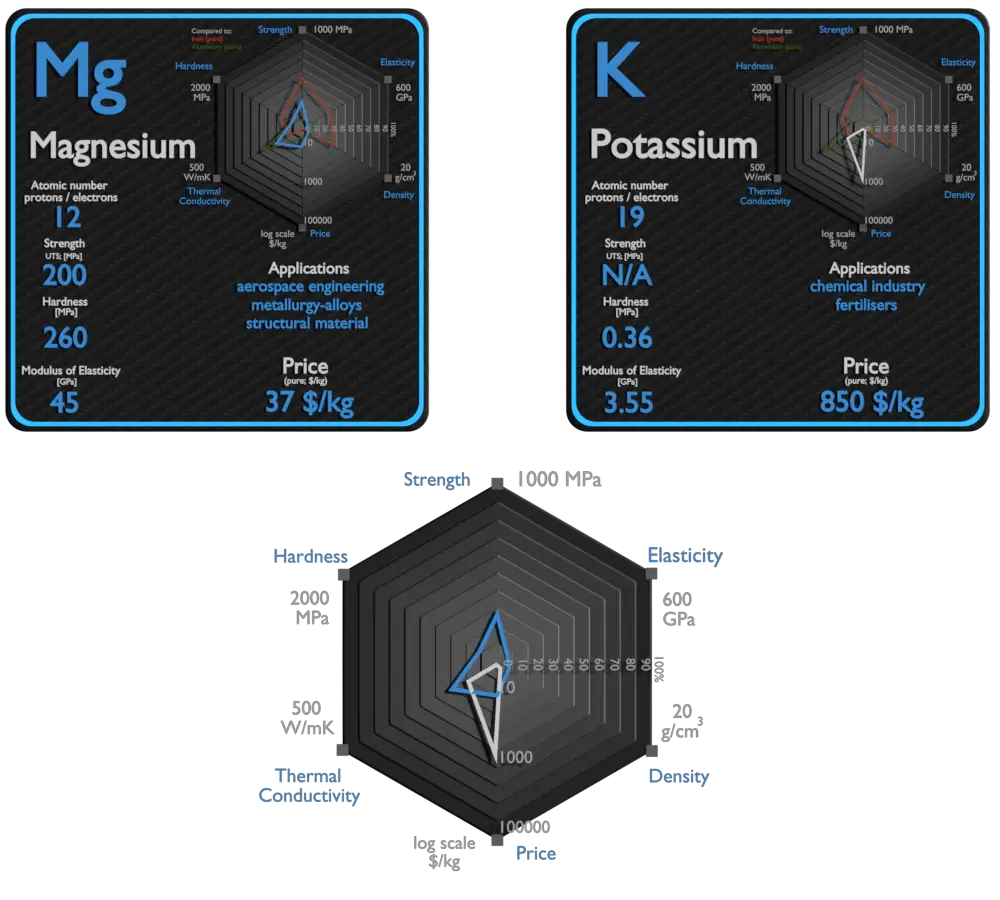
This article contains comparison of key thermal and atomic properties of aluminium and potassium, two comparable chemical elements from the periodic table. It also contains basic descriptions and applications of both elements. Aluminium vs Potassium.

magnesium and potassium - comparison

Compare aluminium with another element

Hydrogen - Properties - Price - Applications - Production

Lithium - Properties - Price - Applications - Production

Beryllium - Properties - Price - Applications - Production

Carbon - Properties - Price - Applications - Production

Oxygen - Properties - Price - Applications - Production

Fluorine - Properties - Price - Applications - Production

Sodium - Properties - Price - Applications - Production

Magnesium - Properties - Price - Applications - Production

Copper - Properties - Price - Applications - Production

Mercury - Properties - Price - Applications - Production

Potassium - Properties - Price - Applications - Production

Silicon - Properties - Price - Applications - Production

Chlorine - Properties - Price - Applications - Production

Titanium - Properties - Price - Applications - Production

Iron - Properties - Price - Applications - Production

Gallium - Properties - Price - Applications - Production

Compare potassium with another element

Lithium - Properties - Price - Applications - Production

Oxygen - Properties - Price - Applications - Production

Sodium - Properties - Price - Applications - Production

Magnesium - Properties - Price - Applications - Production

Aluminium - Properties - Price - Applications - Production

Phosphorus - Properties - Price - Applications - Production

Sulfur - Properties - Price - Applications - Production

Calcium - Properties - Price - Applications - Production

Iron - Properties - Price - Applications - Production

Zinc - Properties - Price - Applications - Production

Bromine - Properties - Price - Applications - Production

Aluminium and Potassium – About Elements

Aluminium

Aluminium is a silvery-white, soft, nonmagnetic, ductile metal in the boron group. By mass, aluminium makes up about 8% of the Earth’s crust; it is the third most abundant element after oxygen and silicon and the most abundant metal in the crust, though it is less common in the mantle below.

Potassium

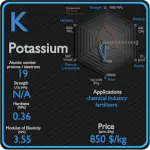
Potassium was first isolated from potash, the ashes of plants, from which its name derives. In the periodic table, potassium is one of the alkali metals. All of the alkali metals have a single valence electron in the outer electron shell, which is easily removed to create an ion with a positive charge – a cation, which combines with anions to form salts. Naturally occurring potassium is composed of three isotopes, of which 40K is radioactive. Traces of 40K are found in all potassium, and it is the most common radioisotope in the human body.

Aluminium in Periodic Table

Potassium in Periodic Table

Source: www.luciteria.com

Aluminium and Potassium – Applications

Aluminium

Aluminium and its alloys are used widely in aerospace, automotive, architectural, lithographic, packaging, electrical and electronic applications. It is the prime material of construction for the aircraft industry throughout most of its history. About 70% of commercial civil aircraft airframes are made from aluminium alloys, and without aluminium civil aviation would not be economically viable. Automotive industry now includes aluminium as engine castings, wheels, radiators and increasingly as body parts. 6111 aluminium and 2008 aluminium alloy are extensively used for external automotive body panels. Cylinder blocks and crankcases are often cast made of aluminium alloys.

Potassium

Potassium (K) is an essential nutrient for plant growth. It’s classified as a macronutrient because plants take up large quantities of K during their life cycle. Agricultural fertilizers consume 95% of global potassium chemical production, and about 90% of this potassium is supplied as KCl. Due to its high degree of reactivity, pure potassium is rarely used in its elemental /metallic form. It is used as a powerful reducing agent in organic chemistry. Potassium/Sodium alloys are It used as a heat exchange medium . The heat in the potassium warms water and makes it hot enough to boil. Then water is changed into steam, which is used to work devices that generate electricity.

Aluminium and Potassium – Comparison in Table

Element Aluminium Potassium
Density 2.7 g/cm3 0.856 g/cm3
Ultimate Tensile Strength 90 MPa (pure), 600 MPa (alloys) N/A
Yield Strength 11 MPa (pure), 400 MPa (alloys) N/A
Young’s Modulus of Elasticity 70 GPa 3.53 GPa
Mohs Scale 2.8 0.4
Brinell Hardness 240 MPa 0.36 MPa
Vickers Hardness 167 MPa N/A
Melting Point 660 °C 63.25 °C
Boiling Point 2467 °C 760 °C
Thermal Conductivity 237 W/mK 102.4 W/mK
Thermal Expansion Coefficient 23.1 µm/mK 83 µm/mK
Specific Heat 0.9 J/g K 0.75  J/g K
Heat of Fusion 10.79 kJ/mol 2.334 kJ/mol
Heat of Vaporization 293.4 kJ/mol 79.87 kJ/mol


Aluminium and Mercury – Comparison – Properties

This article contains comparison of key thermal and atomic properties of aluminium and mercury, two comparable chemical elements from the periodic table. It also contains basic descriptions and applications of both elements. Aluminium vs Mercury.

aluminium and mercury - comparison

Compare aluminium with another element

Hydrogen - Properties - Price - Applications - Production

Lithium - Properties - Price - Applications - Production

Beryllium - Properties - Price - Applications - Production

Carbon - Properties - Price - Applications - Production

Oxygen - Properties - Price - Applications - Production

Fluorine - Properties - Price - Applications - Production

Sodium - Properties - Price - Applications - Production

Magnesium - Properties - Price - Applications - Production

Copper - Properties - Price - Applications - Production

Mercury - Properties - Price - Applications - Production

Potassium - Properties - Price - Applications - Production

Silicon - Properties - Price - Applications - Production

Chlorine - Properties - Price - Applications - Production

Titanium - Properties - Price - Applications - Production

Iron - Properties - Price - Applications - Production

Gallium - Properties - Price - Applications - Production

Compare mercury with another element

Aluminium - Properties - Price - Applications - Production

Iodine - Properties - Price - Applications - Production

Lead - Properties - Price - Applications - Production

Aluminium and Mercury – About Elements

Aluminium

Aluminium is a silvery-white, soft, nonmagnetic, ductile metal in the boron group. By mass, aluminium makes up about 8% of the Earth’s crust; it is the third most abundant element after oxygen and silicon and the most abundant metal in the crust, though it is less common in the mantle below.

Mercury

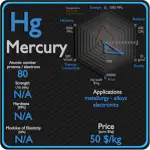
Mercury is commonly known as quicksilver and was formerly named hydrargyrum. Mercury is a heavy, silvery d-block element, mercury is the only metallic element that is liquid at standard conditions for temperature and pressure.

Aluminium in Periodic Table

Mercury in Periodic Table

Source: www.luciteria.com

Aluminium and Mercury – Applications

Aluminium

Aluminium and its alloys are used widely in aerospace, automotive, architectural, lithographic, packaging, electrical and electronic applications. It is the prime material of construction for the aircraft industry throughout most of its history. About 70% of commercial civil aircraft airframes are made from aluminium alloys, and without aluminium civil aviation would not be economically viable. Automotive industry now includes aluminium as engine castings, wheels, radiators and increasingly as body parts. 6111 aluminium and 2008 aluminium alloy are extensively used for external automotive body panels. Cylinder blocks and crankcases are often cast made of aluminium alloys.

Mercury

Mercury is used primarily for the manufacture of industrial chemicals or for electrical and electronic applications. However, because of its toxicity, many uses of mercury are being phased out or are under review. It is used in some thermometers, especially ones which are used to measure high temperatures. Mercury easily forms alloys, called amalgams, with other metals such as gold, silver and tin. The ease with which it amalgamates with gold made it useful in recovering gold from its ores. Mercury amalgams were also used in dental fillings. Gaseous mercury is used in mercury-vapor lamps and some “neon sign” type advertising signs and fluorescent lamps.

Aluminium and Mercury – Comparison in Table

Element Aluminium Mercury
Density 2.7 g/cm3 13.534 g/cm3
Ultimate Tensile Strength 90 MPa (pure), 600 MPa (alloys) N/A
Yield Strength 11 MPa (pure), 400 MPa (alloys) N/A
Young’s Modulus of Elasticity 70 GPa N/A
Mohs Scale 2.8 N/A
Brinell Hardness 240 MPa N/A
Vickers Hardness 167 MPa N/A
Melting Point 660 °C -38.9 °C
Boiling Point 2467 °C 357 °C
Thermal Conductivity 237 W/mK 8.3 W/mK
Thermal Expansion Coefficient 23.1 µm/mK 60.4 µm/mK
Specific Heat 0.9 J/g K 0.139 J/g K
Heat of Fusion 10.79 kJ/mol 2.295 kJ/mol
Heat of Vaporization 293.4 kJ/mol 59.229 kJ/mol


Aluminium and Copper – Comparison – Properties

This article contains comparison of key thermal and atomic properties of aluminium and copper, two comparable chemical elements from the periodic table. It also contains basic descriptions and applications of both elements. Aluminium vs Copper.

aluminium and copper - comparison

Compare aluminium with another element

Hydrogen - Properties - Price - Applications - Production

Lithium - Properties - Price - Applications - Production

Beryllium - Properties - Price - Applications - Production

Carbon - Properties - Price - Applications - Production

Oxygen - Properties - Price - Applications - Production

Fluorine - Properties - Price - Applications - Production

Sodium - Properties - Price - Applications - Production

Magnesium - Properties - Price - Applications - Production

Copper - Properties - Price - Applications - Production

Mercury - Properties - Price - Applications - Production

Potassium - Properties - Price - Applications - Production

Silicon - Properties - Price - Applications - Production

Chlorine - Properties - Price - Applications - Production

Titanium - Properties - Price - Applications - Production

Iron - Properties - Price - Applications - Production

Gallium - Properties - Price - Applications - Production

Compare copper with another element

Beryllium - Properties - Price - Applications - Production

Magnesium - Properties - Price - Applications - Production

Aluminium - Properties - Price - Applications - Production

Silicon - Properties - Price - Applications - Production

Chlorine - Properties - Price - Applications - Production

Titanium - Properties - Price - Applications - Production

Chromium - Properties - Price - Applications - Production

Manganese - Properties - Price - Applications - Production

Iron - Properties - Price - Applications - Production

Cobalt - Properties - Price - Applications - Production

Silver - Properties - Price - Applications - Production

Gold - Properties - Price - Applications - Production

Tin - Properties - Price - Applications - Production

Aluminium and Copper – About Elements

Aluminium

Aluminium is a silvery-white, soft, nonmagnetic, ductile metal in the boron group. By mass, aluminium makes up about 8% of the Earth’s crust; it is the third most abundant element after oxygen and silicon and the most abundant metal in the crust, though it is less common in the mantle below.

Copper

Copper is a soft, malleable, and ductile metal with very high thermal and electrical conductivity. A freshly exposed surface of pure copper has a reddish-orange color. Copper is used as a conductor of heat and electricity, as a building material, and as a constituent of various metal alloys, such as sterling silver used in jewelry, cupronickel used to make marine hardware and coins, and constantan used in strain gauges and thermocouples for temperature measurement.

Aluminium in Periodic Table

Copper in Periodic Table

Source: www.luciteria.com

Aluminium and Copper – Applications

Aluminium

Aluminium and its alloys are used widely in aerospace, automotive, architectural, lithographic, packaging, electrical and electronic applications. It is the prime material of construction for the aircraft industry throughout most of its history. About 70% of commercial civil aircraft airframes are made from aluminium alloys, and without aluminium civil aviation would not be economically viable. Automotive industry now includes aluminium as engine castings, wheels, radiators and increasingly as body parts. 6111 aluminium and 2008 aluminium alloy are extensively used for external automotive body panels. Cylinder blocks and crankcases are often cast made of aluminium alloys.

Copper

Historically, alloying copper with another metal, for example tin to make bronze, was first practiced about 4000 years after the discovery of copper smelting, and about 2000 years after “natural bronze” had come into general use. An ancient civilization is defined to be in the Bronze Age either by producing bronze by smelting its own copper and alloying with tin, arsenic, or other metals. The major applications of copper are electrical wire (60%), roofing and plumbing (20%), and industrial machinery (15%). Copper is used mostly as a pure metal, but when greater hardness is required, it is put into such alloys as brass and bronze (5% of total use). Copper and copper-based alloys including brasses (Cu-Zn) and bronzes (Cu-Sn) are widely used in different industrial and societal applications. Some of the common uses for brass alloys include costume jewelry, locks, hinges, gears, bearings, ammunition casings, automotive radiators, musical instruments, electronic packaging, and coins. Bronze, or bronze-like alloys and mixtures, were used for coins over a longer period. is still widely used today for springs, bearings, bushings, automobile transmission pilot bearings, and similar fittings, and is particularly common in the bearings of small electric motors. Brass and bronze are common engineering materials in modern architecture and primarily used for roofing and facade cladding due to their visual appearance.

Aluminium and Copper – Comparison in Table

Element Aluminium Copper
Density 2.7 g/cm3 8.92 g/cm3
Ultimate Tensile Strength 90 MPa (pure), 600 MPa (alloys) 210 MPa
Yield Strength 11 MPa (pure), 400 MPa (alloys) 33 MPa
Young’s Modulus of Elasticity 70 GPa 120 GPa
Mohs Scale 2.8 3
Brinell Hardness 240 MPa 250 MPa
Vickers Hardness 167 MPa 350 MPa
Melting Point 660 °C 1084.62 °C
Boiling Point 2467 °C 2562 °C
Thermal Conductivity 237 W/mK 401 W/mK
Thermal Expansion Coefficient 23.1 µm/mK 16.5 µm/mK
Specific Heat 0.9 J/g K 0.38 J/g K
Heat of Fusion 10.79 kJ/mol 13.05 kJ/mol
Heat of Vaporization 293.4 kJ/mol 300.3 kJ/mol


Magnesium and Copper – Comparison – Properties

This article contains comparison of key thermal and atomic properties of magnesium and copper, two comparable chemical elements from the periodic table. It also contains basic descriptions and applications of both elements. Magnesium vs Copper.

magnesium and copper - comparison

Compare magnesium with another element

Lithium - Properties - Price - Applications - Production

Beryllium - Properties - Price - Applications - Production

Oxygen - Properties - Price - Applications - Production

Sodium - Properties - Price - Applications - Production

Calcium - Properties - Price - Applications - Production

Potassium - Properties - Price - Applications - Production

Chlorine - Properties - Price - Applications - Production

Zinc - Properties - Price - Applications - Production

Bromine - Properties - Price - Applications - Production

Aluminium - Properties - Price - Applications - Production

Iron - Properties - Price - Applications - Production

Copper - Properties - Price - Applications - Production

Compare copper with another element

Beryllium - Properties - Price - Applications - Production

Magnesium - Properties - Price - Applications - Production

Aluminium - Properties - Price - Applications - Production

Silicon - Properties - Price - Applications - Production

Chlorine - Properties - Price - Applications - Production

Titanium - Properties - Price - Applications - Production

Chromium - Properties - Price - Applications - Production

Manganese - Properties - Price - Applications - Production

Iron - Properties - Price - Applications - Production

Cobalt - Properties - Price - Applications - Production

Silver - Properties - Price - Applications - Production

Gold - Properties - Price - Applications - Production

Tin - Properties - Price - Applications - Production

Magnesium and Copper – About Elements

Magnesium

Magnesium is a shiny gray solid which bears a close physical resemblance to the other five elements in the second column (group 2, or alkaline earth metals) of the periodic table: all group 2 elements have the same electron configuration in the outer electron shell and a similar crystal structure.

Copper

Copper is a soft, malleable, and ductile metal with very high thermal and electrical conductivity. A freshly exposed surface of pure copper has a reddish-orange color. Copper is used as a conductor of heat and electricity, as a building material, and as a constituent of various metal alloys, such as sterling silver used in jewelry, cupronickel used to make marine hardware and coins, and constantan used in strain gauges and thermocouples for temperature measurement.

Magnesium in Periodic Table

Copper in Periodic Table

Source: www.luciteria.com

Magnesium and Copper – Applications

Magnesium

Magnesium is the third-most-commonly-used structural metal, following iron and aluminium.[35] The main applications of magnesium are, in order: aluminium alloys, die-casting (alloyed with zinc), removing sulfur in the production of iron and steel, and the production of titanium in the Kroll process. Magnesium alloys are used in a wide variety of structural and nonstructural applications. Structural applications include automotive, industrial, materials-handling, commercial, and aerospace equipment. Magnesium alloys are used for parts that operate at high speeds and thus must be light weight to minimize inertial forces. Commercial applications include hand-held tools, laptops, luggage, and ladders, automobiles (e.g., steering wheels and columns, seat frames, transmission cases). Magnox (alloy), whose name is an abbreviation for “magnesium non-oxidizing”, is 99% magnesium and 1% aluminum, and is used in the cladding of fuel rods in magnox nuclear power reactors.

Copper

Historically, alloying copper with another metal, for example tin to make bronze, was first practiced about 4000 years after the discovery of copper smelting, and about 2000 years after “natural bronze” had come into general use. An ancient civilization is defined to be in the Bronze Age either by producing bronze by smelting its own copper and alloying with tin, arsenic, or other metals. The major applications of copper are electrical wire (60%), roofing and plumbing (20%), and industrial machinery (15%). Copper is used mostly as a pure metal, but when greater hardness is required, it is put into such alloys as brass and bronze (5% of total use). Copper and copper-based alloys including brasses (Cu-Zn) and bronzes (Cu-Sn) are widely used in different industrial and societal applications. Some of the common uses for brass alloys include costume jewelry, locks, hinges, gears, bearings, ammunition casings, automotive radiators, musical instruments, electronic packaging, and coins. Bronze, or bronze-like alloys and mixtures, were used for coins over a longer period. is still widely used today for springs, bearings, bushings, automobile transmission pilot bearings, and similar fittings, and is particularly common in the bearings of small electric motors. Brass and bronze are common engineering materials in modern architecture and primarily used for roofing and facade cladding due to their visual appearance.

Magnesium and Copper – Comparison in Table

Element Magnesium Copper
Density 1.738 g/cm3 8.92 g/cm3
Ultimate Tensile Strength 200 MPa 210 MPa
Yield Strength N/A 33 MPa
Young’s Modulus of Elasticity 45 GPa 120 GPa
Mohs Scale 2.5 3
Brinell Hardness 260 MPa 250 MPa
Vickers Hardness N/A 350 MPa
Melting Point 649 °C 1084.62 °C
Boiling Point 1090 °C 2562 °C
Thermal Conductivity 156 W/mK 401 W/mK
Thermal Expansion Coefficient 24.8 µm/mK 16.5 µm/mK
Specific Heat 1.02 J/g K 0.38 J/g K
Heat of Fusion 8.954 kJ/mol 13.05 kJ/mol
Heat of Vaporization 127.4 kJ/mol 300.3 kJ/mol


Magnesium and Iron – Comparison – Properties

This article contains comparison of key thermal and atomic properties of magnesium and iron, two comparable chemical elements from the periodic table. It also contains basic descriptions and applications of both elements. Magnesium vs Iron.

magnesium and iron - comparison

Compare magnesium with another element

Lithium - Properties - Price - Applications - Production

Beryllium - Properties - Price - Applications - Production

Oxygen - Properties - Price - Applications - Production

Sodium - Properties - Price - Applications - Production

Calcium - Properties - Price - Applications - Production

Potassium - Properties - Price - Applications - Production

Chlorine - Properties - Price - Applications - Production

Zinc - Properties - Price - Applications - Production

Bromine - Properties - Price - Applications - Production

Aluminium - Properties - Price - Applications - Production

Iron - Properties - Price - Applications - Production

Copper - Properties - Price - Applications - Production

Compare iron with another element

Carbon - Properties - Price - Applications - Production

Oxygen - Properties - Price - Applications - Production

Fluorine - Properties - Price - Applications - Production

Magnesium - Properties - Price - Applications - Production

Aluminium - Properties - Price - Applications - Production

Chlorine - Properties - Price - Applications - Production

Potassium - Properties - Price - Applications - Production

Calcium - Properties - Price - Applications - Production

Chromium - Properties - Price - Applications - Production

Manganese - Properties - Price - Applications - Production

Cobalt - Properties - Price - Applications - Production

Nickel - Properties - Price - Applications - Production

Copper - Properties - Price - Applications - Production

Zinc - Properties - Price - Applications - Production

Zirconium - Properties - Price - Applications - Production

Lead - Properties - Price - Applications - Production

Magnesium and Iron – About Elements

Magnesium

Magnesium is a shiny gray solid which bears a close physical resemblance to the other five elements in the second column (group 2, or alkaline earth metals) of the periodic table: all group 2 elements have the same electron configuration in the outer electron shell and a similar crystal structure.

Iron

Iron is a metal in the first transition series. It is by mass the most common element on Earth, forming much of Earth’s outer and inner core. It is the fourth most common element in the Earth’s crust. Its abundance in rocky planets like Earth is due to its abundant production by fusion in high-mass stars.

Magnesium in Periodic Table

Iron in Periodic Table

Source: www.luciteria.com

Magnesium and Iron – Applications

Magnesium

Magnesium is the third-most-commonly-used structural metal, following iron and aluminium.[35] The main applications of magnesium are, in order: aluminium alloys, die-casting (alloyed with zinc), removing sulfur in the production of iron and steel, and the production of titanium in the Kroll process. Magnesium alloys are used in a wide variety of structural and nonstructural applications. Structural applications include automotive, industrial, materials-handling, commercial, and aerospace equipment. Magnesium alloys are used for parts that operate at high speeds and thus must be light weight to minimize inertial forces. Commercial applications include hand-held tools, laptops, luggage, and ladders, automobiles (e.g., steering wheels and columns, seat frames, transmission cases). Magnox (alloy), whose name is an abbreviation for “magnesium non-oxidizing”, is 99% magnesium and 1% aluminum, and is used in the cladding of fuel rods in magnox nuclear power reactors.

Iron

Iron is used in numerous sectors such as electronics, manufacturing, automotive, and construction and building. Iron is the most widely used of all the metals, accounting for over 90% of worldwide metal produc0tion. Its low cost and high strength often make it the material of choice material to withstand stress or transmit forces, such as the construction of machinery and machine tools, rails, automobiles, ship hulls, concrete reinforcing bars, and the load-carrying framework of buildings. Since pure iron is quite soft, it is most commonly combined with alloying elements to make steel. Steels are iron–carbon alloys that may contain appreciable concentrations of other alloying elements. Adding a small amount of non-metallic carbon to iron trades its great ductility for the greater strength. Due to its very-high strength, but still substantial toughness, and its ability to be greatly altered by heat treatment, steel is one of the most useful and common ferrous alloy in modern use. There are thousands of alloys that have different compositions and/or heat treatments. The mechanical properties are sensitive to the content of carbon, which is normally less than 1.0 wt%.

Magnesium and Iron – Comparison in Table

Element Magnesium Iron
Density 1.738 g/cm3 7.874 g/cm3
Ultimate Tensile Strength 200 MPa 540 MPa
Yield Strength N/A 50 MPa
Young’s Modulus of Elasticity 45 GPa 211 GPa
Mohs Scale 2.5 4.5
Brinell Hardness 260 MPa 490 MPa
Vickers Hardness N/A 608 MPa
Melting Point 649 °C 1538 °C
Boiling Point 1090 °C 2861 °C
Thermal Conductivity 156 W/mK 80.2 W/mK
Thermal Expansion Coefficient 24.8 µm/mK 11.8 µm/mK
Specific Heat 1.02 J/g K 0.44 J/g K
Heat of Fusion 8.954 kJ/mol 13.8 kJ/mol
Heat of Vaporization 127.4 kJ/mol 349.6 kJ/mol


Magnesium and Aluminium – Comparison – Properties

This article contains comparison of key thermal and atomic properties of magnesium and aluminium, two comparable chemical elements from the periodic table. It also contains basic descriptions and applications of both elements. Magnesium vs Aluminium.

magnesium and aluminium - comparison

Compare magnesium with another element

Lithium - Properties - Price - Applications - Production

Beryllium - Properties - Price - Applications - Production

Oxygen - Properties - Price - Applications - Production

Sodium - Properties - Price - Applications - Production

Calcium - Properties - Price - Applications - Production

Potassium - Properties - Price - Applications - Production

Chlorine - Properties - Price - Applications - Production

Zinc - Properties - Price - Applications - Production

Bromine - Properties - Price - Applications - Production

Aluminium - Properties - Price - Applications - Production

Iron - Properties - Price - Applications - Production

Copper - Properties - Price - Applications - Production

Compare aluminium with another element

Hydrogen - Properties - Price - Applications - Production

Lithium - Properties - Price - Applications - Production

Beryllium - Properties - Price - Applications - Production

Carbon - Properties - Price - Applications - Production

Oxygen - Properties - Price - Applications - Production

Fluorine - Properties - Price - Applications - Production

Sodium - Properties - Price - Applications - Production

Magnesium - Properties - Price - Applications - Production

Copper - Properties - Price - Applications - Production

Mercury - Properties - Price - Applications - Production

Potassium - Properties - Price - Applications - Production

Silicon - Properties - Price - Applications - Production

Chlorine - Properties - Price - Applications - Production

Titanium - Properties - Price - Applications - Production

Iron - Properties - Price - Applications - Production

Gallium - Properties - Price - Applications - Production

Magnesium and Aluminium – About Elements

Magnesium

Magnesium is a shiny gray solid which bears a close physical resemblance to the other five elements in the second column (group 2, or alkaline earth metals) of the periodic table: all group 2 elements have the same electron configuration in the outer electron shell and a similar crystal structure.

Aluminium

Aluminium is a silvery-white, soft, nonmagnetic, ductile metal in the boron group. By mass, aluminium makes up about 8% of the Earth’s crust; it is the third most abundant element after oxygen and silicon and the most abundant metal in the crust, though it is less common in the mantle below.

Magnesium in Periodic Table

Aluminium in Periodic Table

Source: www.luciteria.com

Magnesium and Aluminium – Applications

Magnesium

Magnesium is the third-most-commonly-used structural metal, following iron and aluminium.[35] The main applications of magnesium are, in order: aluminium alloys, die-casting (alloyed with zinc), removing sulfur in the production of iron and steel, and the production of titanium in the Kroll process. Magnesium alloys are used in a wide variety of structural and nonstructural applications. Structural applications include automotive, industrial, materials-handling, commercial, and aerospace equipment. Magnesium alloys are used for parts that operate at high speeds and thus must be light weight to minimize inertial forces. Commercial applications include hand-held tools, laptops, luggage, and ladders, automobiles (e.g., steering wheels and columns, seat frames, transmission cases). Magnox (alloy), whose name is an abbreviation for “magnesium non-oxidizing”, is 99% magnesium and 1% aluminum, and is used in the cladding of fuel rods in magnox nuclear power reactors.

Aluminium

Aluminium and its alloys are used widely in aerospace, automotive, architectural, lithographic, packaging, electrical and electronic applications. It is the prime material of construction for the aircraft industry throughout most of its history. About 70% of commercial civil aircraft airframes are made from aluminium alloys, and without aluminium civil aviation would not be economically viable. Automotive industry now includes aluminium as engine castings, wheels, radiators and increasingly as body parts. 6111 aluminium and 2008 aluminium alloy are extensively used for external automotive body panels. Cylinder blocks and crankcases are often cast made of aluminium alloys.

Magnesium and Aluminium – Comparison in Table

Element Magnesium Aluminium
Density 1.738 g/cm3 2.7 g/cm3
Ultimate Tensile Strength 200 MPa 90 MPa (pure), 600 MPa (alloys)
Yield Strength N/A 11 MPa (pure), 400 MPa (alloys)
Young’s Modulus of Elasticity 45 GPa 70 GPa
Mohs Scale 2.5 2.8
Brinell Hardness 260 MPa 240 MPa
Vickers Hardness N/A 167 MPa
Melting Point 649 °C 660 °C
Boiling Point 1090 °C 2467 °C
Thermal Conductivity 156 W/mK 237 W/mK
Thermal Expansion Coefficient 24.8 µm/mK 23.1 µm/mK
Specific Heat 1.02 J/g K 0.9 J/g K
Heat of Fusion 8.954 kJ/mol 10.79 kJ/mol
Heat of Vaporization 127.4 kJ/mol 293.4 kJ/mol


Magnesium and Bromine – Comparison – Properties

This article contains comparison of key thermal and atomic properties of magnesium and bromine, two comparable chemical elements from the periodic table. It also contains basic descriptions and applications of both elements. Magnesium vs Bromine.

magnesium and bromine - comparison

Compare magnesium with another element

Lithium - Properties - Price - Applications - Production

Beryllium - Properties - Price - Applications - Production

Oxygen - Properties - Price - Applications - Production

Sodium - Properties - Price - Applications - Production

Calcium - Properties - Price - Applications - Production

Potassium - Properties - Price - Applications - Production

Chlorine - Properties - Price - Applications - Production

Zinc - Properties - Price - Applications - Production

Bromine - Properties - Price - Applications - Production

Aluminium - Properties - Price - Applications - Production

Iron - Properties - Price - Applications - Production

Copper - Properties - Price - Applications - Production

Compare bromine with another element

Carbon - Properties - Price - Applications - Production

Magnesium - Properties - Price - Applications - Production

Chlorine - Properties - Price - Applications - Production

Potassium - Properties - Price - Applications - Production

Iodine - Properties - Price - Applications - Production

Magnesium and Bromine – About Elements

Magnesium

Magnesium is a shiny gray solid which bears a close physical resemblance to the other five elements in the second column (group 2, or alkaline earth metals) of the periodic table: all group 2 elements have the same electron configuration in the outer electron shell and a similar crystal structure.

Bromine

Bromine is the third-lightest halogen, and is a fuming red-brown liquid at room temperature that evaporates readily to form a similarly coloured gas. Its properties are thus intermediate between those of chlorine and iodine.

Magnesium in Periodic Table

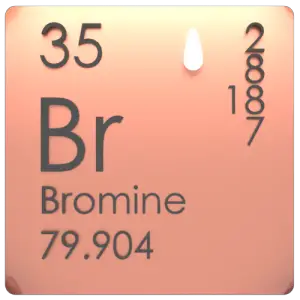
Bromine in Periodic Table

Source: www.luciteria.com

Magnesium and Bromine – Applications

Magnesium

Magnesium is the third-most-commonly-used structural metal, following iron and aluminium.[35] The main applications of magnesium are, in order: aluminium alloys, die-casting (alloyed with zinc), removing sulfur in the production of iron and steel, and the production of titanium in the Kroll process. Magnesium alloys are used in a wide variety of structural and nonstructural applications. Structural applications include automotive, industrial, materials-handling, commercial, and aerospace equipment. Magnesium alloys are used for parts that operate at high speeds and thus must be light weight to minimize inertial forces. Commercial applications include hand-held tools, laptops, luggage, and ladders, automobiles (e.g., steering wheels and columns, seat frames, transmission cases). Magnox (alloy), whose name is an abbreviation for “magnesium non-oxidizing”, is 99% magnesium and 1% aluminum, and is used in the cladding of fuel rods in magnox nuclear power reactors.

Bromine

A wide variety of organobromine compounds are used in industry. Some are prepared from bromine and others are prepared from hydrogen bromide, which is obtained by burning hydrogen in bromine. Brominated flame retardants represent a commodity of growing importance, and make up the largest commercial use of bromine. One of the major uses of bromine is a water purifier/disinfectant, as an alternative to chlorine. Bromine compounds are effective pesticides, used both as soil fumigants in agriculture, particularly fruit-growing, and as a fumigant to prevent pests from attacking stored grain and other produce.

Magnesium and Bromine – Comparison in Table

Element Magnesium Bromine
Density 1.738 g/cm3 3.12 g/cm3
Ultimate Tensile Strength 200 MPa N/A
Yield Strength N/A N/A
Young’s Modulus of Elasticity 45 GPa N/A
Mohs Scale 2.5 N/A
Brinell Hardness 260 MPa N/A
Vickers Hardness N/A N/A
Melting Point 649 °C -7.3 °C
Boiling Point 1090 °C 59 °C
Thermal Conductivity 156 W/mK 0.122 W/mK
Thermal Expansion Coefficient 24.8 µm/mK N/A
Specific Heat 1.02 J/g K 0.473 J/g K
Heat of Fusion 8.954 kJ/mol 5.286 kJ/mol
Heat of Vaporization 127.4 kJ/mol 15.438 kJ/mol