Facebook Instagram Youtube Twitter

Oxygen and Fluorine – Comparison – Properties

This article contains comparison of key thermal and atomic properties of oxygen and fluorine, two comparable chemical elements from the periodic table. It also contains basic descriptions and applications of both elements. Oxygen vs Fluorine.

oxygen and fluorine - comparison

Compare oxygen with another element

Sodium - Properties - Price - Applications - Production

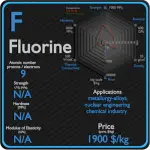
Fluorine - Properties - Price - Applications - Production

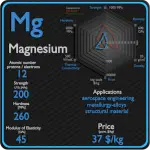
Magnesium - Properties - Price - Applications - Production

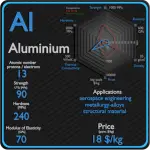
Aluminium - Properties - Price - Applications - Production

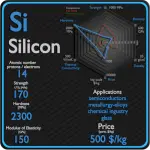
Silicon - Properties - Price - Applications - Production

Sulfur - Properties - Price - Applications - Production

Chlorine - Properties - Price - Applications - Production

Potassium - Properties - Price - Applications - Production

Calcium - Properties - Price - Applications - Production

Iron - Properties - Price - Applications - Production

Hydrogen - Properties - Price - Applications - Production

Helium - Properties - Price - Applications - Production

Lithium - Properties - Price - Applications - Production

Beryllium - Properties - Price - Applications - Production

Boron - Properties - Price - Applications - Production

Carbon - Properties - Price - Applications - Production

Compare fluorine with another element

Chlorine - Properties - Price - Applications - Production

Neon - Properties - Price - Applications - Production

Iron - Properties - Price - Applications - Production

Calcium - Properties - Price - Applications - Production

Aluminium - Properties - Price - Applications - Production

Hydrogen - Properties - Price - Applications - Production

Oxygen - Properties - Price - Applications - Production

Oxygen and Fluorine – About Elements
Oxygen

Oxygen is a colourless, odourless reactive gas, the chemical element of atomic number 8 and the life-supporting component of the air. It is a member of the chalcogen group on the periodic table, a highly reactive nonmetal, and an oxidizing agent that readily forms oxides with most elements as well as with other compounds. By mass, oxygen is the third-most abundant element in the universe, after hydrogen and helium.

Fluorine

Fluorine is the lightest halogen and exists as a highly toxic pale yellow diatomic gas at standard conditions. As the most electronegative element, it is extremely reactive: almost all other elements, including some noble gases, form compounds with fluorine.

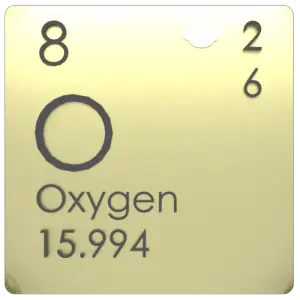
Oxygen in Periodic Table

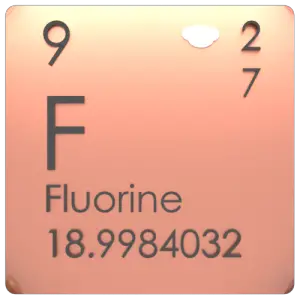
Fluorine in Periodic Table

Source: www.luciteria.com

Oxygen and Fluorine – Applications

Oxygen

Common uses of oxygen include production of steel, plastics and textiles, brazing, welding and cutting of steels and other metals, rocket propellant, oxygen therapy, and life support systems in aircraft, submarines, spaceflight and diving. Smelting of iron ore into steel consumes 55% of commercially produced oxygen. In this process, oxygen is injected through a high-pressure lance into molten iron, which removes sulfur impurities and excess carbon as the respective oxides, sulfur dioxide and carbon dioxide. Uptake of oxygen from the air is the essential purpose of respiration, so oxygen supplementation is used in medicine. Treatment not only increases oxygen levels in the patient’s blood, but has the secondary effect of decreasing resistance to blood flow in many types of diseased lungs, easing work load on the heart.

Fluorine

Owing to the expense of refining pure fluorine, most commercial applications use fluorine compounds, with about half of mined fluorite used in steelmaking. The rest of the fluorite is converted into corrosive hydrogen fluoride en route to various organic fluorides, or into cryolite, which plays a key role in aluminium refining. Most commercial uranium enrichment processes (gaseous diffusion and the gas centrifuge method) require the uranium to be in a gaseous form, therefore the uranium oxide concentrate must be first converted to uranium hexafluoride, which is a gas at relatively low temperatures. Molecules containing a carbon–fluorine bond often have very high chemical and thermal stability; their major uses are as refrigerants, electrical insulation and cookware, the last as PTFE (Teflon).

Oxygen and Fluorine – Comparison in Table

Element Oxygen Fluorine
Density 0.00125 g/cm3 0.0017 g/cm3
Ultimate Tensile Strength N/A N/A
Yield Strength N/A N/A
Young’s Modulus of Elasticity N/A N/A
Mohs Scale N/A N/A
Brinell Hardness N/A N/A
Vickers Hardness N/A N/A
Melting Point -209.9 °C -219.8 °C
Boiling Point -195.8 °C -188.1 °C
Thermal Conductivity 0.02598 W/mK 0.0279 W/mK
Thermal Expansion Coefficient N/A N/A
Specific Heat 1.04 J/g K 0.82 J/g K
Heat of Fusion (N2) 0.7204 kJ/mol 0.2552 kJ/mol
Heat of Vaporization (N2) 5.56 kJ/mol 3.2698 kJ/mol


Oxygen and Sodium – Comparison – Properties

This article contains comparison of key thermal and atomic properties of oxygen and sodium, two comparable chemical elements from the periodic table. It also contains basic descriptions and applications of both elements. Oxygen vs Sodium.

oxygen and sodium - comparison

Compare oxygen with another element

Sodium - Properties - Price - Applications - Production

Fluorine - Properties - Price - Applications - Production

Magnesium - Properties - Price - Applications - Production

Aluminium - Properties - Price - Applications - Production

Silicon - Properties - Price - Applications - Production

Sulfur - Properties - Price - Applications - Production

Chlorine - Properties - Price - Applications - Production

Potassium - Properties - Price - Applications - Production

Calcium - Properties - Price - Applications - Production

Iron - Properties - Price - Applications - Production

Hydrogen - Properties - Price - Applications - Production

Helium - Properties - Price - Applications - Production

Lithium - Properties - Price - Applications - Production

Beryllium - Properties - Price - Applications - Production

Boron - Properties - Price - Applications - Production

Carbon - Properties - Price - Applications - Production

Compare sodium with another element

Hydrogen - Properties - Price - Applications - Production

Lithium - Properties - Price - Applications - Production

Oxygen - Properties - Price - Applications - Production

Calcium - Properties - Price - Applications - Production

Magnesium - Properties - Price - Applications - Production

Potassium - Properties - Price - Applications - Production

Chlorine - Properties - Price - Applications - Production

Aluminium - Properties - Price - Applications - Production

Silicon - Properties - Price - Applications - Production

Sulfur - Properties - Price - Applications - Production

Oxygen and Sodium – About Elements

Oxygen

Oxygen is a colourless, odourless reactive gas, the chemical element of atomic number 8 and the life-supporting component of the air. It is a member of the chalcogen group on the periodic table, a highly reactive nonmetal, and an oxidizing agent that readily forms oxides with most elements as well as with other compounds. By mass, oxygen is the third-most abundant element in the universe, after hydrogen and helium.

Sodium

Sodium is a soft, silvery-white, highly reactive metal. Sodium is an alkali metal, being in group 1 of the periodic table, because it has a single electron in its outer shell that it readily donates, creating a positively charged atom—the Na+ cation.

Oxygen in Periodic Table

Sodium in Periodic Table

Source: www.luciteria.com

Oxygen and Sodium – Applications

Oxygen

Common uses of oxygen include production of steel, plastics and textiles, brazing, welding and cutting of steels and other metals, rocket propellant, oxygen therapy, and life support systems in aircraft, submarines, spaceflight and diving. Smelting of iron ore into steel consumes 55% of commercially produced oxygen. In this process, oxygen is injected through a high-pressure lance into molten iron, which removes sulfur impurities and excess carbon as the respective oxides, sulfur dioxide and carbon dioxide. Uptake of oxygen from the air is the essential purpose of respiration, so oxygen supplementation is used in medicine. Treatment not only increases oxygen levels in the patient’s blood, but has the secondary effect of decreasing resistance to blood flow in many types of diseased lungs, easing work load on the heart.

Sodium

Metallic sodium is used mainly for the production of sodium borohydride, sodium azide, indigo, and triphenylphosphine. A once-common use was the making of tetraethyllead and titanium metal; because of the move away from TEL and new titanium production methods. An electric current and sodium vapor combine to form a yellowish glow. This principle is used for the making of sodium vapor lamps. Sodium is occasionally used as a heat exchange medium in nuclear power plants. Liquid sodium is sealed into pipes surrounding the reactor core. Generated heat is absorbed by sodium and forced through the pipes in a heat exchanger which can be used to generate electricity.

Oxygen and Sodium – Comparison in Table

Element Oxygen Sodium
Density 0.00125 g/cm3 0.00143 g/cm3
Ultimate Tensile Strength N/A N/A
Yield Strength N/A N/A
Young’s Modulus of Elasticity N/A N/A
Mohs Scale N/A N/A
Brinell Hardness N/A N/A
Vickers Hardness N/A N/A
Melting Point -209.9 °C -218.4 °C
Boiling Point -195.8 °C -183 °C
Thermal Conductivity 0.02598 W/mK 0.02674 W/mK
Thermal Expansion Coefficient N/A N/A
Specific Heat 1.04 J/g K 0.92 J/g K
Heat of Fusion (N2) 0.7204 kJ/mol (O2) 0.444 kJ/mol
Heat of Vaporization (N2) 5.56 kJ/mol (O2) 6.82 kJ/mol


Nitrogen and Phosphorus – Comparison – Properties

This article contains comparison of key thermal and atomic properties of nitrogen and phosphorus, two comparable chemical elements from the periodic table. It also contains basic descriptions and applications of both elements. Nitrogen vs Phosphorus.

nitrogen and phosphorus - comparison

Compare nitrogen with another element

Hydrogen - Properties - Price - Applications - Production

Helium - Properties - Price - Applications - Production

Lithium - Properties - Price - Applications - Production

Beryllium - Properties - Price - Applications - Production

Carbon - Properties - Price - Applications - Production

Oxygen - Properties - Price - Applications - Production

Phosphorus - Properties - Price - Applications - Production

Compare phosphorus with another element

Lithium - Properties - Price - Applications - Production

Nitrogen - Properties - Price - Applications - Production

Calcium - Properties - Price - Applications - Production

Potassium - Properties - Price - Applications - Production

Magnesium - Properties - Price - Applications - Production

Nitrogen and Phosphorus – About Elements

Nitrogen

Nitrogen is a colourless, odourless unreactive gas that forms about 78% of the earth’s atmosphere. Liquid nitrogen (made by distilling liquid air) boils at 77.4 kelvins (−195.8°C) and is used as a coolant.

Phosphorus

As an element, phosphorus exists in two major forms—white phosphorus and red phosphorus—but because it is highly reactive, phosphorus is never found as a free element on Earth. At 0.099%, phosphorus is the most abundant pnictogen in the Earth’s crust.

Nitrogen in Periodic Table

Phosphorus in Periodic Table

Source: www.luciteria.com

Nitrogen and Phosphorus – Applications

Nitrogen

Nitrogen in various chemical forms plays a major role in large number of environmental issues. The applications of nitrogen compounds are naturally extremely widely varied due to the huge size of this class: hence, only applications of pure nitrogen itself will be considered here. Two-thirds of nitrogen produced by industry is sold as the gas and the remaining one-third as the liquid. In metallurgy, nitriding is a case hardening process in which the surface nitrogen concentration of a ferrous is increased by diffusion from the surrounding environment to create case-hardened surface. Nitriding produces hard, highly wear-resistant surface (shallow case depths) of product with fair capacity for contact load, good bending fatigue strength and excellent resistance to seizure. Synthetically produced ammonia and nitrates are key industrial fertilisers, and fertiliser nitrates are key pollutants in the eutrophication of water systems. Apart from its use in fertilisers and energy-stores, nitrogen is a constituent of organic compounds as diverse as Kevlar used in high-strength fabric and cyanoacrylate used in superglue.

Phosphorus

Phosphorus is an essential plant nutrient (the most often limiting nutrient, after nitrogen), and the bulk of all phosphorus production is in concentrated phosphoric acids for agriculture fertilisers, containing as much as 70% to 75% P2O5. The vast majority of phosphorus compounds mined are consumed as fertilisers. Phosphate is needed to replace the phosphorus that plants remove from the soil, and its annual demand is rising nearly twice as fast as the growth of the human population. Other applications include organophosphorus compounds in detergents, pesticides, and nerve agents.

Nitrogen and Phosphorus – Comparison in Table

Element Nitrogen Phosphorus
Density 0.00125 g/cm3 1.823 g/cm3
Ultimate Tensile Strength N/A N/A
Yield Strength N/A N/A
Young’s Modulus of Elasticity N/A N/A
Mohs Scale N/A N/A
Brinell Hardness N/A N/A
Vickers Hardness N/A N/A
Melting Point -209.9 °C 44.1 °C
Boiling Point -195.8 °C 280 °C
Thermal Conductivity 0.02598 W/mK 0.235 W/mK
Thermal Expansion Coefficient N/A N/A
Specific Heat 1.04 J/g K 0.77 J/g K
Heat of Fusion (N2) 0.7204 kJ/mol 0.657 kJ/mol
Heat of Vaporization (N2) 5.56 kJ/mol 51.9 kJ/mol


Nitrogen and Oxygen – Comparison – Properties

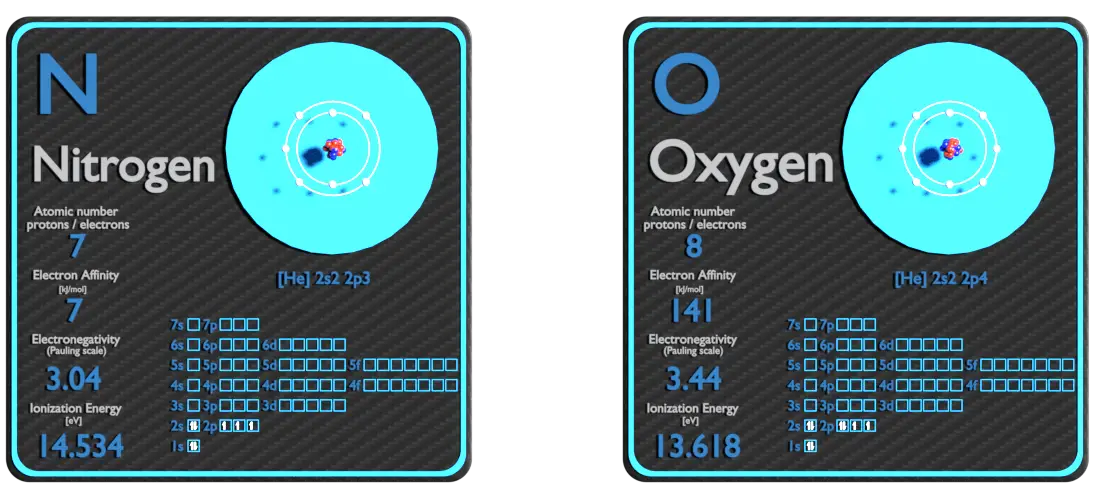
This article contains comparison of key thermal and atomic properties of nitrogen and oxygen, two comparable chemical elements from the periodic table. It also contains basic descriptions and applications of both elements. Nitrogen vs Oxygen.

nitrogen and oxygen - comparison

Compare nitrogen with another element

Hydrogen - Properties - Price - Applications - Production

Helium - Properties - Price - Applications - Production

Lithium - Properties - Price - Applications - Production

Beryllium - Properties - Price - Applications - Production

Carbon - Properties - Price - Applications - Production

Oxygen - Properties - Price - Applications - Production

Phosphorus - Properties - Price - Applications - Production

Compare oxygen with another element

Sodium - Properties - Price - Applications - Production

Fluorine - Properties - Price - Applications - Production

Magnesium - Properties - Price - Applications - Production

Aluminium - Properties - Price - Applications - Production

Silicon - Properties - Price - Applications - Production

Sulfur - Properties - Price - Applications - Production

Chlorine - Properties - Price - Applications - Production

Potassium - Properties - Price - Applications - Production

Calcium - Properties - Price - Applications - Production

Iron - Properties - Price - Applications - Production

Hydrogen - Properties - Price - Applications - Production

Helium - Properties - Price - Applications - Production

Lithium - Properties - Price - Applications - Production

Beryllium - Properties - Price - Applications - Production

Boron - Properties - Price - Applications - Production

Carbon - Properties - Price - Applications - Production

Nitrogen and Oxygen – About Elements

Nitrogen

Nitrogen is a colourless, odourless unreactive gas that forms about 78% of the earth’s atmosphere. Liquid nitrogen (made by distilling liquid air) boils at 77.4 kelvins (−195.8°C) and is used as a coolant.

Oxygen

Oxygen is a colourless, odourless reactive gas, the chemical element of atomic number 8 and the life-supporting component of the air. It is a member of the chalcogen group on the periodic table, a highly reactive nonmetal, and an oxidizing agent that readily forms oxides with most elements as well as with other compounds. By mass, oxygen is the third-most abundant element in the universe, after hydrogen and helium.

Nitrogen in Periodic Table

Oxygen in Periodic Table

Source: www.luciteria.com

Nitrogen and Oxygen – Applications

Nitrogen

Nitrogen in various chemical forms plays a major role in large number of environmental issues. The applications of nitrogen compounds are naturally extremely widely varied due to the huge size of this class: hence, only applications of pure nitrogen itself will be considered here. Two-thirds of nitrogen produced by industry is sold as the gas and the remaining one-third as the liquid. In metallurgy, nitriding is a case hardening process in which the surface nitrogen concentration of a ferrous is increased by diffusion from the surrounding environment to create case-hardened surface. Nitriding produces hard, highly wear-resistant surface (shallow case depths) of product with fair capacity for contact load, good bending fatigue strength and excellent resistance to seizure. Synthetically produced ammonia and nitrates are key industrial fertilisers, and fertiliser nitrates are key pollutants in the eutrophication of water systems. Apart from its use in fertilisers and energy-stores, nitrogen is a constituent of organic compounds as diverse as Kevlar used in high-strength fabric and cyanoacrylate used in superglue.

Oxygen

Common uses of oxygen include production of steel, plastics and textiles, brazing, welding and cutting of steels and other metals, rocket propellant, oxygen therapy, and life support systems in aircraft, submarines, spaceflight and diving. Smelting of iron ore into steel consumes 55% of commercially produced oxygen. In this process, oxygen is injected through a high-pressure lance into molten iron, which removes sulfur impurities and excess carbon as the respective oxides, sulfur dioxide and carbon dioxide. Uptake of oxygen from the air is the essential purpose of respiration, so oxygen supplementation is used in medicine. Treatment not only increases oxygen levels in the patient’s blood, but has the secondary effect of decreasing resistance to blood flow in many types of diseased lungs, easing work load on the heart.

Nitrogen and Oxygen – Comparison in Table

Element Nitrogen Oxygen
Density 0.00125 g/cm3 0.00143 g/cm3
Ultimate Tensile Strength N/A N/A
Yield Strength N/A N/A
Young’s Modulus of Elasticity N/A N/A
Mohs Scale N/A N/A
Brinell Hardness N/A N/A
Vickers Hardness N/A N/A
Melting Point -209.9 °C -218.4 °C
Boiling Point -195.8 °C -183 °C
Thermal Conductivity 0.02598 W/mK 0.02674 W/mK
Thermal Expansion Coefficient N/A N/A
Specific Heat 1.04 J/g K 0.92 J/g K
Heat of Fusion (N2) 0.7204 kJ/mol (O2) 0.444 kJ/mol
Heat of Vaporization (N2) 5.56 kJ/mol (O2) 6.82 kJ/mol


Carbon and Bromine – Comparison – Properties

This article contains comparison of key thermal and atomic properties of carbon and bromine, two comparable chemical elements from the periodic table. It also contains basic descriptions and applications of both elements. Carbon vs Bromine.

carbon and bromine - comparison

Compare carbon with another element

Hydrogen - Properties - Price - Applications - Production

Boron - Properties - Price - Applications - Production

Oxygen - Properties - Price - Applications - Production

Aluminium - Properties - Price - Applications - Production

Nitrogen - Properties - Price - Applications - Production

Iron - Properties - Price - Applications - Production

Chlorine - Properties - Price - Applications - Production

Bromine - Properties - Price - Applications - Production

Compare bromine with another element

Carbon - Properties - Price - Applications - Production

Magnesium - Properties - Price - Applications - Production

Chlorine - Properties - Price - Applications - Production

Potassium - Properties - Price - Applications - Production

Iodine - Properties - Price - Applications - Production

Carbon and Bromine – About Elements

Carbon

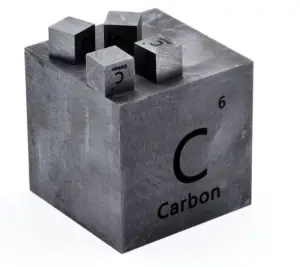
It is nonmetallic and tetravalent—making four electrons available to form covalent chemical bonds. Carbon is one of the few elements known since antiquity. Carbon is the 15th most abundant element in the Earth’s crust, and the fourth most abundant element in the universe by mass after hydrogen, helium, and oxygen.

Bromine

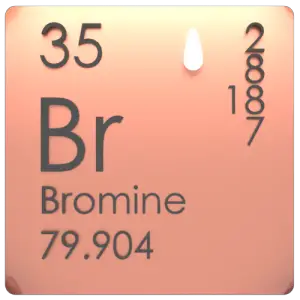
Bromine is the third-lightest halogen, and is a fuming red-brown liquid at room temperature that evaporates readily to form a similarly coloured gas. Its properties are thus intermediate between those of chlorine and iodine.

Carbon in Periodic Table

Bromine in Periodic Table

Source: www.luciteria.com

Carbon and Bromine – Applications

Carbon

The major economic use of carbon other than food and wood is in the form of hydrocarbons, most notably the fossil fuel methane gas and crude oil (petroleum). Graphite and diamonds are two important allotropes of carbon that have wide applications. The uses of carbon and its compounds are extremely varied. It can form alloys with iron, of which the most common is carbon steel. Carbon is a non-metallic element, which is an important alloying element in all ferrous metal based materials. Carbon is always present in metallic alloys, i.e. in all grades of stainless steel and heat resistant alloys. Carbon is a very strong austenitizer and increases the strength of steel. In fact, it is the principal hardening element and is essential to the formation of cementite, Fe3C, pearlite, spheroidite, and iron-carbon martensite. Adding a small amount of non-metallic carbon to iron trades its great ductility for the greater strength. Graphite is combined with clays to form the ‘lead’ used in pencils used for writing and drawing. It is also used as a lubricant and a pigment, as a molding material in glass manufacture, in electrodes for dry batteries and in electroplating and electroforming, in brushes for electric motors and as a neutron moderator in nuclear reactors. Charcoal has been used since earliest times for a large range of purposes including art and medicine, but by far its most important use has been as a metallurgical fuel. Carbon fibers are used where low weight, high stiffness, high conductivity, or where the look of the carbon fiber weave desired.

Bromine

A wide variety of organobromine compounds are used in industry. Some are prepared from bromine and others are prepared from hydrogen bromide, which is obtained by burning hydrogen in bromine. Brominated flame retardants represent a commodity of growing importance, and make up the largest commercial use of bromine. One of the major uses of bromine is a water purifier/disinfectant, as an alternative to chlorine. Bromine compounds are effective pesticides, used both as soil fumigants in agriculture, particularly fruit-growing, and as a fumigant to prevent pests from attacking stored grain and other produce.

Carbon and Bromine – Comparison in Table

Element Carbon Bromine
Density 2.26 g/cm3 3.12 g/cm3
Ultimate Tensile Strength 15 MPa (graphite); 3500 MPa (carbon fiber) N/A
Yield Strength N/A N/A
Young’s Modulus of Elasticity 4.1 GPa (graphite); 228 GPa (carbon fiber) N/A
Mohs Scale 0.8 (graphite) N/A
Brinell Hardness N/A N/A
Vickers Hardness N/A N/A
Melting Point 4099 °C -7.3 °C
Boiling Point 4527 °C 59 °C
Thermal Conductivity 129 W/mK 0.122 W/mK
Thermal Expansion Coefficient 0.8 µm/mK N/A
Specific Heat 0.71 J/g K 0.473 J/g K
Heat of Fusion N/A 5.286 kJ/mol
Heat of Vaporization 355.8 kJ/mol 15.438 kJ/mol


Carbon and Chlorine – Comparison – Properties

This article contains comparison of key thermal and atomic properties of carbon and chlorine, two comparable chemical elements from the periodic table. It also contains basic descriptions and applications of both elements. Carbon vs Chlorine.

carbon and chlorine - comparison

Compare carbon with another element

Hydrogen - Properties - Price - Applications - Production

Boron - Properties - Price - Applications - Production

Oxygen - Properties - Price - Applications - Production

Aluminium - Properties - Price - Applications - Production

Nitrogen - Properties - Price - Applications - Production

Iron - Properties - Price - Applications - Production

Chlorine - Properties - Price - Applications - Production

Bromine - Properties - Price - Applications - Production

Compare chlorine with another element

Beryllium - Properties - Price - Applications - Production

Boron - Properties - Price - Applications - Production

Carbon - Properties - Price - Applications - Production

Oxygen - Properties - Price - Applications - Production

Fluorine - Properties - Price - Applications - Production

Sodium - Properties - Price - Applications - Production

Magnesium - Properties - Price - Applications - Production

Aluminium - Properties - Price - Applications - Production

Calcium - Properties - Price - Applications - Production

Caesium - Properties - Price - Applications - Production

Barium - Properties - Price - Applications - Production

Copper - Properties - Price - Applications - Production

Silver - Properties - Price - Applications - Production

Iron - Properties - Price - Applications - Production

Bromine - Properties - Price - Applications - Production

Iodine - Properties - Price - Applications - Production

Carbon and Chlorine – About Elements

Carbon

It is nonmetallic and tetravalent—making four electrons available to form covalent chemical bonds. Carbon is one of the few elements known since antiquity. Carbon is the 15th most abundant element in the Earth’s crust, and the fourth most abundant element in the universe by mass after hydrogen, helium, and oxygen.

Chlorine

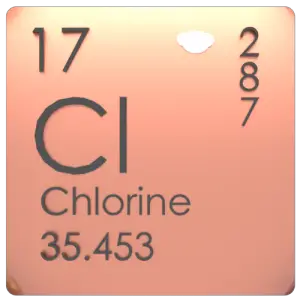
Chlorine is a yellow-green gas at room temperature. It is an extremely reactive element and a strong oxidising agent: among the elements, it has the highest electron affinity and the third-highest electronegativity, behind only oxygen and fluorine.

Carbon in Periodic Table

Chlorine in Periodic Table

Source: www.luciteria.com

Carbon and Chlorine – Applications

Carbon

The major economic use of carbon other than food and wood is in the form of hydrocarbons, most notably the fossil fuel methane gas and crude oil (petroleum). Graphite and diamonds are two important allotropes of carbon that have wide applications. The uses of carbon and its compounds are extremely varied. It can form alloys with iron, of which the most common is carbon steel. Carbon is a non-metallic element, which is an important alloying element in all ferrous metal based materials. Carbon is always present in metallic alloys, i.e. in all grades of stainless steel and heat resistant alloys. Carbon is a very strong austenitizer and increases the strength of steel. In fact, it is the principal hardening element and is essential to the formation of cementite, Fe3C, pearlite, spheroidite, and iron-carbon martensite. Adding a small amount of non-metallic carbon to iron trades its great ductility for the greater strength. Graphite is combined with clays to form the ‘lead’ used in pencils used for writing and drawing. It is also used as a lubricant and a pigment, as a molding material in glass manufacture, in electrodes for dry batteries and in electroplating and electroforming, in brushes for electric motors and as a neutron moderator in nuclear reactors. Charcoal has been used since earliest times for a large range of purposes including art and medicine, but by far its most important use has been as a metallurgical fuel. Carbon fibers are used where low weight, high stiffness, high conductivity, or where the look of the carbon fiber weave desired.

Chlorine

Chlorine is used in the manufacture of a wide range of consumer products, about two-thirds of them organic chemicals such as polyvinyl chloride (PVC), many intermediates for the production of plastics, and other end products which do not contain the element. As a common disinfectant, elemental chlorine and chlorine-generating compounds are used more directly in swimming pools to keep them sanitary. While perhaps best known for its role in providing clean drinking water, chlorine chemistry also helps provide energy-efficient building materials, electronics, fiber optics, solar energy cells, 93 percent of life-saving pharmaceuticals, 86 percent of crop protection compounds, medical plastics, and much more.

Carbon and Chlorine – Comparison in Table

Element Carbon Chlorine
Density 2.26 g/cm3 0.0032 g/cm3
Ultimate Tensile Strength 15 MPa (graphite); 3500 MPa (carbon fiber) N/A
Yield Strength N/A N/A
Young’s Modulus of Elasticity 4.1 GPa (graphite); 228 GPa (carbon fiber) N/A
Mohs Scale 0.8 (graphite) N/A
Brinell Hardness N/A N/A
Vickers Hardness N/A N/A
Melting Point 4099 °C -101 °C
Boiling Point 4527 °C -34.6 °C
Thermal Conductivity 129 W/mK 0.0089 W/mK
Thermal Expansion Coefficient 0.8 µm/mK N/A
Specific Heat 0.71 J/g K 0.48 J/g K
Heat of Fusion N/A 3.23 kJ/mol
Heat of Vaporization 355.8 kJ/mol 10.2 kJ/mol


Carbon and Iron – Comparison – Properties

This article contains comparison of key thermal and atomic properties of carbon and iron, two comparable chemical elements from the periodic table. It also contains basic descriptions and applications of both elements. Carbon vs Iron.

carbon and iron - comparison

Compare carbon with another element

Hydrogen - Properties - Price - Applications - Production

Boron - Properties - Price - Applications - Production

Oxygen - Properties - Price - Applications - Production

Aluminium - Properties - Price - Applications - Production

Nitrogen - Properties - Price - Applications - Production

Iron - Properties - Price - Applications - Production

Chlorine - Properties - Price - Applications - Production

Bromine - Properties - Price - Applications - Production

Compare iron with another element

Carbon - Properties - Price - Applications - Production

Oxygen - Properties - Price - Applications - Production

Fluorine - Properties - Price - Applications - Production

Magnesium - Properties - Price - Applications - Production

Aluminium - Properties - Price - Applications - Production

Chlorine - Properties - Price - Applications - Production

Potassium - Properties - Price - Applications - Production

Calcium - Properties - Price - Applications - Production

Chromium - Properties - Price - Applications - Production

Manganese - Properties - Price - Applications - Production

Cobalt - Properties - Price - Applications - Production

Nickel - Properties - Price - Applications - Production

Copper - Properties - Price - Applications - Production

Zinc - Properties - Price - Applications - Production

Zirconium - Properties - Price - Applications - Production

Lead - Properties - Price - Applications - Production

Carbon and Iron – About Elements

Carbon

It is nonmetallic and tetravalent—making four electrons available to form covalent chemical bonds. Carbon is one of the few elements known since antiquity. Carbon is the 15th most abundant element in the Earth’s crust, and the fourth most abundant element in the universe by mass after hydrogen, helium, and oxygen.

Iron

Iron is a metal in the first transition series. It is by mass the most common element on Earth, forming much of Earth’s outer and inner core. It is the fourth most common element in the Earth’s crust. Its abundance in rocky planets like Earth is due to its abundant production by fusion in high-mass stars.

Carbon in Periodic Table

Iron in Periodic Table

Source: www.luciteria.com

Carbon and Iron – Applications

Carbon

The major economic use of carbon other than food and wood is in the form of hydrocarbons, most notably the fossil fuel methane gas and crude oil (petroleum). Graphite and diamonds are two important allotropes of carbon that have wide applications. The uses of carbon and its compounds are extremely varied. It can form alloys with iron, of which the most common is carbon steel. Carbon is a non-metallic element, which is an important alloying element in all ferrous metal based materials. Carbon is always present in metallic alloys, i.e. in all grades of stainless steel and heat resistant alloys. Carbon is a very strong austenitizer and increases the strength of steel. In fact, it is the principal hardening element and is essential to the formation of cementite, Fe3C, pearlite, spheroidite, and iron-carbon martensite. Adding a small amount of non-metallic carbon to iron trades its great ductility for the greater strength. Graphite is combined with clays to form the ‘lead’ used in pencils used for writing and drawing. It is also used as a lubricant and a pigment, as a molding material in glass manufacture, in electrodes for dry batteries and in electroplating and electroforming, in brushes for electric motors and as a neutron moderator in nuclear reactors. Charcoal has been used since earliest times for a large range of purposes including art and medicine, but by far its most important use has been as a metallurgical fuel. Carbon fibers are used where low weight, high stiffness, high conductivity, or where the look of the carbon fiber weave desired.

Iron

Iron is used in numerous sectors such as electronics, manufacturing, automotive, and construction and building. Iron is the most widely used of all the metals, accounting for over 90% of worldwide metal produc0tion. Its low cost and high strength often make it the material of choice material to withstand stress or transmit forces, such as the construction of machinery and machine tools, rails, automobiles, ship hulls, concrete reinforcing bars, and the load-carrying framework of buildings. Since pure iron is quite soft, it is most commonly combined with alloying elements to make steel. Steels are iron–carbon alloys that may contain appreciable concentrations of other alloying elements. Adding a small amount of non-metallic carbon to iron trades its great ductility for the greater strength. Due to its very-high strength, but still substantial toughness, and its ability to be greatly altered by heat treatment, steel is one of the most useful and common ferrous alloy in modern use. There are thousands of alloys that have different compositions and/or heat treatments. The mechanical properties are sensitive to the content of carbon, which is normally less than 1.0 wt%.

Carbon and Iron – Comparison in Table

Element Carbon Iron
Density 2.26 g/cm3 7.874 g/cm3
Ultimate Tensile Strength 15 MPa (graphite); 3500 MPa (carbon fiber) 540 MPa 
Yield Strength N/A 50 MPa 
Young’s Modulus of Elasticity 4.1 GPa (graphite); 228 GPa (carbon fiber) 211 GPa
Mohs Scale 0.8 (graphite) 4.5
Brinell Hardness N/A 490 MPa
Vickers Hardness N/A 608 MPa
Melting Point 4099 °C 1538 °C
Boiling Point 4527 °C 2861 °C
Thermal Conductivity 129 W/mK 80.2 W/mK
Thermal Expansion Coefficient 0.8 µm/mK 11.8 µm/mK
Specific Heat 0.71 J/g K 0.44 J/g K
Heat of Fusion N/A 13.8 kJ/mol
Heat of Vaporization 355.8 kJ/mol 349.6 kJ/mol


Carbon and Aluminium – Comparison – Properties

This article contains comparison of key thermal and atomic properties of carbon and aluminium, two comparable chemical elements from the periodic table. It also contains basic descriptions and applications of both elements. Carbon vs Aluminium.

carbon and aluminium - comparison

Compare carbon with another element

Hydrogen - Properties - Price - Applications - Production

Boron - Properties - Price - Applications - Production

Oxygen - Properties - Price - Applications - Production

Aluminium - Properties - Price - Applications - Production

Nitrogen - Properties - Price - Applications - Production

Iron - Properties - Price - Applications - Production

Chlorine - Properties - Price - Applications - Production

Bromine - Properties - Price - Applications - Production

Compare aluminium with another element

Hydrogen - Properties - Price - Applications - Production

Lithium - Properties - Price - Applications - Production

Beryllium - Properties - Price - Applications - Production

Carbon - Properties - Price - Applications - Production

Oxygen - Properties - Price - Applications - Production

Fluorine - Properties - Price - Applications - Production

Sodium - Properties - Price - Applications - Production

Magnesium - Properties - Price - Applications - Production

Copper - Properties - Price - Applications - Production

Mercury - Properties - Price - Applications - Production

Potassium - Properties - Price - Applications - Production

Silicon - Properties - Price - Applications - Production

Chlorine - Properties - Price - Applications - Production

Titanium - Properties - Price - Applications - Production

Iron - Properties - Price - Applications - Production

Gallium - Properties - Price - Applications - Production

Carbon and Aluminium – About Elements

Carbon

It is nonmetallic and tetravalent—making four electrons available to form covalent chemical bonds. Carbon is one of the few elements known since antiquity. Carbon is the 15th most abundant element in the Earth’s crust, and the fourth most abundant element in the universe by mass after hydrogen, helium, and oxygen.

Aluminium

Aluminium is a silvery-white, soft, nonmagnetic, ductile metal in the boron group. By mass, aluminium makes up about 8% of the Earth’s crust; it is the third most abundant element after oxygen and silicon and the most abundant metal in the crust, though it is less common in the mantle below.

Carbon in Periodic Table

Aluminium in Periodic Table

Source: www.luciteria.com

Carbon and Aluminium – Applications

Carbon

The major economic use of carbon other than food and wood is in the form of hydrocarbons, most notably the fossil fuel methane gas and crude oil (petroleum). Graphite and diamonds are two important allotropes of carbon that have wide applications. The uses of carbon and its compounds are extremely varied. It can form alloys with iron, of which the most common is carbon steel. Carbon is a non-metallic element, which is an important alloying element in all ferrous metal based materials. Carbon is always present in metallic alloys, i.e. in all grades of stainless steel and heat resistant alloys. Carbon is a very strong austenitizer and increases the strength of steel. In fact, it is the principal hardening element and is essential to the formation of cementite, Fe3C, pearlite, spheroidite, and iron-carbon martensite. Adding a small amount of non-metallic carbon to iron trades its great ductility for the greater strength. Graphite is combined with clays to form the ‘lead’ used in pencils used for writing and drawing. It is also used as a lubricant and a pigment, as a molding material in glass manufacture, in electrodes for dry batteries and in electroplating and electroforming, in brushes for electric motors and as a neutron moderator in nuclear reactors. Charcoal has been used since earliest times for a large range of purposes including art and medicine, but by far its most important use has been as a metallurgical fuel. Carbon fibers are used where low weight, high stiffness, high conductivity, or where the look of the carbon fiber weave desired.

Aluminium

Aluminium and its alloys are used widely in aerospace, automotive, architectural, lithographic, packaging, electrical and electronic applications. It is the prime material of construction for the aircraft industry throughout most of its history. About 70% of commercial civil aircraft airframes are made from aluminium alloys, and without aluminium civil aviation would not be economically viable. Automotive industry now includes aluminium as engine castings, wheels, radiators and increasingly as body parts. 6111 aluminium and 2008 aluminium alloy are extensively used for external automotive body panels. Cylinder blocks and crankcases are often cast made of aluminium alloys.

Carbon and Aluminium – Comparison in Table

Element Carbon Aluminium
Density 2.26 g/cm3 2.7 g/cm3
Ultimate Tensile Strength 15 MPa (graphite); 3500 MPa (carbon fiber) 90 MPa (pure), 600 MPa (alloys)
Yield Strength N/A 11 MPa (pure), 400 MPa (alloys)
Young’s Modulus of Elasticity 4.1 GPa (graphite); 228 GPa (carbon fiber) 70 GPa
Mohs Scale 0.8 (graphite) 2.8
Brinell Hardness N/A 240 MPa
Vickers Hardness N/A 167 MPa
Melting Point 4099 °C 660 °C
Boiling Point 4527 °C 2467 °C
Thermal Conductivity 129 W/mK 237 W/mK
Thermal Expansion Coefficient 0.8 µm/mK 23.1 µm/mK
Specific Heat 0.71 J/g K 0.9 J/g K
Heat of Fusion N/A 10.79 kJ/mol
Heat of Vaporization 355.8 kJ/mol 293.4 kJ/mol


Carbon and Oxygen – Comparison – Properties

This article contains comparison of key thermal and atomic properties of carbon and oxygen, two comparable chemical elements from the periodic table. It also contains basic descriptions and applications of both elements. Carbon vs Oxygen.

carbon and oxygen - comparison

Compare carbon with another element

Hydrogen - Properties - Price - Applications - Production

Boron - Properties - Price - Applications - Production

Oxygen - Properties - Price - Applications - Production

Aluminium - Properties - Price - Applications - Production

Nitrogen - Properties - Price - Applications - Production

Iron - Properties - Price - Applications - Production

Chlorine - Properties - Price - Applications - Production

Bromine - Properties - Price - Applications - Production

Compare oxygen with another element

Sodium - Properties - Price - Applications - Production

Fluorine - Properties - Price - Applications - Production

Magnesium - Properties - Price - Applications - Production

Aluminium - Properties - Price - Applications - Production

Silicon - Properties - Price - Applications - Production

Sulfur - Properties - Price - Applications - Production

Chlorine - Properties - Price - Applications - Production

Potassium - Properties - Price - Applications - Production

Calcium - Properties - Price - Applications - Production

Iron - Properties - Price - Applications - Production

Hydrogen - Properties - Price - Applications - Production

Helium - Properties - Price - Applications - Production

Lithium - Properties - Price - Applications - Production

Beryllium - Properties - Price - Applications - Production

Boron - Properties - Price - Applications - Production

Carbon - Properties - Price - Applications - Production

Carbon and Oxygen – About Elements

Carbon

It is nonmetallic and tetravalent—making four electrons available to form covalent chemical bonds. Carbon is one of the few elements known since antiquity. Carbon is the 15th most abundant element in the Earth’s crust, and the fourth most abundant element in the universe by mass after hydrogen, helium, and oxygen.

Oxygen

Oxygen is a colourless, odourless reactive gas, the chemical element of atomic number 8 and the life-supporting component of the air. It is a member of the chalcogen group on the periodic table, a highly reactive nonmetal, and an oxidizing agent that readily forms oxides with most elements as well as with other compounds. By mass, oxygen is the third-most abundant element in the universe, after hydrogen and helium.

Carbon in Periodic Table

Oxygen in Periodic Table

Source: www.luciteria.com

Carbon and Oxygen – Applications

Carbon

The major economic use of carbon other than food and wood is in the form of hydrocarbons, most notably the fossil fuel methane gas and crude oil (petroleum). Graphite and diamonds are two important allotropes of carbon that have wide applications. The uses of carbon and its compounds are extremely varied. It can form alloys with iron, of which the most common is carbon steel. Carbon is a non-metallic element, which is an important alloying element in all ferrous metal based materials. Carbon is always present in metallic alloys, i.e. in all grades of stainless steel and heat resistant alloys. Carbon is a very strong austenitizer and increases the strength of steel. In fact, it is the principal hardening element and is essential to the formation of cementite, Fe3C, pearlite, spheroidite, and iron-carbon martensite. Adding a small amount of non-metallic carbon to iron trades its great ductility for the greater strength. Graphite is combined with clays to form the ‘lead’ used in pencils used for writing and drawing. It is also used as a lubricant and a pigment, as a molding material in glass manufacture, in electrodes for dry batteries and in electroplating and electroforming, in brushes for electric motors and as a neutron moderator in nuclear reactors. Charcoal has been used since earliest times for a large range of purposes including art and medicine, but by far its most important use has been as a metallurgical fuel. Carbon fibers are used where low weight, high stiffness, high conductivity, or where the look of the carbon fiber weave desired.

Oxygen

Common uses of oxygen include production of steel, plastics and textiles, brazing, welding and cutting of steels and other metals, rocket propellant, oxygen therapy, and life support systems in aircraft, submarines, spaceflight and diving. Smelting of iron ore into steel consumes 55% of commercially produced oxygen. In this process, oxygen is injected through a high-pressure lance into molten iron, which removes sulfur impurities and excess carbon as the respective oxides, sulfur dioxide and carbon dioxide. Uptake of oxygen from the air is the essential purpose of respiration, so oxygen supplementation is used in medicine. Treatment not only increases oxygen levels in the patient’s blood, but has the secondary effect of decreasing resistance to blood flow in many types of diseased lungs, easing work load on the heart.

Carbon and Oxygen – Comparison in Table

Element Carbon Oxygen
Density 2.26 g/cm3 0.00143 g/cm3
Ultimate Tensile Strength 15 MPa (graphite); 3500 MPa (carbon fiber) N/A
Yield Strength N/A N/A
Young’s Modulus of Elasticity 4.1 GPa (graphite); 228 GPa (carbon fiber) N/A
Mohs Scale 0.8 (graphite) N/A
Brinell Hardness N/A N/A
Vickers Hardness N/A N/A
Melting Point 4099 °C -218.4 °C
Boiling Point 4527 °C -183 °C
Thermal Conductivity 129 W/mK 0.02674 W/mK
Thermal Expansion Coefficient 0.8 µm/mK N/A
Specific Heat 0.71 J/g K 0.92 J/g K
Heat of Fusion N/A (O2) 0.444 kJ/mol
Heat of Vaporization 355.8 kJ/mol (O2) 6.82 kJ/mol


Carbon and Nitrogen – Comparison – Properties

This article contains comparison of key thermal and atomic properties of carbon and nitrogen, two comparable chemical elements from the periodic table. It also contains basic descriptions and applications of both elements. Carbon vs Nitrogen.

carbon and nitrogen - comparison

Compare carbon with another element

Hydrogen - Properties - Price - Applications - Production

Boron - Properties - Price - Applications - Production

Oxygen - Properties - Price - Applications - Production

Aluminium - Properties - Price - Applications - Production

Nitrogen - Properties - Price - Applications - Production

Iron - Properties - Price - Applications - Production

Chlorine - Properties - Price - Applications - Production

Bromine - Properties - Price - Applications - Production

Compare nitrogen with another element

Hydrogen - Properties - Price - Applications - Production

Helium - Properties - Price - Applications - Production

Lithium - Properties - Price - Applications - Production

Beryllium - Properties - Price - Applications - Production

Carbon - Properties - Price - Applications - Production

Oxygen - Properties - Price - Applications - Production

Phosphorus - Properties - Price - Applications - Production

Carbon and Nitrogen – About Elements

Carbon

It is nonmetallic and tetravalent—making four electrons available to form covalent chemical bonds. Carbon is one of the few elements known since antiquity. Carbon is the 15th most abundant element in the Earth’s crust, and the fourth most abundant element in the universe by mass after hydrogen, helium, and oxygen.

Nitrogen

Nitrogen is a colourless, odourless unreactive gas that forms about 78% of the earth’s atmosphere. Liquid nitrogen (made by distilling liquid air) boils at 77.4 kelvins (−195.8°C) and is used as a coolant.

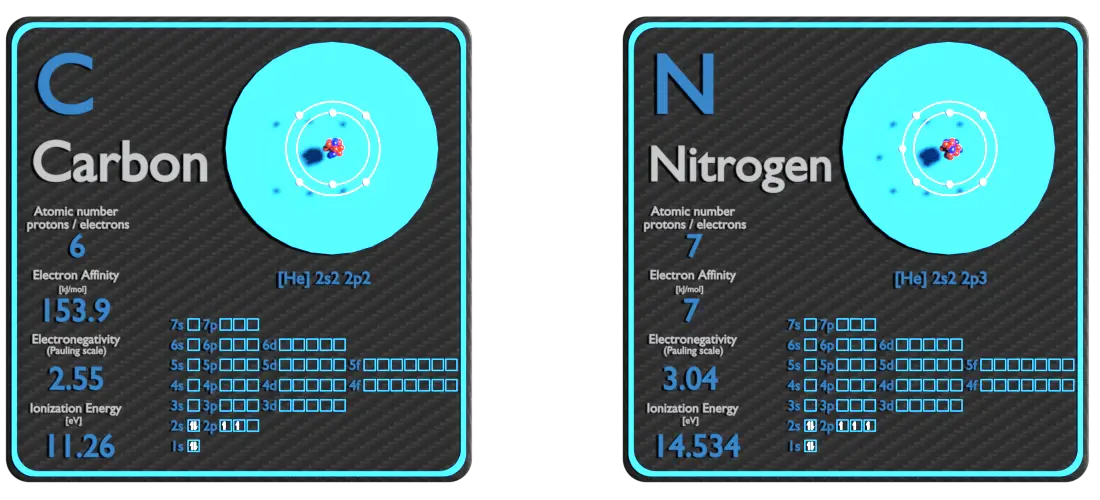
Carbon in Periodic Table

Nitrogen in Periodic Table

Source: www.luciteria.com

Carbon and Nitrogen – Applications

Carbon

The major economic use of carbon other than food and wood is in the form of hydrocarbons, most notably the fossil fuel methane gas and crude oil (petroleum). Graphite and diamonds are two important allotropes of carbon that have wide applications. The uses of carbon and its compounds are extremely varied. It can form alloys with iron, of which the most common is carbon steel. Carbon is a non-metallic element, which is an important alloying element in all ferrous metal based materials. Carbon is always present in metallic alloys, i.e. in all grades of stainless steel and heat resistant alloys. Carbon is a very strong austenitizer and increases the strength of steel. In fact, it is the principal hardening element and is essential to the formation of cementite, Fe3C, pearlite, spheroidite, and iron-carbon martensite. Adding a small amount of non-metallic carbon to iron trades its great ductility for the greater strength. Graphite is combined with clays to form the ‘lead’ used in pencils used for writing and drawing. It is also used as a lubricant and a pigment, as a molding material in glass manufacture, in electrodes for dry batteries and in electroplating and electroforming, in brushes for electric motors and as a neutron moderator in nuclear reactors. Charcoal has been used since earliest times for a large range of purposes including art and medicine, but by far its most important use has been as a metallurgical fuel. Carbon fibers are used where low weight, high stiffness, high conductivity, or where the look of the carbon fiber weave desired.

Nitrogen

Nitrogen in various chemical forms plays a major role in large number of environmental issues. The applications of nitrogen compounds are naturally extremely widely varied due to the huge size of this class: hence, only applications of pure nitrogen itself will be considered here. Two-thirds of nitrogen produced by industry is sold as the gas and the remaining one-third as the liquid. In metallurgy, nitriding is a case hardening process in which the surface nitrogen concentration of a ferrous is increased by diffusion from the surrounding environment to create case-hardened surface. Nitriding produces hard, highly wear-resistant surface (shallow case depths) of product with fair capacity for contact load, good bending fatigue strength and excellent resistance to seizure. Synthetically produced ammonia and nitrates are key industrial fertilisers, and fertiliser nitrates are key pollutants in the eutrophication of water systems. Apart from its use in fertilisers and energy-stores, nitrogen is a constituent of organic compounds as diverse as Kevlar used in high-strength fabric and cyanoacrylate used in superglue.

Carbon and Nitrogen – Comparison in Table

Element Carbon Nitrogen
Density 2.26 g/cm3 0.00125 g/cm3
Ultimate Tensile Strength 15 MPa (graphite); 3500 MPa (carbon fiber) N/A
Yield Strength N/A N/A
Young’s Modulus of Elasticity 4.1 GPa (graphite); 228 GPa (carbon fiber) N/A
Mohs Scale 0.8 (graphite) N/A
Brinell Hardness N/A N/A
Vickers Hardness N/A N/A
Melting Point 4099 °C -209.9 °C
Boiling Point 4527 °C -195.8 °C
Thermal Conductivity 129 W/mK 0.02598 W/mK
Thermal Expansion Coefficient 0.8 µm/mK N/A
Specific Heat 0.71 J/g K 1.04 J/g K
Heat of Fusion N/A (N2) 0.7204 kJ/mol
Heat of Vaporization 355.8 kJ/mol (N2) 5.56 kJ/mol