Facebook Instagram Youtube Twitter

Boron and Silicon – Comparison – Properties

This article contains comparison of key thermal and atomic properties of boron and silicon, two comparable chemical elements from the periodic table. It also contains basic descriptions and applications of both elements. Boron vs Silicon.

boron and silicon - comparison

Compare boron with another element

Oxygen - Properties - Price - Applications - Production

Nitrogen - Properties - Price - Applications - Production

Chlorine - Properties - Price - Applications - Production

Carbon - Properties - Price - Applications - Production

Silicon - Properties - Price - Applications - Production

Compare silicon with another element

Lithium - Properties - Price - Applications - Production

Boron - Properties - Price - Applications - Production

Oxygen - Properties - Price - Applications - Production

Sodium - Properties - Price - Applications - Production

Aluminium - Properties - Price - Applications - Production

Arsenic - Properties - Price - Applications - Production

Germanium - Properties - Price - Applications - Production

Copper - Properties - Price - Applications - Production

Boron and Silicon – About Elements

Boron

Significant concentrations of boron occur on the Earth in compounds known as the borate minerals. There are over 100 different borate minerals, but the most common are: borax, kernite, ulexite etc. Natural boron consists primarily of two stable isotopes, 11B (80.1%) and 10B (19.9%). In nuclear industry boron is commonly used as a neutron absorber due to the high neutron cross-section of isotope 10B. Its (n,alpha) reaction cross-section for thermal neutrons is about 3840 barns (for 0.025 eV neutron). Isotope 11B has absorption cross-section for thermal neutrons about 0.005 barns (for 0.025 eV neutron). Most of (n,alpha) reactions of thermal neutrons are 10B(n,alpha)7Li reactions accompanied by 0.48 MeV gamma emission.

Silicon

Silicon is a hard and brittle crystalline solid with a blue-grey metallic lustre, it is a tetravalent metalloid and semiconductor.

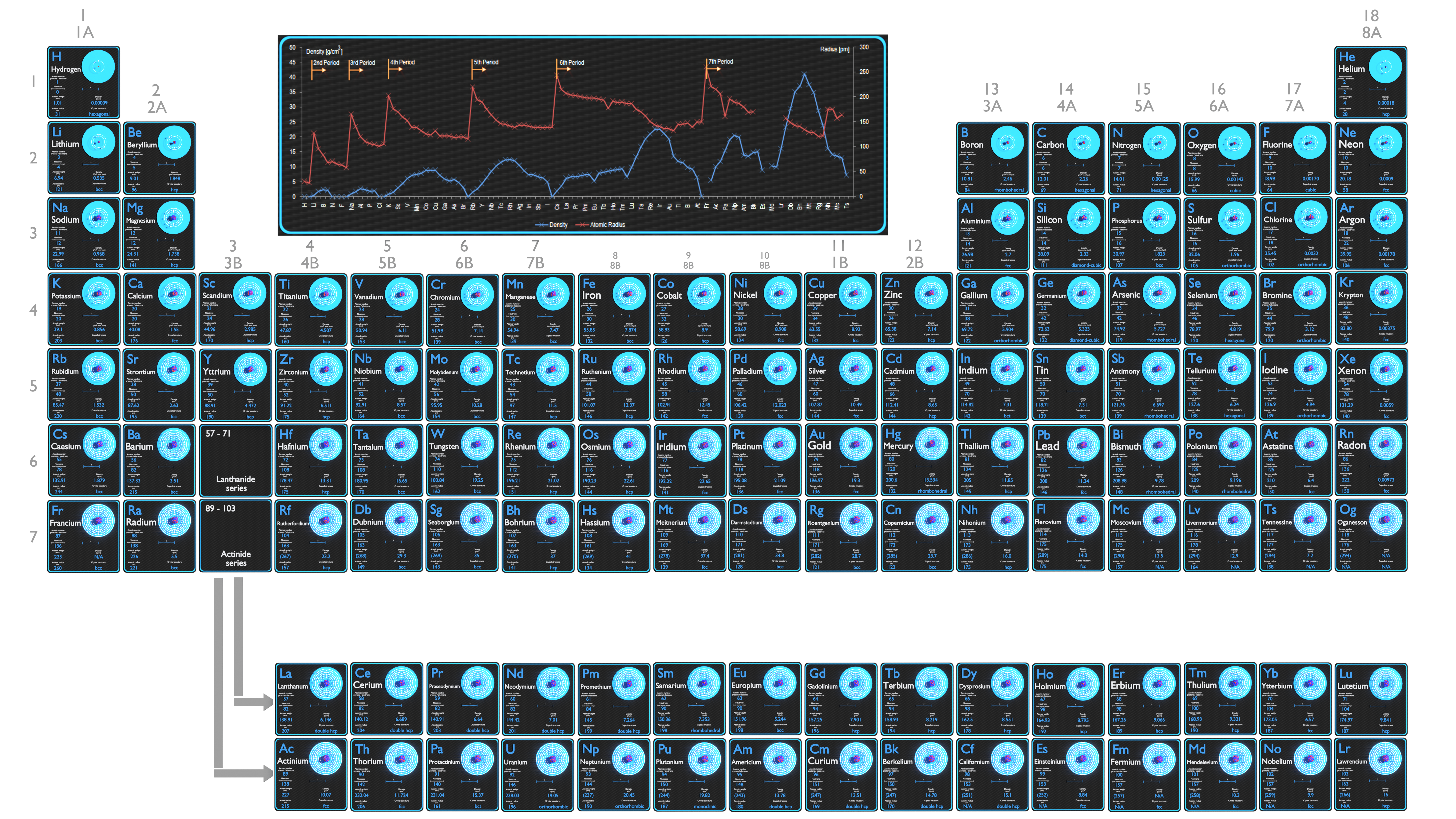
Boron in Periodic Table

Silicon in Periodic Table

Source: www.luciteria.com

Boron and Silicon – Applications

Boron

Nearly all boron ore extracted from the Earth is destined for refinement into boric acid and sodium tetraborate pentahydrate. In the United States, 70% of the boron is used for the production of glass and ceramics. The major global industrial-scale use of boron compounds (about 46% of end-use) is in production of glass fiber for boron-containing insulating and structural fiberglasses, especially in Asia. Boron is added to boron steels at the level of a few parts per million to increase hardenability. Higher percentages are added to steels used in the nuclear industry due to boron’s neutron absorption ability (e.g. pellets of Boron Carbide). Boron can also increase the surface hardness of steels and alloys through boriding. Boron carbide and cubic boron nitride powders are widely used as abrasives.

Silicon

Most silicon is used industrially without being purified, and indeed, often with comparatively little processing from its natural form. Silicon is a vital ingredient in aluminum, steel, and iron alloys. It is added as a fluxing agent for copper alloys. In the form of clay and sand, it is used to manufacture bricks and concrete; it is a valuable refractory material for high-temperature work, for example, molding sands for castings in foundry applications. Silica is used to make fire brick, a type of ceramic. Silicate minerals are also in whiteware ceramics, an important class of products usually containing various types of fired clay minerals (natural aluminium phyllosilicates). An example is porcelain, which is based on the silicate mineral kaolinite. Traditional glass (silica-based soda-lime glass) also functions in many of the same ways, and also is used for windows and containers. Hyperpure silicon metal and doped hyperpure silicon (doping with boron, phosphorous, gallium, or arsenic) are used in solar cells, transistors and semiconductors.

Boron and Silicon – Comparison in Table

Element Boron Silicon
Density 2.46 g/cm3 2.33 g/cm3
Ultimate Tensile Strength N/A 170 MPa
Yield Strength N/A 165 MPa
Young’s Modulus of Elasticity N/A 150 GPa
Mohs Scale 9.5 7
Brinell Hardness N/A N/A
Vickers Hardness 49000 MPa N/A
Melting Point 2079 °C 1410 °C
Boiling Point 3927 °C 3265 °C
Thermal Conductivity 27 W/mK 148 W/mK
Thermal Expansion Coefficient 5-7 µm/mK 2.6 µm/mK
Specific Heat 1.02 J/g K 0.71 J/g K
Heat of Fusion 50.2 kJ/mol 50.55 kJ/mol
Heat of Vaporization 508 kJ/mol 384.22 kJ/mol


Boron and Chlorine – Comparison – Properties

This article contains comparison of key thermal and atomic properties of boron and chlorine, two comparable chemical elements from the periodic table. It also contains basic descriptions and applications of both elements. Boron vs Chlorine.

boron and chlorine - comparison

Compare boron with another element

Oxygen - Properties - Price - Applications - Production

Nitrogen - Properties - Price - Applications - Production

Chlorine - Properties - Price - Applications - Production

Carbon - Properties - Price - Applications - Production

Silicon - Properties - Price - Applications - Production

Compare chlorine with another element

Beryllium - Properties - Price - Applications - Production

Boron - Properties - Price - Applications - Production

Carbon - Properties - Price - Applications - Production

Oxygen - Properties - Price - Applications - Production

Fluorine - Properties - Price - Applications - Production

Sodium - Properties - Price - Applications - Production

Magnesium - Properties - Price - Applications - Production

Aluminium - Properties - Price - Applications - Production

Calcium - Properties - Price - Applications - Production

Caesium - Properties - Price - Applications - Production

Barium - Properties - Price - Applications - Production

Copper - Properties - Price - Applications - Production

Silver - Properties - Price - Applications - Production

Iron - Properties - Price - Applications - Production

Bromine - Properties - Price - Applications - Production

Iodine - Properties - Price - Applications - Production

Boron and Chlorine – About Elements

Boron

Significant concentrations of boron occur on the Earth in compounds known as the borate minerals. There are over 100 different borate minerals, but the most common are: borax, kernite, ulexite etc. Natural boron consists primarily of two stable isotopes, 11B (80.1%) and 10B (19.9%). In nuclear industry boron is commonly used as a neutron absorber due to the high neutron cross-section of isotope 10B. Its (n,alpha) reaction cross-section for thermal neutrons is about 3840 barns (for 0.025 eV neutron). Isotope 11B has absorption cross-section for thermal neutrons about 0.005 barns (for 0.025 eV neutron). Most of (n,alpha) reactions of thermal neutrons are 10B(n,alpha)7Li reactions accompanied by 0.48 MeV gamma emission.

Chlorine

Chlorine is a yellow-green gas at room temperature. It is an extremely reactive element and a strong oxidising agent: among the elements, it has the highest electron affinity and the third-highest electronegativity, behind only oxygen and fluorine.

Boron in Periodic Table

Chlorine in Periodic Table

Source: www.luciteria.com

Boron and Chlorine – Applications

Boron

Nearly all boron ore extracted from the Earth is destined for refinement into boric acid and sodium tetraborate pentahydrate. In the United States, 70% of the boron is used for the production of glass and ceramics. The major global industrial-scale use of boron compounds (about 46% of end-use) is in production of glass fiber for boron-containing insulating and structural fiberglasses, especially in Asia. Boron is added to boron steels at the level of a few parts per million to increase hardenability. Higher percentages are added to steels used in the nuclear industry due to boron’s neutron absorption ability (e.g. pellets of Boron Carbide). Boron can also increase the surface hardness of steels and alloys through boriding. Boron carbide and cubic boron nitride powders are widely used as abrasives.

Chlorine

Chlorine is used in the manufacture of a wide range of consumer products, about two-thirds of them organic chemicals such as polyvinyl chloride (PVC), many intermediates for the production of plastics, and other end products which do not contain the element. As a common disinfectant, elemental chlorine and chlorine-generating compounds are used more directly in swimming pools to keep them sanitary. While perhaps best known for its role in providing clean drinking water, chlorine chemistry also helps provide energy-efficient building materials, electronics, fiber optics, solar energy cells, 93 percent of life-saving pharmaceuticals, 86 percent of crop protection compounds, medical plastics, and much more.

Boron and Chlorine – Comparison in Table

Element Boron Chlorine
Density 2.46 g/cm3 0.0032 g/cm3
Ultimate Tensile Strength N/A N/A
Yield Strength N/A N/A
Young’s Modulus of Elasticity N/A N/A
Mohs Scale 9.5 N/A
Brinell Hardness N/A N/A
Vickers Hardness 49000 MPa N/A
Melting Point 2079 °C -101 °C
Boiling Point 3927 °C -34.6 °C
Thermal Conductivity 27 W/mK 0.0089 W/mK
Thermal Expansion Coefficient 5-7 µm/mK N/A
Specific Heat 1.02 J/g K 0.48 J/g K
Heat of Fusion 50.2 kJ/mol 3.23 kJ/mol
Heat of Vaporization 508 kJ/mol 10.2 kJ/mol


Boron and Nitrogen – Comparison – Properties

This article contains comparison of key thermal and atomic properties of boron and nitrogen, two comparable chemical elements from the periodic table. It also contains basic descriptions and applications of both elements. Boron vs Nitrogen.

boron and nitrogen - comparison

Compare boron with another element

Oxygen - Properties - Price - Applications - Production

Nitrogen - Properties - Price - Applications - Production

Chlorine - Properties - Price - Applications - Production

Carbon - Properties - Price - Applications - Production

Silicon - Properties - Price - Applications - Production

Compare nitrogen with another element

Hydrogen - Properties - Price - Applications - Production

Helium - Properties - Price - Applications - Production

Lithium - Properties - Price - Applications - Production

Beryllium - Properties - Price - Applications - Production

Carbon - Properties - Price - Applications - Production

Oxygen - Properties - Price - Applications - Production

Phosphorus - Properties - Price - Applications - Production

Boron and Nitrogen – About Elements

Boron

Significant concentrations of boron occur on the Earth in compounds known as the borate minerals. There are over 100 different borate minerals, but the most common are: borax, kernite, ulexite etc. Natural boron consists primarily of two stable isotopes, 11B (80.1%) and 10B (19.9%). In nuclear industry boron is commonly used as a neutron absorber due to the high neutron cross-section of isotope 10B. Its (n,alpha) reaction cross-section for thermal neutrons is about 3840 barns (for 0.025 eV neutron). Isotope 11B has absorption cross-section for thermal neutrons about 0.005 barns (for 0.025 eV neutron). Most of (n,alpha) reactions of thermal neutrons are 10B(n,alpha)7Li reactions accompanied by 0.48 MeV gamma emission.

Nitrogen

Nitrogen is a colourless, odourless unreactive gas that forms about 78% of the earth’s atmosphere. Liquid nitrogen (made by distilling liquid air) boils at 77.4 kelvins (−195.8°C) and is used as a coolant.

Boron in Periodic Table

Nitrogen in Periodic Table

Source: www.luciteria.com

Boron and Nitrogen – Applications

Boron

Nearly all boron ore extracted from the Earth is destined for refinement into boric acid and sodium tetraborate pentahydrate. In the United States, 70% of the boron is used for the production of glass and ceramics. The major global industrial-scale use of boron compounds (about 46% of end-use) is in production of glass fiber for boron-containing insulating and structural fiberglasses, especially in Asia. Boron is added to boron steels at the level of a few parts per million to increase hardenability. Higher percentages are added to steels used in the nuclear industry due to boron’s neutron absorption ability (e.g. pellets of Boron Carbide). Boron can also increase the surface hardness of steels and alloys through boriding. Boron carbide and cubic boron nitride powders are widely used as abrasives.

Nitrogen

Nitrogen in various chemical forms plays a major role in large number of environmental issues. The applications of nitrogen compounds are naturally extremely widely varied due to the huge size of this class: hence, only applications of pure nitrogen itself will be considered here. Two-thirds of nitrogen produced by industry is sold as the gas and the remaining one-third as the liquid. In metallurgy, nitriding is a case hardening process in which the surface nitrogen concentration of a ferrous is increased by diffusion from the surrounding environment to create case-hardened surface. Nitriding produces hard, highly wear-resistant surface (shallow case depths) of product with fair capacity for contact load, good bending fatigue strength and excellent resistance to seizure. Synthetically produced ammonia and nitrates are key industrial fertilisers, and fertiliser nitrates are key pollutants in the eutrophication of water systems. Apart from its use in fertilisers and energy-stores, nitrogen is a constituent of organic compounds as diverse as Kevlar used in high-strength fabric and cyanoacrylate used in superglue.

Boron and Nitrogen – Comparison in Table

Element Boron Nitrogen
Density 2.46 g/cm3 0.00125 g/cm3
Ultimate Tensile Strength N/A N/A
Yield Strength N/A N/A
Young’s Modulus of Elasticity N/A N/A
Mohs Scale 9.5 N/A
Brinell Hardness N/A N/A
Vickers Hardness 49000 MPa N/A
Melting Point 2079 °C -209.9 °C
Boiling Point 3927 °C -195.8 °C
Thermal Conductivity 27 W/mK 0.02598 W/mK
Thermal Expansion Coefficient 5-7 µm/mK N/A
Specific Heat 1.02 J/g K 1.04 J/g K
Heat of Fusion 50.2 kJ/mol (N2) 0.7204 kJ/mol
Heat of Vaporization 508 kJ/mol (N2) 5.56 kJ/mol


Boron and Carbon – Comparison – Properties

This article contains comparison of key thermal and atomic properties of boron and carbon, two comparable chemical elements from the periodic table. It also contains basic descriptions and applications of both elements. Boron vs Carbon.

boron and carbon - comparison

Compare boron with another element

Oxygen - Properties - Price - Applications - Production

Nitrogen - Properties - Price - Applications - Production

Chlorine - Properties - Price - Applications - Production

Carbon - Properties - Price - Applications - Production

Silicon - Properties - Price - Applications - Production

Compare carbon with another element

Hydrogen - Properties - Price - Applications - Production

Boron - Properties - Price - Applications - Production

Oxygen - Properties - Price - Applications - Production

Aluminium - Properties - Price - Applications - Production

Nitrogen - Properties - Price - Applications - Production

Iron - Properties - Price - Applications - Production

Chlorine - Properties - Price - Applications - Production

Bromine - Properties - Price - Applications - Production

Boron and Carbon – About Elements

Boron

Significant concentrations of boron occur on the Earth in compounds known as the borate minerals. There are over 100 different borate minerals, but the most common are: borax, kernite, ulexite etc. Natural boron consists primarily of two stable isotopes, 11B (80.1%) and 10B (19.9%). In nuclear industry boron is commonly used as a neutron absorber due to the high neutron cross-section of isotope 10B. Its (n,alpha) reaction cross-section for thermal neutrons is about 3840 barns (for 0.025 eV neutron). Isotope 11B has absorption cross-section for thermal neutrons about 0.005 barns (for 0.025 eV neutron). Most of (n,alpha) reactions of thermal neutrons are 10B(n,alpha)7Li reactions accompanied by 0.48 MeV gamma emission.

Carbon

It is nonmetallic and tetravalent—making four electrons available to form covalent chemical bonds. Carbon is one of the few elements known since antiquity. Carbon is the 15th most abundant element in the Earth’s crust, and the fourth most abundant element in the universe by mass after hydrogen, helium, and oxygen.

Boron in Periodic Table

Carbon in Periodic Table

Source: www.luciteria.com

Boron and Carbon – Applications

Boron

Nearly all boron ore extracted from the Earth is destined for refinement into boric acid and sodium tetraborate pentahydrate. In the United States, 70% of the boron is used for the production of glass and ceramics. The major global industrial-scale use of boron compounds (about 46% of end-use) is in production of glass fiber for boron-containing insulating and structural fiberglasses, especially in Asia. Boron is added to boron steels at the level of a few parts per million to increase hardenability. Higher percentages are added to steels used in the nuclear industry due to boron’s neutron absorption ability (e.g. pellets of Boron Carbide). Boron can also increase the surface hardness of steels and alloys through boriding. Boron carbide and cubic boron nitride powders are widely used as abrasives.

Carbon

The major economic use of carbon other than food and wood is in the form of hydrocarbons, most notably the fossil fuel methane gas and crude oil (petroleum). Graphite and diamonds are two important allotropes of carbon that have wide applications. The uses of carbon and its compounds are extremely varied. It can form alloys with iron, of which the most common is carbon steel. Carbon is a non-metallic element, which is an important alloying element in all ferrous metal based materials. Carbon is always present in metallic alloys, i.e. in all grades of stainless steel and heat resistant alloys. Carbon is a very strong austenitizer and increases the strength of steel. In fact, it is the principal hardening element and is essential to the formation of cementite, Fe3C, pearlite, spheroidite, and iron-carbon martensite. Adding a small amount of non-metallic carbon to iron trades its great ductility for the greater strength. Graphite is combined with clays to form the ‘lead’ used in pencils used for writing and drawing. It is also used as a lubricant and a pigment, as a molding material in glass manufacture, in electrodes for dry batteries and in electroplating and electroforming, in brushes for electric motors and as a neutron moderator in nuclear reactors. Charcoal has been used since earliest times for a large range of purposes including art and medicine, but by far its most important use has been as a metallurgical fuel. Carbon fibers are used where low weight, high stiffness, high conductivity, or where the look of the carbon fiber weave desired.

Boron and Carbon – Comparison in Table

Element Boron Carbon
Density 2.46 g/cm3 2.26 g/cm3
Ultimate Tensile Strength N/A 15 MPa (graphite); 3500 MPa (carbon fiber)
Yield Strength N/A N/A
Young’s Modulus of Elasticity N/A 4.1 GPa (graphite); 228 GPa (carbon fiber)
Mohs Scale 9.5 0.8 (graphite)
Brinell Hardness N/A N/A
Vickers Hardness 49000 MPa N/A
Melting Point 2079 °C 4099 °C
Boiling Point 3927 °C 4527 °C
Thermal Conductivity 27 W/mK 129 W/mK
Thermal Expansion Coefficient 5-7 µm/mK 0.8 µm/mK
Specific Heat 1.02 J/g K 0.71 J/g K
Heat of Fusion 50.2 kJ/mol N/A
Heat of Vaporization 508 kJ/mol 355.8 kJ/mol


Boron and Oxygen – Comparison – Properties

This article contains comparison of key thermal and atomic properties of boron and oxygen, two comparable chemical elements from the periodic table. It also contains basic descriptions and applications of both elements. Boron vs Oxygen.

boron and oxygen - comparison

Compare boron with another element

Oxygen - Properties - Price - Applications - Production

Nitrogen - Properties - Price - Applications - Production

Chlorine - Properties - Price - Applications - Production

Carbon - Properties - Price - Applications - Production

Silicon - Properties - Price - Applications - Production

Compare oxygen with another element

Sodium - Properties - Price - Applications - Production

Fluorine - Properties - Price - Applications - Production

Magnesium - Properties - Price - Applications - Production

Aluminium - Properties - Price - Applications - Production

Silicon - Properties - Price - Applications - Production

Sulfur - Properties - Price - Applications - Production

Chlorine - Properties - Price - Applications - Production

Potassium - Properties - Price - Applications - Production

Calcium - Properties - Price - Applications - Production

Iron - Properties - Price - Applications - Production

Hydrogen - Properties - Price - Applications - Production

Helium - Properties - Price - Applications - Production

Lithium - Properties - Price - Applications - Production

Beryllium - Properties - Price - Applications - Production

Boron - Properties - Price - Applications - Production

Carbon - Properties - Price - Applications - Production

Boron and Oxygen – About Elements

Boron

Significant concentrations of boron occur on the Earth in compounds known as the borate minerals. There are over 100 different borate minerals, but the most common are: borax, kernite, ulexite etc. Natural boron consists primarily of two stable isotopes, 11B (80.1%) and 10B (19.9%). In nuclear industry boron is commonly used as a neutron absorber due to the high neutron cross-section of isotope 10B. Its (n,alpha) reaction cross-section for thermal neutrons is about 3840 barns (for 0.025 eV neutron). Isotope 11B has absorption cross-section for thermal neutrons about 0.005 barns (for 0.025 eV neutron). Most of (n,alpha) reactions of thermal neutrons are 10B(n,alpha)7Li reactions accompanied by 0.48 MeV gamma emission.

Oxygen

Oxygen is a colourless, odourless reactive gas, the chemical element of atomic number 8 and the life-supporting component of the air. It is a member of the chalcogen group on the periodic table, a highly reactive nonmetal, and an oxidizing agent that readily forms oxides with most elements as well as with other compounds. By mass, oxygen is the third-most abundant element in the universe, after hydrogen and helium.

Boron in Periodic Table

Oxygen in Periodic Table

Source: www.luciteria.com

Boron and Oxygen – Applications

Boron

Nearly all boron ore extracted from the Earth is destined for refinement into boric acid and sodium tetraborate pentahydrate. In the United States, 70% of the boron is used for the production of glass and ceramics. The major global industrial-scale use of boron compounds (about 46% of end-use) is in production of glass fiber for boron-containing insulating and structural fiberglasses, especially in Asia. Boron is added to boron steels at the level of a few parts per million to increase hardenability. Higher percentages are added to steels used in the nuclear industry due to boron’s neutron absorption ability (e.g. pellets of Boron Carbide). Boron can also increase the surface hardness of steels and alloys through boriding. Boron carbide and cubic boron nitride powders are widely used as abrasives.

Oxygen

Common uses of oxygen include production of steel, plastics and textiles, brazing, welding and cutting of steels and other metals, rocket propellant, oxygen therapy, and life support systems in aircraft, submarines, spaceflight and diving. Smelting of iron ore into steel consumes 55% of commercially produced oxygen. In this process, oxygen is injected through a high-pressure lance into molten iron, which removes sulfur impurities and excess carbon as the respective oxides, sulfur dioxide and carbon dioxide. Uptake of oxygen from the air is the essential purpose of respiration, so oxygen supplementation is used in medicine. Treatment not only increases oxygen levels in the patient’s blood, but has the secondary effect of decreasing resistance to blood flow in many types of diseased lungs, easing work load on the heart.

Boron and Oxygen – Comparison in Table

Element Boron Oxygen
Density 2.46 g/cm3 0.00143 g/cm3
Ultimate Tensile Strength N/A N/A
Yield Strength N/A N/A
Young’s Modulus of Elasticity N/A N/A
Mohs Scale 9.5 N/A
Brinell Hardness N/A N/A
Vickers Hardness 49000 MPa N/A
Melting Point 2079 °C -218.4 °C
Boiling Point 3927 °C -183 °C
Thermal Conductivity 27 W/mK 0.02674 W/mK
Thermal Expansion Coefficient 5-7 µm/mK N/A
Specific Heat 1.02 J/g K 0.92 J/g K
Heat of Fusion 50.2 kJ/mol (O2) 0.444 kJ/mol
Heat of Vaporization 508 kJ/mol (O2) 6.82 kJ/mol


Bismuth – Periodic Table – Atomic Properties

Bismuth-density-atomic-number-mass-radius

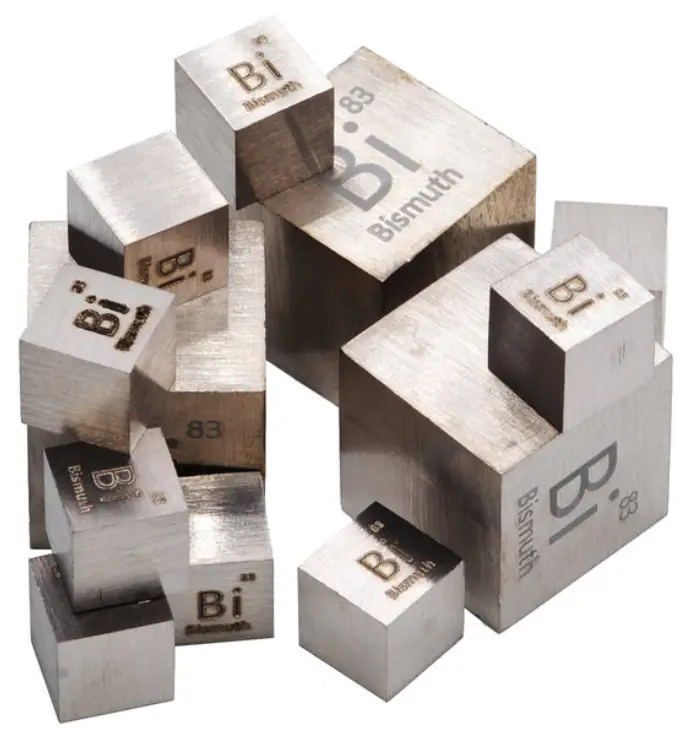
Bismuth is a brittle metal with a silvery white color when freshly produced, but surface oxidation can give it a pink tinge. Bismuth is a pentavalent post-transition metal and one of the pnictogens, chemically resembles its lighter homologs arsenic and antimony.

Summary

Element Bismuth
Atomic number 83
Atomic mass [amu] 208.9804
Atomic mass [pm] 148
Density at STP [g/cm3] 9.78
Number of protons 83
Number of neutrons (typical isotopes) 209
Number of electrons 83
Electron configuration [Hg] 6p3
Oxidation states +3,5
Electron affinity [kJ/mol] 91.2
Electronegativity [Pauling scale] 2.02
First ionization energy [eV] 7.289

Atomic Number – Protons, Electrons and Neutrons in Bismuth

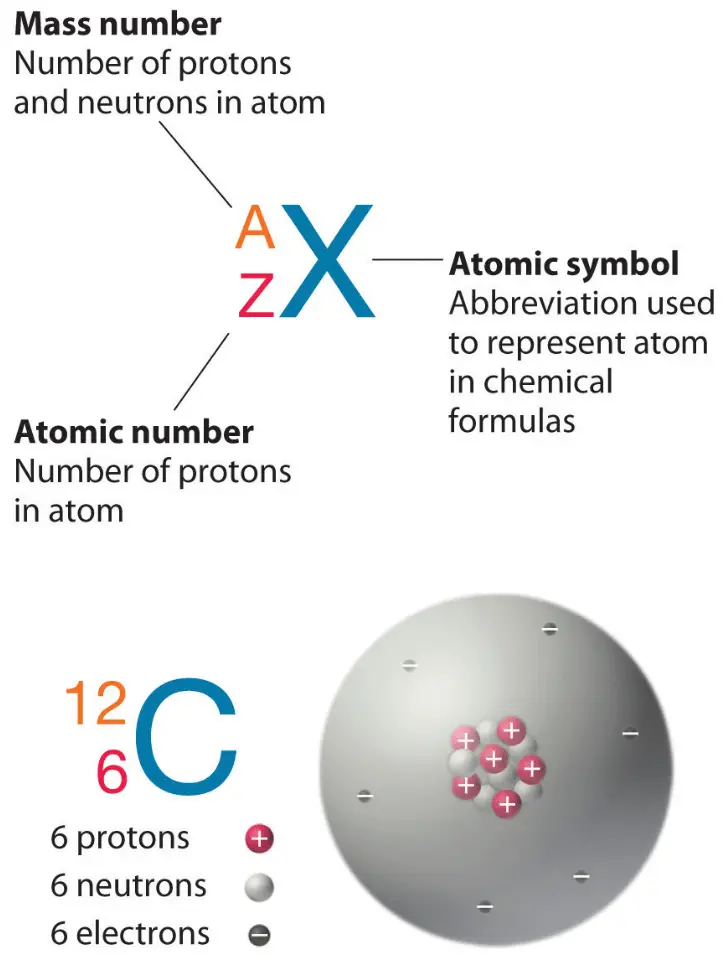
Proton Number - Atomic NumberBismuth is a chemical element with atomic number 83 which means there are 83 protons in its nucleus. Total number of protons in the nucleus is called the atomic number of the atom and is given the symbol Z. The total electrical charge of the nucleus is therefore +Ze, where e (elementary charge) equals to 1,602 x 10-19 coulombs.

The total number of neutrons in the nucleus of an atom is called the neutron number of the atom and is given the symbol N. Neutron number plus atomic number equals atomic mass number: N+Z=A. The difference between the neutron number and the atomic number is known as the neutron excess: D = N – Z = A – 2Z.

For stable elements, there is usually a variety of stable isotopes. Isotopes are nuclides that have the same atomic number and are therefore the same element, but differ in the number of neutrons. Mass numbers of typical isotopes of Bismuth are 209.

Atomic Mass of Bismuth

Atomic mass of Bismuth is 208.9804 u. 

The atomic mass is the mass of an atom. The atomic mass or relative isotopic mass refers to the mass of a single particle, and therefore is tied to a certain specific isotope of an element. The atomic mass is carried by the atomic nucleus, which occupies only about 10-12 of the total volume of the atom or less, but it contains all the positive charge and at least 99.95% of the total mass of the atom. Note that, each element may contain more isotopes, therefore this resulting atomic mass is calculated from naturally-occuring isotopes and their abundance.

Atomic Radius of Bismuth

The atomic radius of Bismuth atom is 148pm (covalent radius).

Atomic Radius of Chemical Elements

It must be noted, atoms lack a well-defined outer boundary. The atomic radius of a chemical element is a measure of the distance out to which the electron cloud extends from the nucleus. However, this assumes the atom to exhibit a spherical shape, which is only obeyed for atoms in vacuum or free space. Therefore, there are various non-equivalent definitions of atomic radius.

Electrons and Electron Configuration

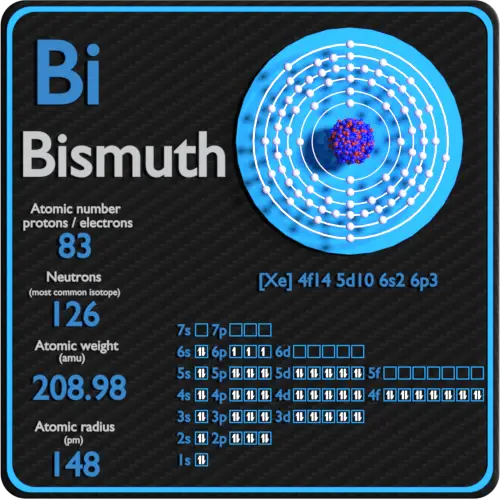
The number of electrons in an electrically-neutral atom is the same as the number of protons in the nucleus. Therefore, the number of electrons in neutral atom of Bismuth is 83. Each electron is influenced by the electric fields produced by the positive nuclear charge and the other (Z – 1) negative electrons in the atom.

Since the number of electrons and their arrangement are responsible for the chemical behavior of atoms, the atomic number identifies the various chemical elements. The configuration of these electrons follows from the principles of quantum mechanics. The number of electrons in each element’s electron shells, particularly the outermost valence shell, is the primary factor in determining its chemical bonding behavior. In the periodic table, the elements are listed in order of increasing atomic number Z.

Electron configuration of Bismuth is [Hg] 6p3.

Possible oxidation states are +3,5.

Density of Bismuth

Density of Bismuth is 9.78g/cm3.

Typical densities of various substances are at atmospheric pressure.

Density is defined as the mass per unit volume. It is an intensive property, which is mathematically defined as mass divided by volume:

ρ = m/V

Atomic Masses of Elements

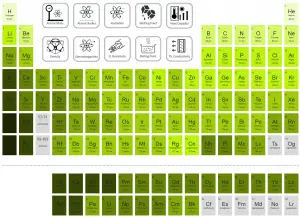
Periodic Table of Elements - atomic mass

Atomic Radii of Elements

Periodic Table of Elements - atomic radius

Densities of Elements

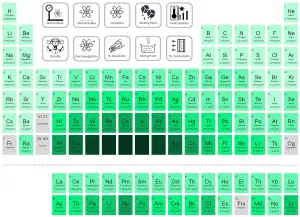
Periodic Table of Elements - density

Bismuth-protons-neutrons-electrons-configuration

Bismuth-affinity-electronegativity-ionization

Electron Affinity – Bismuth

Electron affinity of Bismuth is 91.2 kJ/mol.

In chemistry and atomic physics, the electron affinity of an atom or molecule is defined as:

the change in energy (in kJ/mole) of a neutral atom or molecule (in the gaseous phase) when an electron is added to the atom to form a negative ion.

X + e– → X– + energy        Affinity = – ∆H

In other words, it can be expressed as the neutral atom’s likelihood of gaining an electron. Note that, ionization energies measure the tendency of a neutral atom to resist the loss of electrons. Electron affinities are more difficult to measure than ionization energies.

Electronegativity of Bismuth

Electronegativity of Bismuth is 2.02.

Electronegativity, symbol χ, is a chemical property that describes the tendency of an atom to attract electrons towards this atom. For this purposes, a dimensionless quantity the Pauling scale, symbol χ, is the most commonly used.

The electronegativity of Bismuth is: χ = 2.02

First Ionization Energy of Bismuth

First Ionization Energy of Bismuth is 7.289 eV.

Ionization energy, also called ionization potential, is the energy necessary to remove an electron from the neutral atom.

X + energy → X+ + e−

where X is any atom or molecule capable of being ionized, X+ is that atom or molecule with an electron removed (positive ion), and e− is the removed electron.

A Bismuth atom, for example, requires the following ionization energy to remove the outermost electron.

Bi + IE → Bi+ + e−        IE = 7.289 eV

Electronegativity of Elements

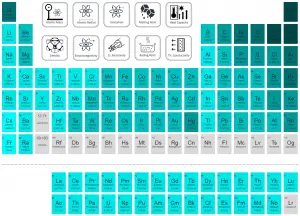
Periodic Table of Elements - electronegativity

Ionization Energy of Elements

Periodic Table of Elements - ionization energy

Bismuth-periodic-table

Source: www.luciteria.com


Properties of other elements

Bismuth - Comparison of Atomic Properties

Periodic Table in 8K resolution

Other properties of Bismuth


Lead – Periodic Table – Atomic Properties

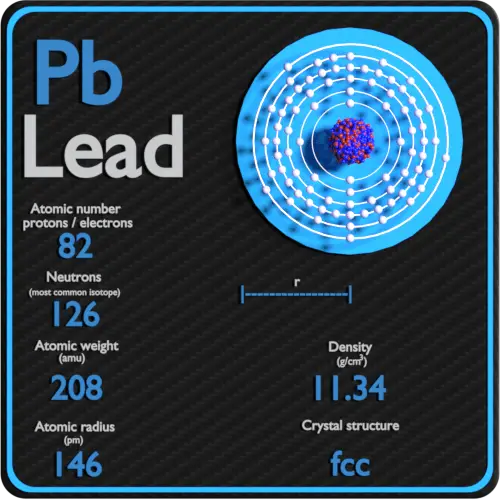
Lead-density-atomic-number-mass-radius

Lead is a heavy metal that is denser than most common materials. Lead is soft and malleable, and has a relatively low melting point. Lead is widely used as a gamma shield. Major advantage of lead shield is in its compactness due to its higher density. Lead has the highest atomic number of any stable element and concludes three major decay chains of heavier elements.

Summary

Element Lead
Atomic number 82
Atomic mass [amu] 207.2
Atomic mass [pm] 146
Density at STP [g/cm3] 11.34
Number of protons 82
Number of neutrons (typical isotopes) 204-208
Number of electrons 82
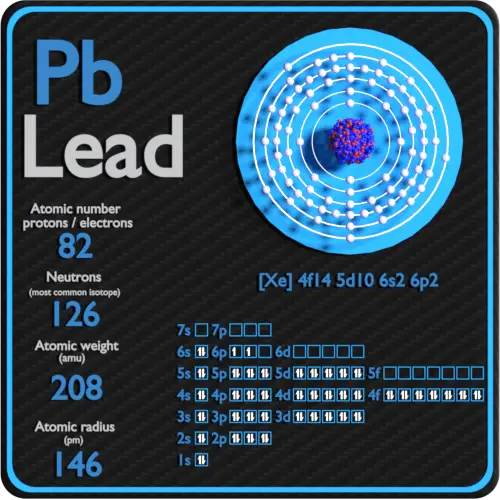
Electron configuration [Hg] 6p2
Oxidation states +2,4
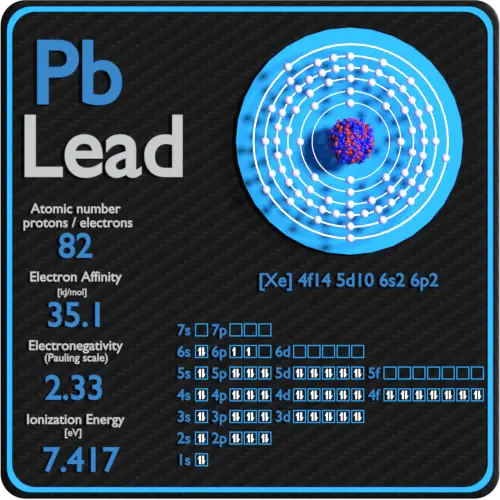
Electron affinity [kJ/mol] 35.1
Electronegativity [Pauling scale] 2.33
First ionization energy [eV] 7.4167

Atomic Number – Protons, Electrons and Neutrons in Lead

Proton Number - Atomic NumberLead is a chemical element with atomic number 82 which means there are 82 protons in its nucleus. Total number of protons in the nucleus is called the atomic number of the atom and is given the symbol Z. The total electrical charge of the nucleus is therefore +Ze, where e (elementary charge) equals to 1,602 x 10-19 coulombs.

The total number of neutrons in the nucleus of an atom is called the neutron number of the atom and is given the symbol N. Neutron number plus atomic number equals atomic mass number: N+Z=A. The difference between the neutron number and the atomic number is known as the neutron excess: D = N – Z = A – 2Z.

For stable elements, there is usually a variety of stable isotopes. Isotopes are nuclides that have the same atomic number and are therefore the same element, but differ in the number of neutrons. Mass numbers of typical isotopes of Lead are 204-208.

Atomic Mass of Lead

Atomic mass of Lead is 207.2 u. 

The atomic mass is the mass of an atom. The atomic mass or relative isotopic mass refers to the mass of a single particle, and therefore is tied to a certain specific isotope of an element. The atomic mass is carried by the atomic nucleus, which occupies only about 10-12 of the total volume of the atom or less, but it contains all the positive charge and at least 99.95% of the total mass of the atom. Note that, each element may contain more isotopes, therefore this resulting atomic mass is calculated from naturally-occuring isotopes and their abundance.

Atomic Radius of Lead

The atomic radius of Lead atom is 146pm (covalent radius).

Atomic Radius of Chemical Elements

It must be noted, atoms lack a well-defined outer boundary. The atomic radius of a chemical element is a measure of the distance out to which the electron cloud extends from the nucleus. However, this assumes the atom to exhibit a spherical shape, which is only obeyed for atoms in vacuum or free space. Therefore, there are various non-equivalent definitions of atomic radius.

Electrons and Electron Configuration

The number of electrons in an electrically-neutral atom is the same as the number of protons in the nucleus. Therefore, the number of electrons in neutral atom of Lead is 82. Each electron is influenced by the electric fields produced by the positive nuclear charge and the other (Z – 1) negative electrons in the atom.

Since the number of electrons and their arrangement are responsible for the chemical behavior of atoms, the atomic number identifies the various chemical elements. The configuration of these electrons follows from the principles of quantum mechanics. The number of electrons in each element’s electron shells, particularly the outermost valence shell, is the primary factor in determining its chemical bonding behavior. In the periodic table, the elements are listed in order of increasing atomic number Z.

Electron configuration of Lead is [Hg] 6p2.

Possible oxidation states are +2,4.

Density of Lead

Density of Lead is 11.34g/cm3.

Typical densities of various substances are at atmospheric pressure.

Density is defined as the mass per unit volume. It is an intensive property, which is mathematically defined as mass divided by volume:

ρ = m/V

Atomic Masses of Elements

Periodic Table of Elements - atomic mass

Atomic Radii of Elements

Periodic Table of Elements - atomic radius

Densities of Elements

Periodic Table of Elements - density

Lead-protons-neutrons-electrons-configuration

Lead-affinity-electronegativity-ionization

Electron Affinity – Lead

Electron affinity of Lead is 35.1 kJ/mol.

In chemistry and atomic physics, the electron affinity of an atom or molecule is defined as:

the change in energy (in kJ/mole) of a neutral atom or molecule (in the gaseous phase) when an electron is added to the atom to form a negative ion.

X + e– → X– + energy        Affinity = – ∆H

In other words, it can be expressed as the neutral atom’s likelihood of gaining an electron. Note that, ionization energies measure the tendency of a neutral atom to resist the loss of electrons. Electron affinities are more difficult to measure than ionization energies.

Electronegativity of Lead

Electronegativity of Lead is 2.33.

Electronegativity, symbol χ, is a chemical property that describes the tendency of an atom to attract electrons towards this atom. For this purposes, a dimensionless quantity the Pauling scale, symbol χ, is the most commonly used.

The electronegativity of Lead is: χ = 2.33

First Ionization Energy of Lead

First Ionization Energy of Lead is 7.4167 eV.

Ionization energy, also called ionization potential, is the energy necessary to remove an electron from the neutral atom.

X + energy → X+ + e−

where X is any atom or molecule capable of being ionized, X+ is that atom or molecule with an electron removed (positive ion), and e− is the removed electron.

A Lead atom, for example, requires the following ionization energy to remove the outermost electron.

Pb + IE → Pb+ + e−        IE = 7.4167 eV

Electronegativity of Elements

Periodic Table of Elements - electronegativity

Ionization Energy of Elements

Periodic Table of Elements - ionization energy

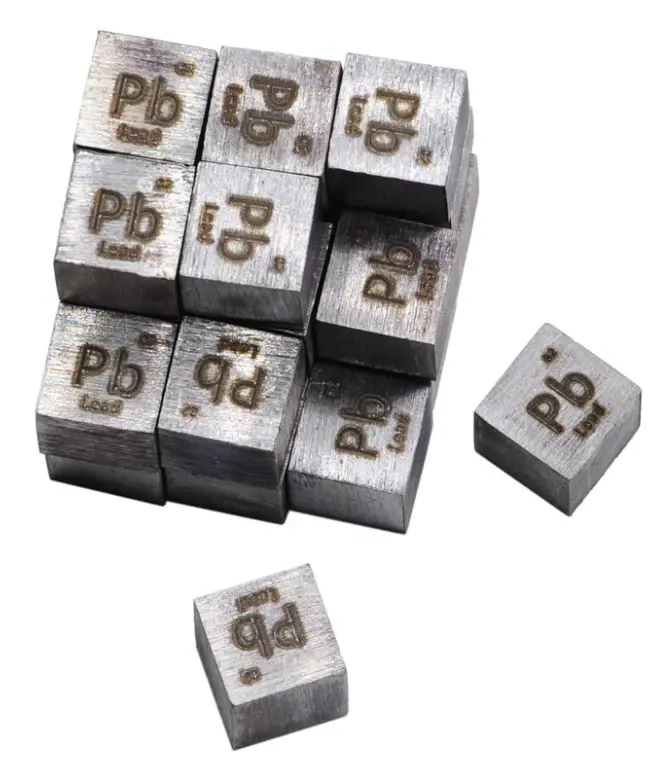
Lead-periodic-table

Source: www.luciteria.com


Properties of other elements

Lead - Comparison of Atomic Properties

Periodic Table in 8K resolution

Other properties of Lead


Thallium – Periodic Table – Atomic Properties

Thallium-density-atomic-number-mass-radius

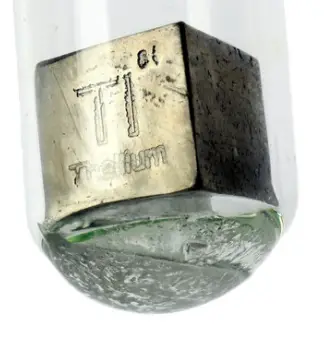
Thallium is a soft gray post-transition metal is not found free in nature. Commercially, thallium is produced as a byproduct from refining of heavy metal sulfide ores. Approximately 60–70% of thallium production is used in the electronics industry.

Summary

Element Thallium
Atomic number 81
Atomic mass [amu] 204.3833
Atomic mass [pm] 145
Density at STP [g/cm3] 11.85
Number of protons 81
Number of neutrons (typical isotopes) 203, 205
Number of electrons 81
Electron configuration [Hg] 6p1
Oxidation states +1,3
Electron affinity [kJ/mol] 19.2
Electronegativity [Pauling scale] 1.62
First ionization energy [eV] 6.1083

Atomic Number – Protons, Electrons and Neutrons in Thallium

Proton Number - Atomic NumberThallium is a chemical element with atomic number 81 which means there are 81 protons in its nucleus. Total number of protons in the nucleus is called the atomic number of the atom and is given the symbol Z. The total electrical charge of the nucleus is therefore +Ze, where e (elementary charge) equals to 1,602 x 10-19 coulombs.

The total number of neutrons in the nucleus of an atom is called the neutron number of the atom and is given the symbol N. Neutron number plus atomic number equals atomic mass number: N+Z=A. The difference between the neutron number and the atomic number is known as the neutron excess: D = N – Z = A – 2Z.

For stable elements, there is usually a variety of stable isotopes. Isotopes are nuclides that have the same atomic number and are therefore the same element, but differ in the number of neutrons. Mass numbers of typical isotopes of Thallium are 203, 205.

Atomic Mass of Thallium

Atomic mass of Thallium is 204.3833 u. 

The atomic mass is the mass of an atom. The atomic mass or relative isotopic mass refers to the mass of a single particle, and therefore is tied to a certain specific isotope of an element. The atomic mass is carried by the atomic nucleus, which occupies only about 10-12 of the total volume of the atom or less, but it contains all the positive charge and at least 99.95% of the total mass of the atom. Note that, each element may contain more isotopes, therefore this resulting atomic mass is calculated from naturally-occuring isotopes and their abundance.

Atomic Radius of Thallium

The atomic radius of Thallium atom is 145pm (covalent radius).

Atomic Radius of Chemical Elements

It must be noted, atoms lack a well-defined outer boundary. The atomic radius of a chemical element is a measure of the distance out to which the electron cloud extends from the nucleus. However, this assumes the atom to exhibit a spherical shape, which is only obeyed for atoms in vacuum or free space. Therefore, there are various non-equivalent definitions of atomic radius.

Electrons and Electron Configuration

The number of electrons in an electrically-neutral atom is the same as the number of protons in the nucleus. Therefore, the number of electrons in neutral atom of Thallium is 81. Each electron is influenced by the electric fields produced by the positive nuclear charge and the other (Z – 1) negative electrons in the atom.

Since the number of electrons and their arrangement are responsible for the chemical behavior of atoms, the atomic number identifies the various chemical elements. The configuration of these electrons follows from the principles of quantum mechanics. The number of electrons in each element’s electron shells, particularly the outermost valence shell, is the primary factor in determining its chemical bonding behavior. In the periodic table, the elements are listed in order of increasing atomic number Z.

Electron configuration of Thallium is [Hg] 6p1.

Possible oxidation states are +1,3.

Density of Thallium

Density of Thallium is 11.85g/cm3.

Typical densities of various substances are at atmospheric pressure.

Density is defined as the mass per unit volume. It is an intensive property, which is mathematically defined as mass divided by volume:

ρ = m/V

Atomic Masses of Elements

Periodic Table of Elements - atomic mass

Atomic Radii of Elements

Periodic Table of Elements - atomic radius

Densities of Elements

Periodic Table of Elements - density

Thallium-protons-neutrons-electrons-configuration

Thallium-affinity-electronegativity-ionization

Electron Affinity – Thallium

Electron affinity of Thallium is 19.2 kJ/mol.

In chemistry and atomic physics, the electron affinity of an atom or molecule is defined as:

the change in energy (in kJ/mole) of a neutral atom or molecule (in the gaseous phase) when an electron is added to the atom to form a negative ion.

X + e– → X– + energy        Affinity = – ∆H

In other words, it can be expressed as the neutral atom’s likelihood of gaining an electron. Note that, ionization energies measure the tendency of a neutral atom to resist the loss of electrons. Electron affinities are more difficult to measure than ionization energies.

Electronegativity of Thallium

Electronegativity of Thallium is 1.62.

Electronegativity, symbol χ, is a chemical property that describes the tendency of an atom to attract electrons towards this atom. For this purposes, a dimensionless quantity the Pauling scale, symbol χ, is the most commonly used.

The electronegativity of Thallium is: χ = 1.62

First Ionization Energy of Thallium

First Ionization Energy of Thallium is 6.1083 eV.

Ionization energy, also called ionization potential, is the energy necessary to remove an electron from the neutral atom.

X + energy → X+ + e−

where X is any atom or molecule capable of being ionized, X+ is that atom or molecule with an electron removed (positive ion), and e− is the removed electron.

A Thallium atom, for example, requires the following ionization energy to remove the outermost electron.

Tl + IE → Tl+ + e−        IE = 6.1083 eV

Electronegativity of Elements

Periodic Table of Elements - electronegativity

Ionization Energy of Elements

Periodic Table of Elements - ionization energy

Thallium-periodic-table

Source: www.luciteria.com


Properties of other elements

Thallium - Comparison of Atomic Properties

Periodic Table in 8K resolution

Other properties of Thallium


Mercury – Periodic Table – Atomic Properties

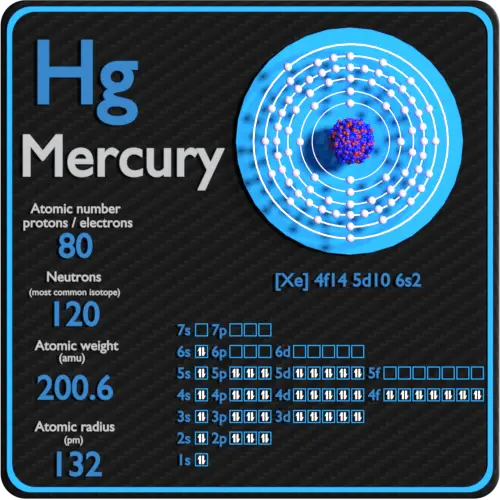
Mercury-density-atomic-number-mass-radius

Mercury is commonly known as quicksilver and was formerly named hydrargyrum. Mercury is a heavy, silvery d-block element, mercury is the only metallic element that is liquid at standard conditions for temperature and pressure.

Summary

Element Mercury
Atomic number 80
Atomic mass [amu] 200.59
Atomic mass [pm] 132
Density at STP [g/cm3] 13.534
Number of protons 80
Number of neutrons (typical isotopes) 198-202
Number of electrons 80
Electron configuration [Xe] 4f14 5d10 6s2
Oxidation states +1,2
Electron affinity [kJ/mol] —
Electronegativity [Pauling scale] 2
First ionization energy [eV] 10.4375

Atomic Number – Protons, Electrons and Neutrons in Mercury

Proton Number - Atomic NumberMercury is a chemical element with atomic number 80 which means there are 80 protons in its nucleus. Total number of protons in the nucleus is called the atomic number of the atom and is given the symbol Z. The total electrical charge of the nucleus is therefore +Ze, where e (elementary charge) equals to 1,602 x 10-19 coulombs.

The total number of neutrons in the nucleus of an atom is called the neutron number of the atom and is given the symbol N. Neutron number plus atomic number equals atomic mass number: N+Z=A. The difference between the neutron number and the atomic number is known as the neutron excess: D = N – Z = A – 2Z.

For stable elements, there is usually a variety of stable isotopes. Isotopes are nuclides that have the same atomic number and are therefore the same element, but differ in the number of neutrons. Mass numbers of typical isotopes of Mercury are 198-202.

Atomic Mass of Mercury

Atomic mass of Mercury is 200.59 u. 

The atomic mass is the mass of an atom. The atomic mass or relative isotopic mass refers to the mass of a single particle, and therefore is tied to a certain specific isotope of an element. The atomic mass is carried by the atomic nucleus, which occupies only about 10-12 of the total volume of the atom or less, but it contains all the positive charge and at least 99.95% of the total mass of the atom. Note that, each element may contain more isotopes, therefore this resulting atomic mass is calculated from naturally-occuring isotopes and their abundance.

Atomic Radius of Mercury

The atomic radius of Mercury atom is 132pm (covalent radius).

Atomic Radius of Chemical Elements

It must be noted, atoms lack a well-defined outer boundary. The atomic radius of a chemical element is a measure of the distance out to which the electron cloud extends from the nucleus. However, this assumes the atom to exhibit a spherical shape, which is only obeyed for atoms in vacuum or free space. Therefore, there are various non-equivalent definitions of atomic radius.

Electrons and Electron Configuration

The number of electrons in an electrically-neutral atom is the same as the number of protons in the nucleus. Therefore, the number of electrons in neutral atom of Mercury is 80. Each electron is influenced by the electric fields produced by the positive nuclear charge and the other (Z – 1) negative electrons in the atom.

Since the number of electrons and their arrangement are responsible for the chemical behavior of atoms, the atomic number identifies the various chemical elements. The configuration of these electrons follows from the principles of quantum mechanics. The number of electrons in each element’s electron shells, particularly the outermost valence shell, is the primary factor in determining its chemical bonding behavior. In the periodic table, the elements are listed in order of increasing atomic number Z.

Electron configuration of Mercury is [Xe] 4f14 5d10 6s2.

Possible oxidation states are +1,2.

Density of Mercury

Density of Mercury is 13.534g/cm3.

Typical densities of various substances are at atmospheric pressure.

Density is defined as the mass per unit volume. It is an intensive property, which is mathematically defined as mass divided by volume:

ρ = m/V

Atomic Masses of Elements

Periodic Table of Elements - atomic mass

Atomic Radii of Elements

Periodic Table of Elements - atomic radius

Densities of Elements

Periodic Table of Elements - density

Mercury-protons-neutrons-electrons-configuration

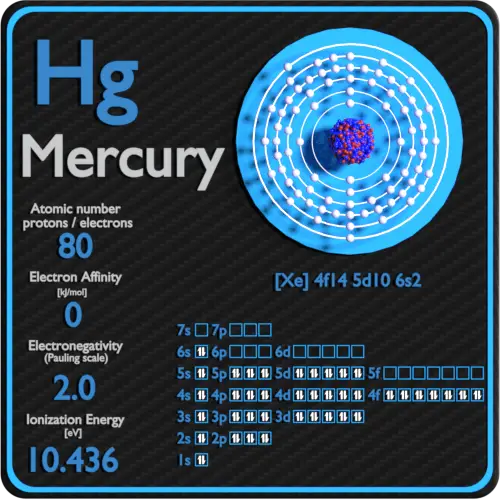
Mercury-affinity-electronegativity-ionization

Electron Affinity – Mercury

Electron affinity of Mercury is — kJ/mol.

In chemistry and atomic physics, the electron affinity of an atom or molecule is defined as:

the change in energy (in kJ/mole) of a neutral atom or molecule (in the gaseous phase) when an electron is added to the atom to form a negative ion.

X + e– → X– + energy        Affinity = – ∆H

In other words, it can be expressed as the neutral atom’s likelihood of gaining an electron. Note that, ionization energies measure the tendency of a neutral atom to resist the loss of electrons. Electron affinities are more difficult to measure than ionization energies.

Electronegativity of Mercury

Electronegativity of Mercury is 2.

Electronegativity, symbol χ, is a chemical property that describes the tendency of an atom to attract electrons towards this atom. For this purposes, a dimensionless quantity the Pauling scale, symbol χ, is the most commonly used.

The electronegativity of Mercury is: χ = 2

First Ionization Energy of Mercury

First Ionization Energy of Mercury is 10.4375 eV.

Ionization energy, also called ionization potential, is the energy necessary to remove an electron from the neutral atom.

X + energy → X+ + e−

where X is any atom or molecule capable of being ionized, X+ is that atom or molecule with an electron removed (positive ion), and e− is the removed electron.

A Mercury atom, for example, requires the following ionization energy to remove the outermost electron.

Hg + IE → Hg+ + e−        IE = 10.4375 eV

Electronegativity of Elements

Periodic Table of Elements - electronegativity

Ionization Energy of Elements

Periodic Table of Elements - ionization energy

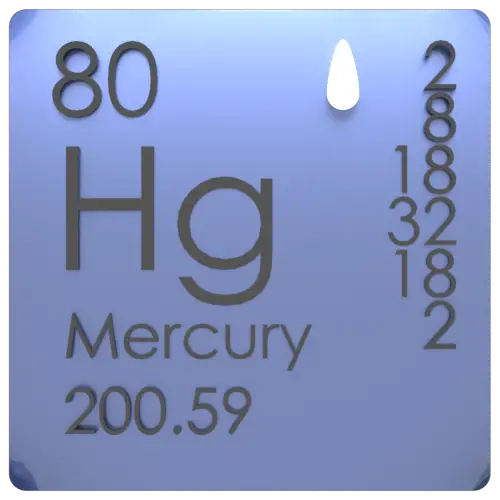
Mercury-periodic-table

Source: www.luciteria.com


Properties of other elements

Mercury - Comparison of Atomic Properties

Periodic Table in 8K resolution

Other properties of Mercury


Gold – Periodic Table – Atomic Properties

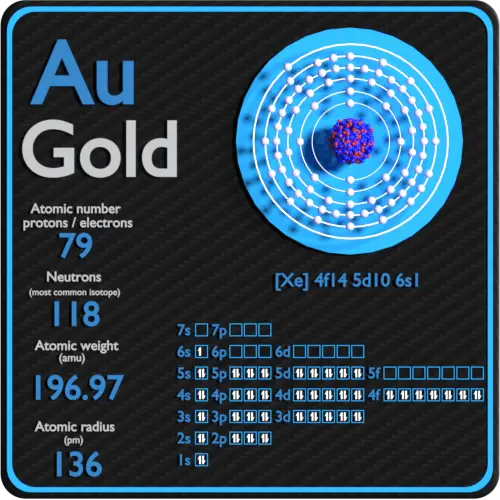
Gold-density-atomic-number-mass-radius

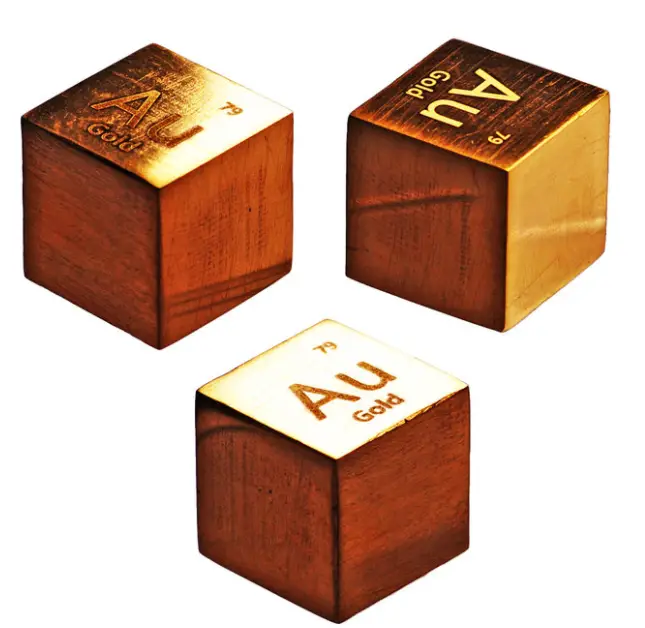
Gold is a bright, slightly reddish yellow, dense, soft, malleable, and ductile metal. Gold is a transition metal and a group 11 element. It is one of the least reactive chemical elements and is solid under standard conditions. Gold is thought to have been produced in supernova nucleosynthesis, from the collision of neutron stars.

Summary

Element Gold
Atomic number 79
Atomic mass [amu] 196.9665
Atomic mass [pm] 136
Density at STP [g/cm3] 19.3
Number of protons 79
Number of neutrons (typical isotopes) 197
Number of electrons 79
Electron configuration [Xe] 4f14 5d10 6s1
Oxidation states +1,3
Electron affinity [kJ/mol] 222.8
Electronegativity [Pauling scale] 2.54
First ionization energy [eV] 9.2257

Atomic Number – Protons, Electrons and Neutrons in Gold
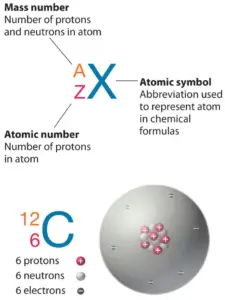
Proton Number - Atomic NumberGold is a chemical element with atomic number 79 which means there are 79 protons in its nucleus. Total number of protons in the nucleus is called the atomic number of the atom and is given the symbol Z. The total electrical charge of the nucleus is therefore +Ze, where e (elementary charge) equals to 1,602 x 10-19 coulombs.

The total number of neutrons in the nucleus of an atom is called the neutron number of the atom and is given the symbol N. Neutron number plus atomic number equals atomic mass number: N+Z=A. The difference between the neutron number and the atomic number is known as the neutron excess: D = N – Z = A – 2Z.

For stable elements, there is usually a variety of stable isotopes. Isotopes are nuclides that have the same atomic number and are therefore the same element, but differ in the number of neutrons. Mass numbers of typical isotopes of Gold are 197.

Atomic Mass of Gold

Atomic mass of Gold is 196.9665 u. 

The atomic mass is the mass of an atom. The atomic mass or relative isotopic mass refers to the mass of a single particle, and therefore is tied to a certain specific isotope of an element. The atomic mass is carried by the atomic nucleus, which occupies only about 10-12 of the total volume of the atom or less, but it contains all the positive charge and at least 99.95% of the total mass of the atom. Note that, each element may contain more isotopes, therefore this resulting atomic mass is calculated from naturally-occuring isotopes and their abundance.

Atomic Radius of Gold

The atomic radius of Gold atom is 136pm (covalent radius).
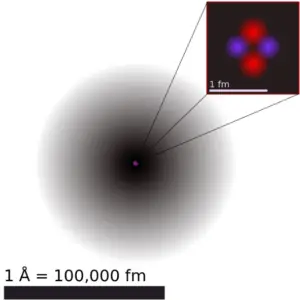
Atomic Radius of Chemical Elements

It must be noted, atoms lack a well-defined outer boundary. The atomic radius of a chemical element is a measure of the distance out to which the electron cloud extends from the nucleus. However, this assumes the atom to exhibit a spherical shape, which is only obeyed for atoms in vacuum or free space. Therefore, there are various non-equivalent definitions of atomic radius.

Electrons and Electron Configuration

The number of electrons in an electrically-neutral atom is the same as the number of protons in the nucleus. Therefore, the number of electrons in neutral atom of Gold is 79. Each electron is influenced by the electric fields produced by the positive nuclear charge and the other (Z – 1) negative electrons in the atom.

Since the number of electrons and their arrangement are responsible for the chemical behavior of atoms, the atomic number identifies the various chemical elements. The configuration of these electrons follows from the principles of quantum mechanics. The number of electrons in each element’s electron shells, particularly the outermost valence shell, is the primary factor in determining its chemical bonding behavior. In the periodic table, the elements are listed in order of increasing atomic number Z.

Electron configuration of Gold is [Xe] 4f14 5d10 6s1.

Possible oxidation states are +1,3.

Density of Gold

Density of Gold is 19.3g/cm3.

Typical densities of various substances are at atmospheric pressure.

Density is defined as the mass per unit volume. It is an intensive property, which is mathematically defined as mass divided by volume:

ρ = m/V

Atomic Masses of Elements
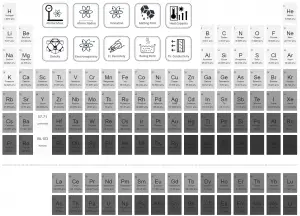
Periodic Table of Elements - atomic mass

Atomic Radii of Elements

Periodic Table of Elements - atomic radius

Densities of Elements

Periodic Table of Elements - density

Gold-protons-neutrons-electrons-configuration

Gold-affinity-electronegativity-ionization

Electron Affinity – Gold

Electron affinity of Gold is 222.8 kJ/mol.

In chemistry and atomic physics, the electron affinity of an atom or molecule is defined as:

the change in energy (in kJ/mole) of a neutral atom or molecule (in the gaseous phase) when an electron is added to the atom to form a negative ion.

X + e– → X– + energy        Affinity = – ∆H

In other words, it can be expressed as the neutral atom’s likelihood of gaining an electron. Note that, ionization energies measure the tendency of a neutral atom to resist the loss of electrons. Electron affinities are more difficult to measure than ionization energies.

Electronegativity of Gold

Electronegativity of Gold is 2.54.

Electronegativity, symbol χ, is a chemical property that describes the tendency of an atom to attract electrons towards this atom. For this purposes, a dimensionless quantity the Pauling scale, symbol χ, is the most commonly used.

The electronegativity of Gold is: χ = 2.54

First Ionization Energy of Gold

First Ionization Energy of Gold is 9.2257 eV.

Ionization energy, also called ionization potential, is the energy necessary to remove an electron from the neutral atom.

X + energy → X+ + e−

where X is any atom or molecule capable of being ionized, X+ is that atom or molecule with an electron removed (positive ion), and e− is the removed electron.

A Gold atom, for example, requires the following ionization energy to remove the outermost electron.

Au + IE → Au+ + e−        IE = 9.2257 eV

Electronegativity of Elements
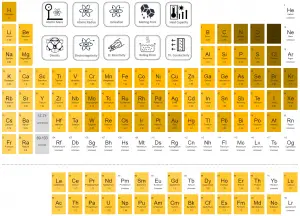
Periodic Table of Elements - electronegativity

Ionization Energy of Elements

Periodic Table of Elements - ionization energy

Gold-periodic-table

Source: www.luciteria.com


Properties of other elements

Gold - Comparison of Atomic Properties
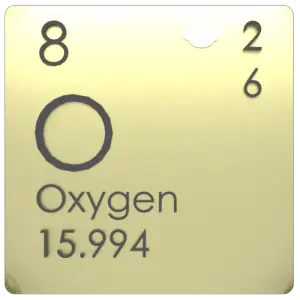
Periodic Table in 8K resolution

Other properties of Gold